Kyrgyzstan is seeking to increase domestic production of AI-92 gasoline by upgrading surplus low-octane AI-80 fuel. The country continues to face rising fuel prices and supply uncertainty because it relies heavily on imports from Russia.
Kyrgyz Petroleum Company (KPC) has issued a tender for chemical additives needed to produce AI-92 gasoline from AI-80 fuel.
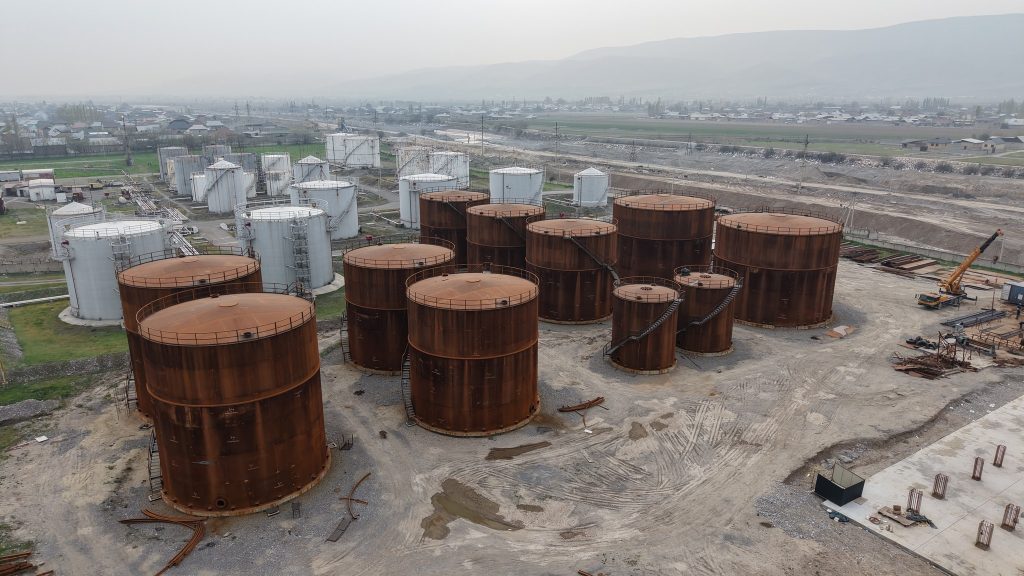
The company operates an oil refinery in Manas, formerly Jalal-Abad, in southern Kyrgyzstan. The facility can process 500,000 tons of crude oil annually.
The refinery mainly produces AI-80 gasoline. Domestic demand for this grade has virtually disappeared, leaving significant stockpiles. Earlier this year, the government authorized exports of domestically produced AI-80 gasoline and diesel fuel to Tajikistan and Afghanistan.
The move comes as Kyrgyzstan faces growing pressure from disruptions in the Russian fuel market. Russia supplies more than 90% of Kyrgyzstan’s imported petroleum products. It has imposed temporary restrictions on gasoline exports after Ukrainian drone attacks on oil-processing facilities reduced refinery output.
Kyrgyzstan imports approximately 1.2 million tons of petroleum products annually. Domestic refineries currently satisfy only about 5% of national demand, while total annual fuel consumption is estimated at 1.6 million tons.
KPC’s refinery is undergoing a $410 million modernization project designed to reduce the country’s dependence on imported fuel. SPEC Engineering, based in the United States, is carrying out the work. External investors are providing $200 million, and Kyrgyzstan’s government is contributing $110 million. Kyrgyzneftegaz, KPC’s parent company, is providing the remaining $100 million.
When the project is completed at the end of 2027, the refinery is expected to begin producing AI-92 and AI-95 gasoline that meets K-4 and K-5 Eurasian Economic Union environmental standards.
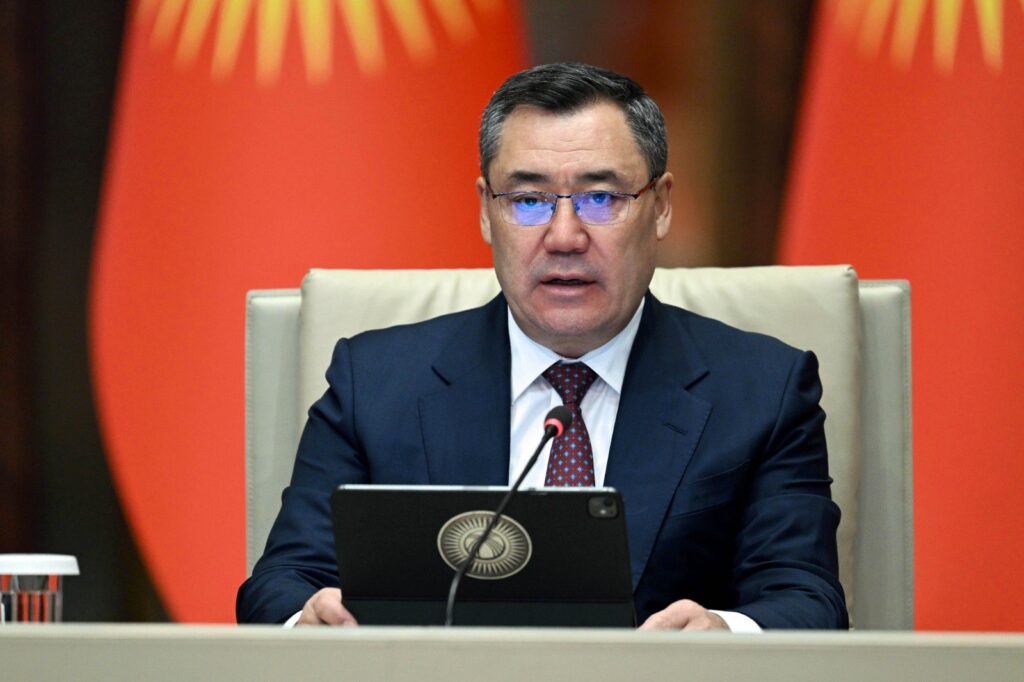
At the launch of the project in September 2024, President Sadyr Japarov said the refinery met only 6.5% of Kyrgyzstan’s demand for high-quality gasoline and diesel fuel. He said its share would rise to 32% after the upgrade.
The Manas refinery is one of Kyrgyzstan’s two largest refining facilities. The other is the Junda refinery in Kara-Balta, also known as the Zhongda refinery. It is being upgraded, with completion scheduled for August 2026.
As previously reported by The Times of Central Asia, Kyrgyzstan has recently eased its temporary fuel price controls in an effort to stabilize supplies. The government introduced emergency regulation of fuel prices on May 25. Benchmark import prices were set at $860 per ton for AI-92 gasoline and $940 per ton for AI-95 gasoline. The benchmarks for diesel fuel and liquefied petroleum gas were $950 and $575 per ton, respectively.
However, a resolution signed on July 7 by Chairman of the Cabinet of Ministers Adylbek Kasymaliev removed AI-95 gasoline from the list of socially significant goods subject to state price regulation. It also abolished the caps on retail fuel prices set earlier. The government said the changes were intended to ensure uninterrupted fuel supplies after AI-95 temporarily disappeared from filling stations in Bishkek.