• KZT/USD = 0.00212
  • TJS/USD = 0.10810
  • UZS/USD = 0.00008
  • TMT/USD = 0.29760
  • KZT/USD = 0.00212
  • TJS/USD = 0.10810
  • UZS/USD = 0.00008
  • TMT/USD = 0.29760
  • KZT/USD = 0.00212
  • TJS/USD = 0.10810
  • UZS/USD = 0.00008
  • TMT/USD = 0.29760
  • KZT/USD = 0.00212
  • TJS/USD = 0.10810
  • UZS/USD = 0.00008
  • TMT/USD = 0.29760
  • KZT/USD = 0.00212
  • TJS/USD = 0.10810
  • UZS/USD = 0.00008
  • TMT/USD = 0.29760
  • KZT/USD = 0.00212
  • TJS/USD = 0.10810
  • UZS/USD = 0.00008
  • TMT/USD = 0.29760
  • KZT/USD = 0.00212
  • TJS/USD = 0.10810
  • UZS/USD = 0.00008
  • TMT/USD = 0.29760
  • KZT/USD = 0.00212
  • TJS/USD = 0.10810
  • UZS/USD = 0.00008
  • TMT/USD = 0.29760

Viewing results 1 - 6 of 4

Kyrgyzstan Seeks to Boost AI-92 Gasoline Production as Fuel Supply Pressures Persist

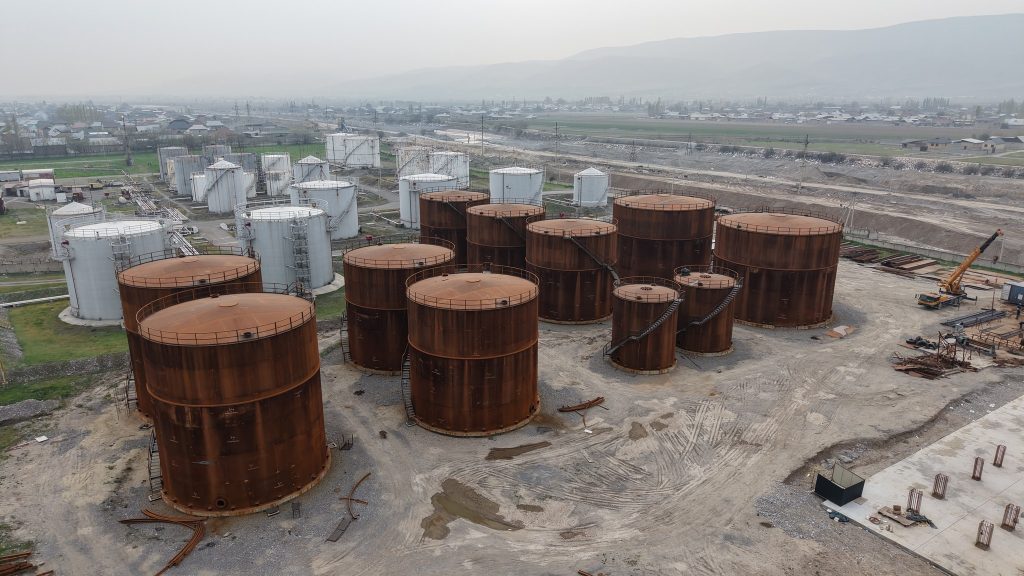
Kyrgyzstan is seeking to increase domestic production of AI-92 gasoline by upgrading surplus low-octane AI-80 fuel. The country continues to face rising fuel prices and supply uncertainty because it relies heavily on imports from Russia. Kyrgyz Petroleum Company (KPC) has issued a tender for chemical additives needed to produce AI-92 gasoline from AI-80 fuel. The company operates an oil refinery in Manas, formerly Jalal-Abad, in southern Kyrgyzstan. The facility can process 500,000 tons of crude oil annually. The refinery mainly produces AI-80 gasoline. Domestic demand for this grade has virtually disappeared, leaving significant stockpiles. Earlier this year, the government authorized exports of domestically produced AI-80 gasoline and diesel fuel to Tajikistan and Afghanistan. The move comes as Kyrgyzstan faces growing pressure from disruptions in the Russian fuel market. Russia supplies more than 90% of Kyrgyzstan’s imported petroleum products. It has imposed temporary restrictions on gasoline exports after Ukrainian drone attacks on oil-processing facilities reduced refinery output. Kyrgyzstan imports approximately 1.2 million tons of petroleum products annually. Domestic refineries currently satisfy only about 5% of national demand, while total annual fuel consumption is estimated at 1.6 million tons. KPC’s refinery is undergoing a $410 million modernization project designed to reduce the country’s dependence on imported fuel. SPEC Engineering, based in the United States, is carrying out the work. External investors are providing $200 million, and Kyrgyzstan’s government is contributing $110 million. Kyrgyzneftegaz, KPC’s parent company, is providing the remaining $100 million. When the project is completed at the end of 2027, the refinery is expected to begin producing AI-92 and AI-95 gasoline that meets K-4 and K-5 Eurasian Economic Union environmental standards. At the launch of the project in September 2024, President Sadyr Japarov said the refinery met only 6.5% of Kyrgyzstan’s demand for high-quality gasoline and diesel fuel. He said its share would rise to 32% after the upgrade. The Manas refinery is one of Kyrgyzstan’s two largest refining facilities. The other is the Junda refinery in Kara-Balta, also known as the Zhongda refinery. It is being upgraded, with completion scheduled for August 2026. As previously reported by The Times of Central Asia, Kyrgyzstan has recently eased its temporary fuel price controls in an effort to stabilize supplies. The government introduced emergency regulation of fuel prices on May 25. Benchmark import prices were set at $860 per ton for AI-92 gasoline and $940 per ton for AI-95 gasoline. The benchmarks for diesel fuel and liquefied petroleum gas were $950 and $575 per ton, respectively. However, a resolution signed on July 7 by Chairman of the Cabinet of Ministers Adylbek Kasymaliev removed AI-95 gasoline from the list of socially significant goods subject to state price regulation. It also abolished the caps on retail fuel prices set earlier. The government said the changes were intended to ensure uninterrupted fuel supplies after AI-95 temporarily disappeared from filling stations in Bishkek.
Tajikistan Offers Farmers Subsidized Diesel as Fuel Shortages Deepen

Tajikistan’s Ministry of Agriculture says farmers will be able to purchase diesel at a subsidized price of approximately $1.20 per liter through the Agency for State Material Reserves as fuel shortages intensify across the country. Speaking at a press conference on July 9, First Deputy Agriculture Minister Nurali Asozoda acknowledged that fuel supplies remained under pressure throughout the region. Tajikistan imports most of its petroleum products and liquefied gas from Russia, leaving it vulnerable to disruptions in the Russian fuel market. According to Asozoda, the agency is selling diesel to agricultural producers for about $1.20 per liter, while AI-92 gasoline is available for approximately $0.99 per liter. Commercial filling stations are charging considerably more. Diesel prices have risen to around $1.40-1.66 per liter, while some stations have reported shortages. Asozoda added that the lower prices apply only to fuel distributed through the agency. He said reserve stocks were available in several regions and that agricultural producers could apply to buy fuel. In some cases, farms may also receive diesel on deferred-payment terms to allow them to complete the harvest. Deputy Agriculture Minister Bahrom Ahmadzada said the ministry had submitted proposals to the government in May to support farmers affected by the shortage. One proposal would establish dedicated fuel distribution points operated by the agency in rural districts. The initiative is currently under government review. Authorities are also seeking to diversify Tajikistan’s fuel imports. According to Ahmadzoda, negotiations are underway with Iran, Iraq, Azerbaijan, and Saudi Arabia. He said an agreement had already been reached to import 10,000 tons of fuel from Iraq, while discussions with Azerbaijan and Saudi Arabia were also progressing. The ministry said it was monitoring the fuel situation daily in coordination with the agency and other government bodies. The shortage became more visible in early July, when several filling stations in Dushanbe ran out of diesel. Others limited sales to 20 liters per vehicle. The supply squeeze is particularly serious for agriculture. Farmers rely on diesel to harvest crops, transport produce, and prepare fields for the next planting season. As previously reported by The Times of Central Asia, fuel shortages are spreading across Central Asia. The pressure has affected gasoline and diesel supplies, along with jet fuel, natural gas, coal, and electricity planning. Seasonal fuel pressure is common, but this year’s shortages have appeared unusually early. They are closely linked to disruptions in Russia, the main fuel supplier for much of the region.

Uzbekistan Faces Fuel Shortage Pressure as Imports Rise

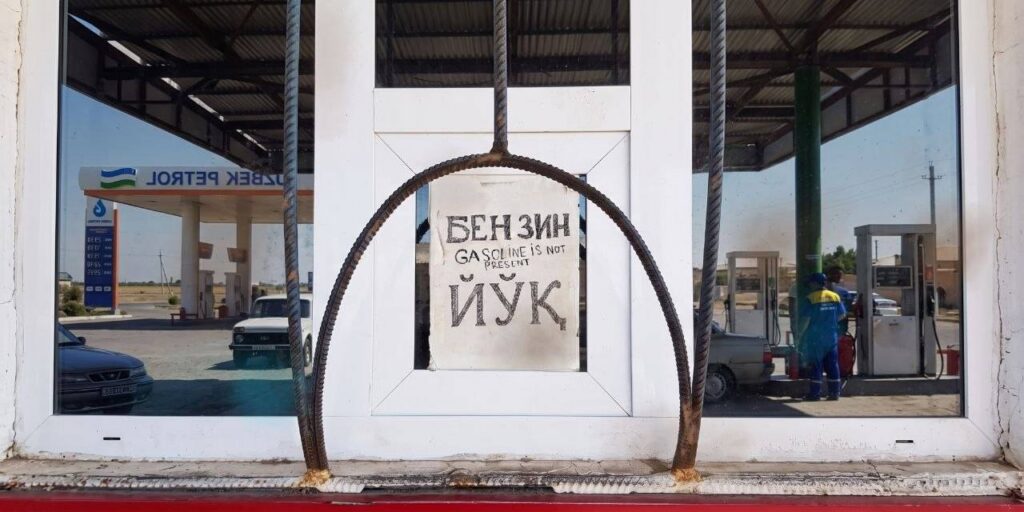
Central Asia is facing a new wave of tension in the market for fuels and lubricants. Shortages of gasoline, diesel fuel, and jet fuel have affected the entire region to varying degrees, but the situation is developing differently in each country. For Kyrgyzstan and Tajikistan, the problem is one of direct import dependence. Kazakhstan and Uzbekistan, which have their own production and refining capacity, are in a more stable position. However, rapidly growing domestic demand is increasingly tying them to imports. The Times of Central Asia previously reported that Kazakhstan is tightening domestic controls, building up reserves ahead of refinery maintenance, and considering fuel imports from China to protect its own market. Kyrgyzstan, meanwhile, has appealed to Azerbaijan, Belarus, Kazakhstan, Russia, Turkmenistan, and Uzbekistan for help in securing fuel supplies, as shortages inside Russia are placing additional pressure on the local fuel market. Uzbekistan’s refining system includes the Bukhara and Fergana oil refineries, the Altyaryk unit of the Fergana refinery, and the modern Uzbekistan GTL complex, which produces synthetic liquid fuels from natural gas. The system produces gasoline, diesel, jet fuel, oils, naphtha, bitumen, and liquefied gas. From January through May 2026, Uzbekistan imported 642 million liters of gasoline worth $373 million. Import volume was 84% higher than in the same period last year, while import value rose by 85%. Imports now cover nearly half of domestic demand. Domestic gasoline production during the five-month period totaled 502,200 tons, equivalent to about 670 million to 678 million liters. Output has declined in recent years, falling from 1.33 million tons in 2023 to 1.2 million tons in 2025. The pressure has also reached the domestic fuel exchange. In late June, AI-92 gasoline prices in Uzbekistan hit a record high, with one ton selling for 13.919 million soums. Since the start of June, prices have risen by about 11% to 12%. The steepest increase came in the first 10 days of the month. Supply on the exchange then fell sharply, from up to 7,700 tons in the first half of June to 1,600 to 2,400 tons in the second half. The price rise has already begun to affect retail fuel costs, especially in Tashkent. One reason for the imbalance was Uzbekistan’s phased reduction of AI-80 gasoline under an environmental reform. In May, Odil Temirov, deputy chairman of Uzbekneftegaz’s board for refining, said the Bukhara Oil Refinery would begin switching from AI-80 to AI-91 and AI-92 in November and December, with a full phase-out of AI-80 from the start of 2025. He said AI-80 accounted for 85% of output at the refinery, while AI-92 made up the remaining 15%, and that this ratio would begin to change in November. Demand quickly shifted toward AI-92 and AI-95, but domestic production has not yet adapted to the new consumption pattern. Additional pressure came from events in Russia, which remains one of the key suppliers of gasoline, refinery feedstock, and aviation fuel. Reduced output at Russian refineries, caused by repairs and the aftermath of attacks on energy...

AI-92 Gasoline Price in Uzbekistan Hits Record High Amid Regional Fuel Pressures

The price of AI-92 gasoline on Uzbekistan’s Republican Commodity and Raw Materials Exchange has reached a record high, according to exchange data reviewed by Uzbek business outlet Spot. On June 29, the exchange price for one metric ton of AI-92 gasoline climbed to 13.919 million UZS, approximately $1,160, up 1.1% from the previous trading session and the highest level ever recorded. Since the beginning of June, the fuel price has risen by 11.8%, or nearly 1.5 million UZS, approximately $125 per ton. Spot reported that the sharpest increase came during the first week of the month. Between June 4 and June 8, the price jumped from 12.476 million UZS, approximately $1,040, to 13.788 million UZS, approximately $1,149, an increase of 10.5% in just four days. Prices then remained relatively stable at around 13.7 million UZS to 13.8 million UZS, approximately $1,141-$1,150, before climbing to a new record at the end of the month. The rise in prices coincided with a sharp drop in supply on the exchange. Available volumes fell from 3,791 tons on June 1 to 1,898 tons by June 23, nearly halving over three weeks. Although supply had recovered to 3,123.2 tons by June 29, prices remained at record levels. The increase comes as Russia experiences fuel shortages linked to unplanned refinery maintenance following Ukrainian drone strikes. Several Russian oil refineries have undergone emergency repairs after the attacks, reducing fuel production and tightening supplies across the region. Russia also introduced a full ban on gasoline exports on April 1. However, the restriction does not apply to deliveries made under intergovernmental agreements, meaning fuel exports to Uzbekistan are not directly affected. As previously reported by The Times of Central Asia, Russia has discussed importing about 50,000 metric tons of AI-92 gasoline from Kazakhstan after refinery outages cut gasoline production by roughly 25% year-on-year by late June. The talks marked an unusual step for Russia, traditionally one of the region’s main fuel exporters.