• KGS/USD = 0.01143 0%
  • KZT/USD = 0.00206 0%
  • TJS/USD = 0.10811 -0.18%
  • UZS/USD = 0.00008 0%
  • TMT/USD = 0.28571 0%
  • KGS/USD = 0.01143 0%
  • KZT/USD = 0.00206 0%
  • TJS/USD = 0.10811 -0.18%
  • UZS/USD = 0.00008 0%
  • TMT/USD = 0.28571 0%
  • KGS/USD = 0.01143 0%
  • KZT/USD = 0.00206 0%
  • TJS/USD = 0.10811 -0.18%
  • UZS/USD = 0.00008 0%
  • TMT/USD = 0.28571 0%
  • KGS/USD = 0.01143 0%
  • KZT/USD = 0.00206 0%
  • TJS/USD = 0.10811 -0.18%
  • UZS/USD = 0.00008 0%
  • TMT/USD = 0.28571 0%
  • KGS/USD = 0.01143 0%
  • KZT/USD = 0.00206 0%
  • TJS/USD = 0.10811 -0.18%
  • UZS/USD = 0.00008 0%
  • TMT/USD = 0.28571 0%
  • KGS/USD = 0.01143 0%
  • KZT/USD = 0.00206 0%
  • TJS/USD = 0.10811 -0.18%
  • UZS/USD = 0.00008 0%
  • TMT/USD = 0.28571 0%
  • KGS/USD = 0.01143 0%
  • KZT/USD = 0.00206 0%
  • TJS/USD = 0.10811 -0.18%
  • UZS/USD = 0.00008 0%
  • TMT/USD = 0.28571 0%
  • KGS/USD = 0.01143 0%
  • KZT/USD = 0.00206 0%
  • TJS/USD = 0.10811 -0.18%
  • UZS/USD = 0.00008 0%
  • TMT/USD = 0.28571 0%

Viewing results 1 - 6 of 21

How Kazakhstan Is Preparing for Parliamentary Elections

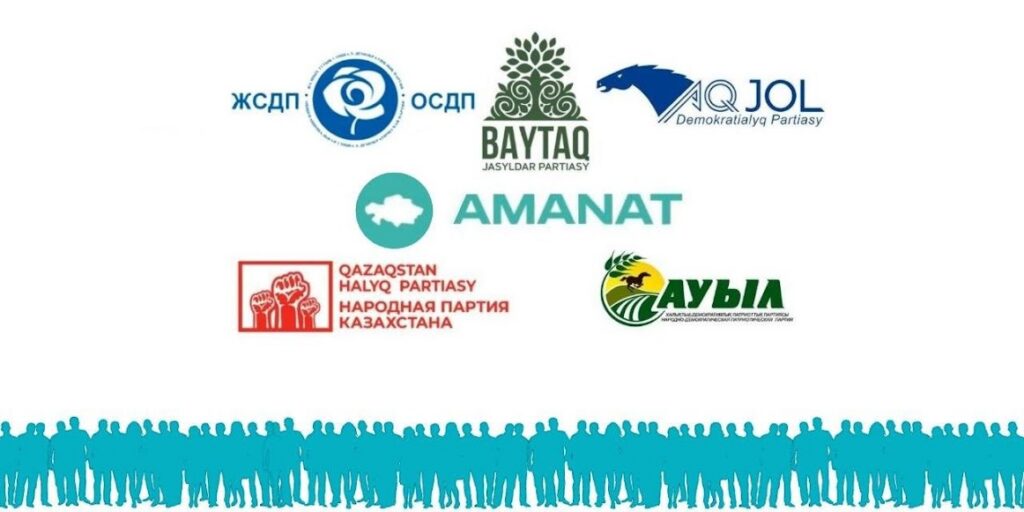
Kazakhstan is preparing for a major political reset centered on the introduction of a unicameral parliament, the Kurultai. Until now, legislative power in the country has been exercised by two chambers, the Mazhilis and the Senate. On April 10, President Kassym-Jomart Tokayev announced that elections would take place in August 2026. According to Tokayev, political parties will have a clear planning horizon and enough time to prepare for the campaign and voter outreach. A Stage Already Passed In 2023, Kazakhstan introduced significant changes to its political system. For the first time in 19 years, a mixed electoral model was used in elections to the lower chamber, the Mazhilis. Under this system, 69 deputies were elected via party lists, while 29 were chosen in single-member constituencies, allowing candidates to run independently of party affiliation. This option has now been removed, although the reasons remain unclear. These reforms were presented as part of a broader democratization effort. In the 2023 parliamentary elections, six parties passed the 5% threshold. Amanat, formerly Nur Otan, won 53.9% of the vote, followed by Auyl with 10.9%, Respublica with 8.59%, Aq Jol with 8.41%, the People’s Party of Kazakhstan with 6.8%, and the Nationwide Social Democratic Party (OSDP) with 5.2%. The Baytaq party received 2.3% and did not enter parliament. In practice, however, Amanat has remained the most active force in the Mazhilis. Some initiatives from Aq Jol, traditionally focused on business interests, have also stood out, while other parties have been less visible to voters. Amanat has advantages not available to other parties, including the presence of many senior officials in its ranks. The Auyl party was expected to represent agrarian and conservative interests, but its initiatives have not been clearly articulated. The OSDP, which has long positioned itself as an opposition party, previously claimed it was excluded from parliament. However, once represented in the Mazhilis, its initiatives have largely focused on narrow issues and have had limited impact on the broader political agenda. The People’s Party of Kazakhstan, once known for raising sharp issues, has been less active in the current parliament. Against this backdrop, Aq Jol has been comparatively stronger, showing a greater ability to shape the agenda and articulate clear positions. Baytaq has occupied an environmental niche, but despite the country’s significant ecological challenges, its voice has remained faint, making its prospects of entering the Kurultai uncertain. Respublica, a new party founded by young entrepreneurs, has also struggled to produce notable results. A potential eighth party, Adilet, may soon join the seven officially registered parties. The party has announced its launch and begun the registration process, though it has yet to name a formal leader. Some political analysts have described Adilet as a pro-government party. Political analyst Daniyar Ashimbayev noted that the concept of multiple pro-government parties is not new in Kazakhstan and suggested that some deputies could shift to Adilet by July. Systemic Criticism Political parties represented in parliament are regularly criticized by analysts for holding positions that closely align with Amanat...

Tokayev Congratulates Péter Magyar on Victory in Hungary’s Parliamentary Elections

Kazakhstan's President Kassym-Jomart Tokayev has sent a congratulatory telegram to Péter Magyar, leader of the TISZA party, following his victory in Hungary’s parliamentary elections. According to the presidential press service, Tokayev noted that the election results reflect a high level of public trust in the TISZA party and its program and expressed confidence in Hungary’s continued sustainable development. Tokayev emphasised that Astana attaches great importance to strengthening its strategic partnership with Budapest, reaffirming readiness to expand bilateral cooperation for the benefit of both countries. He also wished Magyar success in his new role, along with prosperity and well-being for the Hungarian people. So far, there have been no reports of congratulatory messages from other Central Asian leaders addressed to Hungary’s new leadership. Hungary’s political transition following the defeat of Viktor Orbán’s party and his resignation has drawn attention not only in the European Union and the U.S., but also in Central Asia, where Budapest has actively developed economic and energy cooperation in recent years. During Orbán’s tenure, Hungary expanded engagement with Central Asian states, seeking to diversify energy supply sources and reduce dependence on Russian oil and gas. In this context, resource-rich Kazakhstan, Uzbekistan, and Turkmenistan emerged as key partners. One key question now is whether the country’s new leadership will maintain this course, including cooperation in energy, investment, and trade. Experts note that the durability of these ties will depend on the foreign policy priorities of Magyar’s government and its approach to relations with the European Union and partners beyond it.

Is Kyrgyzstan About to Have a Snap President Election?

Kyrgyzstan held early parliamentary elections at the end of November 2025 that were moved forward by a year so that they would not overlap with the campaign for the presidential election scheduled for January 2027. On February 9, a group of 75 former officials and notable figures from various spheres of society publicly submitted a letter to the president and speaker of parliament calling on them to “immediately initiate a new election for president.” While there has yet to be any official response, such a proposal is likely to be accepted, leaving anyone who planned on running against incumbent President Sadyr Japarov with little time to organize a campaign. Early Parliamentary Elections In June 2025, amendments were introduced to the electoral system. The split system of using single-mandate districts and party lists to elect parliamentary deputies was changed to only single-mandate districts, and electoral districts were redivided. This sparked discussions that perhaps early parliamentary elections were needed to fill the 90 seats with deputies elected under the newly-approved system. The argument that tilted the debate toward early elections was that parliamentary elections were scheduled for late November 2026 and the presidential election for January 2027. The general opinion was that having the two elections so close together would make voters weary and unable to fully focus on the presidential campaign. Also, if the vote count was delayed in some districts or there were legal challenges, these processes would be ongoing as campaigning for the presidency got underway. The solution was to move parliamentary elections forward by a year. In September 2025, parliament voted to dissolve itself, and November 30 was named as the date for early elections. The Letter The petition addressed to President Japarov and Speaker of Parliament Nurlanbek Turgunbek uulu was signed by former deputies, nine former governors, four former prime ministers, several high-ranking members of the military, academics, artists, and even an Olympic Games medal-winner. The letter praised the current administration for establishing stability in Kyrgyzstan, strengthening the country’s armed forces, resolving long-standing border issues with Tajikistan and Uzbekistan, successfully battling corruption, and eliminating organized crime in the country. The letter also mentioned remaining problems such as the growing national debt, poverty, and the outflow of “especially young people” unable to find employment and going to other countries to work. A key point in the appeal for an early presidential election was that it would clear up an ambiguity in President Japarov’s term. Japarov came to power in the wake of the October 2020 revolution that was sparked by parliamentary elections riddled with irregularities. He was elected in January 2021 to a six-year term in office, but in April that year, a national referendum approved a new constitution with a five-year presidential term. Therefore, holding the presidential election this year would bring Japarov closer into line with the new constitution. Additionally, the previous constitution, which had a six-year presidential term, also limited a president to one term in office. The new constitution allows for two five-year terms....

Kazakhstan Debates Parliamentary Reform as Inflation Pressures Living Standards

The Kazakh government is actively developing the framework for a future unicameral parliament, working to define its status, powers, and functions. Currently, Kazakhstan’s legislative branch consists of two chambers: the Senate and the Mazhilis.  The proposed transition to a unicameral system has been positioned by authorities as a step toward democratization. However, many citizens remain unclear about the details and implications of the reform, particularly as inflation and declining living standards dominate public concern. Uncertain Details of Reform In September 2025, President Kassym-Jomart Tokayev proposed holding a nationwide referendum on transitioning to a unicameral parliament in 2027. While some analysts have speculated about a faster timeline, no official acceleration beyond 2027 has been announced. "The establishment of a parliamentary republic is not under consideration. The foundational model of a 'Strong President, Influential Parliament, Accountable Government' remains unchanged," Tokayev previously stated. According to political analyst Gaziz Abishev, pivotal developments are expected on January 20, when the National Kurultai (Assembly) convenes. He believes this meeting will outline the contours of constitutional reform and potentially signal a date for the referendum. “If the decree on holding a referendum is signed during the Kurultai, the vote could be held on March 22 [2026],” Abishev stated. Under the current system, the Senate represents regions and appointive quotas, reviewing legislation passed by the Mazhilis and serving as a constitutional buffer. Any move to unicameralism would require redefining how regional interests are represented and how legislative oversight is maintained without an upper chamber. The National Kurultai serves as a platform for dialogue between the government and society, addressing national identity, economic development, social justice, and improving the quality of life. Historically, the Kurultai was a gathering of Turkic and Mongol tribes. Over 500 Public Proposals Submitted Public discussion around the proposed unicameral parliament has been active. Since the launch of a dedicated “Parliamentary Reform” section on the state portals e-Otinish and Egov, over 500 proposals have been submitted by citizens, experts, and public organizations. Despite this engagement, tangible benefits for ordinary citizens remain vague, aside from a potential reduction in government spending. Globally, more than half of national parliaments operate as unicameral systems. According to IPU Parline, 107 out of 188 legislatures follow this model, primarily in unitary states with smaller populations. Unicameral systems are often praised for faster legislative processes, lower administrative costs, and increased transparency. Kazakhstan previously had a unicameral legislature under the 1993 Constitution. Following the invalidation of the 1994 elections, the Supreme Council was dissolved. In 1995, the country transitioned to its current bicameral system. The Senate, as the upper house, plays a stabilizing and arbitration role. Analysts caution that without a second chamber, legislative processes may be vulnerable to hasty or populist decisions. Potential for Early Elections Abishev suggests that a referendum in March 2026 could prompt an early electoral cycle. "Under the current schedule, the next Mazhilis elections are set for January 2028. However, they could be moved up to summer 2026 if Parliament adopts a constitutional amendment package in April...

Kyrgyzstan Election Delivers Wins for Women and the President’s Allies

Kyrgyzstan held snap parliamentary elections on November 30 that seem not to have elicited widespread enthusiasm among the electorate. Not long ago, Kyrgyzstan had the most vibrant political culture in Central Asia. Campaigning for parliamentary elections was a lively period that was impossible not to notice. Parties and candidates were in the news constantly in the weeks before the elections. There were campaign posters and signs, and public events with concerts organized by parties or candidates all around the country. The rapid pace of these latest elections, in which candidates had only 20 days to campaign, might have contributed to voter confusion and apathy on election day, but the elections do seem to have come off without any major controversy. In a country that has had three revolutions in the last 20 years, two of them directly connected to parliamentary elections, a quiet election day is a victory of sorts. Election Day Polls opened at 8:00 local time, and several hours after they closed at 20:00, Kyrgyzstan’s Central Election Commission reported that 36.9% of eligible voters had cast ballots. The last few elections in Kyrgyzstan have seen turnouts of less than 40%. This time, the Kyrgyz authorities were hoping for a significant increase in participation to validate the new system for parliamentary elections approved earlier this year. However, the turnout of 36.9% was only slightly better than the 34.61% of voters who took part in the November 2021 parliamentary elections. As many as 500,000 Kyrgyz citizens are working or living outside Kyrgyzstan, and only just over 26,000 showed up at any of the 100 polling stations in 34 countries. Five of Kyrgyzstan’s last six parliamentary elections were decided based on party lists. The last parliamentary elections were conducted under a split system, whereby 54 of the 90 seats in parliament were selected via party lists, and the other 36 seats in single-mandate districts. This time, all 90 seats were chosen under a majoritarian system, with a twist. The country was divided up into 30 electoral districts, each of which selected three deputies. Kyrgyzstan had a requirement that at least 30% of the seats in parliament should go to women, but that quota has not been observed in recent elections. In the November 30 elections, at least one woman had to be among the three candidates who secured seats in parliament, though up to two women could win in a district (at least one of the winners was required to be a man). Election results confirmed that one woman won a seat in every district, but only one. There were no instances where two women took seats in a district. Also, according to the preliminary election results, all the women who won came in third place in their districts, with one exception. In District 23, veteran MP Elvira Surabaldiyeva took the most votes. Results posted by AKI Press showed that without the requirement of one female deputy per district, only seven women would have become deputies. Name recognition was bound to...

Kyrgyzstan Early Parliamentary Elections See 36.9% Voter Turnout

Kyrgyzstan held early parliamentary elections on November 30, with voter turnout reaching 36.9%, according to the Central Election Commission (CEC). Of the 4,294,000 registered voters, more than 1.5 million cast their ballots. Polling stations across the country and abroad closed at 8:00 p.m. local time. While an automated accounting system (AAS) was used during the voting process, Kyrgyz electoral law requires that electronic results be verified against manual counts. Members of precinct commissions conducted manual ballot counts after the polls closed. The CEC reported receiving 269 complaints regarding potential violations of electoral law during the campaign. These included 124 reports of campaign violations, 37 of the dissemination of defamatory information about candidates, eight related to the alleged use of administrative resources, 46 concerning possible vote buying, and 54 involving other types of violations. There were also reports of equipment malfunctions at several polling stations. Nevertheless, the CEC declared the elections valid. Elected candidates began receiving congratulations on December 1. The 2025 early elections marked a significant change in Kyrgyzstan’s electoral process. Party-list voting was fully abolished, and all candidates ran in single-mandate constituencies. President Sadyr Japarov cast his vote in Bishkek. He noted that the fully automated voting process this year significantly reduced opportunities for human interference in election outcomes. Japarov emphasized that citizens could vote using digital passports via the Tunduk app, and biometric registration took only a few minutes. While acknowledging that vote buying remains a challenge, Japarov stated that relevant authorities are responding quickly to any such incidents. He also noted that efforts to ensure the participation of Kyrgyz citizens abroad included doubling the number of overseas polling stations. A total of 100 polling sites were opened internationally, including in Russia, the United States, Kazakhstan, and several European countries.