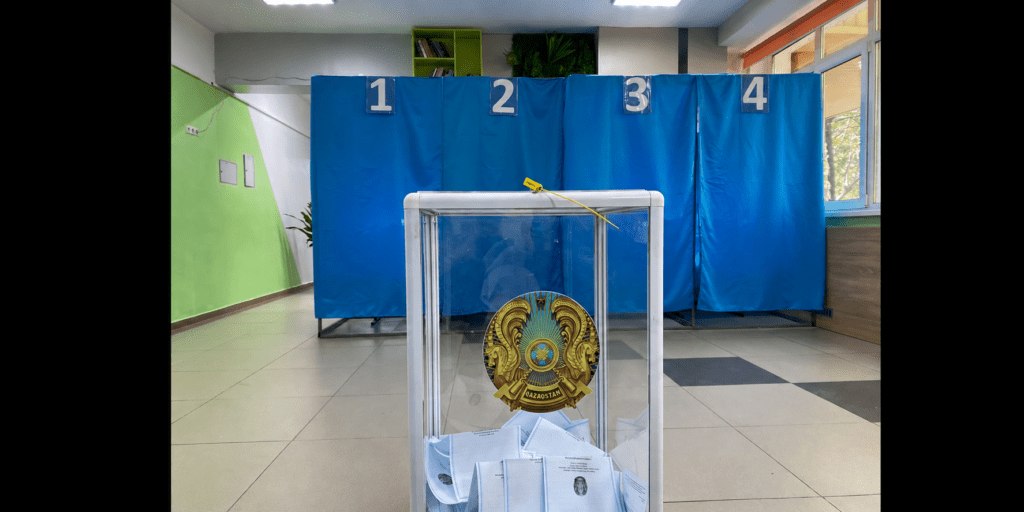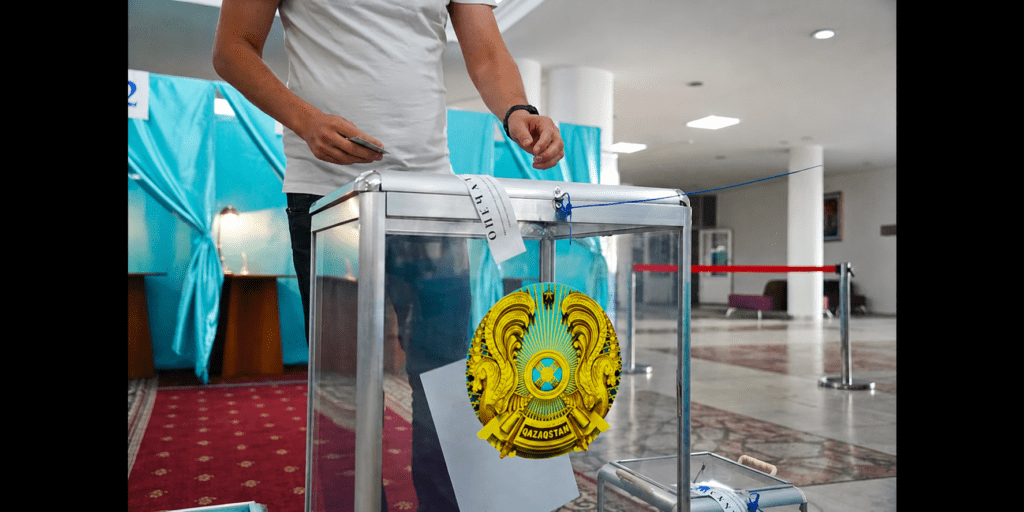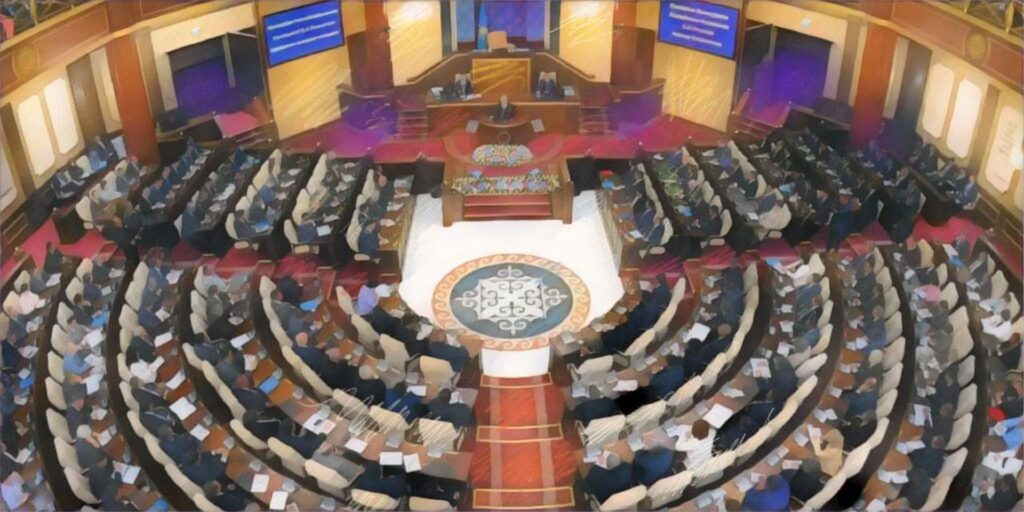
On July 1, Kazakhstan’s new Constitution will come into force, triggering the dissolution of the current bicameral parliament. According to political observers, President Kassym-Jomart Tokayev is expected to sign a decree in early July calling elections to a new unicameral legislature, to be known as the Kurultai. No date has yet been formally announced, but analysts expect the vote to take place in the second half of August, most likely on either August 16 or August 23.
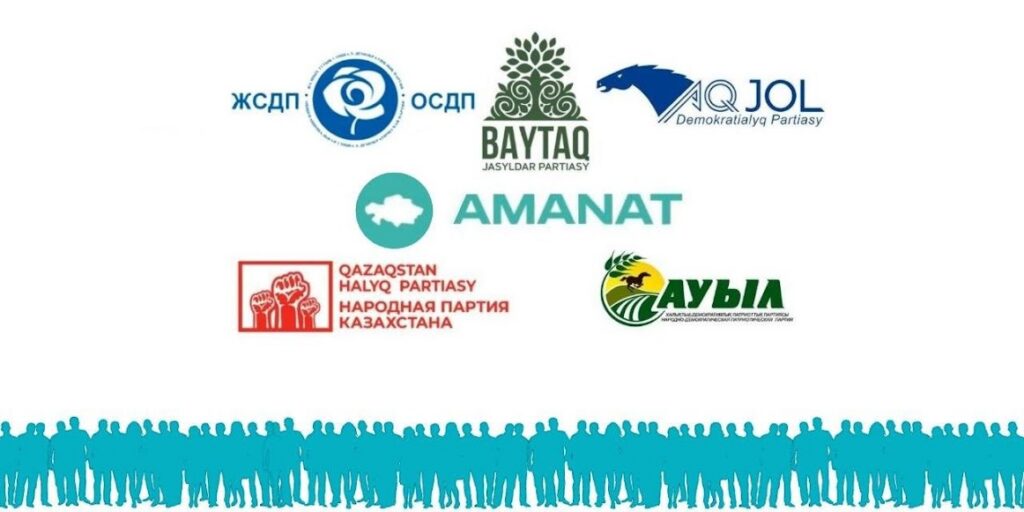
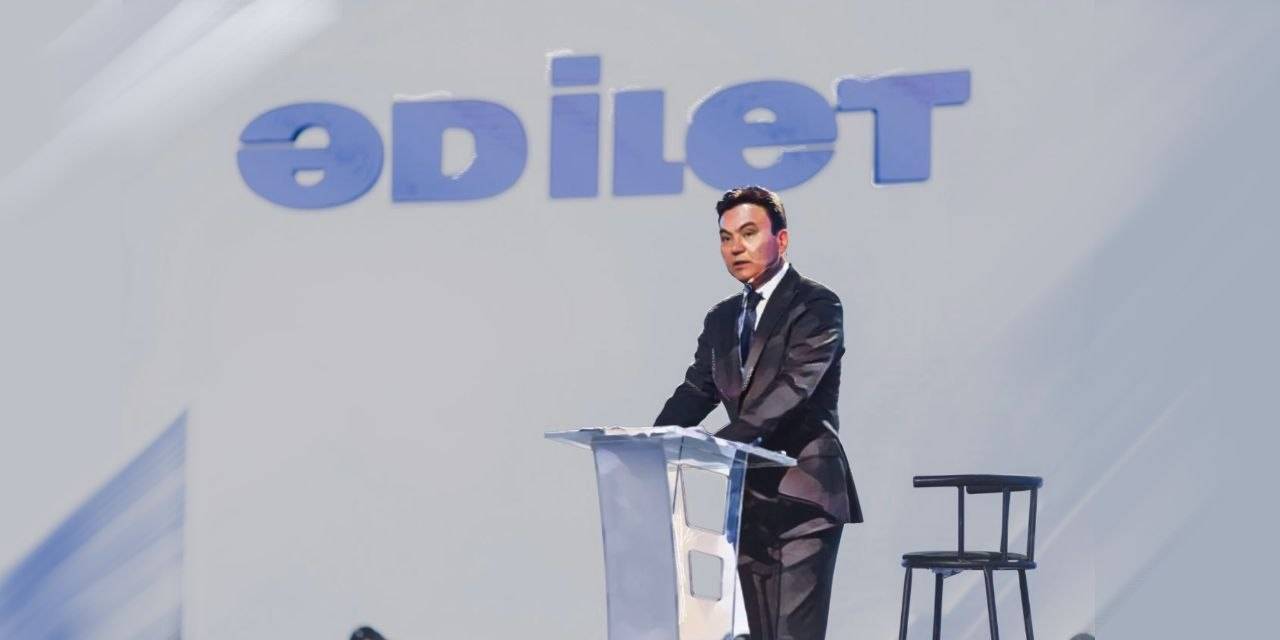
On June 1, Kazakhstan officially registered a new political party, Adilet, meaning “Justice,” led by Aybek Dadebay, the former head of Tokayev’s presidential administration. As a result, eight political parties are now officially registered ahead of the election campaign, six of which are currently represented in the lower house of parliament.
So far, however, none of the parties has shown significant signs of gearing up for the campaign.
“Kazakhstan’s political parties know perfectly well that parliamentary elections will take place in the second half of August, that they will be conducted under a proportional representation system, and that skipping the election is not advisable because it could affect party financing,” political analyst Gaziz Abishev wrote on his Telegram channel. “They could already be actively working to revive their party brands and promote the public figures who will become the faces of the campaign. Yet the passivity is obvious.”
In his view, internal party, inter-party, and broader elite-level processes are currently underway, suggesting that some form of political transformation is taking place behind the scenes.
The emergence of Adilet appears to have influenced the calculations of Kazakhstan’s political class. The arrival of a second openly pro-presidential party introduces a significant element of uncertainty into a system long dominated by Amanat.
Amanat traces its roots to former President Nursultan Nazarbayev’s political machine. Originally known as Otan, or “Fatherland,” it became Nur Otan in 2006 before being rebranded as Amanat following the January 2022 unrest.
Former presidential candidate Amirzhan Kosanov believes the creation of Adilet reflects Tokayev’s desire to create political competition within the ruling elite while presenting it internationally as evidence of political pluralism.
“Given the executive branch’s influence over election commissions and the largely artificial nature of the party system, the campaign beginning in July will most likely resemble a controlled competition between two principal actors: the ruling Amanat party and the new Adilet party,” Kosanov argued.
For critics of the system, the upcoming elections increasingly resemble a contest between two pro-presidential forces.
Organizationally, Amanat remains a formidable political machine. It inherited from the Nur Otan era an extensive nationwide network of regional branches and primary organizations embedded in large workplaces and institutions.
Adilet, meanwhile, has already secured backing from a wide range of business associations, professional groups, technology organizations, creative-industry bodies, and civic initiatives. Its political council also includes senior executives from some of Kazakhstan’s largest companies, including Qarmet, Kazakhtelecom, and Allur Auto.
Despite this, few analysts believe Kazakhstan is moving toward an American-style two-party system. Amanat and Adilet share broadly similar political positions and do not appear to have significant ideological differences.
Instead, many observers see Adilet as reminiscent of the Asar party, created in 2003 by Dariga Nazarbayeva, the daughter of Kazakhstan’s first president. At the time, Asar attracted part of Otan’s electorate and created uncertainty among officials unsure whether to remain loyal to Nazarbayev or align themselves with his daughter, who was widely viewed as a potential successor.
That experiment ended in 2006, when Asar was absorbed into Otan, bringing the brief period of divided loyalties to a close.
Adilet, however, appears to have a somewhat different purpose. Many analysts believe it could ultimately absorb some of the smaller parties that are unlikely to clear the electoral threshold and gain representation in the new parliament.
Political analyst Talgat Kaliyev argues that Adilet is unlikely to overtake Amanat, but its presence could prevent the ruling party from securing the overwhelming majority it has traditionally enjoyed.
“That majority may be relatively narrow,” Kaliyev wrote. “The gap between the old and the new party is unlikely to exceed 10 percentage points. Under this scenario, Amanat would receive slightly more than 40%, Adilet a few percentage points less, while the remaining 20% would go to Auyl, which is firmly positioned in third place.”
When Kaliyev published that forecast on May 27, the People’s Democratic Patriotic Party Auyl was not widely viewed as the leading contender for third place. Most observers expected that role to belong to the Ak Zhol Democratic Party, which presents itself as a constructive opposition force and an advocate for national business interests.
That perception may have changed following remarks made by Tokayev during a recent meeting on the development of Alatau City.
“Some individuals who dislike and hold our country in contempt, and unfortunately there are members of parliament among them, call our legal measures ‘Penaltystan’ or ‘Aiyppulstan,’” the president said.
The term “Penaltystan” was first popularized in 2024 by Azat Peruashev, the leader of Ak Zhol and head of its parliamentary faction in the Mazhilis. Following Tokayev’s criticism, Peruashev publicly distanced himself from the phrase.
“I regret using that term,” he told journalists in parliament. “Parliamentarians should speak in official language. We drew our conclusions a year ago and continue working in a normal manner.”
With only a few months remaining before the election, a tentative picture of Kazakhstan’s future parliamentary landscape is beginning to emerge. Based on current trends, many analysts believe that three parties, Amanat, Adilet, and Auyl, are the most likely to secure representation in the new Kurultai.
The remaining five parties, including Ak Zhol, may face a harder choice: seek accommodation with stronger political forces or risk exclusion from the new legislature altogether.