• KGS/USD = 0.01144 0%
  • KZT/USD = 0.00213 0%
  • TJS/USD = 0.10874 0.37%
  • UZS/USD = 0.00008 0%
  • TMT/USD = 0.28571 0%
  • KGS/USD = 0.01144 0%
  • KZT/USD = 0.00213 0%
  • TJS/USD = 0.10874 0.37%
  • UZS/USD = 0.00008 0%
  • TMT/USD = 0.28571 0%
  • KGS/USD = 0.01144 0%
  • KZT/USD = 0.00213 0%
  • TJS/USD = 0.10874 0.37%
  • UZS/USD = 0.00008 0%
  • TMT/USD = 0.28571 0%
  • KGS/USD = 0.01144 0%
  • KZT/USD = 0.00213 0%
  • TJS/USD = 0.10874 0.37%
  • UZS/USD = 0.00008 0%
  • TMT/USD = 0.28571 0%
  • KGS/USD = 0.01144 0%
  • KZT/USD = 0.00213 0%
  • TJS/USD = 0.10874 0.37%
  • UZS/USD = 0.00008 0%
  • TMT/USD = 0.28571 0%
  • KGS/USD = 0.01144 0%
  • KZT/USD = 0.00213 0%
  • TJS/USD = 0.10874 0.37%
  • UZS/USD = 0.00008 0%
  • TMT/USD = 0.28571 0%
  • KGS/USD = 0.01144 0%
  • KZT/USD = 0.00213 0%
  • TJS/USD = 0.10874 0.37%
  • UZS/USD = 0.00008 0%
  • TMT/USD = 0.28571 0%
  • KGS/USD = 0.01144 0%
  • KZT/USD = 0.00213 0%
  • TJS/USD = 0.10874 0.37%
  • UZS/USD = 0.00008 0%
  • TMT/USD = 0.28571 0%

Viewing results 1 - 6 of 284

Prestige or Coercion? Turkmen Police Questioned Over Costly Leader Watches

Turkmenistan’s Ministry of Internal Affairs has launched an internal investigation after reports emerged that police officers were purchasing high-priced watches featuring images of President Serdar Berdimuhamedov, his father and former president Gurbanguly Berdimuhamedov, and state symbols. According to an internal directive sent to regional departments, police personnel must submit written explanations detailing whether they bought the watches voluntarily or under pressure from superiors. The ministry also announced inspections of police uniforms to ensure compliance with official standards. The directive reminds officers that wearing rings, medallions, or signet rings, aside from wedding bands, is strictly prohibited while on duty. Internal security units have been tasked with monitoring adherence. Prestige or Coercion? The Times of Central Asia previously reported that such watches have become a status symbol within law enforcement circles. Manufactured by Sagat Turkmenistan, the watches feature silver cases with gold plating, gemstone embellishments, and insignias of state agencies. They retail for between 3,000 and 5,000 TMT ($870-1,450). However, many residents allege the watches are frequently used as informal bribes. “If you are told that a criminal case will be brought against you, it means you need to buy such a watch and go to the investigator. This does not mean that the case will be closed. But it’s the first installment,” said a resident of Bayramali with experience of dealing with the police. Watches with white straps are seen as particularly prestigious. Sources say that investigators often request the strap be replaced, at the giver’s expense, to enhance the watch’s appearance. Mandatory Purchases for Civil Servants This phenomenon extends beyond law enforcement. In May 2024, The Times of Central Asia reported that heads of state institutions in the Balkan region were required to purchase similar watches. Prices ranged from 1,500 to 3,000 TMT ($435-870 at the official rate; $75-150 on the black market). High-end models featured portraits of both Berdimuhamedovs, each in differently colored ties, alongside the Turkmen flag and map. Less expensive variants depicted only the president, or a simplified combination of national symbols. The purchase requirement applied to all budget-funded institutions, including schools, hospitals, and transportation agencies. Different “rates” were imposed based on the official’s seniority: lower-level managers paid 1,500 manats, while higher-level administrators paid up to 3,000. The tradition of producing watches featuring national leaders dates back to the rule of Saparmurat Niyazov, under whom such accessories were distributed to schoolchildren and state employees. Serdar Berdimuhamedov has continued this legacy with his own line of commemorative timepieces.

Kyrgyz Parliament Reveals Real Reasons for Its Possible Dissolution

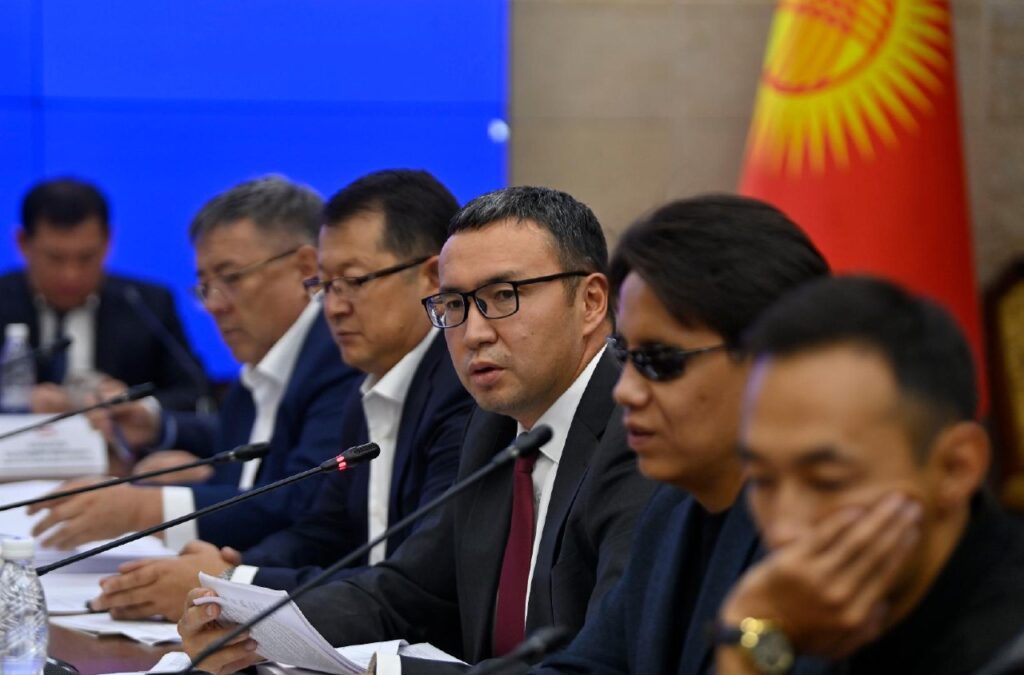
A group of deputies from Kyrgyzstan's parliament, the Jogorku Kenesh, have announced that they are close to finalizing a decision on the parliament’s self-dissolution. According to the Constitution, if dissolution proceeds, early elections must be held within two months, meaning the vote could take place as early as November. Deputy Dastan Bekeshev stated that although he did not sign the dissolution initiative himself, he estimates the likelihood at 99.7 percent. Sixty signatures, two-thirds of all members of parliament, are required for self-dissolution, and 30 signatures have already been collected. Despite the uncertainty, political headquarters are actively preparing: sociologists are conducting phone surveys, consultants are drafting programs and PR strategies, and Bekeshev has called on his supporters to volunteer as campaigners or election observers. “This time, the election campaign will be shortened: 20 days of campaigning, and candidate registration will also be expedited. The parliamentary committee is already planning to discuss the procedure for donations to candidates’ election funds,” Bekeshev said. He has also introduced a new bill addressing election finance. Under current rules, donations can only be made through accounts in a limited number of banks, which he argues creates obstacles for candidates. His proposal would expand banking options and allow campaign funds to be supplemented through the sale of political merchandise. Some lawmakers suggest that the push for early elections reflects the interests of certain groups that want to bring in loyal candidates aligned with the speaker and the authorities. Bekeshev indirectly acknowledged this view, noting that restrictions on candidates’ access to additional resources, combined with the doubling of the maximum campaign fund from 10 to 20 million KGS, could turn parliament into what he called a “parliament for the rich,” limiting access for ordinary citizens. The Central Election Commission has confirmed it is prepared to organize the vote and has urged deputies to inform citizens about new election rules. Under the revised system, three deputies will be elected from each constituency, but voters will only be able to cast a ballot for one candidate.

Kyrgyz Deputies Launch Initiative to Dissolve Parliament

A group of deputies in Kyrgyzstan’s parliament, the Jogorku Kenesh, have launched an initiative to dissolve parliament. The MPs have begun collecting signatures in support of the measure and plan to revisit the issue at the end of September, when a vote could be held. Under Kyrgyzstan’s Constitution, such an initiative can be formally submitted with the backing of at least 30 deputies. For it to pass, however, a two-thirds majority, 60 votes, is required. If successful, parliament would be dissolved and new elections scheduled within two months. Political analysts in Bishkek note that there are currently no signs of a parliamentary crisis that would warrant early elections. They argue that self-dissolution could instead burden the state budget and fuel political instability, potentially discouraging investors. Supporters of the initiative, however, insist their motives are pragmatic. According to the Constitution, the next parliamentary elections are scheduled for November 2026, followed by presidential elections in January 2027. The short interval between the two campaigns, deputies say, could create logistical challenges and additional costs, making an earlier parliamentary vote preferable. Any future elections will be held under Kyrgyzstan’s updated electoral system. Single-member constituencies have been abolished, replaced by 30 multi-member districts that will each elect three deputies, making up the Jogorku Kenesh’s 90 seats in total. The last parliamentary elections, held in November 2021, came after widespread protests in October 2020 over disputed results. Those demonstrations forced a rerun and triggered major political upheaval, including the resignation of then-President Sooronbay Jeenbekov. Since independence, the Jogorku Kenesh has voted to dissolve itself three times, each instance occurring amid political crises and disputes with the presidential administration. So far, officials have not commented on the latest initiative, and the public remains uncertain about the real motivations driving it.

Kyrgyz Parliament Resumes Work After Summer Recess

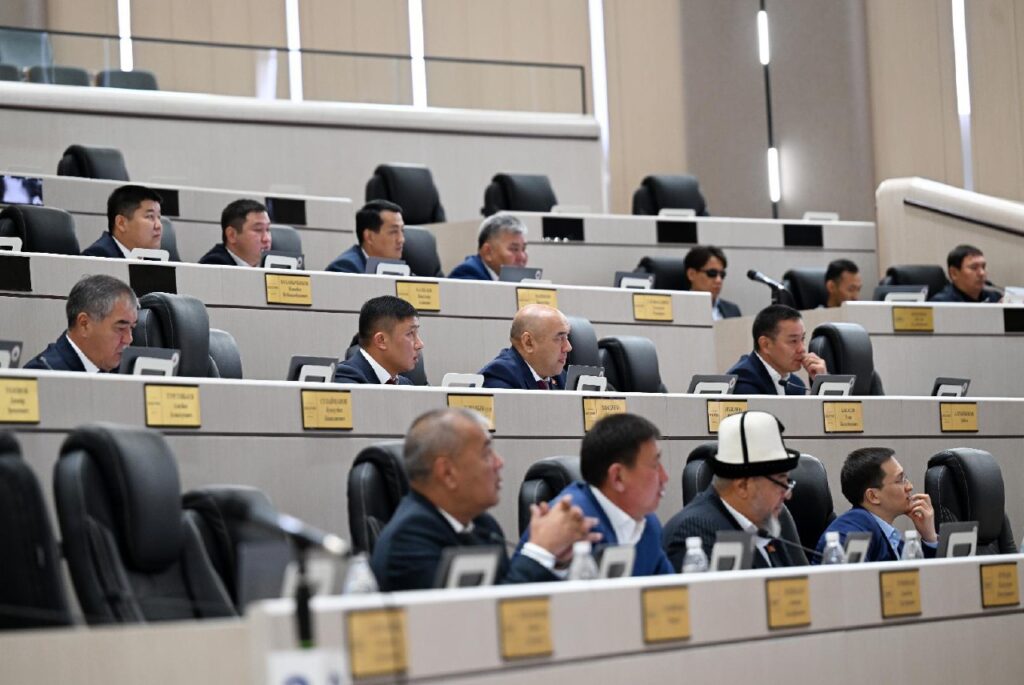
Members of Kyrgyzstan's parliament, the Jogorku Kenesh, have returned to work following a two-month summer recess, during which they engaged with constituents across the country. The new session began in the recently renovated parliament building, which reopened after three years of reconstruction. “I am confident that this chamber will make the right and fair decisions that our country needs,” said Speaker of Parliament Nurlanbek Turgunbek uulu. On the first day of the session, deputies approved the appointment of a new Minister of Labor, Social Security, and Migration. Lawmakers also proposed the establishment of a separate agency focused on migrant affairs, discussed a housing renovation initiative, and allocated additional funds for the CASA-1000 energy infrastructure project. Additionally, amendments to the Criminal Procedure Code were passed to strengthen protections for citizens during investigative procedures. However, some public expectations remain unmet, particularly concerning the discussion of pressing regional issues. Speculation about the early dissolution of parliament continues to circulate, though deputies have dismissed these claims. “This will only happen if parliament itself decides so,” said Deputy Mirlan Samykozho. Kyrgyzstan is scheduled to hold its next parliamentary elections next year.

Watches Bearing Berdimuhamedov Portraits Become Unofficial Currency in Turkmenistan’s Security Sector

In Turkmenistan, wristwatches adorned with the images of President Serdar Berdimuhamedov and his father, former president Gurbanguly Berdimuhamedov, are increasingly being used as informal bribes by citizens dealing with law enforcement. Chronicles of Turkmenistan reports that these timepieces, once symbols of official loyalty, have evolved into an unofficial currency within the country’s security apparatus. Distributed primarily through the company Sagat Turkmenistan, the watches are embellished with silver-plated cases, gold accents, precious stones, and the emblems of various law enforcement agencies. Prices range from 3,000 to 5,000 Turkmenistani Manat (TMT), or approximately $870-1,450. But few security officers reportedly pay for them out of pocket. Instead, citizens facing potential criminal prosecution are expected to offer the watches as “gifts” to investigators. “If you are told that a criminal case will be brought against you, then you need to buy such a watch and go to the investigator. This does not mean that the case will be closed. But it is the first payment,” said a resident of the town of Bayramali who had prior dealings with law enforcement. The standard version comes with a black leather strap, although a white version is seen as particularly luxurious. In some instances, investigators reportedly request a strap upgrade, an added cost that the briber must cover. The practice is not limited to security services. In May 2024, The Times of Central Asia reported that in the Balkan region, heads of state institutions were required to purchase similar watches featuring the Berdimuhamedov portraits. Prices ranged from 1,500 to 3,000 TMT ($435-870 at the official rate, or $75-150 on the black market), depending on the design and seniority of the buyer. Higher-tier models feature both Serdar Berdimuhamedov in a black tie and Gurbanguly Berdimuhamedov in a red tie, along with the Turkmen flag and a map of the country. Simpler versions show only one portrait, or a portrait combined with national symbols. All public sector entities, including institutions in healthcare, education, communications, transport, and law enforcement, were reportedly compelled to participate. Senior officials were instructed to purchase the higher-end watches, while lower-level managers had to acquire less expensive models. The use of personalized accessories as symbols of political loyalty is not new in Turkmenistan. Under former president Saparmurat Niyazov, watches featuring his image were widely distributed among schoolchildren and state employees. “We saw watches with the president’s image during Niyazov’s time. It is not surprising that Serdar [Berdimuhamedov] has also started producing gift watches with his portraits. Now all that remains is for him to start erecting monuments to himself throughout the country,” remarked an employee of a state-funded organization in the city of Turkmenbashi. What began as a tool of soft propaganda has now transformed into a transactional item, part status symbol, part bargaining chip, in the interactions between citizens, officials, and security services.

Kyrgyz President Denounces “Politicized” Sanctions on Banks

President Sadyr Japarov has sharply criticized the United States and United Kingdom for imposing what he has called unfounded sanctions on Kyrgyz financial institutions, urging Western leaders to stop “politicizing the economy.” In an interview with state news agency Kabar, Japarov defended two state-owned banks – Keremet Bank and Capital Bank – against allegations that they helped Russia skirt international sanctions, insisting that no evidence of violations has been presented. Neither the UK nor the U.S. has provided a single fact of violation… such facts simply do not exist,” Japarov said, dismissing the sanctions as politically motivated. UK and U.S. Target Kyrgyz Banks for Russia Sanctions Evasion Japarov’s comments come after a new wave of Western measures targeting Kyrgyzstan’s banking and crypto sectors for purported links to Russian sanctions evasion. On August 20, London sanctioned Kyrgyzstan-based Capital Bank – along with its director, Kantemir Chalbayev – alleging the bank was being used by Moscow to pay for military goods as part of a “convoluted scheme” to evade sanctions. The British authorities also blacklisted two Kyrgyz cryptocurrency exchanges - Grinex and Meer - that ran the infrastructure for a new rouble-backed crypto coin called A7A5, which moved an estimated $9.3 billion in just four months and was “intentionally created to evade sanctions.” The UK’s sanctions minister, Stephen Doughty, warned that “laundering transactions through dodgy crypto networks” would not soften the blow of Western sanctions. These steps followed a U.S. Treasury designation in January 2025 against Keremet Bank, a mid-sized Kyrgyz lender, for creating a hub for trade payments that helped Moscow evade restrictions. U.S. officials allege that Keremet Bank facilitated cross-border transactions for Russia’s sanctioned Promsvyazbank and even sold a controlling stake to a firm linked to a pro-Kremlin oligarch – moves Washington viewed as part of a secret channel to re-export dual-use goods and finance Russia’s defense sector. Those actions marked one of the first instances of Western “secondary sanctions” against Central Asian entities – penalties on third-country institutions accused of abetting a sanctioned nation’s activities. Kyrgyz Government’s Defensive Measures President Japarov contends that Kyrgyzstan has been proactive in compliance and that the West’s suspicions are misplaced. He noted that 21 banks operate in Kyrgyzstan, and authorities deliberately limited all Russian rouble transactions to just two state-controlled banks to shield the rest of the financial sector from any inadvertent sanctions breach. “To prevent any of them from falling under sanctions, we decided that only the state-owned Keremet Bank would work with the Russian rouble… All operations are under state control, and the income goes directly to the state treasury,” Japarov stated. Earlier this year, the government expanded this approach by channeling rouble remittances and payments through Capital Bank, which was brought under 100% state ownership in April. The National Bank of Kyrgyzstan ordered that all cross-border transfers in roubles – including the billions of roubles sent home by Kyrgyz migrant workers each day – be processed exclusively via Capital Bank. Kyrgyz officials argued this centralization was meant to “ensure transparency of...