• KGS/USD = 0.01143 0%
  • KZT/USD = 0.00216 0%
  • TJS/USD = 0.10684 -0.28%
  • UZS/USD = 0.00008 0%
  • TMT/USD = 0.28571 0%
  • KGS/USD = 0.01143 0%
  • KZT/USD = 0.00216 0%
  • TJS/USD = 0.10684 -0.28%
  • UZS/USD = 0.00008 0%
  • TMT/USD = 0.28571 0%
  • KGS/USD = 0.01143 0%
  • KZT/USD = 0.00216 0%
  • TJS/USD = 0.10684 -0.28%
  • UZS/USD = 0.00008 0%
  • TMT/USD = 0.28571 0%
  • KGS/USD = 0.01143 0%
  • KZT/USD = 0.00216 0%
  • TJS/USD = 0.10684 -0.28%
  • UZS/USD = 0.00008 0%
  • TMT/USD = 0.28571 0%
  • KGS/USD = 0.01143 0%
  • KZT/USD = 0.00216 0%
  • TJS/USD = 0.10684 -0.28%
  • UZS/USD = 0.00008 0%
  • TMT/USD = 0.28571 0%
  • KGS/USD = 0.01143 0%
  • KZT/USD = 0.00216 0%
  • TJS/USD = 0.10684 -0.28%
  • UZS/USD = 0.00008 0%
  • TMT/USD = 0.28571 0%
  • KGS/USD = 0.01143 0%
  • KZT/USD = 0.00216 0%
  • TJS/USD = 0.10684 -0.28%
  • UZS/USD = 0.00008 0%
  • TMT/USD = 0.28571 0%
  • KGS/USD = 0.01143 0%
  • KZT/USD = 0.00216 0%
  • TJS/USD = 0.10684 -0.28%
  • UZS/USD = 0.00008 0%
  • TMT/USD = 0.28571 0%

Viewing results 1 - 6 of 14

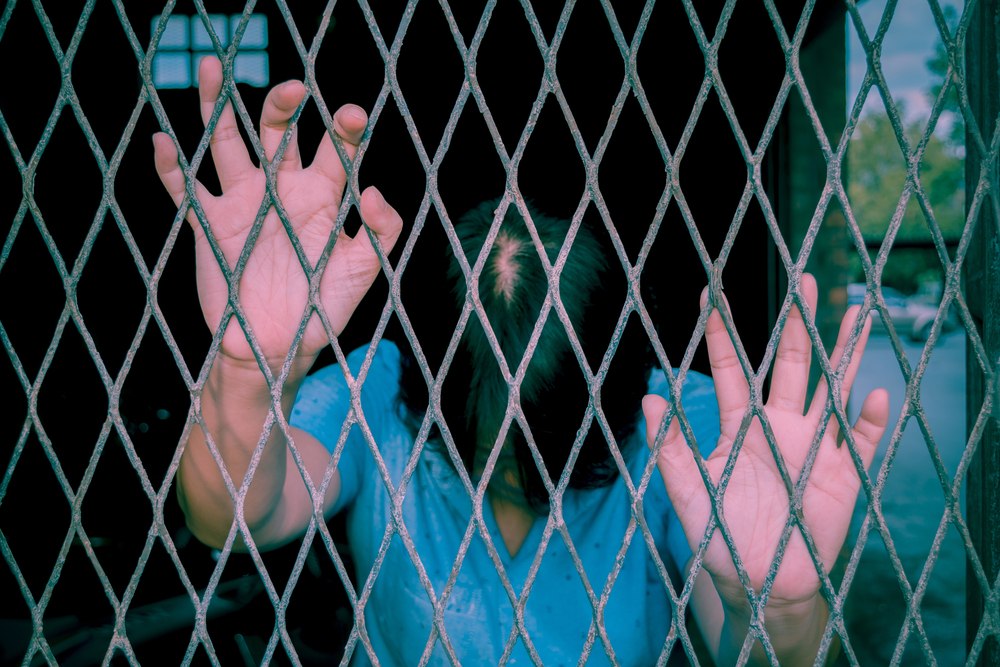
Russia Seeks Transfer of 200 Tajik Women Prisoners After Dushanbe Approval

Russia’s human rights commissioner Tatyana Moskalkova has received a positive response from Emomali Rahmon regarding the possible transfer of around 200 Tajik women currently serving sentences in Russian prisons, according to TASS. Moskalkova said she had written to the Tajik president requesting that the women be allowed to continue serving their sentences in Tajikistan on humanitarian grounds. “In each case, we must carefully weigh issues of justice, mercy, and humanism,” she said in an interview with TASS. She noted that while most cases confirm that crimes were committed, the severity of punishment should not always be maximal. “Sometimes leniency helps a person reform, repent, and change for the better. That is why we try in each case to find arguments that could support leniency, especially for women,” she said. According to Moskalkova, foreign women prisoners face additional challenges, including limited access to family visits and difficulties receiving parcels from relatives. These factors were among the reasons behind her appeal to Tajik authorities. She also pointed to broader policy developments in Russia’s penal system, citing improvements in detention conditions under the country’s penal reform strategy through 2030. Moskalkova highlighted recent legislation limiting pretrial detention for women with young children who have committed non-violent offenses. In addition, she said she has repeatedly asked courts to grant deferrals of sentences for women with children under the age of 14, thanking the judiciary for what she described as “understanding and positive decisions” in such cases. Earlier this month, Moskalkova said Russia was prepared to facilitate the transfer of more than 3,000 Uzbek nationals convicted in Russia to serve their sentences in Uzbekistan. However, she noted that the process remains stalled due to legal constraints, including Uzbekistan’s failure to ratify the 1998 Convention on the Transfer of Sentenced Persons.

Russia Ready to Transfer Over 3,000 Uzbek Prisoners

Russia is prepared to facilitate the transfer of more than 3,000 Uzbek citizens convicted on its territory to serve their sentences in Uzbekistan, but the process remains stalled due to legal obstacles, Kommersant reported, citing Russia’s Human Rights Commissioner Tatyana Moskalkova. Speaking at a meeting of the Commonwealth of Independent States (CIS) Human Rights Commission, Moskalkova said Russia is willing to support the transfer mechanism. However, she noted that Uzbekistan cannot currently accept the prisoners because it has not ratified the 1998 Convention on the Transfer of Sentenced Persons. “Russia is ready to assist, but the country of citizenship cannot accept them due to the lack of ratification of the convention,” she said, according to RIA Novosti. The agreement allows individuals convicted in one participating country to serve their sentences in their home country. It is intended to support rehabilitation and improve humanitarian conditions by allowing individuals to remain closer to their families and social environment. Russia ratified the convention in 1998, and it is also in force in several countries in the region, including Belarus, Kazakhstan, Kyrgyzstan, Tajikistan, and Armenia. For Uzbek nationals, however, Uzbekistan’s absence from the treaty has prevented similar transfers. As previously reported by The Times of Central Asia, in 2025, 191 Uzbek citizens applied for asylum in Russia, highlighting shifting migration patterns and increasing pressure on legal and humanitarian systems in the region.

Turkmenistan Denies Early Release to Activist Mansur Mingelov Despite Serious Illness

Turkmenistan’s Ministry of Internal Affairs has rejected a request to initiate early release procedures for imprisoned human rights activist Mansur Mingelov, despite his confirmed serious medical diagnosis and the legal provisions that would permit such action. According to an official response dated October 20, the Department for the Enforcement of Sentences under the Ministry of Internal Affairs concluded there were “no grounds” for early release. The response followed appeals by Mingelov’s family to the Prosecutor General’s Office and the Ministry of Internal Affairs, citing his deteriorating health and referencing multiple legal articles supporting their request. Mingelov, who has been imprisoned since 2012, was convicted after defending his own rights and those of the Baloch minority in Turkmenistan. His family cited Article 76 of the Criminal Code (“Release from punishment due to serious illness”) and Article 166 of the Criminal Enforcement Code (“Grounds for release from serving a sentence”), as well as Presidential Decree No. 202 of May 11, 2017, which outlines the medical criteria for such releases. In mid-2024, a commission from the Ministry of Health officially diagnosed Mingelov with tuberculous arthritis in both knees, a condition that, according to doctors, cannot be treated inside Turkmenistan. He is currently being held at the MR-B/15 prison hospital. Notably, Vepa Hajiyev, Turkmenistan’s permanent representative to the United Nations, publicly acknowledged Mingelov’s diagnosis and affirmed that national legislation provides for the release of prisoners with serious illnesses upon court approval. Under existing law, a court can only consider such cases after receiving a joint submission from the prison monitoring commission and the sentencing authority - a process Mingelov’s family attempted to initiate but which authorities declined to advance. Despite the official diagnosis and detailed legal framework, no follow-up medical examination or formal review of Mingelov’s health condition has been conducted, according to the independent outlet, turkmen.news. Mingelov's relatives argue that the Ministry’s refusal is not based on medical or legal grounds, but rather political calculation. They note that Mingelov has served more than half of his sentence, one they consider to be politically motivated and unlawful, and that his condition meets all criteria for early release. In their view, the key decision lies with Turkmen President Serdar Berdimuhamedov. Human rights organizations and family members suggest that releasing Mingelov, along with other political prisoners, could help improve Turkmenistan’s international standing by showing a willingness to respect its own laws and humanitarian obligations. For now, the contradiction remains stark: the illness is acknowledged, the law is in place, and the legal procedure is defined, yet no action has been taken.

Riot in Tajik Prison Leaves Several Inmates Dead

On February 3, a riot broke out in Tajikistan's Vahdat Penitentiary No. 3/2, 15 miles from Dushanbe, resulting in the deaths of several prisoners. According to Tajikistan’s Ministry of Justice, the incident occurred when nine inmates - convicted over links to Islamic State and the Jihadi Salafi movement - launched an armed attack on prison staff using improvised weapons. “As a result of the attack, three guards were seriously injured,” the ministry’s statement said. The prisoners, armed with makeshift knives, refused to comply with prison authorities and attempted to kill security personnel in an escape attempt. According to the authorities, the prison guards responded with firearms, killing three of the attackers and detaining the others. The injured staff members received medical treatment and were reported to be in stable condition. Authorities also confirmed that security at the facility has been fully restored. While official reports initially listed three inmate fatalities, some sources suggest that the actual number of prisoner deaths may be higher. Condemning the treatment of detainees by officials at the prison, the Civil Committee for the Rescue of Hostages and Political Prisoners of Tajikistan (CCHP) stated that “at least 10 prisoners were killed and a number were injured as a result of guards shooting at prisoners.” Despite reports that the detainees had briefly raised the Islamic State flag over the prison, CCHP claimed that those killed were political prisoners who had no connection to ISIS or any other banned group.   History of Prison Riots in Tajikistan This is not the first violent uprising within Tajikistan’s penitentiary system. In May 2019, inmates in the same facility armed with knives took three staff members hostage and killed them. They also executed five fellow prisoners before security forces suppressed the riot. Among those killed was Behruz Halimov, son of Gulmurod Halimov, a former Tajik special forces officer who later joined ISIS. The riot left 29 prisoners dead, and Tajikistan’s Supreme Court subsequently increased the sentences of 28 convicts involved in the incident. ISIS claimed responsibility for the riot. In November 2018, a similar riot occurred in a high-security prison in Khujand, where 21 inmates and two prison staff members were killed. Five guards were also injured. Following an investigation, 33 prisoners stood trial, and nine prison officials, including the warden, received prison sentences for negligence. Broader Security Concerns In recent years, Tajikistan has witnessed numerous escape attempts from detention facilities, though nearly all have ended in failure. Most escape organizers have either been killed during apprehension or recaptured. These recurring incidents highlight ongoing security challenges within the country’s prison system and underscore the need for further reforms to prevent future outbreaks of violence.

Russia May Impose Stricter Rules on Central Asian Migrants

New immigration regulations in Russia could affect millions of Central Asian migrants. A proposed bill from the Russian Ministry of Education would require migrant children to pass a Russian language test. Those who fail would be required to enroll in a three-month language program, funded by their parents. If a child does not attend the required language classes, regional authorities will investigate the family’s living conditions and report the case to the Ministry of Internal Affairs. Parents who fail to ensure their child meets the language requirements could face administrative penalties. As of September 1, 2024, nearly four million Central Asian migrants were officially living in Russia. With tightening immigration policies in Russia, the challenges facing Central Asian migrant workers continue to grow. According to a recent survey by the FOCUS Alliance of Euro-Asian Sociologists, most Kyrgyz citizens believe that working conditions for migrants in Russia will worsen significantly in the near future.

Uzbekistan May Reduce Prison Sentences for Inmates Who Read Books

Uzbekistan is considering a new initiative that would reduce prison sentences for inmates who engage in reading, as part of efforts to promote rehabilitation and personal development. Proposal Details The Milliy Tiklanish (National Revival) party has been advocating for this initiative for several years, inspired by similar practices in other countries. According to the party’s press service, a draft law has now been developed to bring the proposal to life. Under the proposed legislation, prisoners who read one book from an approved list and pass an exam on its content could have their sentences reduced by three days. The program would allow inmates to read up to 10 books per year, potentially reducing their sentences by up to 30 days annually. The reading list will be curated and managed by the Republican Center for Spirituality and Enlightenment, ensuring that the selected books align with the program’s goals of fostering intellectual and moral growth. International Inspiration The concept of reducing prison sentences through reading is not unique to Uzbekistan. Last year, Russian politician Vladislav Davankov proposed a similar initiative for inmates in pretrial detention centers and prisons. Davankov argued that reading programs could play a vital role in the rehabilitation and resocialization of prisoners. Kazakhstan has already taken steps in this direction. In 2021, the country launched a pilot project in correctional facilities in the Karaganda region. Under this program, inmates read books from an approved list, retell the content to a commission, and write essays summarizing the material. Positive evaluations by the commission can lead to improved detention conditions or even early release. Broader Implications If implemented, the program in Uzbekistan could serve as a tool to encourage education, personal growth, and rehabilitation among inmates. By focusing on intellectual engagement, the initiative could help prisoners reintegrate into society upon release and reduce recidivism rates. While the draft law is still in the development stage, it reflects Uzbekistan’s broader efforts to modernize its prison system and promote rehabilitation over punishment. If successful, the initiative could become a model for other countries in the region seeking to implement progressive approaches to criminal justice.