• KGS/USD = 0.01144 0%
  • KZT/USD = 0.00207 0%
  • TJS/USD = 0.10407 -0.29%
  • UZS/USD = 0.00008 0%
  • TMT/USD = 0.28571 0%
  • KGS/USD = 0.01144 0%
  • KZT/USD = 0.00207 0%
  • TJS/USD = 0.10407 -0.29%
  • UZS/USD = 0.00008 0%
  • TMT/USD = 0.28571 0%
  • KGS/USD = 0.01144 0%
  • KZT/USD = 0.00207 0%
  • TJS/USD = 0.10407 -0.29%
  • UZS/USD = 0.00008 0%
  • TMT/USD = 0.28571 0%
  • KGS/USD = 0.01144 0%
  • KZT/USD = 0.00207 0%
  • TJS/USD = 0.10407 -0.29%
  • UZS/USD = 0.00008 0%
  • TMT/USD = 0.28571 0%
  • KGS/USD = 0.01144 0%
  • KZT/USD = 0.00207 0%
  • TJS/USD = 0.10407 -0.29%
  • UZS/USD = 0.00008 0%
  • TMT/USD = 0.28571 0%
  • KGS/USD = 0.01144 0%
  • KZT/USD = 0.00207 0%
  • TJS/USD = 0.10407 -0.29%
  • UZS/USD = 0.00008 0%
  • TMT/USD = 0.28571 0%
  • KGS/USD = 0.01144 0%
  • KZT/USD = 0.00207 0%
  • TJS/USD = 0.10407 -0.29%
  • UZS/USD = 0.00008 0%
  • TMT/USD = 0.28571 0%
  • KGS/USD = 0.01144 0%
  • KZT/USD = 0.00207 0%
  • TJS/USD = 0.10407 -0.29%
  • UZS/USD = 0.00008 0%
  • TMT/USD = 0.28571 0%

Viewing results 1 - 6 of 18

Navigation Seals in the EAEU: Digital Modernization or a New Barrier for Kazakhstani Businesses?

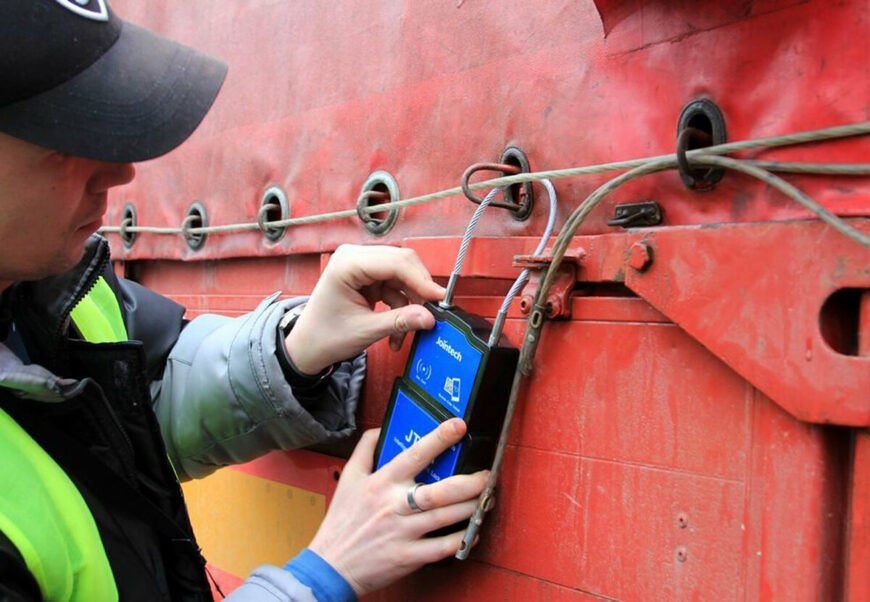
Since February 2026, the countries of the Eurasian Economic Union (EAEU), Kazakhstan, Kyrgyzstan, Tajikistan, Belarus, and Russia, have begun the phased introduction of a navigation seal system to track cargo shipments. The mechanism is designed to increase transit transparency, strengthen control over the movement of goods, and speed up logistics operations. However, business representatives warn that the new system could lead to higher logistics costs and create additional administrative barriers for carriers. Against the backdrop of the launch of the project’s first phase in Kazakhstan, debate is growing over whether digitalization will deliver the expected benefits, or become another source of pressure on the market. New Transport Control System The agreement on the use of navigation seals in the EAEU was signed by the heads of state on April 19, 2021, and ratified by Kazakhstan in 2023. The document provides for the tracking of goods transported through the territories of two or more member states of the union. In Kazakhstan, amendments were introduced to national legislation to implement the agreement, the information systems of controlling authorities were modernized, and pilot projects were conducted in both road and rail transport. Under a resolution of the Government of Kazakhstan dated September 10, 2024, the national operator of the transport tracking system is the Institute of Space Technology and Technologies LLP, which operates under the Aerospace Committee of the Ministry of Digital Development. By decision of the Eurasian Economic Commission’s Collegium dated September 23, 2025, phased transport tracking using navigation seals began on February 11, 2026, for goods transported between EAEU countries. In 2025, the national operator, together with the State Revenue Committee of the Ministry of Finance of Kazakhstan, conducted a pilot project on the use of navigation seals in transit transportation. Testing took place at road border crossings and along railway routes. The main objective was to test procedures for installing and removing seals, as well as to verify the interaction between government information systems and the Transit platform. As a result of the pilot project, more than 890 shipments involving 1,757 vehicles were tracked, and a total of 1,637 navigation seals were installed. The devices were used at key road checkpoints and along the railway route between Altynkol and Saryagash stations. Based on the results, authorities concluded that the system was technically and organizationally ready for large-scale implementation. How “Digital Seals” Work According to Osken Toishibekov, director of the Institute of Space Technology and Technologies, the system is based on the Transit information platform, which connects carriers, operators, and government agencies. He explained to The Times of Central Asia that a navigation seal is a device equipped with an electronic module and a sealing element with satellite navigation capabilities. It enables the location of a vehicle to be tracked via GPS, with data transmitted to the system through mobile networks. The device records attempts to open or damage the seal, break the sealing cable, interfere with the equipment, or trigger other abnormal events. All information is automatically transmitted to the...
Kazakhstan and Uzbekistan Boost Rail Freight to 32.3 Million Tons

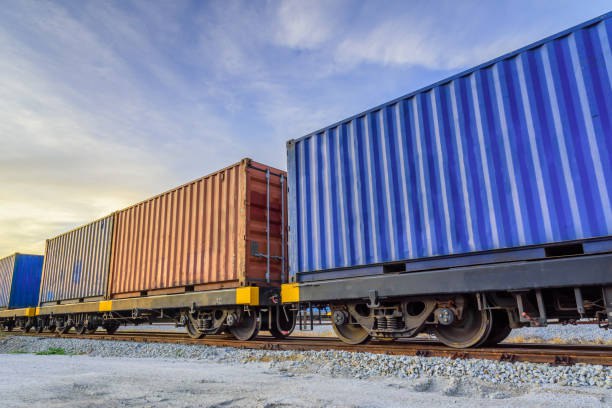
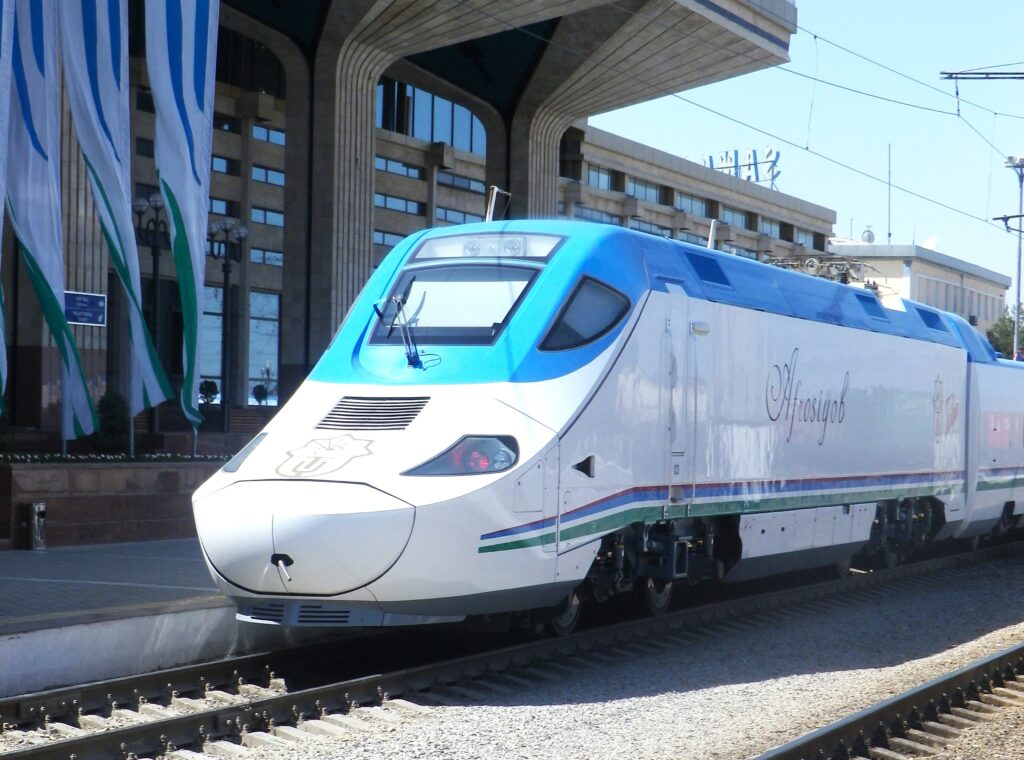
Kazakhstan and Uzbekistan have agreed on new measures to expand rail freight capacity as Astana works toward increasing overall transit volumes to 55 million tons. According to Kazakhstan’s Ministry of Transport, the agreement was reached during a meeting between the transport ministers of the two countries, where they discussed further cooperation in the railway sector. The talks were held as part of Kazakhstan’s broader strategy to strengthen its role as a key transit hub in Central Asia. Both sides emphasized the strategic importance of rail connections between Kazakhstan and Uzbekistan, describing them as central to trade growth, international transit flows, and regional transport integration. Officials also pointed to the strong potential for increasing freight volumes and improving the efficiency of logistics corridors linking the two economies. By the end of 2025, rail freight transportation between the two countries reached 32.3 million tons, representing a 16% increase compared to 2024, the ministry said. To maintain steady growth and achieve agreed capacity targets, the parties adopted a joint action plan focused on infrastructure development at key border crossings, including Saryagash, Oasis, and Syrdarya. The plan also provides for the completion of major railway projects, including the Darbaza-Maktaaral section. Currently, up to 36 pairs of trains pass daily through the Saryagash crossing, with plans to increase that figure to 40. At the Oasis junction, traffic is expected to grow from two to 10 train pairs per day. Through Syrdarya, volumes are projected to reach 10 train pairs daily following the launch of the Darbaza-Maktaaral line. During the meeting, the ministers also reviewed the synchronization of infrastructure upgrades and maintenance work, improvements to border control procedures, and measures to optimize operational coordination in order to raise overall transport efficiency. Last month, Kazakhstan’s national railway company, Kazakhstan Temir Zholy, announced that its Jibek Joly, or Silk Road, tourist train route would be extended to Dushanbe for the first time, linking cities in Kazakhstan and Uzbekistan with Tajikistan’s capital. The inaugural journey on the expanded route is scheduled to depart from Almaty on March 20, 2026, coinciding with Nauryz celebrations across the region.

Kyrgyzstan’s Rail Freight Turnover Emerges from Years of Stagnation

Kyrgyzstan’s rail transport sector is showing sustained growth after years of stagnation. By the end of 2025, the state-owned railway operator Kyrgyz Temir Zholu reported transporting 10 million tons of cargo, the highest volume in the company’s history. Just a few years ago, the country’s annual rail freight volume hovered around 7 million tons. The turning point came in 2022, and by 2024, the figure had already reached 9.2 million tons. Surpassing the 10 million ton milestone in 2025 has further solidified the sector’s recovery. Kyrgyz Temir Zholu acknowledged that prior to 2022, the national railway industry was largely unprofitable and in urgent need of systemic modernization. Early reforms focused not on major infrastructure projects but on managerial and institutional restructuring. “The main focus was on digitalizing processes, minimizing human error, preventing corruption, reducing costs, revising regulatory frameworks, and modernizing repair facilities and railway infrastructure,” the company stated. International partnerships have also played a key role in revitalizing the sector. Under its development strategy, Kyrgyzstan opened additional multimodal transport corridors between China and Europe, significantly enhancing the country’s transit potential. Despite its growth, Kyrgyzstan’s railway network remains one of the most compact in the region. It spans just 425 kilometers and includes 28 operational stations, divided into two geographically isolated segments: north and south. The northern section, 323.4 kilometers long, connects Rybachye station (in Balykchy) with Turksib in Kazakhstan and serves as a vital corridor for freight headed to Russia and other members of the Eurasian Economic Union. The southern section, 101 kilometers in length, links Kyrgyzstan with Uzbekistan’s rail network. “Both sections serve strategically important roles by ensuring Kyrgyzstan’s integration with regional transport systems and facilitating international trade,” Kyrgyz Temir Zholu noted. The growth in freight turnover has been accompanied by an ongoing digital transformation. A key milestone was the development and implementation of the Unified Transport Process Model software system, which consolidates every stage of freight transport, from planning to execution, into a single digital platform. Further momentum is expected from the construction of the China-Kyrgyzstan-Uzbekistan railway, which is already underway. Authorities view the project as a long-term catalyst for boosting Kyrgyzstan’s transit capacity and strengthening its role in Eurasian logistics chains.

First Russian Freight Train Reaches Iran via Kazakhstan and Turkmenistan

A Russian freight train has arrived at the Aprin dry port near Tehran after transiting through Kazakhstan and Turkmenistan, Iran’s ISNA news agency reported on November 8. The train carried 62 forty-foot containers loaded with paper, cellulose, and other paper products, according to Iranian officials. The cargo is destined for various regions in Iran and Iraq. The train crossed the Turkmenistan-Iran border at Incheh-Borun and reached Tehran in 12 days, marking a new phase in regional transit cooperation. Morteza Jafari, Deputy Director of Iranian Railways, said the arrival of the first Russian freight train is expected to enhance trade ties between Russia and Iran and lay the groundwork for regular rail services linking the two countries with Central Asia. He noted that Iran currently anticipates receiving one Russian container train every ten days, with plans to increase the frequency. Jafari emphasized Iran’s broader goal of becoming a regional hub for exports, imports, and transit by expanding coordination with neighboring and CIS countries. The new route underscores growing interest in enhancing rail connectivity across the Caspian region, where Iran is positioning itself as a key transit corridor. In August, Turkmenistan and Iran agreed to construct two additional railway lines at the Sarakhs border crossing to increase freight capacity. The decision followed discussions between Iranian Railways head Jabbar Ali Zakeri and Turkmenistan’s Minister of Railways Mammet Akmammedov during the UN Conference on Landlocked Developing Countries. Officials in both countries have stressed that expanded rail infrastructure will support faster, more reliable cargo movement across Central Asia and help integrate regional markets.

Beijing Meeting Charts Future of China-Kazakhstan-Turkmenistan-Iran Rail Corridor

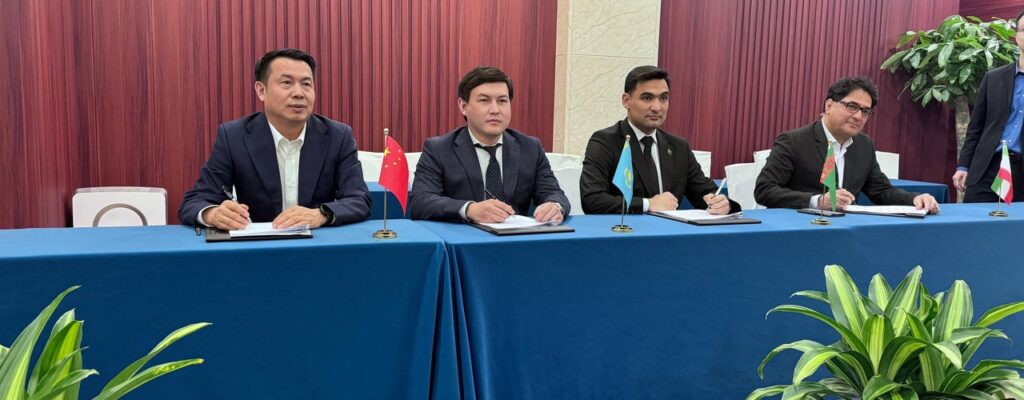
On December 25, experts convened in Beijing to evaluate the performance and future potential of the China-Kazakhstan-Turkmenistan-Iran railway route. The meeting reviewed the route’s operational results for 2024 and explored opportunities for further development. Kazakhstan was represented by KTZ Express, a subsidiary of Kazakhstan Temir Zholy (KTZ), the national railway company. According to KTZ Express, cargo transportation volume along the route increased by 31% during the first 11 months of 2024 compared to the same period in 2023. This growth underscores the rising interest of market participants in the route and highlights Kazakhstan’s critical role as a transit hub in the global supply chain. Key Discussion Points Participants focused on several areas to enhance the route’s efficiency: Increasing cargo delivery speeds to further reduce transit times. Optimizing customs procedures to streamline cross-border operations. Implementing modern digital solutions to simplify logistics processes and improve transparency. Strategic Importance of the Route The China-Kazakhstan-Turkmenistan-Iran railway corridor is a vital link in Eurasian trade, facilitating the rapid movement of goods from China’s eastern coast to the Persian Gulf and Middle Eastern markets. This corridor has already achieved significant milestones, reducing delivery times between China and Iran to just 15 days. With its growing cargo volumes and strategic positioning, the China-Kazakhstan-Turkmenistan-Iran railway route is poised to become an even more significant player in Eurasian trade. Continued efforts to optimize its operations and infrastructure will further solidify its role in connecting key global markets.

Transforming Kazakhstan’s Railways: Strategic Infrastructure for Regional and Global Connectivity

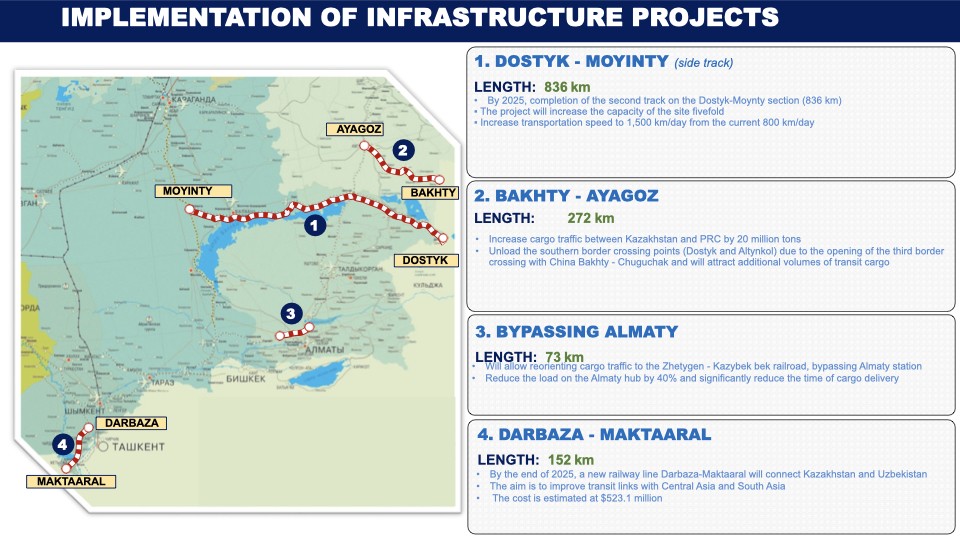
Kazakhstan’s rail network is a strategic national asset, vital for a country of its vast size and landlocked geography. Without direct access to the world’s oceans, railways serve as critical arteries for trade and transit. Under new geopolitical and logistical conditions, the importance of modernizing and expanding this network has become increasingly urgent. Spanning 21,000 kilometers, Kazakhstan’s railroads form the backbone of its transportation infrastructure. By 2030, the country plans to modernize 11,000 kilometers of highways and construct over 5,000 kilometers of new railways. Among these ambitious projects are the construction of second tracks on the Dostyk-Moyinty railway section, a bypass railway line around Almaty, and two new lines: Darbaza-Maktaaral and Bakhty-Ayagoz. Expanding Trade with China: Increased Cargo Traffic The Dostyk border station has become a key hub for exports to China and a vital transit point for East-West trade. In recent years, growing cargo volumes and limited capacity have placed immense pressure on its infrastructure. The Dostyk-Alashankou junction point, with a current capacity of 20 million tons annually, handled 15.2 million tons in the first 10 months of this year alone - a 15% increase compared to the same period last year. To address these challenges, construction of second railroad tracks on the Dostyk-Moyinty section began in November 2022. Part of the National Project: Strong Regions - Driver of the Country's Development, this project aims to increase the section’s capacity fivefold, from 12 to 60 train pairs per day. Transportation speeds between China and Europe are also set to improve significantly, from the current 800 kilometers per day to 1,500 kilometers per day. Official data indicates that 635 kilometers of the planned 836 kilometers have already been completed. The project involves 62 bridges, 242 pipelines, and a workforce of 24 construction companies and over 440 units of equipment. Completion is expected by late 2025. Private Investments Driving New Railway Lines Kazakhstan’s second major rail crossing with China, Altynkol station, has also reached its maximum capacity. Together with Dostyk, the two stations handle 28 million tons annually. This makes the development of the new 272-kilometer Bakhty-Ayagoz railway line essential. Connecting the border to the Semey-Aktogay section and the China-Europe corridor, the new line is expected to boost goods transportation to and from China by an additional 20 million tons. This project, realized under a public-private partnership model, will feature the construction of 11 stations, 47 bridges, 23 railroad overpasses, and eight highway overpasses. It will also include five pedestrian bridges and 16 observation structures, utilizing over 500,000 locally manufactured sleepers and 36,000 rails. Approximately 1,700 jobs will be created during the construction phase, with priority given to local residents. Alleviating Traffic in Almaty: A New Bypass Line The 73-kilometer bypass railway line around Almaty is set to increase cargo capacity by 17 million tons annually. By redirecting traffic to the Zhetygen-Kazybek Bey line, this project will reduce congestion at the Almaty junction by 40%. Faster delivery times for goods and passengers - up to 24 hours shorter - are among...