• KGS/USD = 0.01144 0%
  • KZT/USD = 0.00207 0%
  • TJS/USD = 0.10419 -0.1%
  • UZS/USD = 0.00008 0%
  • TMT/USD = 0.28571 0%
  • KGS/USD = 0.01144 0%
  • KZT/USD = 0.00207 0%
  • TJS/USD = 0.10419 -0.1%
  • UZS/USD = 0.00008 0%
  • TMT/USD = 0.28571 0%
  • KGS/USD = 0.01144 0%
  • KZT/USD = 0.00207 0%
  • TJS/USD = 0.10419 -0.1%
  • UZS/USD = 0.00008 0%
  • TMT/USD = 0.28571 0%
  • KGS/USD = 0.01144 0%
  • KZT/USD = 0.00207 0%
  • TJS/USD = 0.10419 -0.1%
  • UZS/USD = 0.00008 0%
  • TMT/USD = 0.28571 0%
  • KGS/USD = 0.01144 0%
  • KZT/USD = 0.00207 0%
  • TJS/USD = 0.10419 -0.1%
  • UZS/USD = 0.00008 0%
  • TMT/USD = 0.28571 0%
  • KGS/USD = 0.01144 0%
  • KZT/USD = 0.00207 0%
  • TJS/USD = 0.10419 -0.1%
  • UZS/USD = 0.00008 0%
  • TMT/USD = 0.28571 0%
  • KGS/USD = 0.01144 0%
  • KZT/USD = 0.00207 0%
  • TJS/USD = 0.10419 -0.1%
  • UZS/USD = 0.00008 0%
  • TMT/USD = 0.28571 0%
  • KGS/USD = 0.01144 0%
  • KZT/USD = 0.00207 0%
  • TJS/USD = 0.10419 -0.1%
  • UZS/USD = 0.00008 0%
  • TMT/USD = 0.28571 0%

Viewing results 1 - 6 of 49

Washington Steps Up Focus on Central Asia Amid Strategic Competition with China

The United States has intensified its interest in Central Asia following China’s decision to restrict exports of rare earth elements. Amid the broader U.S.–China trade rivalry, Washington is seeking to diversify its sources of strategic raw materials and strengthen economic ties with countries in the region. Analysts note that Central Asia is increasingly viewed as a key part of Washington’s strategy to reduce dependence on Chinese supply chains. However, they point to several obstacles, including high logistics costs, underdeveloped export infrastructure, and what they describe as a high-risk investment environment that limits the commercial viability of many projects. Kazakhstan and Uzbekistan: Pillars of U.S. Engagement Among the countries of the region, Kazakhstan and Uzbekistan offer the greatest potential for rare earth element extraction and present favorable conditions for U.S. cooperation. Kazakhstan is strengthening its partnerships with Western investors in the mining sector, while Uzbekistan has implemented market reforms and opened its economy to foreign capital in recent years. Kazakh President Kassym-Jomart Tokayev, currently visiting the U.S., has reiterated his government’s interest in attracting American investment and technology, including through the C5+1 regional format. After his visit to Washington, he is scheduled to travel to Moscow for a meeting with Russian President Vladimir Putin on November 12, reflecting Kazakhstan’s longstanding policy of balancing relations among major powers. Kyrgyzstan Banks on the Digital Economy Lacking major oil and gas reserves, Kyrgyzstan is pursuing a different path by developing partnerships with the U.S. in financial technology and digital assets. During talks with U.S. President Donald Trump in Washington, Kyrgyz President Sadyr Japarov said the country’s most valuable asset is its educated youth, who are increasingly active in the IT sector. Japarov outlined several initiatives, including the introduction of digital financial instruments such as the national stablecoin KGST. He also noted the importance of the U.S. Genius Act, which regulates stablecoin circulation, calling it one of the most progressive in the world. In response, the U.S. expressed its readiness to expand cooperation in digital transformation and fintech development. Tajikistan Prioritizes Energy and Security Tajik President Emomali Rahmon participated in the C5+1 summit in Washington and held separate talks with President Trump. The discussions focused on energy, investment, and regional security. Rahmon said that peace and stability are essential for sustainable development and reaffirmed Tajikistan’s readiness to expand cooperation with the U.S. in green energy and regional electricity transmission projects. At present, more than 70 U.S.-affiliated companies operate in Tajikistan. American investment in mineral extraction and processing is viewed as a promising area for future collaboration. The two sides also discussed joint efforts to combat transnational threats, including terrorism, extremism, and drug trafficking. Turkmenistan Maintains Its Neutral Stance In contrast to the active diplomatic engagements of its neighbors, Turkmenistan continues to adhere to its traditional policy of neutrality. Ashgabat has so far refrained from joining initiatives that could be perceived as aligning with geopolitical blocs. Nonetheless, the U.S. remains interested in Turkmenistan’s energy potential, particularly regarding prospects for diversifying gas exports to Europe through the...

Deals, Not Declarations: U.S.–Central Asia Cooperation at Summit Crossroads

A landmark summit between the United States and the five Central Asian republics is scheduled for November 6 in Washington, D.C., bringing together the presidents of Kazakhstan, Kyrgyzstan, Tajikistan, Turkmenistan, and Uzbekistan. It will be the second leaders-level C5+1 meeting with a U.S. president—the first took place on the sidelines of the UN General Assembly in 2023—and the first time the format is hosted in the U.S. capital. The gathering also marks the 10th anniversary of the C5+1 diplomatic platform that connects Central Asia with Washington. The summit comes at a pivotal moment geopolitically; Russia remains consumed by its war in Ukraine, whilst China continues to expand its Belt and Road footprint across Eurasia. As the region’s strategic importance grows, both the United States and the Central Asian states see an opportunity to recalibrate their relationships, each approaching the meeting with distinct priorities and expectations. Washington’s Agenda: Critical Minerals and Connectivity For the United States, this summit is about converting diplomatic engagement into tangible deliverables. Officials want to see results in three main areas: critical minerals, regional connectivity, and security coordination. Congress and the administration view the region’s reserves of antimony, tungsten, uranium, and rare earth elements as essential to securing U.S. supply chains. During his October 2025 visit to Kazakhstan and Uzbekistan, Deputy Secretary of State Christopher Landau emphasized expanding cooperation on critical minerals and trade diversification. The Trump administration has prioritized these resources as part of a broader effort to reduce dependence on China. Trade routes are also in focus. The U.S. supports the Middle Corridor, a trans-Caspian route that links Central Asia with the South Caucasus and Europe. Infrastructure investments that bypass Russia are strategically important, and Washington wants to help harmonize customs and logistics to make that corridor more viable. These priorities form part of a wider push to anchor the region in transparent, market-based supply chains that connect Central Asia more directly with Western markets. Kazakhstan: Trade Normalization and Resource Investment Central Asia’s largest economy, Kazakhstan is expected to push for permanent normal trade relations with the U.S. The country still faces Cold War-era restrictions under the Jackson-Vanik amendment – as do Tajikistan, Turkmenistan, and Uzbekistan - with Astana long having viewed its repeal as a key milestone. That push has taken on new importance after Washington imposed a 25% tariff on Kazakh imports in mid-2025 - though Kazakh exports were exempted shortly thereafter - a move viewed by officials in Astana as inconsistent with efforts to expand economic cooperation. Kazakhstan is also looking to the U.S. for support in developing its mineral wealth. President Kassym-Jomart Tokayev’s government is actively mapping new rare earth deposits, and Washington has recently backed a private American bid to reopen Kazakhstan’s long-idle tungsten mine at Upper Kairakty, underscoring growing U.S. interest in Central Asia’s critical minerals sector. The two sides are also expanding industrial ties: in September 2025, Astana signed a $4.2 billion deal with U.S. rail manufacturer Wabtec to modernize Kazakhstan’s locomotive fleet and develop regional transport corridors...

Kazakhstan’s Development Bank Launches $1 Billion Program for Rare Earth Metals Processing

The Bank for Development of Kazakhstan (BDK) has announced the launch of a $1 billion program to finance projects for the extraction and processing of rare, rare earth, and critical materials between 2025 and 2030. According to a press release from the bank, the new program is intended to support the mining and metallurgical industries as part of Kazakhstan’s strategic push into high-tech sectors. The minimum project financing threshold has been reduced to $9.4 million, down from the usual $13 million. Funding will be available in various currencies, including dollars, euros, and yuan, for terms of up to 20 years. The bank stated that it will not charge commissions for organizing or altering the terms of financing under this initiative. Borrowers will also benefit from grace periods. BDK described the program as strategically important for diversifying Kazakhstan’s industrial base and integrating the country into global value chains. It will also support the implementation of the 2024-2028 Comprehensive Development Plan for the Rare and Rare Earth Metals Industry. “The launch of the program reflects BDK’s strategic focus on supporting new growth points in the economy. We are creating conditions for Kazakhstan to become a producer of finished products with high added value. This will allow us to form new technological chains, increase the competitiveness of domestic industry, and strengthen the country's position in the global market for critical materials,” said Marat Yelibaev, Chairman of the Board of BDK. The financing will target projects in the metallurgical industry, including mining enterprises with processing capabilities. All applicants must confirm reserves in accordance with the JORC international standard, which governs reporting on geological exploration, mineral resources, and ore reserves. Eligible materials include lanthanides, scandium, yttrium, lithium, cobalt, tungsten, germanium, gallium, graphite, and other critical elements used in advanced technologies, green energy, and electronics. Separately, Kazakhstan’s Minister of Industry and Construction, Yersayin Nagaspayev, announced during the Kazakhstan Global Investment Roundtable (KGIR) that the country plans to launch more than $6 billion worth of mining projects. “Investments in this sector have already reached $3.6 billion. In the near future, we plan to implement five major projects worth over $6 billion, which will create about 8,000 new jobs,” he said. Nagaspayev emphasized Kazakhstan’s global standing in reserves of tungsten, uranium, and chrome ores, and its role as a top producer of manganese, silver, and zinc. In 2024, the mining sector accounted for 8% of GDP, with total production surpassing $29 billion and metallurgical exports totaling $21 billion. “Today, Kazakhstan is one of the key suppliers of non-ferrous, ferrous, and rare earth metals. We are actively working to diversify both our export products and sales markets,” Nagaspayev noted. Recent geological studies suggest that Kazakhstan's rare earth metal reserves exceed previous estimates, bolstering the country’s potential as a global supplier of these strategic resources. To support this shift from raw material exports to domestic processing, Kazakhstan also plans to open an internationally accredited rare earth metals laboratory.

Trump–Xi Meeting Reshapes Stakes Ahead of C5+1 Summit

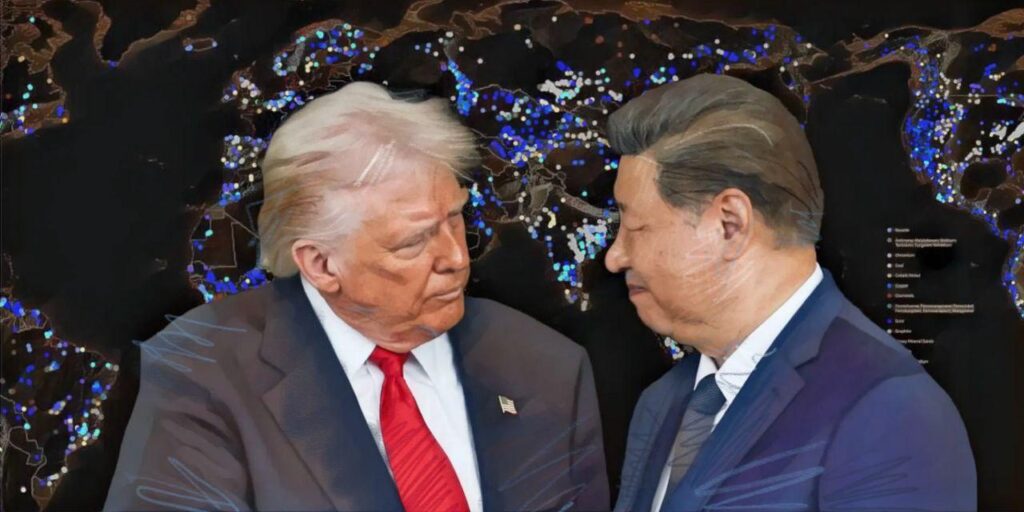
The October 30, 2025, meeting between U.S. President Donald Trump and Chinese President Xi Jinping in Busan, South Korea, marked their first in-person contact since 2019. While framed as a limited reset or tactical pause, the talks carry deeper strategic implications. They occurred just days before the forthcoming C5+1 Leaders’ Summit in Washington on November 6, a gathering with direct consequences for Central Asia’s role in the future of critical mineral supply chains. South Korea Talks: Reset or Recalibration? At the meeting in Busan, Trump and Xi discussed supply chains, tariffs, rare earth trade, and broader trade issues. The U.S. announced that China had agreed to pause certain rare-earth export curbs for a year, with Trump describing the talks as “amazing.” China currently processes roughly 90% of the world’s rare-earth elements and mines around 70%, which are indispensable in the production of electric vehicles, wind turbines, defense technologies, and high-tech manufacturing. Analysts characterized the Busan accord not as a strategic realignment but as a “tactical pause” or a “temporary lull to escalation” between the U.S. and China. For emerging potential U.S. partners in Central Asia, however, the optics matter, as any perceived U.S.–China trade thaw could diminish the urgency behind diversifying rare earth supply chains. Central Asia’s Rare Earth Opportunity As previously reported by The Times of Central Asia, the upcoming C5+1 summit is likely to focus on critical minerals, energy logistics, and investment infrastructure as the U.S. seeks to reduce its reliance on China. Kazakhstan has emerged as a major player in rare earths, with geological surveys in 2024 and 2025 identifying 38 promising solid mineral deposits, including the Kuyrektykol site in the Karaganda region, which contains substantial reserves. Uzbekistan, meanwhile, signed a memorandum of understanding with the U.S. on critical minerals cooperation in September 2024, which represented a major step toward deepening bilateral cooperation on this front. The U.S. International Development Finance Corporation (DFC) has signaled its interest in co-financing midstream mining and processing infrastructure in Central Asia, though projects remain at formative stages. Logistics routes such as the Middle Corridor via Central Asia and the Caspian remain strategically attractive to Western-aligned supply chains seeking to bypass Russia. Trump–Xi Reset Could Blur U.S. Commitments, But the Case for Diversification Remains Strong Should the Trump-Xi meeting diminish the immediate urgency of supply chain diversification, this will be of concern to countries looking to balance their economies with geopolitical neutrality. Kazakhstan has long positioned itself as a multi-vector neutral broker between major powers, meaning fluctuating U.S. policy signals could cause complications. Despite the reset, however, most analysts contend that little has fundamentally changed, with the Busan meeting seen as a temporary rather than a genuine strategic pivot. While structural competition between Washington and Beijing endures, diversification of critical mineral supply chains remains as essential as ever. For Central Asia, this dynamic reinforces the need to continue developing regional value chains and its mid-stream processing capacity. What to Expect in Washington The November 6 C5+1 Leaders’ Summit in Washington will test whether the...

Rare Earth Diplomacy: Critical Minerals Set to Top Agenda at C5+1 Summit

The announcement of an upcoming C5+1 summit in Washington between the United States and the Central Asian republics has taken much of the regional and U.S. political establishment by surprise. A swift visit by U.S. Special Envoy for South and Central Asia Sergio Gor and Deputy Secretary of State Christopher Landau to Uzbekistan and Kazakhstan was seemingly necessary to coordinate the summit’s agenda. Notably, Kazakhstan appears prepared to play a leading role on one of the summit’s most pressing issues. The summit, scheduled for November 6 in Washington, was first revealed through media channels before being confirmed through official correspondence between Kazakh President Kassym-Jomart Tokayev and U.S. President Donald Trump. Uzbek media later confirmed the meeting, citing sources within the administration of President Shavkat Mirziyoyev, and this was followed by Kyrgyzstan's President Sadyr Japarov. It is notable that shortly after Tokayev’s correspondence with Trump became public, the Kazakh president held a phone call with Russian President Vladimir Putin. Officially, the two discussed Tokayev’s upcoming visit to Moscow. This was their second such call in less than two weeks, the previous taking place on October 14. There is speculation that the Washington summit may have been a key topic of discussion. During meetings in Tashkent with Gor and Landau - Uzbekistan being the first stop on their tour - Mirziyoyev reportedly discussed a broad set of topics. However, the issue of “critical materials,” particularly rare earth metals, stood out. It is increasingly clear that rare earths will be a central focus of Trump’s engagement with Central Asian leaders. [caption id="attachment_38242" align="aligncenter" width="1600"] Sergio Gor and Christopher Landau at the Shymbulak ski resort in Almaty; image: Akorda[/caption] Trump has previously drawn attention for high-stakes diplomacy involving rare earth metals, including a controversial deal with Ukrainian President Volodymyr Zelensky and later discussions with Russian President Vladimir Putin in Anchorage. Most recently, during the first leg of his Asia tour, Trump met with Japanese Prime Minister Sanae Takaichi and concluded a rare earth metals agreement, despite the challenges associated with extracting these materials, which are often found underwater. Against this backdrop, Kazakhstan appears well-positioned to take the lead in terms of rare earth elements. President Tokayev first proposed developing rare earth metal deposits in his September 2023 address, “The Economic Course of Fair Kazakhstan.” In 2024, Kazakh geologists identified 38 promising solid mineral deposits, including the Kuyrektykol site in the Karaganda region, which contains substantial reserves. Tokayev returned to the issue in January 2025, during an extended government meeting, criticizing the cabinet for delays and emphasizing Kazakhstan’s untapped potential in rare earth extraction and processing. In April, during the Central Asia-European Union summit, Tokayev met with European Commission President Ursula von der Leyen, who congratulated him on the discovery of a major deposit in Kazakhstan. The topic also featured at the Central Asia-Italy summit in May, where Tokayev proposed creating a regional research center to consolidate data on rare earth deposits across Central Asia. “The creation of joint ventures, technology transfer, and the localization...

Kazakhstan’s Emerging Role in Global Rare-Earth Supply Chains

October 10 was one of the most consequential days for global trade policy and one of the most volatile for world markets since the U.S.–China tariff conflict first reignited. After China announced tighter export controls on rare earths, U.S. President Donald J. Trump first posted on Truth Social that “there seems to be no reason” anymore for him to meet with the Chinese leader Xi Jinping at the APEC summit in two weeks' time. Several hours later, the official White House account on X posted a message from Trump that he had learned that "effective November 1st, 2025, [China will] impose large-scale Export Controls [sic] on virtually every product they make, and some not even made by them." He then followed with the declaration that the U.S. will impose a 100% tariff on Chinese imports starting November 1, "or sooner," and launch export controls on critical software. As Washington and Beijing escalate their economic confrontation, the scramble for stable rare-earth supply chains has broadened beyond East Asia. Attention is shifting to Central Asia, where mineral potential and trade corridors align with the broader effort to reduce dependence on China. Kazakhstan has drawn particular attention, not as a single solution, but as a state seeking to leverage its Soviet-era industrial base and access to the Caspian to help meet emerging supply chain needs. Although Kazakhstan has made the most progress in translating its mineral reserves into a functioning mining industry, it remains part of a broader regional effort to diversify away from a single external partner, most notably China. Other Central Asian states are testing their own capabilities to meet global supply chain demands, though most remain constrained by infrastructure, financing, or lack of processing capability. Kazakhstan’s Position in the Emerging Supply Realignment On reserves, Kazakhstan’s rare-earth potential is rooted as much in continuity as it is in discovery. Decades of geological mapping under Soviet administration established its mineral profile, and recent joint surveys by Kazgeology and private firms have both confirmed and expanded those earlier findings. New delineated deposits in the east and center of the country, including the Zhana Kazakhstan site in Karagandy, have reinforced its status as a prospective non-Chinese source of critical materials, with verified concentrations of neodymium, praseodymium, dysprosium, terbium, and samarium. If current resource estimates are validated, the Zhana Kazakhstan deposit could rank among the largest rare-earth reserves in the world. These elements are essential inputs for high-efficiency magnets used in electric vehicles, wind turbines, and advanced defense systems. The U.S. Department of Defense classifies these rare earths as “critical defense materials,” a designation that underscores their strategic relevance rather than any immediate shift in supply. Both the Pentagon and the Defense Logistics Agency have begun increasing stockpiles and exploring alternative processing sources, but for now, the question in Kazakhstan is not geological endowment, which is established, but the terms under which that endowment can be brought to market. On processing capacity, Kazakhstan’s experience in large-scale mining of uranium, copper, and other critical minerals has...