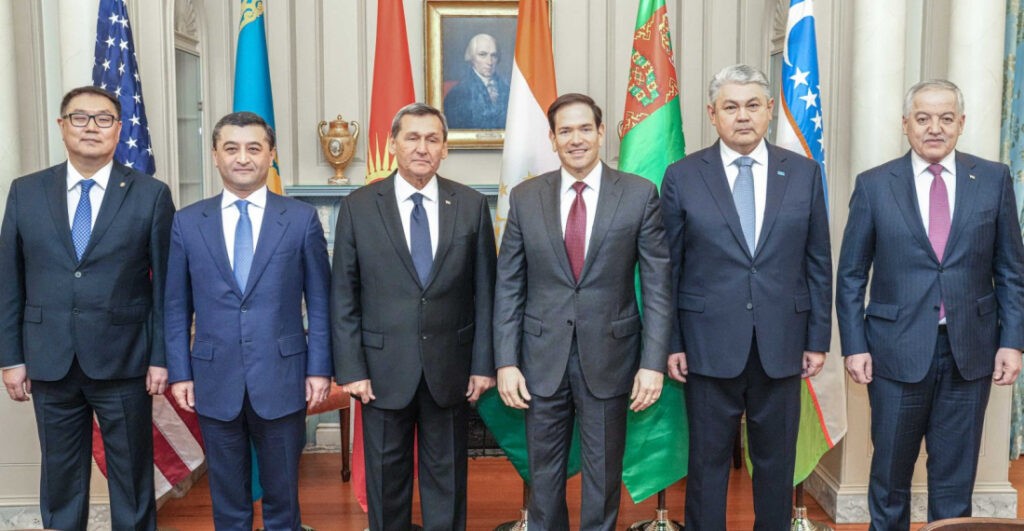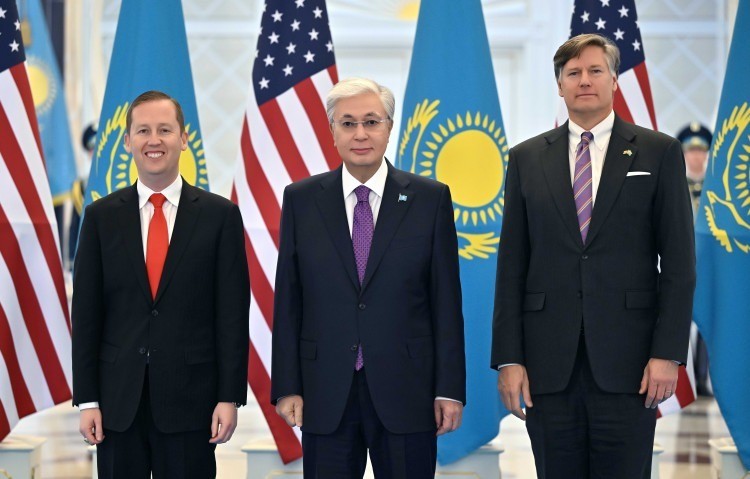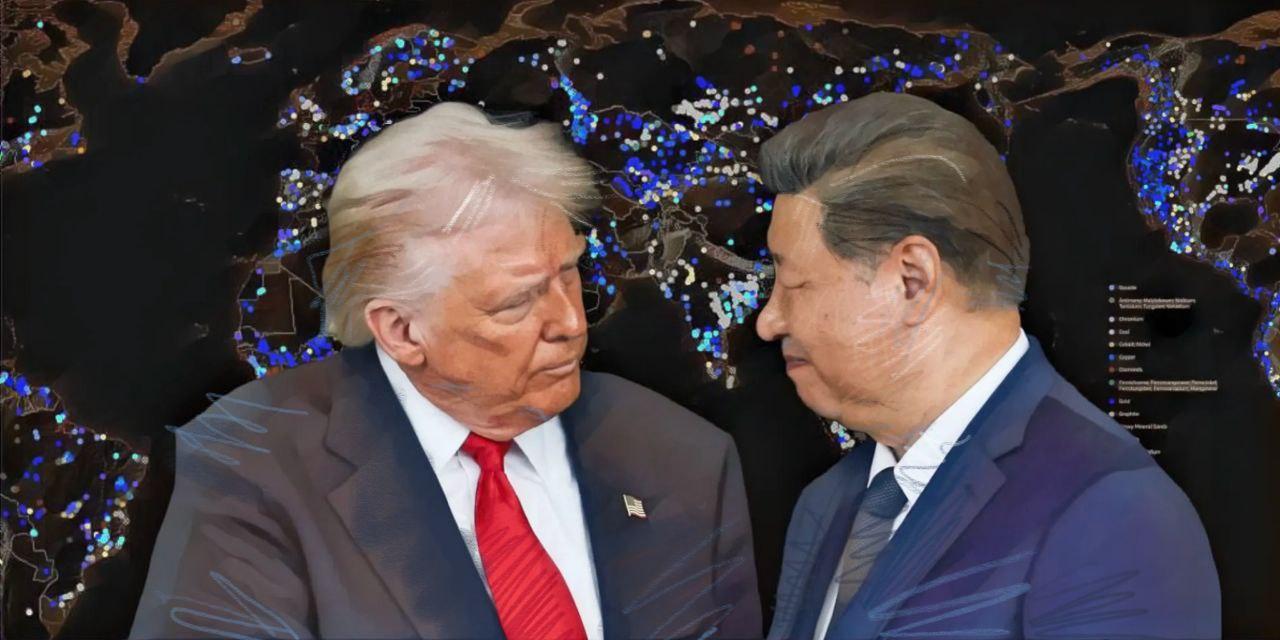
The October 30, 2025, meeting between U.S. President Donald Trump and Chinese President Xi Jinping in Busan, South Korea, marked their first in-person contact since 2019. While framed as a limited reset or tactical pause, the talks carry deeper strategic implications. They occurred just days before the forthcoming C5+1 Leaders’ Summit in Washington on November 6, a gathering with direct consequences for Central Asia’s role in the future of critical mineral supply chains.
South Korea Talks: Reset or Recalibration?
At the meeting in Busan, Trump and Xi discussed supply chains, tariffs, rare earth trade, and broader trade issues. The U.S. announced that China had agreed to pause certain rare-earth export curbs for a year, with Trump describing the talks as “amazing.”
China currently processes roughly 90% of the world’s rare-earth elements and mines around 70%, which are indispensable in the production of electric vehicles, wind turbines, defense technologies, and high-tech manufacturing. Analysts characterized the Busan accord not as a strategic realignment but as a “tactical pause” or a “temporary lull to escalation” between the U.S. and China.
For emerging potential U.S. partners in Central Asia, however, the optics matter, as any perceived U.S.–China trade thaw could diminish the urgency behind diversifying rare earth supply chains.
Central Asia’s Rare Earth Opportunity
As previously reported by The Times of Central Asia, the upcoming C5+1 summit is likely to focus on critical minerals, energy logistics, and investment infrastructure as the U.S. seeks to reduce its reliance on China. Kazakhstan has emerged as a major player in rare earths, with geological surveys in 2024 and 2025 identifying 38 promising solid mineral deposits, including the Kuyrektykol site in the Karaganda region, which contains substantial reserves. Uzbekistan, meanwhile, signed a memorandum of understanding with the U.S. on critical minerals cooperation in September 2024, which represented a major step toward deepening bilateral cooperation on this front.
The U.S. International Development Finance Corporation (DFC) has signaled its interest in co-financing midstream mining and processing infrastructure in Central Asia, though projects remain at formative stages. Logistics routes such as the Middle Corridor via Central Asia and the Caspian remain strategically attractive to Western-aligned supply chains seeking to bypass Russia.
Trump–Xi Reset Could Blur U.S. Commitments, But the Case for Diversification Remains Strong
Should the Trump-Xi meeting diminish the immediate urgency of supply chain diversification, this will be of concern to countries looking to balance their economies with geopolitical neutrality. Kazakhstan has long positioned itself as a multi-vector neutral broker between major powers, meaning fluctuating U.S. policy signals could cause complications.
Despite the reset, however, most analysts contend that little has fundamentally changed, with the Busan meeting seen as a temporary rather than a genuine strategic pivot. While structural competition between Washington and Beijing endures, diversification of critical mineral supply chains remains as essential as ever. For Central Asia, this dynamic reinforces the need to continue developing regional value chains and its mid-stream processing capacity.
What to Expect in Washington
The November 6 C5+1 Leaders’ Summit in Washington will test whether the dialogue can yield tangible outcomes – clear schedules, designated project leads, and measurable progress on trade corridors, regulatory alignment, critical minerals, and energy logistics.
A crucial signal will be whether Washington commits to mid-stream infrastructure – refining and processing – rather than focusing on upstream mining, which for many Central Asian states is essential to avoid being mere raw-material exporters. Leaders will also monitor how the U.S. manages geopolitical risks. Deeper cooperation on rare earths paired with military or security components such as geospatial surveys or dual-use technologies could trigger pushback from Russia and China, potentially deterring some governments from closer alignment.
Observers will also watch how the U.S. manages geopolitical sensitivities. If critical mineral cooperation expands into areas such as geospatial surveys or dual-use technology partnerships, both Russia and China are likely to respond, potentially complicating regional governments’ balancing acts between major powers.
Window of Opportunity or Moment of Drift?
The Trump–Xi meeting in Busan has shifted the diplomatic atmosphere heading into the C5+1 summit, softening expectations of confrontation while raising just as many questions. Now entering its tenth year, the C5+1 platform is facing a turning point. The region’s governments are increasingly pragmatic, welcoming U.S. engagement and transactional diplomacy, but seeking predictable, long-term partnerships that deliver investment, technology transfer, and access to markets.
Whether the summit will produce genuine progress or another symbolic round of declarations will depend on Washington’s ability to translate strategy into capital and implementation. The coming summit could reaffirm Central Asia’s role in a diversified, resilient global supply chain, or reveal the limits of U.S. economic diplomacy in a multipolar world.