• KGS/USD = 0.01144 0%
  • KZT/USD = 0.00191 0%
  • TJS/USD = 0.10850 0%
  • UZS/USD = 0.00008 0%
  • TMT/USD = 0.28490 0%
  • KGS/USD = 0.01144 0%
  • KZT/USD = 0.00191 0%
  • TJS/USD = 0.10850 0%
  • UZS/USD = 0.00008 0%
  • TMT/USD = 0.28490 0%
  • KGS/USD = 0.01144 0%
  • KZT/USD = 0.00191 0%
  • TJS/USD = 0.10850 0%
  • UZS/USD = 0.00008 0%
  • TMT/USD = 0.28490 0%
  • KGS/USD = 0.01144 0%
  • KZT/USD = 0.00191 0%
  • TJS/USD = 0.10850 0%
  • UZS/USD = 0.00008 0%
  • TMT/USD = 0.28490 0%
  • KGS/USD = 0.01144 0%
  • KZT/USD = 0.00191 0%
  • TJS/USD = 0.10850 0%
  • UZS/USD = 0.00008 0%
  • TMT/USD = 0.28490 0%
  • KGS/USD = 0.01144 0%
  • KZT/USD = 0.00191 0%
  • TJS/USD = 0.10850 0%
  • UZS/USD = 0.00008 0%
  • TMT/USD = 0.28490 0%
  • KGS/USD = 0.01144 0%
  • KZT/USD = 0.00191 0%
  • TJS/USD = 0.10850 0%
  • UZS/USD = 0.00008 0%
  • TMT/USD = 0.28490 0%
  • KGS/USD = 0.01144 0%
  • KZT/USD = 0.00191 0%
  • TJS/USD = 0.10850 0%
  • UZS/USD = 0.00008 0%
  • TMT/USD = 0.28490 0%
10 November 2025

Viewing results 1 - 6 of 3

Ukraine Eyes Central Asia: Can War-Weary Kyiv Forge New Regional Alliances?

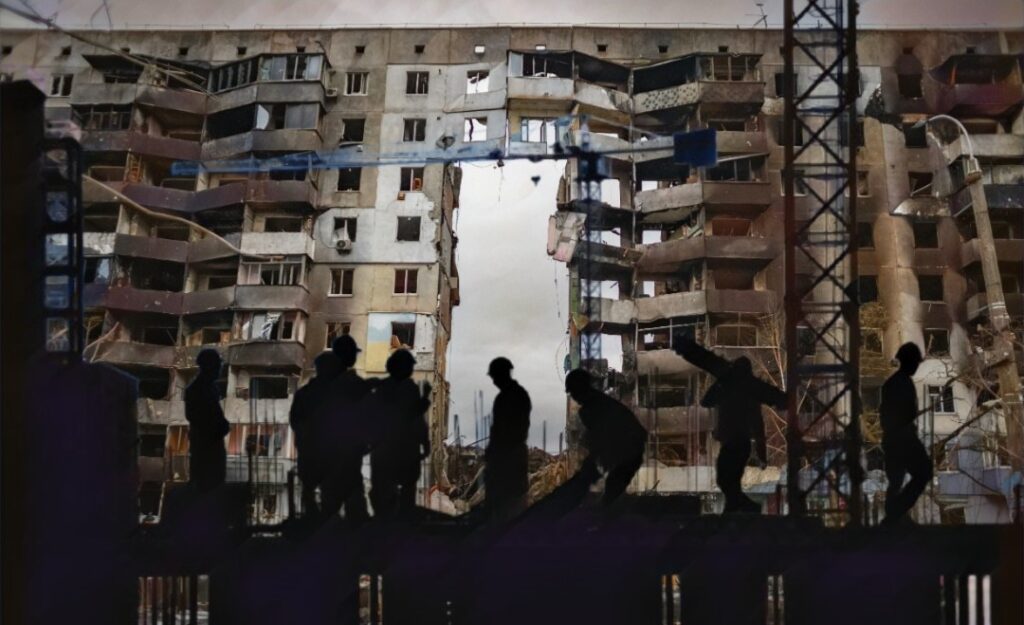
Despite the ongoing war with Russia, Ukraine is attempting to intensify its diplomatic and economic ties with Central Asia. Kyiv is seeking the region’s de facto political support against Moscow, and aiming to rebuild trade relations with the former Soviet republics. But how do the Central Asian nations view Ukraine’s regional ambitions? Ukraine’s Ministry of Foreign Affairs has recently launched a new department focused on Central Asia – a region that has traditionally been in Russia’s zone of influence. The move comes as no surprise, given that Kyiv is also actively seeking to make diplomatic inroads in Africa, a continent where the Kremlin harbors significant geopolitical ambitions. But unlike in Africa, which represents relatively new ground for Ukraine — and where it struggles to compete with Russia’s growing influence — Kyiv appears to be in a stronger position in Central Asia. Ukraine and the countries of Central Asia share a common Soviet past, which has left its mark on their relations in various areas, including the economy, culture, and education. A Ukrainian diaspora also lives in all of the Central Asian states and serves as an important link between the nations. That, however, does not mean that Kyiv’s diplomatic initiative will go flawlessly. Besides the ongoing war, geography is one of the biggest obstacles to Ukraine’s efforts to increase its presence in Central Asia. As a result of the conflict, the Eastern European nation can no longer use its old transport and trade routes to Central Asia through Russia. Since 2022, trade between Ukraine and the regional countries has dropped significantly, as sending goods back and forth has become more expensive. To bypass Russian territory, products from Ukrainian manufacturers are now transported to Central Asia through countries such as Romania, Bulgaria, Turkey, Azerbaijan, and Georgia. Although these routes are functional, their profitability remains questionable. Moreover, statistics show that Ukraine’s industrial production index collapsed from 101.7% in December 2021 to 69.3% in December 2024, which is why the war-torn nation is no longer among Central Asia’s major trading partners. In 2012, long before the war, trade turnover between Ukraine and Kazakhstan – Central Asian largest economy – amounted to $5.5 billion, while in 2023 it was only $391 million. At the end of 2023, Ukraine ranked 35th in Kazakhstan’s list of trading partners, while before the war, in 2021, it was the energy-rich nation’s 15th largest trade partner. Economic ties between Ukraine and Kyrgyzstan are faring no better. According to Idris Kadyrkulov, Kyrgyzstan’s Ambassador to Ukraine, trade between the two countries has “mostly stopped” because many Ukrainian businesses have been hurt by the war, and shipping goods between Ukraine and Kyrgyzstan has become “at least three times more expensive than before the Russian invasion.” That is why, under the current circumstances, strengthening economic ties between Ukraine and the Central Asian states does not seem realistic. Fully aware of this, Kyiv is counting on the regional nations’ economic support in the post-war era – an area in which Kazakhstan has already shown...

Azerbaijan’s Aliyev: Uzbekistan’s First Gift Helped Rebuild Karabakh

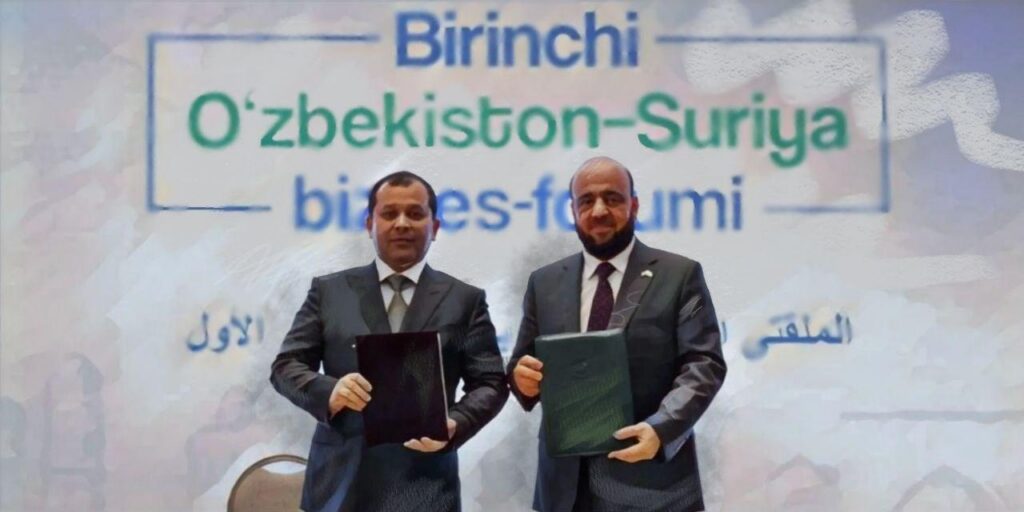
At a major media forum held in Khankendi, Azerbaijani President Ilham Aliyev expressed gratitude to Uzbekistan for its contribution to the reconstruction of Nagorno-Karabakh. Speaking at the event, Professor Sherzodhon Kudratkhodja, Rector of Uzbekistan’s University of Journalism and Mass Communications, congratulated Aliyev on successfully hosting the 17th Summit of the Economic Cooperation Organization (ECO) in Khankendi. He noted that while Uzbek journalists had visited Karabakh over the past three years, this was their first visit to Khankendi, marking a symbolic step toward reconciliation and renewal. Kudratkhodja praised the recent meeting between Aliyev and Armenian Prime Minister Nikol Pashinyan in Abu Dhabi, calling it “historic” and “a beacon of friendship” amid global uncertainty. He also asked about the strategic importance of the Zangezur corridor, not just for Azerbaijan and Armenia, but for the wider Turkic world. “The corridor will serve as a bridge, reconnecting once-separated lands,” he said. Commending the reconstruction of roads, buildings, mosques, and churches in Karabakh, he added: “This shows the world your tolerance and noble spirit.” Uzbekistan’s First Contribution In response, Aliyev highlighted Uzbekistan’s role in the early phases of Karabakh’s reconstruction following the 2020 Second Karabakh War. He cited the construction of a school for 960 students in Fizuli, initiated by Uzbek President Shavkat Mirziyoyev and named after the renowned Uzbek scholar Mirzo Ulugbek. “Uzbekistan made the first gift in restoring Karabakh,” Aliyev said. “A few days ago, I visited the school again. Over 500 children are already studying there, even though refugees are only just beginning to return to Fizuli. We deeply appreciate this brotherly gesture by the President of Uzbekistan.” Rebuilding Efforts in Karabakh The Second Karabakh War, also known as the 44-day war, ended in November 2020 with a ceasefire agreement restoring Azerbaijani control over formerly occupied territories. By mid-2024, Azerbaijan had spent more than USD $7 billion on reconstruction, including demining, infrastructure development, industrial revitalization, and tourism initiatives. Aliyev emphasized the symbolism of hosting the ECO Summit at Khankendi’s new congress center, built on the site of the former separatist parliament. Leaders from eight ECO member states attended the event, underscoring normalization in the region. Nearby, reconstruction continues at a Soviet-era hotel and Victory Square, the former site of the communist party headquarters, which is being transformed with the construction of a new Victory Museum. Zangezur Corridor and Regional Connectivity Aliyev also underlined the strategic significance of the Zangezur corridor, which is intended to link mainland Azerbaijan with its exclave of Nakhchivan and further to Turkey. He cited billions of dollars in national infrastructure investment, including the Caspian Sea’s largest port, expanded roadways, and the Baku-Tbilisi-Kars railway-now capable of handling 25 million tonnes of freight annually. “During President Mirziyoyev’s visit, we discussed increasing freight traffic through this corridor,” Aliyev said. He also referenced the development of the China-Kyrgyzstan-Uzbekistan-Turkmenistan railway, which will provide an additional route across the Caspian Sea and enhance regional connectivity. “These links are proof that our region can grow stronger together,” Aliyev stated. A Shared Legacy Both speakers highlighted...

ADB Finances 90% of Road Projects in Tajikistan’s Regions

The Asian Development Bank (ADB) has financed the construction and reconstruction of 90% of all roads in Tajikistan outside the capital, Dushanbe. This was announced by Evgeny Zhukov, ADB Director General for Central and West Asia, during the 58th Annual Meeting of the Bank’s Board of Governors in Milan. Tajikistan’s Largest Transport Infrastructure Investor According to Zhukov, Tajikistan has long been a key partner for the ADB. Since the start of cooperation, the bank has invested approximately $2.7 billion in the country, with the majority of funds directed toward public sector development. “If you travel outside Dushanbe, there is a 90% chance the roads you are on were built or modernized with ADB support. This confirms the effectiveness of our investments,” Zhukov stated. Laziza Sabirova, Head of Regional Cooperation and Integration at the ADB’s Central and West Asia Department, emphasized the bank’s commitment to quality control. An independent unit evaluates whether project outcomes align with initial objectives and ensures efficient use of funds. “These specialists assess each project’s relevance and effectiveness, checking if goals were achieved, whether there was overspending, and evaluating construction quality. Post-completion, they also analyze facility use, maintenance, and any further funding needs,” Sabirova explained. Zhukov also highlighted the ADB’s intent to strengthen cooperation with other international financial institutions, including the World Bank and the Asian Infrastructure Investment Bank. One of the largest upcoming joint initiatives will involve funding the Rogun hydroelectric power plant. The ADB plans to allocate up to $500 million for this project in the coming years. Future Development Plans Earlier announcements indicated that the ADB is planning around 20 major projects in Tajikistan between 2025 and 2029. These initiatives span agriculture, social services, urban development, and energy. Particular emphasis will continue to be placed on improving transport infrastructure to enhance domestic logistics and boost economic ties with neighboring countries. Currently, the ADB’s portfolio in Tajikistan includes 19 ongoing public investment projects valued at about $1 billion. These cover key sectors such as energy, healthcare, water supply, irrigation, environmental protection, and tourism. In support of these efforts, the ADB has also provided 12 technical assistance grants totaling $11.2 million. Supporting Economic Stability Ko Sakamoto, the ADB’s permanent representative in Tajikistan, affirmed the bank’s ongoing partnership with the government to reinforce economic stability and improve living standards. “Our collaboration with local partners is already producing tangible results, and we are confident that upcoming projects will contribute to sustainable development,” Sakamoto said. Tajikistan remains one of the largest recipients of ADB grants in Central Asia. Since the beginning of their partnership in 1998, the ADB has delivered significant financial support for vital infrastructure projects, helping lay the groundwork for long-term economic progress.