• KZT/USD = 0.00219
  • TJS/USD = 0.10850
  • UZS/USD = 0.00008
  • TMT/USD = 0.29850
  • KZT/USD = 0.00219
  • TJS/USD = 0.10850
  • UZS/USD = 0.00008
  • TMT/USD = 0.29850
  • KZT/USD = 0.00219
  • TJS/USD = 0.10850
  • UZS/USD = 0.00008
  • TMT/USD = 0.29850
  • KZT/USD = 0.00219
  • TJS/USD = 0.10850
  • UZS/USD = 0.00008
  • TMT/USD = 0.29850
  • KZT/USD = 0.00219
  • TJS/USD = 0.10850
  • UZS/USD = 0.00008
  • TMT/USD = 0.29850
  • KZT/USD = 0.00219
  • TJS/USD = 0.10850
  • UZS/USD = 0.00008
  • TMT/USD = 0.29850
  • KZT/USD = 0.00219
  • TJS/USD = 0.10850
  • UZS/USD = 0.00008
  • TMT/USD = 0.29850
  • KZT/USD = 0.00219
  • TJS/USD = 0.10850
  • UZS/USD = 0.00008
  • TMT/USD = 0.29850
28 October 2026

Viewing results 1 - 6 of 5

Citibank Kazakhstan Chairperson Sees Opportunities for U.S.-Central Asia Collaboration

Foreign investors are looking outside Kazakhstan’s oil and gas sector. But turning that interest into investment will require predictable regulations and stronger cross-border connections, according to Saule Zhakayeva, chairperson of Citibank Kazakhstan’s management board and president of the American Chamber of Commerce in Kazakhstan (AmCham). Citi has operated in Kazakhstan since 1994, when it opened a representative office in Almaty. In an interview with The Times of Central Asia, Zhakayeva discussed the country’s investment climate and its role as a regional business hub. She also addressed the future of economic relations between the United States and Kazakhstan. TCA: How is foreign investor interest in Central Asia evolving, and which of Kazakhstan’s strengths are already translating into investment? Where do you see the strongest commercial opportunities over the next three to five years, and what would help turn untapped potential into committed capital? Zhakayeva: Investors today are looking for markets that combine economic stability, access to natural resources, strategic geography, and long-term growth potential. Kazakhstan offers each of these attributes. The country has established itself as the largest economy in Central Asia, maintains a relatively strong institutional framework, and continues to pursue reforms aimed at improving the investment climate. Most notably, investor interest is becoming increasingly diversified. Historically, foreign investment was concentrated primarily in oil and gas. Today, we see growing interest in transportation and logistics, renewable energy, critical minerals, digital infrastructure, financial services, manufacturing, and data-related investments. This growing interest is also reflected in the increasing level of engagement between international investors and Kazakhstan. As President of the American Chamber of Commerce in Kazakhstan, I have seen firsthand the strong momentum in U.S.-Kazakhstan business relations. Throughout 2026, Kazakhstan has hosted a growing number of high-level business engagements involving senior representatives of American companies and institutions, including the U.S. Chamber of Commerce Business Mission to Kazakhstan and other executive-level dialogues focused on investment, trade, digital transformation, energy, and infrastructure. AmCham Kazakhstan also led its first business delegation to Washington, D.C., bringing member companies together to strengthen bilateral economic ties, promote Kazakhstan's investment opportunities, and advocate for deeper economic cooperation. These activities underscore the growing recognition of Kazakhstan and Central Asia as strategically important destinations for long-term investment and commercial cooperation. More importantly, they are beginning to translate into tangible outcomes. For example, in 2026, the U.S. International Development Finance Corporation announced plans to explore up to $700 million in financing opportunities to support the development of Kazakhstan's critical minerals sector. Kazakhstan's location at the crossroads of Europe and Asia has become increasingly important as global companies diversify supply chains and seek alternative trade routes. The development of the Trans-Caspian International Transport Route is further strengthening Kazakhstan's role in regional and global commerce, creating opportunities far beyond traditional sectors. Similar dynamics are being observed across the region, where alternative trade routes, logistics investments, and infrastructure development are becoming increasingly important to global investors. We are also seeing growing international interest in strategic sectors linked to global energy security and the energy transition....
Central Asia and Azerbaijan Discuss Trade Expansion at Turkmenistan Summit

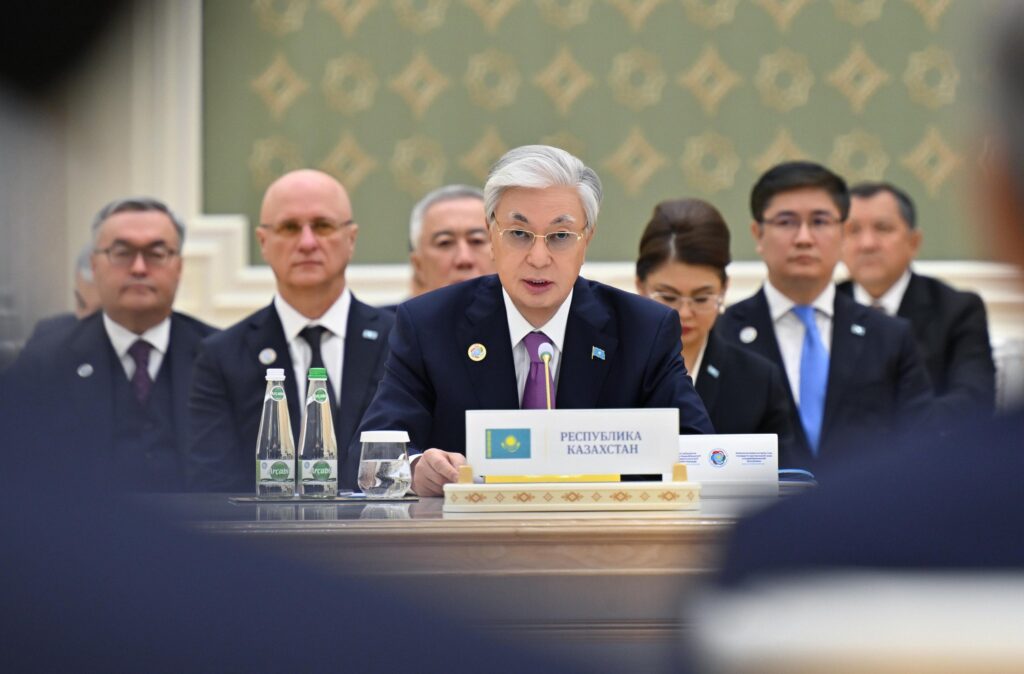
The leaders of Central Asia and Azerbaijan met in Turkmenistan on October 8, with expanding trade between their countries high on the agenda. Kazakhstan's President Kassym-Jomart Tokayev called for trade among the six countries to rise to at least $20 billion, up from approximately $13 billion in 2025. The eighth Consultative Meeting of the Heads of State of Central Asia and Azerbaijan was held in the resort of Avaza, with Azerbaijan participating as a full member of the grouping for the first time. According to Tokayev, trade between the six countries accounted for just 8% of their combined trade turnover last year. He proposed that governments develop a joint action plan to increase that share. Other leaders put forward proposals for closer economic ties. Uzbekistan's President Shavkat Mirziyoyev called for greater cooperation in manufacturing and a Central Asia-Azerbaijan Business Forum in 2027, while Kyrgyzstan's President Sadyr Japarov proposed creating a shared e-commerce platform to make regional products more accessible. One problem is the insufficient integration of national markets. Even where countries share a border, trade is hampered by logistical constraints and differences in business operating conditions. Tokayev proposed bringing existing and planned cross-border trade and logistics complexes and industrial centers into a single network. The idea is to enable businesses from different countries to sell finished products to one another and produce them jointly. However, Kazakhstan's major transport projects are not designed solely for its neighbors. Astana is investing in railways and highways to increase freight transit between China, Central Asia, and Europe. The projects include the Moyynty–Kyzylzhar, Darbaza–Maktaaral, and Bakhty–Ayagoz railway lines, as well as the Aral–Caspian highway project. The Middle Corridor holds a particularly important place in these plans, running from China through Kazakhstan, the Caspian Sea, Azerbaijan, and Georgia to Europe. It allows freight to bypass Russian territory and is viewed as an alternative to traditional northern routes. Kazakhstan is now proposing to explore linking the Middle Corridor with the Trump Route for International Peace and Prosperity (TRIPP), a transport project through Armenia intended to connect mainland Azerbaijan with Nakhchivan. Plans for the route were outlined during talks in Washington in August 2025, and Armenia and the United States signed a framework agreement in June 2026. The route is to remain under Armenian sovereignty and jurisdiction. Astana has already established a technical group to assess its potential participation in TRIPP. For now, Tokayev is proposing that the integration of the two transport initiatives be discussed only at the expert level. At the Avaza summit, Turkmen President Serdar Berdimuhamedov emphasized the importance of developing North–South transport corridors alongside East–West routes. Turkmenistan also supports the eastern branch of the International North–South Transport Corridor, which connects Russia with Iran through Kazakhstan and Turkmenistan. However, an increase in freight traffic through Central Asia does not in itself mean that trade among its countries will grow. For that to happen, local producers need access to neighboring markets. The summit also addressed cooperation over shared water resources, with Tokayev proposing a regional framework...

World Bank Says Middle Corridor Needs More Than $55 Billion by 2040

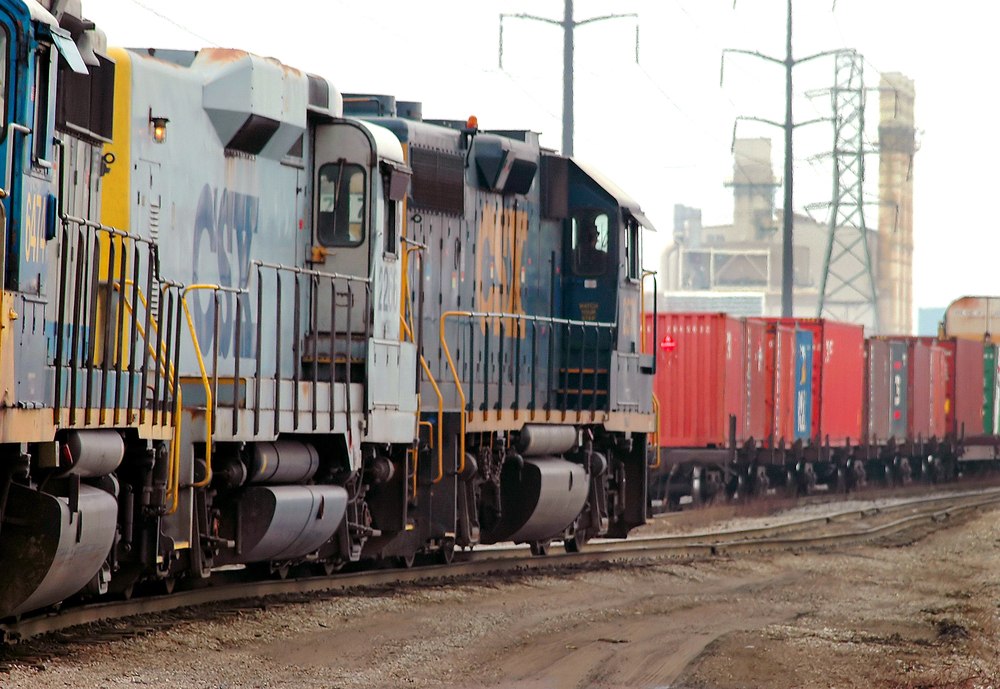
Developing a transport corridor linking China and Central Asia with Europe across the Caspian Sea will require more than $55 billion in investment through 2040. But the World Bank’s recent report, Integration: World-Class Trade Logistics Along the Trans-Caspian Transport Corridor, argues that infrastructure alone will not resolve the difficulties of moving freight across borders and between rail and ships. The route is the Trans-Caspian Transport Corridor, better known as the Middle Corridor. Trains typically travel from China through Kazakhstan to the Caspian ports of Aktau and Kuryk, where containers are transferred to ships. In Azerbaijan, they return to rail and continue through Georgia and Turkey toward Europe. The report covers nine countries with a combined population of nearly 200 million. With targeted investment, the World Bank estimates that trade volumes along the corridor could more than triple and travel times could be halved. GDP across those countries could be around 3.3% higher by 2040, with about 2 million additional jobs. If infrastructure investment is combined with reforms to make trade and transport more efficient, corridor volumes could quadruple compared with 2023 and travel times could fall by about two-thirds. At least $25 billion would be needed to relieve bottlenecks on railways and at Caspian ports. Another estimated $30.5 billion would improve connections between the main corridor and local economies, including terminals and digital systems. In February, the World Bank approved an $846 million guarantee from the International Bank for Reconstruction and Development, alongside a $564 million co-guarantee from the Asian Infrastructure Investment Bank. The package is intended to help mobilize $1.41 billion in long-term commercial financing for rail infrastructure along Kazakhstan’s section of the Middle Corridor. One of the principal projects is the roughly 322-kilometer Mointy-Kyzylzhar railway. The new line is expected to shorten the route by 149 kilometers and relieve pressure on the existing rail network. But hours saved on the Kazakh rail leg could still be lost waiting for a ship or crossing a border. The World Bank proposes a single digital corridor system built around a Transport, Transit, and Trade (T3) document. A carrier would enter cargo information once, allowing transport and customs authorities in different countries to use the same data. The bank also proposes a joint venture between railway and Caspian shipping operators. It would allow customers to buy a single container freight service for the route rather than arranging rail and maritime transport separately. During a September visit to Kazakhstan, World Customs Organization Secretary General Ian Saunders called for common international data standards and closer coordination between neighboring customs administrations. The Middle Corridor is often described as an alternative route for Chinese goods traveling to Europe. Its railways and ports also need to carry goods produced by Central Asia’s own economies. The five Central Asian countries exported $8.1 billion worth of goods to one another in January-July 2026, up 25.4% from a year earlier. The World Bank expects cheaper and more predictable transport to help local producers sell to neighboring countries and more distant...

Afghanistan’s Regional Ties Grow as Global Reintegration Stalls

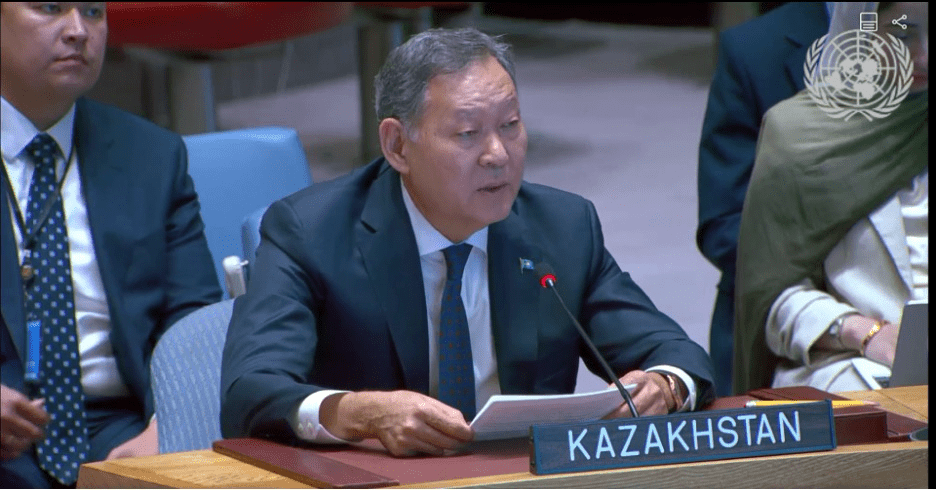
For Central Asia, Afghanistan is both a source of risk and a potential route south. Governments across the region increasingly see a more stable Afghanistan as a way to open new markets and expand economic links with South Asia. Afghanistan is a direct neighbor of Tajikistan, Uzbekistan, and Turkmenistan. The geography is different for Kazakhstan and Kyrgyzstan, but their political and economic interests are no less significant. Many long-term plans for expanding Central Asia’s connections to the south depend in part on Afghanistan’s future and the role it can play in the regional economy. At the UN Security Council’s September 16, 2026, meeting on Afghanistan, Kazakhstan set out a position that may reflect a wider Central Asian view. Astana argued that engagement with Afghanistan’s current authorities should not be equated with recognition and that isolation could not offer a sustainable solution. Astana proposes moving past the current focus on humanitarian aid. In Kazakhstan’s view, the next phase of international engagement should gradually move Afghanistan from dependence on humanitarian aid toward economic self-reliance through job creation, private-sector development, the restoration of financial channels, and expanded trade and investment. The statement also calls for Afghanistan’s integration into the regional economy. Kazakhstan’s representative specifically discussed connections between Central and South Asia, Kazakh-Afghan business ties, trade houses in Herat and Kabul, and the new UN Regional Centre for the Sustainable Development Goals for Central Asia and Afghanistan in Almaty. Astana also expressed concern about restrictions affecting Afghan women and girls. Georgette Gagnon, the UN secretary-general’s deputy special representative for Afghanistan, delivered the main briefing. Five years after the Taliban’s return to power, the UN Assistance Mission in Afghanistan (UNAMA) assesses that the de facto authorities face no significant armed or political threat to their control, although risks to long-term stability are accumulating and largely stem from their own policies. UNAMA therefore distinguishes between the Taliban’s control of the country and its prospects for long-term stability. UNAMA views the Doha process as the main multilateral framework for Afghanistan’s gradual reintegration into the international community. It links progress to women’s rights and inclusive governance, along with the fulfillment of counterterrorism commitments. The mission also notes that Kabul prefers bilateral relations to multilateral engagement. Russia and China focused on pragmatic engagement and economic recovery, stressing the need to avoid isolation. China also urged Kabul to step up its efforts against terrorist groups and lift restrictions preventing Afghan women employed by the UN from doing their jobs. Russia called for dialogue without pressure and for steps toward Afghanistan’s international reintegration without preconditions. Afghanistan’s economic ties with some regional partners are expanding while its political normalization at the global level remains unresolved. Kazakhstan’s position illustrates this divide. It allows for engagement without accepting the existing order as permanent or waiting for isolation to change it. Future international discussions on Afghanistan will have to address this tension.

Afghan Traders in Ashgabat Discuss Proposed Turkmenistan-Afghanistan Transit Corridor

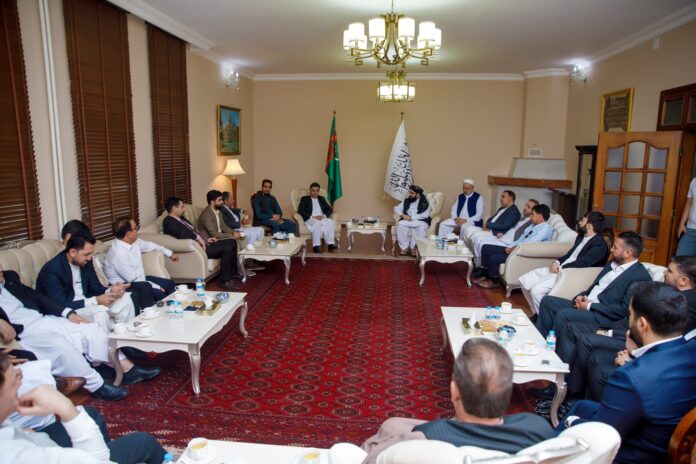
A delegation from the Afghanistan Chamber of Commerce and Investment was in Turkmenistan in recent days as the two countries explore ways to boost trade and develop transit corridors, according to Afghan state media. Mawlawi Fazal Mohammad Saber, Afghanistan’s chargé d'affaires in the Turkmen capital of Ashgabat, met the group of Afghan traders during their visit, the National Radio and Television of Afghanistan, also known as RTA, reported on Thursday. The Afghan delegates and their counterparts in Turkmenistan discussed a proposal to create a new transit corridor from the Turkmen city of Turkmenabat to the northern Afghan city of Mazar-e-Sharif, according to TOLOnews, a news organization based in Kabul. It said the Afghan side had invited Turkmenistan to send a delegation of 100 traders and investors to Afghanistan. Turkmenabat is an economic hub in eastern Turkmenistan that is close to the border with Uzbekistan. Mazar-e-Sharif is the biggest city in northern Afghanistan and is a significant transit point for trade in Central Asia. Mazar-e-Sharif is closely linked to Uzbek trade and transport networks, though Turkmenistan has also been working to expand its economic presence in the city. The latest outreach between Afghanistan and Turkmenistan reflects a wider policy among Central Asian countries to expand economic ties with Taliban authorities in Kabul and increase access to South Asian and other markets, adding to the landlocked region’s options for trade at a time of geopolitical uncertainty. The leadership of those countries retains concerns about the security situation in Afghanistan, but hopes that engagement will help to stabilize their southern neighbor. Kazakhstan and Uzbekistan are key drivers of Central Asia’s growing relationship with Afghanistan. One of the high-profile projects featuring Ashgabat’s involvement is the planned 1,800-kilometer Turkmenistan-Afghanistan-Pakistan-India (TAPI) gas pipeline, which has faced years of delays and challenges, including heightened Afghan-Pakistani tensions.