• KGS/USD = 0.01144 0%
  • KZT/USD = 0.00215 0%
  • TJS/USD = 0.10694 0%
  • UZS/USD = 0.00008 0%
  • TMT/USD = 0.28571 0%
  • KGS/USD = 0.01144 0%
  • KZT/USD = 0.00215 0%
  • TJS/USD = 0.10694 0%
  • UZS/USD = 0.00008 0%
  • TMT/USD = 0.28571 0%
  • KGS/USD = 0.01144 0%
  • KZT/USD = 0.00215 0%
  • TJS/USD = 0.10694 0%
  • UZS/USD = 0.00008 0%
  • TMT/USD = 0.28571 0%
  • KGS/USD = 0.01144 0%
  • KZT/USD = 0.00215 0%
  • TJS/USD = 0.10694 0%
  • UZS/USD = 0.00008 0%
  • TMT/USD = 0.28571 0%
  • KGS/USD = 0.01144 0%
  • KZT/USD = 0.00215 0%
  • TJS/USD = 0.10694 0%
  • UZS/USD = 0.00008 0%
  • TMT/USD = 0.28571 0%
  • KGS/USD = 0.01144 0%
  • KZT/USD = 0.00215 0%
  • TJS/USD = 0.10694 0%
  • UZS/USD = 0.00008 0%
  • TMT/USD = 0.28571 0%
  • KGS/USD = 0.01144 0%
  • KZT/USD = 0.00215 0%
  • TJS/USD = 0.10694 0%
  • UZS/USD = 0.00008 0%
  • TMT/USD = 0.28571 0%
  • KGS/USD = 0.01144 0%
  • KZT/USD = 0.00215 0%
  • TJS/USD = 0.10694 0%
  • UZS/USD = 0.00008 0%
  • TMT/USD = 0.28571 0%

Viewing results 1 - 6 of 27

Pakistan Sends First Transit Shipment to Uzbekistan via Iran Corridor

Pakistan has launched trade operations under the Pakistan-Iran transit corridor, dispatching its first export consignment to Tashkent in Uzbekistan via Iran, Pakistan Today reported, citing customs officials. According to the report, the inaugural shipment consisted of frozen meat transported in refrigerated trucks. The cargo departed from Pakistan and is being routed through Gwadar and Iranian territory before reaching Central Asia. Officials say the corridor is intended to facilitate overland trade and provide an alternative to maritime routes. Sanaullah Abro, Director General of Transit Trade Customs, said the corridor has been operationalized under the TIR (Transports Internationaux Routiers) system, which enables goods to move across multiple countries with minimal customs checks. He added that key border crossing points including Taftan, Rimdan, Sost, and Gwadar, have been activated for TIR transit, with procedures streamlined to support faster cargo movement. At a launch ceremony, Abro and Director of Transit Muhammad Rashid formally flagged off the first consignment. Officials described the initiative as part of broader efforts to strengthen Pakistan’s trade connectivity with Central Asia and reduce logistics costs. Sources cited by Pakistan Today said the new route offers a more economical option for exporters and is expected to shorten transit times while easing pressure on maritime trade routes. The corridor may also increase traffic through Pakistan’s ports and support export growth. The development comes as Pakistan seeks to expand its economic engagement with Central Asia, including Uzbekistan. As previously reported by The Times of Central Asia, bilateral trade between the two countries reached nearly $500 million last year, with around 230 companies with Pakistani capital currently operating in Uzbekistan. Cooperation spans sectors such as textiles, pharmaceuticals, agriculture, and chemicals. Both sides have agreed to work toward increasing trade turnover to $2 billion in the near term. Measures under discussion include expanding the list of goods covered by the Preferential Trade Agreement, easing phytosanitary requirements, and strengthening trade infrastructure, including Uzbekistan’s trade houses in Lahore and Karachi.

Kazakhstan’s Logistics: Mukhtar Tolegen on Infrastructure and Reform

Kazakhstan has invested tens of billions of dollars in transport infrastructure in recent years and has positioned itself as a key transit link between Europe and Asia. Yet the country still ranks in the middle of the World Bank’s Logistics Performance Index (LPI). Why have these large investments not produced a sharper improvement, and what reforms are needed to change that? The Times of Central Asia spoke with Mukhtar Tolegen, executive director for transport logistics at the Union of Transport Workers of Kazakhstan, “KAZLOGISTICS.” TCA: What is Kazakhstan's current position in the LPI, and how has it changed? Mukhtar: In the World Bank's 2023 LPI ranking, Kazakhstan ranks 79th out of 139 countries, with an overall score of 2.7 on a five-point scale. This represents a decline from the previous ranking, when the country ranked 71st. It's important to note that the index's methodology was updated in 2023. In addition to expert assessments, the calculation now includes real-world cargo tracking data, including GPS-based data. This made the ranking more objective and simultaneously increased competition between countries. Despite its decline, Kazakhstan is demonstrating steady progress in a number of areas. This is primarily due to the development of transport infrastructure, the construction of new highways, the modernization of checkpoints, and the creation of transport and logistics centers. Strengthening the country's transit potential within international transport corridors, including the Middle Corridor, the North-South Corridor, and the China-Kazakhstan-Europe route, is also playing a significant role. At the same time, digitalization of logistics is rapidly advancing, including electronic customs solutions, cargo tracking systems, and other technological tools. An additional driver is the growing interest of international investors, including in the context of the Belt and Road Initiative. TCA: How does a country's position in the ranking affect its economy and investment attractiveness? Mukhtar: The LPI index is not simply a reflection of the state of the logistics system, but an important indicator of a country's economic competitiveness. The higher a country's ranking, the lower its logistics costs for exports and imports, the faster cargo flows across borders, and the higher the level of trust among international partners and investors. Low scores, on the other hand, indicate bottlenecks, for example, in customs procedures or infrastructure. Under such conditions, large international companies may choose alternative routes, which reduces the country's transit potential. Thus, the LPI serves as a tool that directly influences the development of international trade, investment attractiveness, and the country's strategic position in the global market. TCA: In which index components is Kazakhstan showing progress, and where are challenges remaining? Mukhtar: The LPI index is based on six key components, and the dynamics of these components in Kazakhstan remain uneven. Quality of Infrastructure Steady progress is being observed here, driven by large-scale investments in the transport system. The modernization of the Dostyk-Moiynty railway section has significantly increased the capacity of the Kazakhstan-China route. Projects are underway to build new lines, including a bypass of Almaty, as well as the Moiynty-Kyzylzhar, Darbaza-Maktaaral, and Ayagoz-Bakhty routes....

Central Asia’s Airspace Is Growing in Value as the Iran Conflict Reshapes Routes

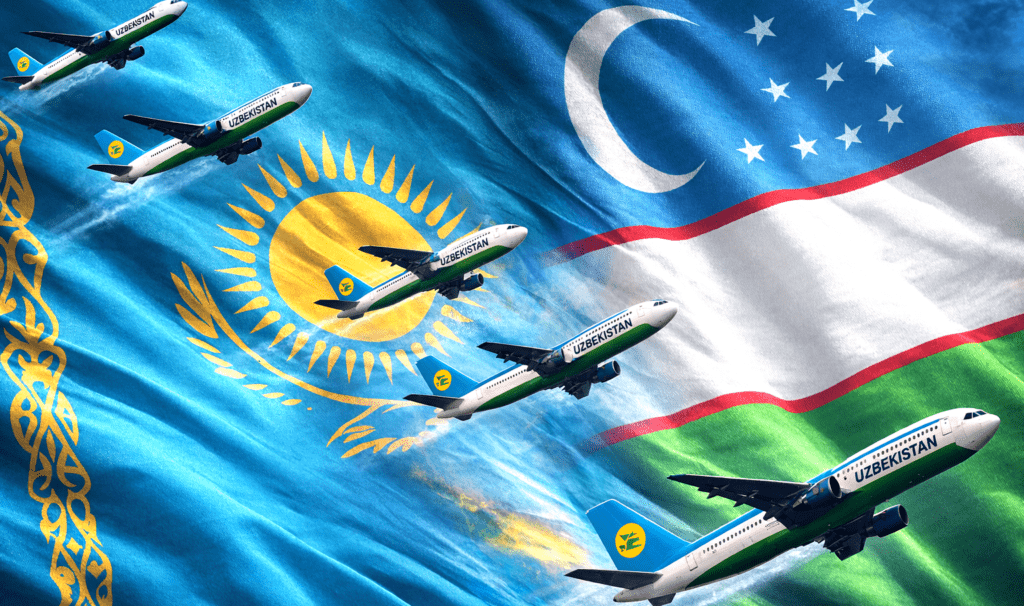
The war involving Iran has made Central Asia’s skies more important, but it has not made them a replacement for the Gulf. The change is narrower and more practical. As previously reported by The Times of Central Asia, the conflict has already reshaped Europe–Asia flight routes, with airlines forced to reroute around high-risk airspace. As EASA’s conflict-zone bulletin for Iran remains in force through March 31, and its broader Middle East and Persian Gulf bulletin advises operators to avoid a wide band of regional airspace, airlines flying between Europe and Asia now have fewer safe and efficient options than they did even a month ago. That matters for Central Asia because the region sits just north of the disrupted corridor. Iran’s airspace is considered high risk and is being widely avoided by airlines, while large parts of the central Middle East corridor are closed or heavily restricted. Safe Airspace’s March 21 summary states that the normal central route has been effectively shut for many operators, while Oman has become a heavily used southern bypass. That leaves a northern arc running through the Caucasus and Central Asia as one of the few workable alternatives for many carriers. The roots of this go back further than this month’s escalation. Since Russia’s full-scale invasion of Ukraine in 2022, many Western and Europe-bound operators have had to rethink routes that once crossed Russian airspace. In January 2025, Uzbekistan Airways began rerouting its Europe flights around Russia and Belarus. The airline said the Tashkent–Munich route grew from 4,849 kilometers to 5,156 kilometers, adding 30 to 40 minutes to each flight. The conflict has now squeezed traffic again, this time from the south. That double squeeze raises a harder question. Can Central Asia handle more strategic weight in the air, not just on a map but in daily operations? Kazakhstan is the strongest candidate. Kazaeronavigatsiya says Kazakhstan’s airspace handled 216,616 flights in the first half of 2025. Of those, 161,029 were flown by foreign airlines in transit or landing operations, while 55,587 were operated by Kazakh carriers. The same state operator lists 124 air traffic service routes with a combined length of 113,530 kilometers. These are substantial figures for a landlocked state positioning itself as a Eurasian transit hub. The country’s broader aviation system has also been expanding. The Civil Aviation Administration of Kazakhstan says airports served 31.8 million passengers in 2025, up from 29.7 million in 2024. Airlines carried 20.7 million passengers, and Kazakhstan’s compliance with international aviation safety standards reached 95.7%. The same report points to a three-year development plan, a new accident investigation center, and continued work on digital systems and urban air mobility rules. Still, higher value does not mean unlimited capacity. Central Asia is not one integrated aviation market. It is a set of separate national systems with uneven infrastructure, uneven investment, and different regulatory speeds. Kazakhstan has scale, but it is also expanding passenger traffic, cargo capacity, and international routes at the same time. More overflights can bring revenue, but...

Iran War Quietly Raises the Strategic Value of Central Asian Airspace

The war in Iran has disrupted one of the main aviation corridors linking Europe and Asia. The European Union Aviation Safety Agency (EASA) has issued safety bulletins warning of high risk to civilian aircraft in Iranian airspace and surrounding regions affected by military activity, missile launches, interceptions, and air defense operations. A separate EASA bulletin covering Iran, valid through March 31, describes a high risk to civil flights at all altitudes within the Tehran flight information region. The consequences reach far beyond the Middle East. Since Russia’s full-scale invasion of Ukraine in 2022, most Western airlines have been unable to use Russian airspace. With Iranian airspace now considered unsafe for normal commercial transit, the map for long-haul traffic between Europe and Asia has become extremely tight. Reuters mapping of global flight paths shows airlines diverting north via the Caucasus or taking longer southern routes through the eastern Mediterranean and the Arabian Peninsula. Many passengers traveling between Europe and Asia still transit through Gulf hubs. However, airports across the region, including Dubai, Abu Dhabi, Doha, Kuwait, and Bahrain, have faced disruption and unstable schedules during the conflict. Central Asia sits just beyond that northern bypass. It is not replacing the Gulf as a passenger hub, and is not suddenly becoming the main bridge between Europe and Asia, but the region’s airspace is increasingly strategically valuable as the number of efficient alternatives shrinks. The war has made Central Asia more important as part of a wider arc stretching from Turkey and the Caucasus across the Caspian basin and onward toward South and East Asia. [caption id="attachment_45218" align="aligncenter" width="1290"] Live flight-tracking map (image taken at 840am EST) showing aircraft routes avoiding Iranian airspace during the crisis. Many flights between Europe, the Middle East, and South Asia are being diverted north over the Caspian Sea and across Central Asia instead of flying over Iran; source: Planes Live[/caption] Kazakhstan is the clearest example. Local airlines had already begun to adjust before the current escalation reached its present level. In January, The Times of Central Asia reported that Air Astana had rerouted flights to Sharm el-Sheikh, Dubai, Doha, and Medina to avoid Iranian airspace. After the conflict widened, Air Astana canceled flights to several Middle Eastern destinations following the closure of Iranian airspace and rising regional tensions. Kazakhstan also imposed a temporary ban on flights over or near the airspace of Iran, Israel, Syria, Iraq, Jordan, and Lebanon. Uzbekistan also moved quickly. As early as October 2024, Kun.uz reported that Uzbekistan Airways was avoiding Iraqi airspace and western Iranian airspace on safety grounds. After the latest escalation, on March 4, Uzbekistan suspended flights to six Middle Eastern countries. The pattern is clear: Central Asian carriers are not immune to the crisis; they are already adjusting networks, schedules, and commercial risk, with the broader economic consequences of the conflict emerging across regional supply chains. However, the region’s aviation systems clearly now carry far greater strategic and economic importance than they did only a few years ago. On its...

Iran War Highlights Central Asia’s Vulnerable Southern Trade Corridors

The widening war centered on Iran is reverberating far beyond the Middle East, exposing a structural vulnerability in Central Asia’s economic geography: the region’s reliance on transport corridors that pass through or near Iran and the Persian Gulf. As fighting escalates and shipping risks spread across the region, insurers, shipping companies, and logistics firms are reassessing operations across the Gulf. War-risk insurance premiums have surged while some commercial carriers have scaled back bookings to parts of the region amid growing security concerns. Tensions around the Strait of Hormuz have already pushed shipping costs higher as governments and logistics firms weigh the risks of operating in one of the world’s most important maritime chokepoints. For Central Asia’s landlocked economies, the crisis highlights how much regional connectivity strategies still depend on southern access routes linking the region to global markets. The conflict has also edged closer to the transport routes linking Central Asia with Europe after what were alleged to be Iranian drone strikes on Azerbaijan’s Nakhchivan region, damaging facilities at the exclave’s airport and prompting diplomatic protests from Baku. While the strike did not directly disrupt trade corridors, it underscored how quickly the conflict could spill over into the South Caucasus, a key segment of the Middle Corridor. Nakhchivan is a landlocked Azerbaijani exclave bordering Iran and Turkey, separated from mainland Azerbaijan by Armenia, and lies at the frontier where Iranian territory meets the transport networks of the South Caucasus. The South Caucasus also hosts energy infrastructure with wider geopolitical significance. The Baku–Tbilisi–Ceyhan (BTC) pipeline transports mostly Azerbaijani crude through Georgia to the Turkish Mediterranean port of Ceyhan, from where it is shipped to global markets. In 2025, Azerbaijani oil accounted for 46.4% of Israel’s crude imports, most of it moving through this supply chain before being shipped onward by tanker. The pipeline also carries limited volumes of Kazakh crude - 2-3% of Kazakhstan’s overall exports - making it far more significant for Israel’s energy supply than for Kazakhstan’s export system. Iran’s armed forces have denied responsibility for the drone incident, instead accusing Israel of attempting to provoke tensions and disrupt relations between Muslim countries. The Geography of Connectivity Since independence, Central Asian governments have sought to overcome the constraints of geography. Landlocked and long dependent on Soviet-era transport networks running north through Russia, the region has spent three decades developing alternative corridors in multiple directions. Routes leading south have held particular appeal, offering the shortest overland access to ports on the Persian Gulf and the Indian Ocean. Iran sits at the heart of several connectivity initiatives designed to connect Central Asian rail networks to ports on the Persian Gulf and the Indian Ocean. The Ashgabat Agreement — a multimodal transport framework linking Iran, Oman, Turkmenistan, and Uzbekistan and designed to connect Central Asia with ports on the Persian Gulf and the Gulf of Oman — was created specifically to facilitate international trade and transit between Central Asia and global shipping routes. For countries such as Turkmenistan and Uzbekistan, rail routes...

Middle East Conflict Tests Central Asia’s Trade Routes and Energy Security

The escalating conflict between Iran, the United States, and their regional partners is raising economic concerns across Central Asia. Turkmenistan shares a long border with Iran, while other Central Asian economies depend on energy markets and trade routes that pass through or around the Persian Gulf. A wider conflict there could ripple across Central Asia through higher fuel prices, disrupted logistics, and pressure on key transport corridors. For countries such as Kyrgyzstan and Tajikistan, the most immediate risk is rising fuel prices. Both depend heavily on imported fuel. Kyrgyz security expert Taalaibek Jumadylov has warned that Kyrgyzstan could face rising prices for food, clothing, and other essential goods. For Tajikistan, the closure of the Strait of Hormuz would significantly increase import costs. Tajik media reports that trade between Tajikistan and Iran has grown rapidly over the past five years. Tajik-Iranian trade turnover increased from $377.7 million in 2024 to approximately $484 million in 2025, a rise of around 28%. Tajikistan’s exports totaled about $113 million, while imports from Iran exceeded $371 million, giving Iran a 4.5% share of Tajikistan’s total foreign trade turnover. If global oil prices rise significantly, Tajikistan could also face additional pressure on its budget. There are indirect risks as well: a slowdown in the economies of Russia, China, or other major partners could affect Tajikistan through trade, investment flows, and remittances. In Uzbekistan, analysts note that in recent years Iran has actively pursued transport diplomacy with Central Asia, seeking to strengthen its position as a regional logistics hub. Uzbek analyst Nargiza Umarova says this trend aligns with China’s Belt and Road Initiative. Iran and China signed a 25-year cooperation agreement in March 2021, a deal widely described as deepening Iran’s role in Belt and Road-linked connectivity. Kazakh economist Almas Chukin highlighted the logistical advantages of transport routes through Iran. “If we take the point where the Turkmenistan railway connects with Iran and the route to the Persian Gulf, it is about 1,200-1,500 kilometers. This is comparable to the distance from Astana to Almaty. Once you cover this distance, you reach the Persian Gulf and its major ports, where you can handle anything from oil transshipment to grain shipments. From there, sea transport to Rotterdam takes about three to four weeks,” he stated. Chukin added that such routes could simplify exports compared with transporting oil through Russia to Novorossiysk and then via the Black Sea, the Bosphorus Strait, and the Mediterranean. According to his estimates, a rail route to Europe through Iran would be about 3,500 kilometers from the Turkmen border. The economist suggested that if Iran’s political system changes and sanctions are lifted, Central Asia could benefit significantly. “This would be a huge shift for Central Asia: a region with a population of 80 million, abundant resources, and a young workforce, but constrained by geography, suddenly gaining direct access to global markets,” Chukin argued. Some analysts also point to emerging competition among regional transport corridors. In the South Caucasus, a proposed Zangezur corridor has been promoted...