• KGS/USD = 0.01144 0%
  • KZT/USD = 0.00198 0%
  • TJS/USD = 0.10857 -0.18%
  • UZS/USD = 0.00008 0%
  • TMT/USD = 0.28571 0%
  • KGS/USD = 0.01144 0%
  • KZT/USD = 0.00198 0%
  • TJS/USD = 0.10857 -0.18%
  • UZS/USD = 0.00008 0%
  • TMT/USD = 0.28571 0%
  • KGS/USD = 0.01144 0%
  • KZT/USD = 0.00198 0%
  • TJS/USD = 0.10857 -0.18%
  • UZS/USD = 0.00008 0%
  • TMT/USD = 0.28571 0%
  • KGS/USD = 0.01144 0%
  • KZT/USD = 0.00198 0%
  • TJS/USD = 0.10857 -0.18%
  • UZS/USD = 0.00008 0%
  • TMT/USD = 0.28571 0%
  • KGS/USD = 0.01144 0%
  • KZT/USD = 0.00198 0%
  • TJS/USD = 0.10857 -0.18%
  • UZS/USD = 0.00008 0%
  • TMT/USD = 0.28571 0%
  • KGS/USD = 0.01144 0%
  • KZT/USD = 0.00198 0%
  • TJS/USD = 0.10857 -0.18%
  • UZS/USD = 0.00008 0%
  • TMT/USD = 0.28571 0%
  • KGS/USD = 0.01144 0%
  • KZT/USD = 0.00198 0%
  • TJS/USD = 0.10857 -0.18%
  • UZS/USD = 0.00008 0%
  • TMT/USD = 0.28571 0%
  • KGS/USD = 0.01144 0%
  • KZT/USD = 0.00198 0%
  • TJS/USD = 0.10857 -0.18%
  • UZS/USD = 0.00008 0%
  • TMT/USD = 0.28571 0%
05 December 2025

Viewing results 1 - 6 of 7

Women Who Wear Niqab in Public in Kazakhstan to Risk Fines Under New Law

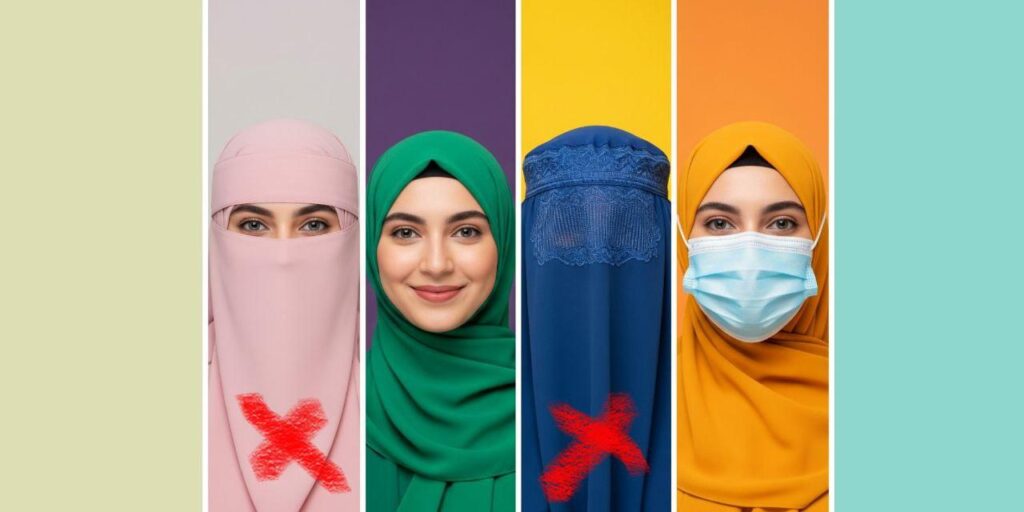
The Mazhilis, the lower house of the Kazakh parliament, has approved in its second reading a draft law “On the Prevention of Offenses,” which introduces fines for wearing a niqab, or other clothing that covers the face, preventing identification in public spaces. The bill amends the Code of Administrative Offenses to include penalties for such violations. A first offense will result in a warning; a second offense will incur a fine of $78 under current rates, increasing to $86 from 2026. A ban on face-covering garments, including both masks and niqabs, was first introduced in the summer of 2025. The new amendments formalize enforcement through administrative measures. Garments such as hijabs, sheilas, and khimars, which do not cover the face, remain permitted. Similar measures have been adopted in other Central Asian countries, including Kyrgyzstan. Beyond face coverings, the bill introduces liability for posting and distributing illegal content and for failing to comply with official instructions to remedy violations. It also expands the powers of the Ministry of Emergency Situations, allowing it to hold officials from state and local executive bodies accountable for not implementing civil protection measures intended to prevent natural or man-made emergencies. Debate over banning the niqab has persisted in Kazakhstan for years. Despite public resistance from some groups, authorities have finalized the decision, citing national security and efforts to counter extremism.

Uzbekistan Extends Sentences for Religious Prisoners Amid Longstanding Security Fears

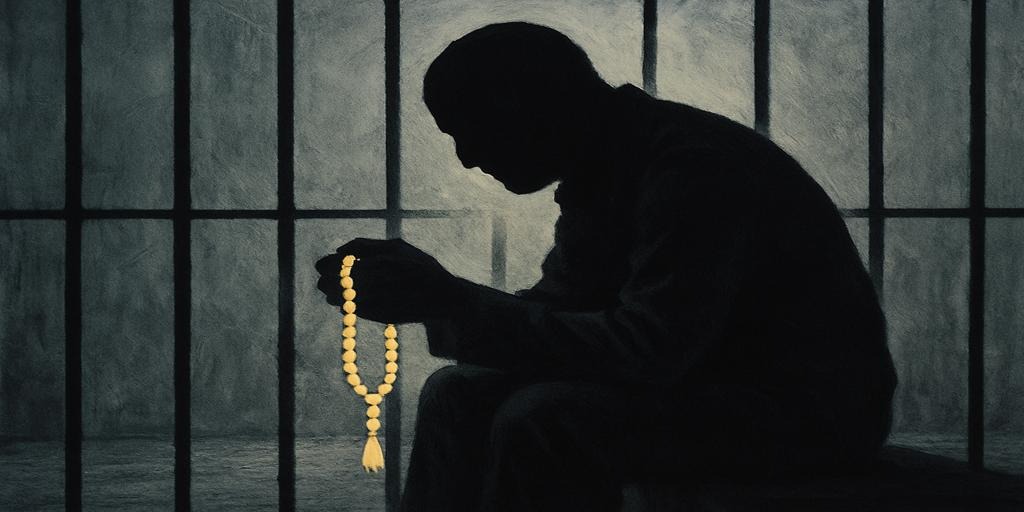
Two Muslim prisoners of conscience in Uzbekistan — both previously jailed for nonviolent religious activity — have had their sentences extended in recent months under charges that human rights observers describe as vague and politically motivated. While the cases have drawn criticism from international monitors, they also highlight the Uzbek government’s enduring fears over political Islam, concerns shaped by geography, history, and national security calculations. Tulkun Astanov, a 54-year-old activist originally imprisoned in 2020 for defending the rights of fellow Muslims, was sentenced to an additional three years and two months in a strict-regime labor camp this May. Authorities accused him of refusing to attend morning exercises in prison and of disobeying lawful orders. Astanov, who has suffered multiple strokes in custody, submitted a written request to be excused from physical activity on medical grounds — documentation which was reportedly dismissed by prison officials. His family and legal counsel contend the new case was fabricated to prevent his scheduled release later this year. The U.S. State Department has documented repeated concerns about his treatment in its 2022 International Religious Freedom Report. A second prisoner, Fariduddin Abduvokhidov, 30, was arrested in 2020 after participating in private Islamic study circles. He was originally given an 11-year sentence, but earlier this year, his term was extended twice: by ten years in March and an additional year in April. According to his family, the new charges relate to alleged "religious propaganda" while in detention. They say he was not fully informed of the basis of the charges and declined to appeal, citing emotional fatigue and lack of faith in the process. International monitors, including Human Rights Watch, have raised alarm about Uzbekistan’s use of vague extremism provisions to prosecute peaceful religious expression. Trials are often held behind closed doors, with little transparency or legal recourse for defendants. In both cases, court documents have not been made available to families or the public. Uzbekistan shares a 144-kilometer border with Afghanistan, where groups like the Taliban and ISIS-K remain active. During the 1990s and early 2000s, Uzbekistan suffered violent attacks from the Islamic Movement of Uzbekistan (IMU), a jihadist group aligned with the Taliban and later al-Qaeda. Those experiences left a lasting impact on both policymakers and public opinion, contributing to an enduring suspicion of independent Islamic activism. Several OECD democracies, including France, Belgium, and Austria, have enacted bans on face coverings in public. While controversial, those policies were introduced through public debate and are subject to judicial review. In Uzbekistan, by contrast, the lack of independent courts, competitive elections, and free media means that state regulation of religion is rarely subject to institutional checks. Uzbekistan has made real progress in other aspects of governance. Since independence in 1991, the country has implemented reforms in public administration, economic policy, and digital infrastructure, and it is currently pursuing accession to the World Trade Organization. Engagement with the OECD and OSCE has also deepened. For many observers, Uzbekistan’s evolution will be gradual, and should be allowed to proceed...

Kazakhstan Moves to Ban Face-Coverings in Public

On June 25, Kazakhstan’s Mazhilis, the lower house of parliament, approved amendments to the law “On the Prevention of Offenses,” introducing a new provision that prohibits wearing clothing that obscures the face in public places. While the regulation applies broadly, the most contentious element is its effective ban on the niqab, a religious garment that leaves only the eyes visible. This legislative move echoes ongoing debates in Kazakhstan and across Central Asia, where secular norms are enshrined in law but tensions persist over religious expression. Medical Masks Exempt Earlier, on June 19, Senator Nauryzbay Baikadamov clarified that the amendments would exempt face coverings worn for medical reasons, weather protection, or professional duties. According to Baikadamov, the law aims to enhance public safety and assist in crime prevention. While accessories such as balaclavas are included in the ban, the central controversy surrounds the prohibition of the niqab. The Scarf of Discord Understanding the distinctions among various forms of religious dress is critical to the current debate. The niqab is a face veil that leaves only the eyes uncovered, while the burqa (or paranji), typically worn in Afghanistan, covers the entire face with a mesh screen over the eyes. Burqas are rarely seen in Kazakhstan. Niqabs and black, floor-length dresses have become more visible on Kazakhstan’s streets in recent years, reflecting broader religious shifts. By contrast, the hijab, a headscarf that leaves the face exposed, has become commonplace and enjoys broader acceptance. While niqabs are widely seen as foreign to Kazakh culture, hijabs hold a more complex status. Historically, Kazakh women did not cover their faces, a fact supported by pre-revolutionary photographs. The niqab is viewed by many as an imported practice, largely linked to Islamic teachings from Arab countries. The hijab, however, is often seen as consistent with Kazakh traditions. As such, attempts to ban it have repeatedly stirred controversy. Religious Tensions in Schools In the fall of 2023, more than 150 schoolgirls in the Atyrau region refused to attend classes in protest against a hijab ban. Similar incidents were reported in other southern regions. Authorities reported that the situation was resolved after consultations with parents, but ambiguity remained regarding the scope of the restrictions, particularly whether the hijab was included. President Kassym-Jomart Tokayev ultimately addressed the issue, reaffirming Kazakhstan’s secular identity. “This principle must be strictly observed in all spheres, including education. School is, first and foremost, an educational institution where children come to gain knowledge. Religious beliefs, on the other hand, are a choice and a private matter for each citizen,” Tokayev stated. Still, the legal and cultural status of the hijab remains unresolved. While school uniform policies emphasize secular dress, enforcement is inconsistent, and experts warn of renewed conflict. Religious scholar Asylbek Izbaev noted, “It is not so important what a girl wears on her head as what she thinks.” A Regional Trend Kazakhstan’s move is part of a broader trend across Central Asia. In January 2025, Kyrgyz President Sadyr Japarov signed a law banning face-covering clothing. In...

Majority of Kazakhstanis Are Religious, But Discrimination Persists, Studies Suggest

A recent study by analysts at Energyprom.kz sheds light on the religious landscape of Kazakhstan. According to data from the educational platform Jagran Josh, Kazakhstan's population includes approximately 15.4 million believers.  The majority, 11.3 million, identify as Muslim, while about 4 million identify as Christian. A smaller segment, approximately 670,000 individuals, comprise atheists, agnostics, and those with no religious affiliation. Additionally, there are around 5,000 Hindus, 40,000 Buddhists, and about 50,000 practitioners of traditional local beliefs. It is important to note that these figures are compiled from various sources, some dating back to 2015 or earlier. Consequently, they are more suitable for broad international comparisons rather than a precise assessment of Kazakhstan's current religious demographics. Regional Characteristics of Religiosity More recent data, based on a 2024 survey of 1,500 respondents (aged 18 to 65) conducted by the Committee on Religious Affairs of the Republic of Kazakhstan, provides deeper insights into domestic religiosity. The survey revealed that 24.1% of Kazakhstani citizens consider themselves practicing believers who strictly observe religious precepts. The majority, 62.7%, identify as believers but observe only some rituals and traditions. About 9.2% of respondents stated they do not consider themselves believers yet still participate in certain rituals. A smaller proportion, 1.3%, reported no religious affiliation and no participation in rituals, while 0.9% identified as convinced atheists and 0.5% as agnostics. Regionally, Shymkent recorded the largest share of conditionally religious people who observe only certain traditions, at 77.6%. The Atyrau region exhibited the highest proportion of strict practitioners, at 46%. Conversely, the Pavlodar region led in the number of non-believers who nevertheless participate in rituals, at 24.6%. Atyrau also had the highest proportion of complete non-believers, at 10%. In terms of religious affiliation, 65.1% of respondents identified as followers of the Hanafi school of Islam, with another 11.6% belonging to other branches of Islam. Orthodox Christianity was practiced by 14.8% of respondents, Catholicism by 2.1%, and Protestantism by 1.8%. Hinduism, Buddhism, paganism, and Tengriism collectively accounted for less than 2%. An additional 0.8% reported believing but not identifying with any particular religion. The proportion of daily prayers increased from 17.7% to 19.3% over the last quarter. However, 27.9% of respondents reported never praying. Regarding attendance at places of worship (mosques, churches, etc.), 6.2% visit regularly, 14.5% do so weekly, and 33.8% two to three times a year. Notably, 10.4% of respondents have never been to a place of worship. Daily religious discussions with relatives were reported by 4.3% of Kazakhstani citizens, while 27.3% admitted that they never discuss religion within their families. Religious Discrimination Over the past three months, 41.3% of respondents reported experiencing discrimination on religious grounds. The most frequently cited incidents included the publication of offensive images (19.3%), negative comments on social media (11.5%), bans on visiting mosques or churches by the clergy (7.8%), and restrictions on education due to wearing a hijab (10.8%). Although official statistics on incidents directly classified as religiously motivated are not maintained, 54 criminal offenses were recorded between January and April 2025...

U.S. Commission Again Cites Turkmenistan for Religious Freedom Violations

The U.S. Commission on International Religious Freedom (USCIRF) has once again designated Turkmenistan as a “Country of Particular Concern” (CPC), citing ongoing and systematic violations of religious freedom in its 2024 annual report. Persistent State Control and Persecution The USCIRF report emphasizes that religious freedoms in Turkmenistan remain severely restricted, with the state maintaining tight control over religious life and prosecuting individuals whose beliefs deviate from officially sanctioned interpretations. Notably, the commission highlighted the imprisonment of ten Muslims for participating in peaceful religious activities, a case that underscores the regime's repressive stance toward nonconforming Islamic practices. Turkmenistan’s legal framework continues to draw criticism. The 2016 Religion Law prohibits unregistered religious groups and heavily restricts the distribution of religious literature, instruction, and rituals. The 2015 Law on Combating Extremism also remains a concern, as its vague provisions allow for the prosecution of peaceful religious activity. Harassment of Religious Minorities The report also documents the continued harassment of Protestant Christians and Jehovah’s Witnesses. In one case, a mosque official in Lebap province reportedly threatened to "shut down" a pastor of an unregistered Protestant church, prompting a visit from the Ministry of National Security. The pastor’s relatives later received anonymous threats. In January, law enforcement officers raided a Jehovah’s Witnesses' home in the village of Sakara, detaining five individuals who were subjected to eight hours of interrogation. Restrictions on Religious Travel The Turkmen authorities also restrict international travel on religious grounds. In January 2024, Pygamberdy Allaberdyev, a lawyer and activist from Balkanabat, was barred from traveling to Iran to attend a relative’s funeral. According to USCIRF, he was informed by Department of Homeland Security officials that he was under surveillance and would be prohibited from leaving the country for five years. Religion and the Cult of Personality The commission's report also criticizes the use of religion to reinforce the cult of personality surrounding former president Gurbanguly Berdimuhamedov. Although he currently serves as chairman of the Khalk Maslahaty, his influence remains widespread. Officials in Balkanabat and Turkmenbashi reportedly interfered with wedding ceremonies, mandating the exclusive use of Turkmen music, including songs from the former president’s personal repertoire. Authorities have also targeted religious expression among civil servants. Men have been forced to shave their beards, and women have been ordered to remove their hijabs. Ahead of the Berdimuhamedov family’s vacation in Avaza, police carried out raids targeting religious symbols. In October, women in Ashgabat wearing hijabs were reportedly detained, had their belongings confiscated, and were banned from traveling abroad. They were also lectured about the secular nature of the state. Policy Recommendations In its conclusions, USCIRF recommends targeted sanctions against officials and agencies responsible for egregious violations of religious freedom, including asset freezes and visa bans. The commission also urged the U.S. Congress to take a more active role in addressing these issues through hearings and delegations to the region. Turkmenistan has consistently appeared on USCIRF’s CPC list since 2000, reflecting its entrenched policies of religious control, suppression of non-state-approved faiths, and ongoing violations against...