• KGS/USD = 0.01143 0%
  • KZT/USD = 0.00206 0%
  • TJS/USD = 0.10811 -0.09%
  • UZS/USD = 0.00008 0%
  • TMT/USD = 0.28571 0%
  • KGS/USD = 0.01143 0%
  • KZT/USD = 0.00206 0%
  • TJS/USD = 0.10811 -0.09%
  • UZS/USD = 0.00008 0%
  • TMT/USD = 0.28571 0%
  • KGS/USD = 0.01143 0%
  • KZT/USD = 0.00206 0%
  • TJS/USD = 0.10811 -0.09%
  • UZS/USD = 0.00008 0%
  • TMT/USD = 0.28571 0%
  • KGS/USD = 0.01143 0%
  • KZT/USD = 0.00206 0%
  • TJS/USD = 0.10811 -0.09%
  • UZS/USD = 0.00008 0%
  • TMT/USD = 0.28571 0%
  • KGS/USD = 0.01143 0%
  • KZT/USD = 0.00206 0%
  • TJS/USD = 0.10811 -0.09%
  • UZS/USD = 0.00008 0%
  • TMT/USD = 0.28571 0%
  • KGS/USD = 0.01143 0%
  • KZT/USD = 0.00206 0%
  • TJS/USD = 0.10811 -0.09%
  • UZS/USD = 0.00008 0%
  • TMT/USD = 0.28571 0%
  • KGS/USD = 0.01143 0%
  • KZT/USD = 0.00206 0%
  • TJS/USD = 0.10811 -0.09%
  • UZS/USD = 0.00008 0%
  • TMT/USD = 0.28571 0%
  • KGS/USD = 0.01143 0%
  • KZT/USD = 0.00206 0%
  • TJS/USD = 0.10811 -0.09%
  • UZS/USD = 0.00008 0%
  • TMT/USD = 0.28571 0%

Viewing results 1 - 6 of 116

World Bank Approves $100 Million to Modernize Uzbekistan’s Power Grid

The World Bank has approved a $100 million credit to support the modernization of Uzbekistan’s electricity distribution system and facilitate the integration of renewable energy sources. Uzbekistan’s Regional Electric Power Networks (REPN) will contribute an additional $50 million to the initiative, marking the country’s first use of the World Bank’s Program-for-Results (PforR) financing model. Uzbekistan’s aging power distribution infrastructure poses serious challenges. Over 50% of the network is more than 30 years old and suffers from significant inefficiencies. As of 2024, technical issues contribute to the loss of approximately 13% of electricity, resulting in frequent outages across the country. The government has set a target of installing 25 gigawatts of renewable energy capacity by 2030. However, experts warn that without immediate upgrades to the national grid, Uzbekistan’s infrastructure will be unable to accommodate this expansion. In addition to technical improvements, the government is working to reduce commercial losses and enhance the financial viability of the electricity sector to attract private investment. Tatiana Proskuryakova, World Bank Country Director for Central Asia, highlighted the scale of the challenge. “The total investment needed is about $3 billion. We hope other development partners and private investors will join us in supporting REPN in this crucial effort,” she said. The combined $150 million from the World Bank and REPN will be deployed over the next five years to upgrade and expand infrastructure, particularly in regions such as Karakalpakstan and Surkhandarya. Planned improvements include: Construction or modernization of 6,000 kilometers of power lines Installation of 1,200 transformers Connection of 150,000 smart meters Deployment of 4,000 data concentrators to improve automation The program also aims to enhance REPN’s operational and financial management. It includes the development of advanced planning methodologies, strengthened financial oversight, and support for corporate governance reforms. By 2029, the initiative is expected to increase customer satisfaction, reduce annual CO₂ emissions by up to 450,000 tons, and raise the proportion of women in technical and leadership roles from 9% to 14%. Earlier this year, the World Bank also approved $153 million in support of a project aimed at reforestation and combating land degradation in Uzbekistan, as part of a broader regional climate resilience program.

Azerbaijan, Kazakhstan, and Uzbekistan Partner on Caspian Green Energy Corridor

Azerbaijan, Kazakhstan, and Uzbekistan have signed a landmark agreement with the Asian Development Bank (ADB) and the Asian Infrastructure Investment Bank (AIIB) to advance a regional renewable energy initiative known as the Caspian Green Energy Corridor. The Memorandum of Understanding (MoU), signed on April 5 in Baku, outlines plans for a feasibility study to assess the project's potential. The primary objective is to establish a robust legal and institutional framework that will facilitate cross-border electricity trade among the three countries, particularly from renewable sources. The Caspian Green Energy Corridor is part of ADB’s broader regional strategy to promote clean energy and enhance multilateral cooperation. The initiative aims to interconnect the energy systems of Azerbaijan, Kazakhstan, and Uzbekistan, enabling them to share and distribute renewable electricity more efficiently. “This agreement lays the foundation for deeper cooperation and shows our shared commitment to building a clean energy future,” said Yevgeniy Zhukov, ADB Director General for Central and West Asia. A key ambition of the project is to develop a green energy supply route from the Caspian region to Europe via the Black Sea Cable. The corridor is expected to improve energy security, reduce carbon emissions, and support economic development across the region. The initiative is also backed by the Central Asia Regional Economic Cooperation (CAREC) Program, which brings together 11 countries and several development partners to promote regional integration and reduce poverty through economic collaboration.

Kyrgyzstan Begins Construction of a New Solar Power Plant

Kyrgyzstan has launched the construction of a new solar power plant in the Kemin district of the Chui region, approximately 100 kilometers east of the capital, Bishkek. The plant will have a capacity of 100 MW and is expected to generate 155 million kWh of electricity annually. According to the government, this will help reduce carbon dioxide emissions by 140,000 tons and coal consumption by 50,000 tons per year. At the January 21 groundbreaking ceremony, Chairman of the Cabinet of Ministers Adylbek Kasymaliev described the project as a significant step toward achieving Kyrgyzstan’s energy independence and advancing sustainable development. Acknowledging that the country still heavily relies on its Soviet-era hydroelectric power plants for electricity generation, Kasymaliev emphasized Kyrgyzstan’s commitment to adopting modern and environmentally friendly energy solutions. Kasymaliev also highlighted the country’s growing energy demands, noting that Kyrgyzstan’s population now exceeds 7 million and new large-scale industrial enterprises are being established. He expressed optimism that the new solar power plant would help alleviate electricity shortages, which remain a pressing issue, especially during the winter months. The chairman extended his gratitude to Chinese partners and investors, particularly those from Shaanxi Province, for their support and contributions to the project. Kyrgyzstan is actively addressing its energy challenges by investing in a diversified mix of renewable energy initiatives, including solar and wind farms, as well as large hydroelectric power projects.

Uzbekistan to Build New Solar Plant with World Bank Support

The World Bank has approved a $3.5 million payment guarantee to support Uzbekistan’s renewable energy development. The guarantee covers the National Electric Grid of Uzbekistan JSC’s obligation to purchase electricity from a 100-megawatt solar power plant to be built and operated by the French company Voltalia in the Khorezm region. Details of the Solar Plant Project The solar plant, set to be commissioned in November 2025, will span 177 hectares and generate more than 240 gigawatt-hours of renewable energy annually. It is projected to reduce CO₂ emissions by over 230,000 metric tons each year and produce enough clean energy to power approximately 60,000 households. This initiative aligns with Uzbekistan’s commitment to increasing clean energy production and advancing its transition to a green economy. Broader World Bank Support In addition to this project, the World Bank has allocated $800 million to accelerate Uzbekistan’s transformation into an inclusive and stable market economy. This financing supports reforms to: Improve the business environment. Enhance agriculture, railways, and energy efficiency. Strengthen public finance management. Expand social services. Increase preparedness for environmental risks. Favorable Financing Terms The World Bank’s financial support employs highly concessional loans, offering low-cost, long-term repayment options that are more favorable than standard international financial market rates. Uzbekistan’s collaboration with the World Bank underscores its strategic focus on sustainable development and clean energy to meet environmental and economic goals.

Uzbekistan Energizes Growth with $7 Billion in New Energy Projects

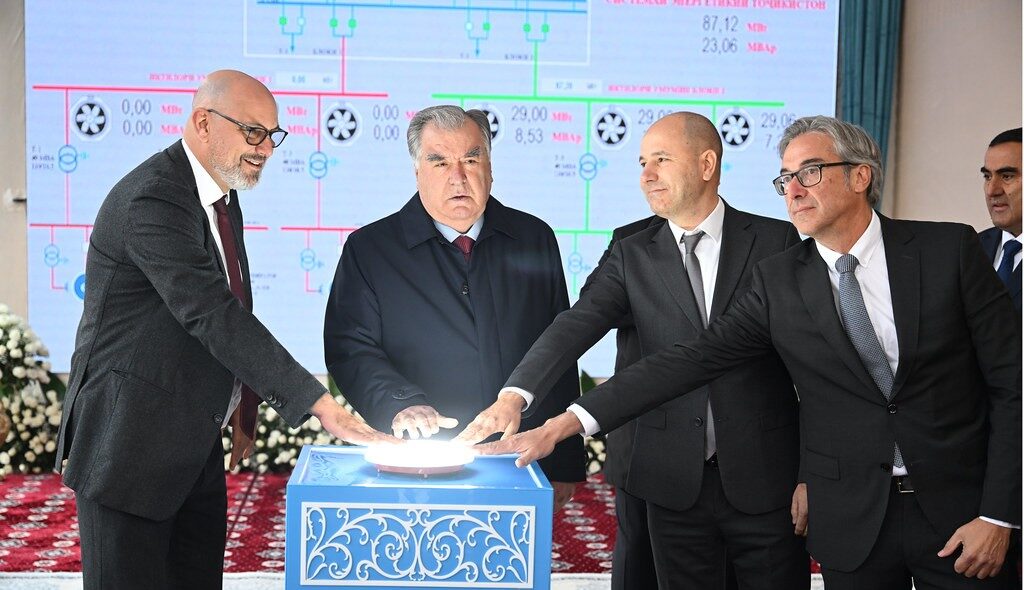
On December 13, Uzbekistan’s President Shavkat Mirziyoyev inaugurated operations for 18 new energy facilities and launched the construction of six additional projects. Together, the 24 initiatives represent an investment of over $7 billion. The ceremony marked a significant milestone for Uzbekistan’s energy sector, connecting the national power grid to five solar and wind power plants with a combined capacity of approximately 2,300 megawatts. Additionally, five high-voltage substations were commissioned in the Bukhara, Navoi, Namangan, and Tashkent regions. The country’s first energy storage system, with a capacity of 300 megawatts, began operations in the Andijan and Fergana regions. New power facilities launched include a 400-megawatt plant in Kashkadarya, a modern cogeneration plant in Tashkent, and four small hydroelectric power plants in Andijan, Surkhandarya, and Tashkent regions. Mirziyoyev also initiated construction on six power-generating facilities with a total capacity of 2.5 gigawatts in the Fergana, Samarkand, Navoi, and Tashkent regions, as well as in the city of Tashkent. These projects will collectively produce an additional 9.5 billion kilowatt-hours of electricity, sufficient to power more than 4 million households. They are also expected to save 2.5 billion cubic meters of natural gas and reduce emissions by 4.6 million tons annually. Foreign Investment Fuels Energy Transformation Mirziyoyev highlighted the pivotal role of foreign investment in these initiatives. Companies from the United Arab Emirates, Saudi Arabia, Turkey, China, and Germany are leading the projects, supported by international financial institutions such as the Asian Development Bank, the Islamic Development Bank, the European Bank for Reconstruction and Development, and the World Bank. Uzbekistan aims to produce 84 billion kilowatt-hours of electricity in 2025—an increase of 25 billion kilowatt-hours compared to 2016. Over the past five years, the energy sector has attracted $20 billion in foreign direct investment. Solar and wind power plants with a total capacity of 3,500 megawatts have already been launched, producing 10 billion kilowatt-hours annually and raising the share of "green" energy to 16% of the total energy mix. The country’s GDP reached a historic $100 billion last year, and plans are underway to double this to $200 billion by 2030. Such economic growth will drive a 1.5-fold increase in electricity demand over the next five years. Key Priorities for Uzbekistan’s Energy Sector Mirziyoyev outlined three strategic priorities for the energy sector: Expansion of Renewable Energy By 2030, Uzbekistan plans to add 19,000 megawatts of renewable energy capacity, increasing the share of "green" energy to 54%. In 2025, the country will commission 18 solar and wind power plants with a combined capacity of 3,400 megawatts, along with energy storage systems totaling 1,800 megawatts. This is expected to boost "green" energy production to 12 billion kilowatt-hours annually. Liberalization of the Electricity Market Uzbekistan will continue to liberalize its electricity market, with plans to establish a competitive wholesale electricity market by the end of 2025. Public-private partnerships will be introduced in energy distribution, and $4 billion will be invested to modernize power grids across the country. Expanding International Cooperation The government will enhance international collaboration in...

Kazakhstan, Uzbekistan, and Azerbaijan Forge Green Energy Partnership

On November 13, on the sidelines of the COP29 summit in Baku, Azerbaijan, Kassym-Jomart Tokayev, Shavkat Mirziyoyev and Ilham Aliyev, the leaders of Kazakhstan, Uzbekistan and Azerbaijan, signed an agreement for a strategic partnership in developing and transporting green energy. Calling the signing of this agreement a historic event, Aliyev said that “it opens new opportunities for cooperation between the regions of Central Asia and the Caucasus. In fact, the integration processes, the processes related to transportation, energy, and trade between the regions of Central Asia and the Caucasus, allow us to say that these two regions are acting in a synchronized manner in many areas, including in the field of green energy development.”. The Azeri president added that constructing an electric cable under the Caspian Sea could lead to broader regional collaboration. Aliyev also highlighted Azerbaijan's ongoing plans to construct a cable from Azerbaijan along the bottom of the Black Sea to Europe. “The feasibility study for this project is nearing completion, so we will connect Central Asia, the Caucasus, Europe, the Caspian, and the Black Seas with a single energy corridor,” he stated. In his speech, Tokayev said the trilateral agreement opens new opportunities for integrating the energy systems of Kazakhstan, Uzbekistan, and Azerbaijan, as well as for creating reliable corridors to supply environmentally friendly energy to European and other markets. “Kazakhstan plays an extremely important role here as a large transit territory. The practical results of this Agreement will also contribute to developing the Middle Corridor as a ‘green bridge’ connecting our economies. Close cooperation in this key area will intensify the exchange of experience and advanced technologies between the three states and further strengthen our energy security,” Tokayev said. Mirziyoyev emphasized the environmental significance of this agreement, noting, “The energy that will be transmitted is wind and solar energy, which will help mitigate the impact on the climate. In this way, we support joint efforts to protect the climate within the framework of the Paris Agreement and achieve the Sustainable Development Goals,” he added. The three presidents also witnessed the signing of an Executive Program on cooperation in green energy development and transmission by the energy ministers of Azerbaijan, Kazakhstan, Uzbekistan, and Saudi Arabia.