• KGS/USD = 0.01144 0%
  • KZT/USD = 0.00207 0%
  • TJS/USD = 0.10419 -0.1%
  • UZS/USD = 0.00008 0%
  • TMT/USD = 0.28530 -0.14%
  • KGS/USD = 0.01144 0%
  • KZT/USD = 0.00207 0%
  • TJS/USD = 0.10419 -0.1%
  • UZS/USD = 0.00008 0%
  • TMT/USD = 0.28530 -0.14%
  • KGS/USD = 0.01144 0%
  • KZT/USD = 0.00207 0%
  • TJS/USD = 0.10419 -0.1%
  • UZS/USD = 0.00008 0%
  • TMT/USD = 0.28530 -0.14%
  • KGS/USD = 0.01144 0%
  • KZT/USD = 0.00207 0%
  • TJS/USD = 0.10419 -0.1%
  • UZS/USD = 0.00008 0%
  • TMT/USD = 0.28530 -0.14%
  • KGS/USD = 0.01144 0%
  • KZT/USD = 0.00207 0%
  • TJS/USD = 0.10419 -0.1%
  • UZS/USD = 0.00008 0%
  • TMT/USD = 0.28530 -0.14%
  • KGS/USD = 0.01144 0%
  • KZT/USD = 0.00207 0%
  • TJS/USD = 0.10419 -0.1%
  • UZS/USD = 0.00008 0%
  • TMT/USD = 0.28530 -0.14%
  • KGS/USD = 0.01144 0%
  • KZT/USD = 0.00207 0%
  • TJS/USD = 0.10419 -0.1%
  • UZS/USD = 0.00008 0%
  • TMT/USD = 0.28530 -0.14%
  • KGS/USD = 0.01144 0%
  • KZT/USD = 0.00207 0%
  • TJS/USD = 0.10419 -0.1%
  • UZS/USD = 0.00008 0%
  • TMT/USD = 0.28530 -0.14%

Viewing results 1 - 6 of

Russia: Thousands of Central Asia-Born Russians Sent to Ukraine Front Line

A senior Russian official has said that thousands of migrants from Central Asia who became Russian citizens were sent to fight in Ukraine after they tried to dodge conscription. "Our military investigations directorate conducts regular raids,” Alexander Bastrykin, head of Russia’s Investigative Committee, said on Tuesday in remarks that were reported by the Russian state-run TASS news agency. “So far, we've tracked down 80,000 such Russian citizens who didn't just avoid the front lines — they wouldn’t even show up at military enlistment offices. We’ve registered them for military service, and about 20,000 of these 'new' Russian citizens, who for some reason no longer want to live in Uzbekistan, Tajikistan, or Kyrgyzstan, are now on the front lines," Bastrykin said at the St. Petersburg International Legal Forum. Bastrykin’s comments contributed a piece to the often murky picture of the involvement of people from Central Asia in Russia’s war effort in Ukraine in the last three years. In addition to conscription measures, Russia has also sought to replenish its ranks by offering contracts and other incentives to foreigners willing to fight. Uzbekistan and Kazakhstan are among Central Asian countries that ban their nationals from fighting in foreign conflicts and there have been several high-profile prosecutions of citizens who fought for Russia and returned home. It is a sensitive political matter in Central Asia, a region that seeks to project neutrality in the conflict between Russia and Ukraine. Kazakhstan has said it is reviewing a report by a Ukrainian institution that said about 661 Kazakh citizens have fought for Russia since it launched a full-scale invasion of Ukraine in February 2022. The I Want To Live center, which is run by the Ukrainian security services and assists with surrender requests from soldiers fighting for Russia, published a list of what it said were the Kazakh nationals. Of the 661, at least 78 have been killed, according to the center. Without providing details, it said it received the list from its own sources within the Russian military. Uzbekistan is conducting a similar investigation based on data from the Ukrainian group.
Opinion: The Ukraine-Russia Peace Talks Need Multiple Platforms for Negotiations

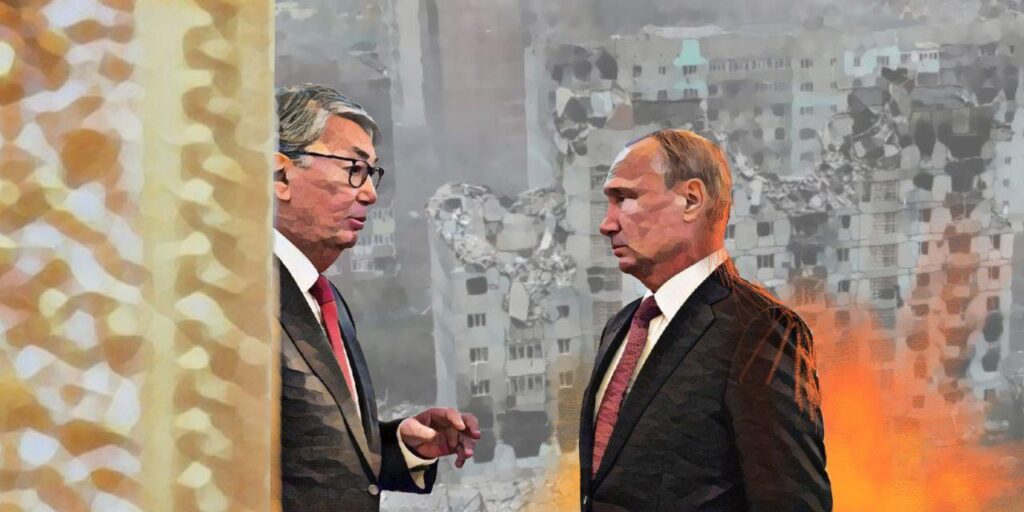
The proposed Istanbul meeting between Zelensky and Putin on May 15 did not take place, with no Russian ministers attending the talks Putin himself had called for, leading Zelensky to describe the Russian delegation as "phony". Hopes for peace remain, however, as other stakeholders have expressed their eagerness to support a resolution. With its unique geopolitical position as a bridge between Europe and Asia, Turkey was an obvious choice to host the negotiations. While Turkey has sought to maintain balanced relations throughout the conflict, its provision of military support to Ukraine, including drones, has complicated its image as a neutral party. Despite this, as a NATO member with significant energy partnerships with Russia, Turkey serves as a crucial intermediary. Furthermore, its active role in initiatives like the Black Sea Grain Agreement has reinforced its credibility in international diplomacy. Turkey’s continued involvement, therefore, benefits not only the peace process but also its own economic and strategic interests. Turkey is not the only stakeholder on the periphery of Russia, however; Kazakhstan is also well-positioned to contribute to the peace negotiations. Kazakhstan’s shared history with Russia and Ukraine as former Soviet republics has shaped mutual economic and security frameworks, rooted in decades of centralized governance and cooperation. The continued use of the Russian language as one medium of communication across these nations underscores intertwined cultural and historical links. Kazakhstan’s relationship with Russia spans centuries, marked by alliances, trade, and cultural exchange, further deepening ties beyond the Soviet era. In recent years, Kazakhstan has diversified its alliances through its multi-vector foreign policy. It has forged strong relationships with China, the U.S., the EU, and organizations like the SCO and EAEU while cultivating robust economic ties. Its energy sector has attracted major foreign investors such as Chevron, ExxonMobil, and Shell. By hosting peace talks and global summits, Kazakhstan has established itself as a neutral mediator, balancing traditional ties with Russia while expanding its global influence. Kazakhstan also has an impressive record in terms of peace negotiations. President Kassym-Jomart Tokayev hosted pivotal talks in Almaty in 2024 between Armenia and Azerbaijan, addressing over three decades of conflict in Nagorno-Karabakh. Kazakhstan also played a key role in facilitating the 2018 agreement on the Caspian Sea’s legal status, which resolved disputes over resources and territorial boundaries. The country hosted multiple rounds of Syrian peace talks starting in Astana in 2017, bringing together the Syrian government, opposition groups, and international stakeholders, including Russia and Turkey. Similarly, it provided a platform for the Iran nuclear talks in 2013 and supported the 2015 Iran nuclear deal. Kazakhstan’s neutrality and commitment to diplomacy have earned it credibility as a Middle Power in fostering agreements on contentious issues. Additionally, Kazakhstan hosted the 2010 OSCE Summit that led to the adoption of the Astana Declaration. This reaffirmed the Helsinki Principles on peace, security, and cooperation from Vancouver to Vladivostok. It represented a critical collective commitment to territorial integrity, sovereignty, and human rights since the dissolution of the USSR. The summit underscored Kazakhstan’s role in...

Putin Briefs Tokayev on U.S.-Russia Talks About Possible Ukraine Deal

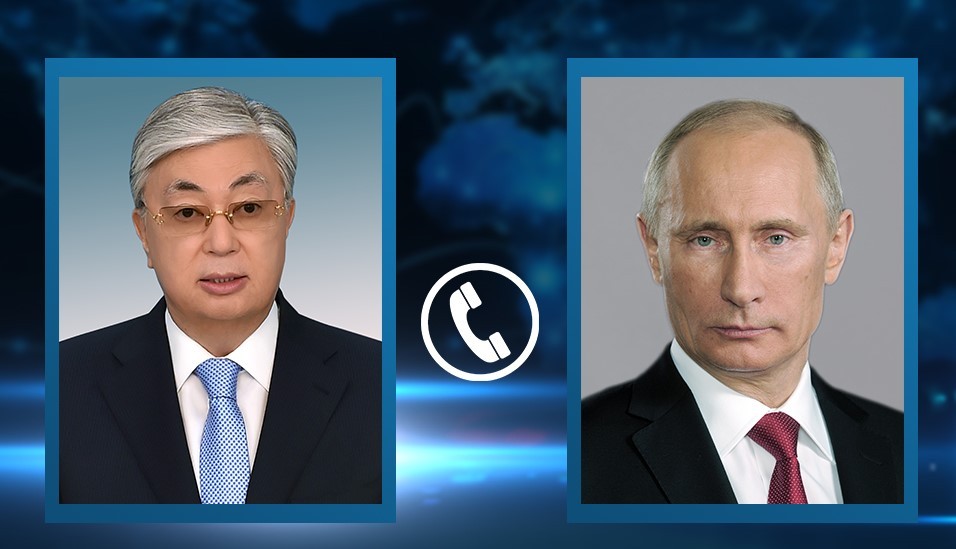
Russian President Vladimir Putin has updated Kazakh President Kassym-Jomart Tokayev on U.S.-Russian talks, which have focused in recent weeks on trying to reach a settlement in the war in Ukraine. Putin and Tokayev spoke by telephone on Thursday, according to the offices of the two leaders. In the conversation, Putin “shared his assessments of the progress achieved in the dialogue between Russia and the United States,” the Kremlin said without providing details. It said the two men also discussed preparations for the May 9 commemoration in Moscow of victory over Nazi Germany in World War II, adding that Tokayev is expected to attend. Kazakhstan’s presidency said that Putin and Tokayev talked about topics including joint energy projects and “exchanged views on current international issues,” a possible reference to talks on the Ukraine war. U.S. envoy Steve Witkoff discussed Ukraine with Putin in St. Petersburg last week. American and Russian officials also negotiated in Saudi Arabia in February, in the first face-to-face meeting between the two countries since Russia launched a full-scale invasion of Ukraine three years earlier. Ukraine and its European allies fear the United States favors Russian negotiating positions, while Russia has ramped up accusations that some European countries are undermining any progress toward a settlement. The two sides remain far apart on key issues and U.S. President Donald Trump has expressed frustration over a conflict that he had said he would quickly resolve. Kazakhstan and other Central Asian countries have tried to maintain a publicly neutral stance in the conflict. Tokayev, in particular, has emphasized the need for dialogue and welcomed a lengthy call last month between Putin and Trump. Another international priority for Kazakhstan is how to navigate Trump administration tariffs, and the government plans to send a delegation to Washington to negotiate.

Ukrainian Drone Strike Disrupts Kazakhstan’s Oil Exports

On February 17, Ukrainian drones struck the Kropotkinskaya oil pumping station, a key component of the pipeline of the Caspian Pipeline Consortium (CPC) in Russia’s Krasnodar region. The CPC, a 1,500-kilometer pipeline, transports crude from Kazakhstan’s Tengiz field to the Black Sea port of Novorossiysk, a crucial hub for global exports. The attack, confirmed by CPC operators, resulted in the temporary shutdown of the Kropotkinskaya station, the largest such facility on Russian soil. No casualties or oil spills were reported. Ukrainian sources, including the Security Service of Ukraine (SBU) and Special Operations Forces (SOF), claimed responsibility, citing the pipeline’s role in supporting Russia’s military-industrial complex. The strike reportedly involved seven drones armed with high-explosive warheads, significantly damaging energy infrastructure, including a gas turbine unit and a substation. Russian authorities estimated a 30–40 percent reduction in CPC throughput for the next six to eight weeks, affecting global supply chains. While CPC pipeline operators have not disclosed a precise timeline for repairs, the anticipated disruptions will inevitably place additional pressure on global energy markets. The degree of damage inflicted raises questions about the vulnerability of Russian energy infrastructure and the efficacy of existing defense systems in preventing such attacks. The CPC pipeline handles a substantial share of Kazakhstan’s oil exports. In 2023, it transported 63.5 million tons, or approximately 1.27 million barrels per day (bpd), with 90 percent of that volume originating in Kazakhstan. This pipeline disruption translates into a projected drop in Kazakh oil flows from 1.143 million bpd to an estimated range of 0.69 to 0.80 million bpd. Consequently, Kazakhstan’s total crude exports—including volumes transported via alternative routes such as the Trans-Caspian corridor and rail—are expected to decline by up to 28.6 percent. The revenue impact could be severe given oil’s centrality to Kazakhstan’s economy. Even a short-term disruption will reverberate across multiple sectors, affecting fiscal revenues and potentially leading to a recalibration of investment strategies within the country’s energy sector. Although Kazakhstan has sought to diversify its oil export routes since 2022, alternatives remain limited. The Trans-Caspian International Transport Route (TITR), connecting Kazakhstan to Azerbaijan via the Caspian Sea and then onward through the Baku–Tbilisi–Ceyhan (BTC) pipeline, carried just 1.8 million tons in 2023. This is but a fraction of CPC’s capacity. Other options, such as the Druzhba pipeline to Europe and rail transport, are constrained by infrastructure bottlenecks and geopolitical risks. Given these constraints, Astana has increasingly prioritized the expansion of maritime oil exports, including investments in new tankers and port facilities. However, logistical challenges, cost considerations, and geopolitical uncertainties continue to complicate Kazakhstan’s ability to execute a seamless transition away from Russian transit routes. The attack underscores the vulnerability of Russia’s energy infrastructure amid the ongoing war. Unlike previous Ukrainian strikes targeting refineries and storage depots, this is a direct hit on a critical transit corridor with transnational implications. The disruption may accelerate Astana’s long-term push for diversification, including investment in new tankers and expanded partnerships with U.S. and European firms. In light of these developments, Kazakhstan...

Ukraine’s Drone Strike on Russian Oil Hub Sparks Concerns Over Kazakhstan’s Energy Security

On February 17, seven Ukrainian unmanned aerial vehicles (UAVs) attacked an oil transportation facility of the Caspian Pipeline Consortium (CPC), targeting the Kropotkinskaya oil pumping station in Russia. Following the attack, reports emerged that the volume of oil pumped from Kazakhstan through the CPC could decrease by 30% for a period of one and a half to two months. Conflicting Reports on the Impact On February 18, Ukraine officially confirmed the strike. "Yesterday, the Ukrainian defense forces carried out a pinpoint strike on strategic facilities of the military and fuel and energy infrastructure of the Russian Federation... The Kropotkinskaya and Andriapol oil pumping stations, which played a key role in transporting fuel for the occupiers, were hit. After the strike, they were put out of action, significantly complicating the logistics of fuel supplies to the aggressor," the General Staff of the Armed Forces of Ukraine stated. Shortly after, Transneft, the Russian shareholder in the CPC, warned that oil pumping volumes from Kazakhstan could drop by approximately 30% due to the damage.  Meanwhile, Russian Deputy Prime Minister Alexander Novak provided an even bleaker assessment. During a meeting with President Vladimir Putin, he stated: "We see a decrease in pumping volumes by about 30 - 40% compared to levels before the drone attack." Novak estimated that restoring the CPC infrastructure would take "several months, at least," citing the need to replace damaged Western-made equipment, including Siemens gas turbines.  However, later that day, Kazakhstan’s Ministry of Energy issued a statement disputing these claims. "Currently, there are no restrictions on Kazakh oil shipments via the CPC, and acceptance is proceeding as scheduled," the ministry said.  Despite this, Russian Foreign Minister Sergey Lavrov framed the attack as a direct assault on Kazakhstan’s energy infrastructure.  Expert Perspectives: Overreaction or Serious Threat? While officials issued conflicting statements, financial analyst Rasul Rysmambetov urged against panic. Writing on his Telegram channel ArtFinanze, he dismissed talk of a 30% reduction in pumping volumes as an "overreaction." However, he acknowledged that the attack exposed the risks of Kazakhstan’s reliance on foreign transit routes. "Geopolitical and other risks when exporting through third countries can easily double. It’s too early to panic; there are few catastrophic scenarios at this stage. But if attacks on infrastructure continue, it will become increasingly difficult to protect the underwater pipeline system, especially considering the Russian Black Sea Fleet’s recent losses. Kazakhstan’s oil facilities have been largely spared so far, but there’s no guarantee this will continue. Contrary to popular belief, the fact that companies like Chevron are involved won’t deter anyone; on the contrary, such infrastructure can be used to exert pressure on entire countries," he warned.  Kazakhstan’s Dilemma: Dependence on Russian Routes While experts downplay immediate consequences, Kazakhstan’s vulnerability is undeniable. Calls to boost domestic petrochemical production to reduce dependence on foreign pipelines remain largely aspirational. Meanwhile, efforts to diversify oil export routes have yielded little progress. Currently, 93% of Kazakhstan’s oil exports pass through Russian territory, leaving the country with limited alternatives: Caspian Pipeline Consortium...

Trump-Putin Deal Talks: Central Asia at the Nexus of Global Power Shifts

The reported discussions this week between Donald Trump and Vladimir Putin have become a central focus for global media and analysts. However, for Central Asia, the most pressing question is not when the war in Ukraine will end—an outcome that could occur as unexpectedly as the contact between U.S. and Russian leaders—but what Russia’s next move will be. The future actions of Moscow remain a primary concern for the five Central Asian countries. On February 12, Donald Trump announced via his social network, Truth Social, that he had a lengthy phone conversation with Vladimir Putin. His main message was that both leaders had agreed on the need to end the war and would take immediate action. The day before, Trump told reporters at the White House that members of his negotiating team and Putin’s representatives would meet in Munich. Despite skepticism from many analysts who anticipated a longer negotiation process, talks are already scheduled to begin on Valentine’s Day. In the same post, Trump revealed the composition of his negotiating team: “I have asked Secretary of State Marco Rubio, CIA Director John Ratcliffe, National Security Advisor Michael Waltz, and Ambassador and Special Representative Steve Witkoff to lead the negotiations.” Although the details of Trump’s proposed peace plan remain under discussion, a rough outline has emerged from various sources which involve: A freeze in fighting along the current front line. The establishment of a demilitarized zone spanning the entire 1,300-kilometer front. Deployment of a European military contingent, including UK troops, to patrol the demilitarized zone (U.S. troops will not be involved, but may provide training and logistical support). A 20-year postponement of Ukraine’s NATO membership bid in exchange for continued Western arms supplies. Recognition of Russian sovereignty over occupied territories. Security guarantees for Ukraine from European countries. A possible EU membership pathway for Ukraine by 2030. A 10-year reconstruction plan for Ukraine, funded by European countries and Russian contributions. A gradual lifting of sanctions on Russia’s energy sector over several years. Reimbursement of U.S. military aid to Ukraine through Ukrainian natural resource revenues. Presidential and parliamentary elections in Ukraine in 2025, especially if a settlement is reached between Kyiv and Moscow. If Russia accepts these terms, they are likely to be included in the final draft of the agreement. Notably, Trump’s plan takes Moscow’s interests into account, though some points were reportedly rejected during the February 12 call. The depth of the proposal suggests that Trump’s team and Putin’s representatives have been in contact for some time, well before Trump’s formal inauguration as U.S. president. Trump first hinted at such talks in March 2023,  when he claimed he could resolve the Russia-Ukraine conflict within 24 hours of taking office. At the time, many dismissed this as election rhetoric. However, recent events suggest that he is following through on his promises. A striking example is the release of Mark Vogel, an American sentenced in Russia to 14 years in prison for marijuana possession. His return to the U.S. was part of a...