• KZT/USD = 0.00214
  • TJS/USD = 0.10810
  • UZS/USD = 0.00008
  • TMT/USD = 0.29760
  • KZT/USD = 0.00214
  • TJS/USD = 0.10810
  • UZS/USD = 0.00008
  • TMT/USD = 0.29760
  • KZT/USD = 0.00214
  • TJS/USD = 0.10810
  • UZS/USD = 0.00008
  • TMT/USD = 0.29760
  • KZT/USD = 0.00214
  • TJS/USD = 0.10810
  • UZS/USD = 0.00008
  • TMT/USD = 0.29760
  • KZT/USD = 0.00214
  • TJS/USD = 0.10810
  • UZS/USD = 0.00008
  • TMT/USD = 0.29760
  • KZT/USD = 0.00214
  • TJS/USD = 0.10810
  • UZS/USD = 0.00008
  • TMT/USD = 0.29760
  • KZT/USD = 0.00214
  • TJS/USD = 0.10810
  • UZS/USD = 0.00008
  • TMT/USD = 0.29760
  • KZT/USD = 0.00214
  • TJS/USD = 0.10810
  • UZS/USD = 0.00008
  • TMT/USD = 0.29760
12 August 2026

Viewing results 1 - 6 of

Kazakh Deputy PM Zhumangarin: Our Industries Come Before Sanctions

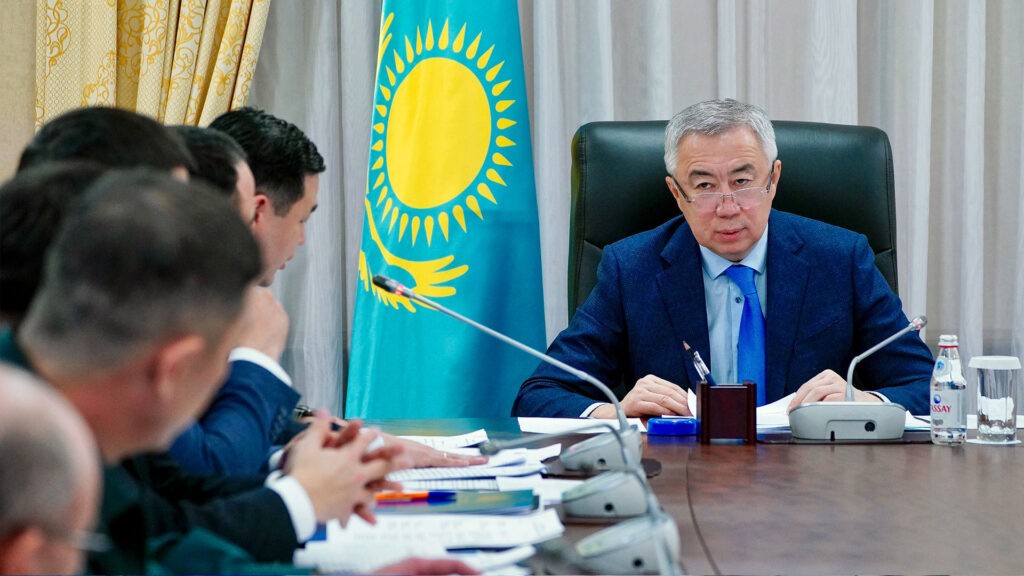
Kazakhstan has clarified its position on sanctions against Russia imposed as a result of Russia's invasion of Ukraine. Primarily, Kazakhstan will not support measures that could negatively impact its economy. Speaking to Russian state media outlet Tass, Deputy Prime Minister Serik Zhumangarin underscored that Kazakhstan will not act as a conduit for circumventing sanctions, as doing so could severely affect its domestic industries. However, he emphasized the nation's commitment to safeguarding its economic interests, particularly in sectors where products might fall under sanction restrictions. “We have explicitly stated that we will not impose restrictions on these goods, as behind them are large labor collectives and enterprises, often located in single-industry towns,” Zhumangarin explained. During Russian President Vladimir Putin's visit to Kazakhstan on November 27-28, he met with Kazakh President Kassym-Jomart Tokayev. The leaders issued a joint statement condemning unilateral sanctions, citing their detrimental effects on global trade, economic cooperation, and sustainable development. They reaffirmed their commitment to principles of open and non-discriminatory international trade. By maintaining a neutral stance on sanctions, Kazakhstan seeks to minimize economic risks while prioritizing the interests of its workforce and industries. As The Times of Central Asia previously reported, Kazakhstan’s Ambassador to Russia, Dauren Abayev, noted that Kazakh companies aim to avoid secondary sanctions but will continue fostering close cooperation with Russia. In an August interview with Bloomberg, Zhumangarin reiterated that Kazakhstan would not blindly adhere to sanctions against Russia but would consider international restrictions. He highlighted that while Kazakhstan aims to protect its companies from trade bans, it cannot completely disregard sanctions due to the risk of economic isolation. Furthermore, Kazakhstan's Minister of National Economy, Nurlan Baibazarov, addressed concerns in early November regarding including Kazakh companies on UK sanctions lists. He emphasized that these cases mostly involved transient firms, asserting that Kazakhstan continues to comply with international regulations.

Putin in Kazakhstan: Language Diplomacy, Treaty Fine Print and a Hack

Geopolitical tensions, finding common ground on oil and gas transportation and deliveries and Russia’s hopes of beating out rivals to build Kazakhstan´s first nuclear power plant. These were some of the big ticket themes framing Russian President Vladimir Putin’s trip to the Central Asian nation last week. The Times of Central Asia looks at a few other things that happened on the sidelines:   A Tale of Two Languages “Kazakhstan is practically a Russian-speaking country, which you have probably had a chance to see for yourself.” Putin was extolling close ties between Russia and Kazakhstan when he made that remark to journalists in Astana last week. But the comment also drew attention to how Kazakhstan uses the Kazakh language to express national identity and independence from a past controlled by Moscow. In November 2023, during an earlier visit by Putin to Astana, Kazakh President Kassym-Jomart Tokayev spoke in Kazakh rather than Russian, causing senior Russian officials to reach somewhat hurriedly for their earpieces to get the translation. While Russia and Kazakhstan share a long land border and are bound by deep economic and security ties, Tokayev’s semantic switch seemed to be a reminder that Kazakhstan, a former Soviet republic and Russian imperial territory, would follow its own path. Last week, both leaders went out of their way to emphasize linguistic harmony, even if tensions sometimes emerge over Kazakhstan’s increasing promotion of the Kazakh language. There is a significant ethnic Russian minority living in Kazakhstan. “One third of schoolchildren in our country are educated in Russian. We attach special importance to this issue. It is for this reason that I proposed the creation of the International Russian Language Organization,” Tokayev said. Putin thanked Tokayev for backing the use of the Russian language, “widely and freely,” in Kazakhstan. He said there are plans to open three Russian language schools in Kazakhstan, with Russian government support. Some social media posts claimed there was a diplomatic dustup between the two leaders, showing video of Putin´s “Russian-speaking country” remark followed by Tokayev speaking in Kazakh in an apparent pushback. However, the video appears to be spliced from different events. Putin is shown standing; Tokayev is seated. Furthermore, the Kremlin transcript shows that Putin made the remark at a solo news conference.   That’s What It Says, But… The treaty of a regional security group that includes Russia, Kazakhstan, Kyrgyzstan, Tajikistan, Belarus and Armenia says members must provide military and other help to any member subjected to “aggression by any state or group of states.” Does that mean members of the Collective Security Treaty Organization, or CSTO, should get behind Russia in its war against Western-backed Ukraine? After all, Putin says Russia is a target of Ukrainian and Western aggression, even if some dispute the assertion because he launched a full-scale invasion of Ukraine in 2022. Putin was asked the question on Thursday after a state visit to Kazakhstan and a meeting of the regional security group in Astana. Each security group member “stands ready to act in accordance with...

On Kazakhstan Trip, Putin Touts Russian Military Power

Russian President Vladimir Putin briefed a regional security group meeting in Kazakhstan on Thursday about Russia’s latest hypersonic missile system and possible plans to strike “decision-making centers” in Kyiv, a step that would represent another escalation after nearly three years of war in Western-backed Ukraine. Putin’s speech to key figures in the Collective Security Treaty Organization, showcased the military might of Russia, which has nevertheless suffered significant losses during the war. It was delivered to an audience that, with the exception of Russian ally Belarus, has largely tried to stay on the sidelines of the conflict. The Russian-led security organization, known by its acronym CSTO, includes five other post-Soviet states – Kazakhstan, Kyrgyzstan, Tajikistan, Belarus and Armenia. However, Armenia has effectively frozen its membership and its representatives were not present at the meeting in Astana, Kazakhstan’s capital. “Some of our colleagues have asked me to report extensively on the latest developments in the zone of conflict in Ukraine, the zone of the special military operation, in view of the recent developments,” Putin said, according to a Kremlin transcript. “Certainly, recognizing the importance of the ongoing events, I will gladly provide an update on the situation today, as I believe it is my duty to inform you about the latest events.” Putin, who launched a full-scale invasion of Ukraine in February 2022, described recent Russian strikes as a response to Ukraine’s use of Western weapon systems, including ATACMS and Storm Shadow missiles, in Russia’s Bryansk and Kursk regions. He referred to a test of the hypersonic Oreshnik missile “in its non-nuclear configuration” in an attack on the Ukrainian city of Dnipro on Nov. 21, a strike that intensified concerns about nuclear escalation by Russia. Some U.S. officials, however, believe the use of nuclear weapons by Russia remains unlikely, even if the situation is dangerous. “Military and technical experts note that when used in a concentrated, massive strike – using several Oreshnik missiles simultaneously – the resulting impact is comparable in power to that of a nuclear weapon,” Putin said. He clarified that the Oreshnik is not deemed to be a weapon of mass destruction because of its “exceptional precision” and because it is not delivering a nuclear warhead, meaning there is no radiation. Production of the Oreshnik system is ongoing and Russia might further use it in combat, Putin said. He also said the Russian military is identifying more strike targets in Ukraine. “These may include military installations, defense industry sites, or decision-making centers” in the Ukrainian capital, he said. There were no immediate public reactions by Kazakh President Kassym-Jomart Tokayev and other regional leaders to Putin’s remarks. Tokayev has previously said that Russia is “militarily invincible” and that negotiations are the only way to end the conflict. A Gallup poll conducted in Ukraine this year concluded that about half of Ukrainians want a negotiated end to the war as soon as possible, an increase since the beginning of the conflict. However, it’s not clear on what exact terms they would accept a deal with Putin, who says Ukraine is part of Russia. There is also uncertainty about how U.S. President-elect Donald Trump will deal with the war when...

Kazakhstan on Alert as War in Ukraine Escalates

Kazakh President Kassym-Jomart Tokayev has instructed his government to take urgent steps to safeguard key military and civilian facilities because of escalating hostilities in Ukraine, which has been fighting Russian forces since they launched a full-scale invasion in early 2022. Tokayev ordered the prime minister, the presidential chief of staff, security chiefs and regional governors “to ensure the security” of the facilities, presidential press secretary Berik Uali said on Facebook on Thursday. Uali’s message did not include any details about the security steps that were being taken. Parliamentary leaders were notified of the measures, according to Uali. “The President is personally monitoring the situation in the country,” he said. The message came hours after Russia struck a site in the Ukrainian city of Dnipro with a new ballistic missile that amounted to a heightened warning from Russian President Vladimir Putin. The missile was only carrying conventional warheads, but it is in a class of missiles that can carry nuclear weapons. On Wednesday, Kazakhstan’s embassy in Ukraine urged Kazakh citizens to consider leaving Ukraine for safety reasons, and Kyrgyzstan issued a similar message to its nationals. Kazakhstan, which shares a long border with Russia, has called for an end to the conflict in Ukraine through negotiations. Kazakhstan and other Central Asian countries that, like Ukraine, were former Soviet republics have sought a neutral stance, maintaining trade and security ties with Russia while not publicly supporting the invasion.

War in Ukraine: Kazakhstan, Kyrgyzstan Tell Citizens to Step Up Safety

Some Central Asian countries are urging their nationals to consider leaving Ukraine as the war with Russian forces escalates there. “Due to the increased frequency of artillery shelling and airstrikes in Ukraine, the Embassy of the Republic of Kazakhstan in Ukraine strongly advises its citizens to consider leaving areas close to active combat zones or leaving Ukraine altogether for safety purposes,” the embassy said on Telegram on Wednesday. It urged citizens “to take air raid warnings seriously, immediately seek shelter, adhere to personal safety measures, and follow the recommendations of official authorities.” Kazakh citizens can travel home from Ukraine by using land routes through Poland or Moldova, and then boarding a commercial flight, according to the embassy. It said a Schengen visa is required for entry into Poland and no visa is needed for Moldova. Citing its embassy in Ukraine, Kyrgyzstan’s Ministry of Foreign Affairs said “a massive attack was carried out on the territory of the Kyiv region using attack unmanned aerial vehicles” on Wednesday. The ministry recommended that Kyrgyz citizens currently in Ukraine “strengthen their personal security measures and, if necessary, leave the territory of Ukraine until the situation has fully stabilized.” The U.S. Embassy in Kyiv said it was closing on Wednesday as a precaution after receiving “specific information of a potential significant air attack” and that embassy employees were instructed to shelter in place. Some other Western embassies also closed temporarily. Russia launched a full-scale invasion of Ukraine in February 2022 and the war has recently escalated. North Korean troops have deployed into ally Russia’s territory near the border, including in the Kursk region of Russia where Ukrainian troops have seized territory; the United States has allowed Ukraine to use U.S.-supplied, longer-range missiles to attack targets in Russia; and Russian President Vladimir Putin has issued another round of warnings about the possible use of Russia’s nuclear arsenal, in an apparent effort to deter more Western support for Ukraine.

U.S. Sanctions Uzbek Companies Supplying Russia with Equipment

The U.S. Department of the Treasury has sanctioned 275 individuals and entities involved in supplying Russia with advanced technology and equipment that it desperately needs to support its war machine. The Uzbek companies Uzstanex and The Elite Investment Group are among the sanctioned entities. Deputy Secretary of the Treasury Wally Adeyemo emphasized that the U.S. and its allies are committed to halting the flow of essential tools and technologies that enable Russia to pursue its unlawful war against Ukraine. “As demonstrated by today’s actions, we are unwavering in our resolve to weaken Russia’s military capabilities and to penalize those attempting to circumvent or evade our sanctions and export controls,” Adeyemo stated. Uzstanex is part of the StanexGroup holding. The company sells and adjusts machine tools in Uzbekistan, Kazakhstan, Kyrgyzstan, Tajikistan, and Turkmenistan. According to the U.S. Treasury Department, the machine tools purchased by Uzstanex were delivered to Russia through the Chinese company Shanghai Winsun Imp and Exp Co Ltd (Shanghai Winsun), which is why sanctions were imposed against it. The Elite Investment Group is a non-specialized wholesaler. It is noted that from mid-March to May 2024, using GUCLU GLOBAL as a carrier agent, the company delivered approximately $190,000 worth of high-priority goods, including electrical transformers, to companies in Russia, including the GS Group.