• KGS/USD = 0.01143 0%
  • KZT/USD = 0.00202 0%
  • TJS/USD = 0.10599 -0.19%
  • UZS/USD = 0.00008 0%
  • TMT/USD = 0.28575 0%
  • KGS/USD = 0.01143 0%
  • KZT/USD = 0.00202 0%
  • TJS/USD = 0.10599 -0.19%
  • UZS/USD = 0.00008 0%
  • TMT/USD = 0.28575 0%
  • KGS/USD = 0.01143 0%
  • KZT/USD = 0.00202 0%
  • TJS/USD = 0.10599 -0.19%
  • UZS/USD = 0.00008 0%
  • TMT/USD = 0.28575 0%
  • KGS/USD = 0.01143 0%
  • KZT/USD = 0.00202 0%
  • TJS/USD = 0.10599 -0.19%
  • UZS/USD = 0.00008 0%
  • TMT/USD = 0.28575 0%
  • KGS/USD = 0.01143 0%
  • KZT/USD = 0.00202 0%
  • TJS/USD = 0.10599 -0.19%
  • UZS/USD = 0.00008 0%
  • TMT/USD = 0.28575 0%
  • KGS/USD = 0.01143 0%
  • KZT/USD = 0.00202 0%
  • TJS/USD = 0.10599 -0.19%
  • UZS/USD = 0.00008 0%
  • TMT/USD = 0.28575 0%
  • KGS/USD = 0.01143 0%
  • KZT/USD = 0.00202 0%
  • TJS/USD = 0.10599 -0.19%
  • UZS/USD = 0.00008 0%
  • TMT/USD = 0.28575 0%
  • KGS/USD = 0.01143 0%
  • KZT/USD = 0.00202 0%
  • TJS/USD = 0.10599 -0.19%
  • UZS/USD = 0.00008 0%
  • TMT/USD = 0.28575 0%
14 February 2026

Viewing results 1 - 6 of 67

Has Kyrgyzstan Benefited From Its Membership of the EAEU?

On the sunlit shores of Lake Issyk-Kul this August, Kyrgyzstan played host to leaders from across the Eurasian Economic Union (EAEU). On August 14-15, officials from Armenia, Belarus, Kazakhstan, and Russia descended on the resort town of Cholpon-Ata for a meeting of the Eurasian Intergovernmental Council, accompanied by ceremonies to mark a decade since Kyrgyzstan joined the Moscow-led economic bloc. The Kyrgyz government issued a commemorative stamp to celebrate the anniversary, while the guest of honor, Russian Prime Minister Mikhail Mishustin, arrived with pledges of deeper integration. Rosatom, Moscow’s nuclear agency, signed agreements to build Kyrgyzstan’s first wind farm near Issyk-Kul, while the union’s five governments also agreed to recognize each other’s digital documents, and talks continued on a long-awaited gas union. Mishustin also caused a stir on social media by addressing the Kyrgyz honor guard in their own language. The words “Salam Asker” (hello, soldiers) were enough to draw appreciation from a Kyrgyz society unused to hearing Russian politicians use any language but Russian in its former colonies. The flattery was all part of the choreography: in return, Kyrgyz government officials and state media fell in line to proclaim the benefits of EAEU membership. But have these benefits been worth it? Or has the EAEU merely tethered Bishkek to a partner whose grip is more suffocating than supportive? [caption id="attachment_35121" align="aligncenter" width="1600"] The Conference Hall at Cholpon-Ata, where the council meeting took place; image: Joe Luc Barnes[/caption] The Case for the Union Kyrgyz officials are keen to emphasize the upsides. In an interview with state mouthpiece Slovo.kg, former economic minister Arzybek Kozhoshev said that joining the bloc had eased conditions for Kyrgyz migrant laborers in Russia and Kazakhstan. “With the accession of the Kyrgyz Republic to the EAEU, the conditions of stay and work of citizens of the Kyrgyz Republic in other EAEU countries have changed significantly,” Kozhoshev said, highlighting simplified entry, no requirement to take a Russian language exam, equal access to health insurance, and even the right to draw pensions on par with local workers. For a country where remittances have accounted for around 25% GDP over the past decade, these measures are not insignificant. Kyrgyz drivers, once barred from operating commercial vehicles in Russia, now enjoy full rights. Digital labor platforms like Work Without Borders make it easier to find jobs, and migrant workers in Russia pay the same flat 13% tax as local workers. In short, for the hundreds of thousands of Kyrgyz toiling in Moscow, Novosibirsk, and Almaty, the EAEU has meant fewer hurdles and more predictability. It’s worth bearing in mind that other potential labor destinations, such as Korea, the United States, or the European Union, are not handing out hundreds of thousands of visas to Kyrgyz citizens every year. Kremlin officials have also stressed that Kyrgyzstan pays lower tariffs on Russian gas – only $150 per 1,000 cubic meters, due to its EAEU membership. That said, given Russia’s current oversupply of gas with the closure of the European market, this is not...

Trump-Putin Alaska Summit Ends Without Ceasefire

U.S. President Donald Trump and Russian President Vladimir Putin met on Friday in Alaska for their first face-to-face summit since the start of the Ukraine war. Despite optimism from the U.S. side, the talks ended without an agreement on a ceasefire. The leaders met for nearly three hours at Joint Base Elmendorf-Richardson in Anchorage, following a red-carpet welcome and military flyover. Only a handful of aides joined the private session. Afterward, Trump called the exchange “extremely productive” and said “some headway” had been made, but stressed that “there’s no deal until there’s a deal.” Putin described “progress” and “agreements,” though neither leader offered specifics, and neither took questions. No Ceasefire, Continued Dialogue Ending Russia’s invasion of Ukraine dominated the agenda. Trump had vowed to bring the war to a close quickly, but the Alaska talks produced no ceasefire. Ukrainian officials noted that Putin appeared to have “bought more time” as fighting continues. Air raid sirens sounded in Ukraine, and Russian border regions came under drone attack even as the summit unfolded. Having previously said on the way to his summit with Russian President Vladimir Putin that he wouldn’t “be happy if I walk away without some form of a ceasefire,” U.S. President Donald Trump walked away from the talks with no agreement in place, instead urging Ukrainian President Volodymyr Zelenskyy to “make a deal.” “I believe we had a very productive meeting,” Trump stated. “There were many, many points that we agreed on… I will call up NATO… I’ll of course call up President Zelenskyy and tell him about today’s meeting… We really made some great progress… I’ve always had a fantastic relationship with President Putin – with Vladimir…We were interfered with by the ‘Russia, Russia, Russia’ hoax,” he added. “Again, Mr. President, I’d like to thank you very much, and we’ll speak to you very soon and probably see you again very soon,” Trump said. “Thank you very much, Vladimir.” “Next time in Moscow,” Putin replied, chuckling, with a rare use of English, before Trump abruptly ended his press event, refusing to take any questions. Both leaders said the dialogue would continue. Trump claimed he and Putin agreed on “most things” and floated the idea of joining a future meeting between Putin and Ukrainian President Volodymyr Zelenskyy. Putin, while not referencing direct talks with Kyiv, urged Ukraine and its allies not to “derail” what he called constructive progress. Signals from Washington and Moscow Trump emphasized his desire to stop the fighting, stating, “I want the killing to stop,” and suggested he believed Putin wanted peace as well. He also said he would hold off on imposing new “severe” measures on Russia, a shift from earlier rhetoric. Trump also revealed that he would pause plans to levy tariffs on Chinese imports over Beijing’s purchases of Russian oil, saying progress in Alaska made that step unnecessary for now. Putin, meanwhile, repeated his long-standing demands that NATO expansion and other “root causes” be addressed before peace can be achieved. He warned that...

Trump–Putin Talks in Alaska: What Could They Mean for Central Asia?

As U.S. President Donald Trump prepares to meet Russian President Vladimir Putin at the Joint Base Elmendorf-Richardson, located just outside of Anchorage, Alaska, hopes and anxieties are reverberating across Central Asia. Trump has signaled that securing a ceasefire in Ukraine is his top priority, warning of “very severe consequences” for Moscow if Putin refuses to halt the war. For the five former Soviet republics of Central Asia, these peace talks carry high stakes. Any truce or breakdown could ripple into their economies and strategic calculus. The war has already fundamentally changed Central Asia’s strategic positioning, accelerating diversification away from Russian dependence. With Trump and Putin poised to negotiate, Central Asian leaders are mindful that all possible outcomes - a ceasefire, a prolonged conflict, or a major power realignment - could each reshape the region’s economic fortunes and foreign policy choices. Central Asian Stances on the Ukraine War All five Central Asian governments have officially maintained neutrality on the Ukraine conflict. On the first UN General Assembly resolution of March 2, 2022, Kazakhstan, Kyrgyzstan, and Tajikistan abstained, while Uzbekistan and Turkmenistan did not vote. On subsequent resolutions, Uzbekistan abstained alongside Kazakhstan, Kyrgyzstan, and Tajikistan; Turkmenistan continued not to vote. None has recognized Russia’s claims to Ukrainian territory. Seated beside Putin at a plenary session of the St. Petersburg International Economic Forum in June 2022, referring to them as “quasi-state territories,” President Kassym-Jomart Tokayev of Kazakhstan refused to recognize the independence of the so-called Donetsk and Lugansk People’s Republics. “Modern international law is the United Nations Charter,” Tokayev stated. Despite maintaining ties with Russia, Kazakhstan has boosted its engagement with China, Turkey, and Europe during the conflict. Whilst publicly affirming that it will comply with Western sanctions on Russia, Kazakhstan has stated that it will continue to prioritize its economic interests, vowing not to “blindly follow” such measures when they harm its domestic industries. “Kazakhstan will continue to comply with the sanctions but will pursue a balanced policy to minimize the impact on its own economy,” Deputy Prime Minister Serik Zhumangarin said in August 2024. Uzbekistan has adopted a similar “balanced and neutral” approach to the war in Ukraine. In March 2022, then-Foreign Minister Abdulaziz Kamilov stated that Uzbekistan “recognizes the independence, sovereignty and territorial integrity of Ukraine, and does not recognize the Luhansk and Donetsk People’s Republics.” Despite Kamilov leaving his position shortly after making this statement, the nation’s position appears largely unchanged. Calling for an immediate end to “hostilities and violence,” Tashkent has expanded links with Turkey, China, and the EU. According to a U.S. State Department report from 2024, “Uzbekistan formally committed to adhering to U.S. and EU sanctions and trade restrictions on Russia.” Kyrgyzstan has continued to maintain a close economic relationship with Moscow while abstaining from all key United Nations resolutions concerning the Ukraine war. President Sadyr Japarov has said the country “adheres to a neutral position” and that exports to Russia are civilian in nature. In January 2025, Kyrgyzstan’s Keremet Bank was designated by the U.S....

Central Asia Charts New Course as Russian Aviation Falters

Sanctions against Russia may intensify if U.S. President Donald Trump escalates pressure on the Kremlin and Vladimir Putin. But even without additional measures, several sectors of Russia’s economy are already buckling under strain. Among the most vulnerable is civil aviation, now grappling with “fleet cannibalization”, a practice born of scarcity and isolation. In this context, alarmist claims from Russian aviation analysts that Central Asian airlines might soon replace Russian carriers not only on international routes but potentially within Russia itself are being reassessed. So, what is actually happening and why? Squeezing Russia Out One of the most overlooked aviation developments of 2024 was the announcement at the Central Asian Aviation Summit in Astana that regional countries were forming their own civil aviation regulatory body. As Amir Akhmetov, senior advisor to the director of the Aviation Administration of Kazakhstan, put it: “In the changing geopolitical environment of the republics of Central Asia and the South Caucasus, together with like-minded countries, they are creating their own regional civil aviation organization, the Eurasian Civil Aviation Conference (EACAC).” This initiative, first proposed by Astana in 2023, includes Kazakhstan, Kyrgyzstan, Uzbekistan, Tajikistan, and Turkmenistan, as well as Armenia, Azerbaijan, Georgia, Moldova, and Mongolia. Although initially scheduled for 2025, the first EACAC meeting took place in Almaty in November 2024. Russian observers have taken note. The publication Versiya, which had predicted Russia’s marginalization in the Central Asian aviation market as early as 2016, commented on the development in stark terms: “It is hard not to notice that this is truly a momentous event in the field of civil aviation regulation within the EAEU member states, aimed precisely at pushing Russia out of the process… which, after the formation of the announced structure, will de facto exist and be managed under direct Anglo-American influence.” However alarmist the tone, the underlying concern is not unfounded. Russia’s aviation sector is increasingly isolated and dependent. By December 2024, it was confirmed that a new aircraft maintenance hub would be built in Aktau, one of Kazakhstan’s four major aviation centers. The project, spearheaded by Turkish Technic, YDA, and ASFAT, will serve civil and military aircraft from Kazakhstan, Russia, Uzbekistan, Turkmenistan, Kyrgyzstan, and Tajikistan. According to then-Minister of Transport Marat Karabayev, “The center will serve 411 civil aircraft... As a result of the project, the airport’s cargo handling capacity will increase to 200,000 tons per year, with an annual turnover of 520 billion tenge ($996.7 million).” Aviation in Central Asia: A Regional Snapshot In Kazakhstan, liberalization and competition have allowed the civil aviation sector to flourish. National carrier Air Astana operates hubs in Almaty and Astana and is widely considered among the best airlines in the post-Soviet space. Its low-cost subsidiary, FlyArystan, has grown rapidly, fueled by a strong Airbus fleet, now over 60 aircraft, with new A320 and A321 deliveries annually. Private airline SCAT flies across the former USSR and Asia, while Qazaq Air, now rebranded as Vietjet Qazaqstan, entered into a strategic partnership in 2025 with Vietnam’s Sovico Group, owner...

Iraq Seeks Alternative Gas Import Routes Through Turkmenistan Amid Sanctions Challenge

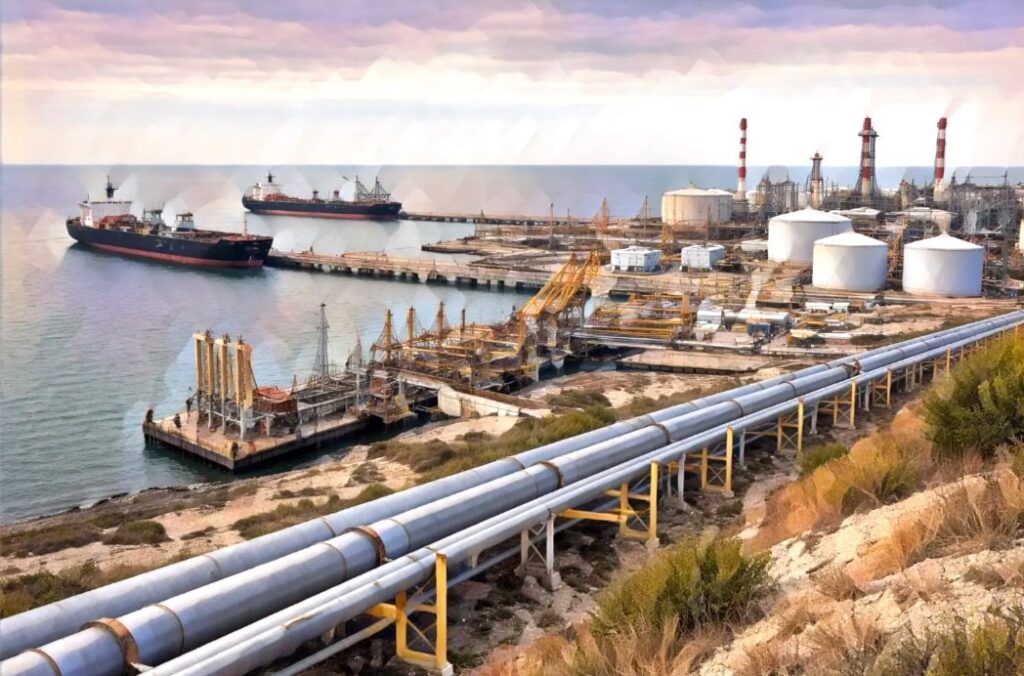
Iraq is intensifying efforts to implement a long-discussed agreement on natural gas imports from Turkmenistan, seeking to stabilize its energy sector and diversify supply sources. According to Ahmed Musa, spokesperson for Iraq’s Ministry of Energy, the plan involves importing around 20 million cubic meters of gas per day through pipelines connecting Turkmenistan and Iran. The route is intended to offset a shortfall caused by reduced gas flows from Iran, which currently supplies approximately one-third of Iraq’s energy needs. However, the implementation of this deal has faced significant hurdles. Chief among them is the issue of payments: the Trade Bank of Iraq (TBI) has been unable to issue a letter of credit due to U.S. sanctions on Iran, through whose territory the gas must transit. In an effort to resolve the deadlock, Iraqi Energy Minister Ziad Ali Fadel visited Turkmenistan to explore potential mechanisms to bypass the sanctions and operationalize the agreement. The foundations of this partnership were laid in 2023, when Iraq and Turkmenistan signed a memorandum of understanding, agreeing to continue negotiations on the logistics of fuel transit via Iran. Progress followed in November 2023, when both sides signed a protocol outlining the key commercial terms. Under the deal, Iraq is set to receive 45 billion cubic meters of gas over five years, equivalent to 9 billion cubic meters annually. The arrangement is structured as a swap: Turkmenistan will deliver gas to Iran, which in turn will transfer an equivalent volume to Iraq. Further advancing bilateral ties, Turkmenistan’s President Serdar Berdimuhamedov discussed gas supplies and the potential opening of an Iraqi embassy in Ashgabat with Iraqi Prime Minister Mohammed Shia Al-Sudani in March 2025. The talks underscored the growing strategic importance of energy cooperation between the two nations. A Strategic Energy Lifeline Iraq's reliance on natural gas to power its electricity grid makes securing reliable fuel sources a national priority. Given the country’s frequent power shortages and its current dependence on Iranian gas, diversifying suppliers is seen as crucial for both energy security and political autonomy. Turkmen gas is viewed as a strategically vital resource that could help stabilize Iraq’s energy sector and reduce vulnerability to geopolitical disruptions. The five-year agreement with Ashgabat aims to establish predictable, long-term supplies. Nevertheless, full-scale gas deliveries have yet to begin. The main obstacle remains the inability to process payments due to U.S. sanctions on Iran. Baghdad must either secure exemptions or devise alternative payment mechanisms to activate the contract. Simultaneously, technical discussions continue among Iraq, Iran, and Turkmenistan on ensuring reliable transport and infrastructure under the swap scheme. If these issues are resolved, Iraq could gain a dependable new energy partner, while Turkmenistan would expand its reach into a key southern market, strengthening both nations' strategic positions.

Kyrgyzstan Offers International Audits of State Firms Amid Russia Sanctions Scrutiny

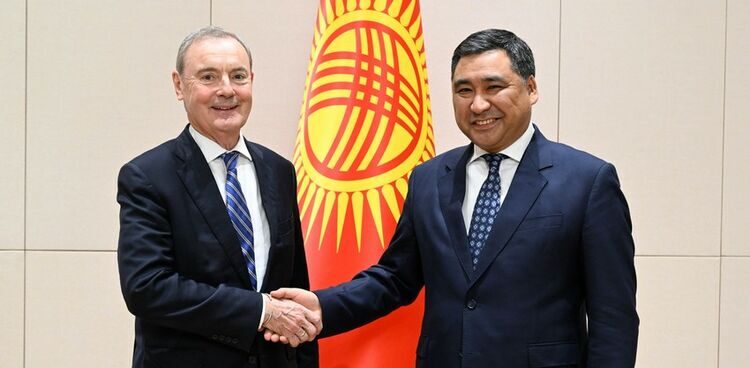
Kyrgyzstan has expressed its readiness to subject state-owned enterprises to international audits amid rising Western scrutiny over potential sanctions circumvention. The statement was made during a meeting in London between First Deputy Chairman of the Cabinet of Ministers Daniyar Amangeldiev and David Reed, Director of Sanctions at the UK Foreign, Commonwealth & Development Office. The two officials discussed Kyrgyzstan’s compliance with international sanctions regimes and the need to prevent any circumvention of restrictions, particularly those related to Russia. Reed raised concerns about the activities of certain Kyrgyz companies engaged in foreign trade, specifically naming Capital Bank and Trading Company, both state-owned enterprises. Capital Bank was created to oversee financial transactions involving Russia and has been designated, as of May 1, as a clearing institution for settlements in Russian rubles. The Trading Company is tasked with monitoring transit trade flows. Amangeldiev emphasized that the establishment of these entities was aimed at enhancing transparency and regulatory oversight, not sanctions evasion. He assured the UK side that Kyrgyzstan is fully open to inspections by international auditing firms and reaffirmed that these companies are operating within legal frameworks. Kyrgyzstan’s foreign trade, especially its re-export of goods, has faced growing scrutiny from Western governments amid broader concerns over the enforcement and impact of sanctions on Russia. The Kyrgyz government has consistently denied any role in facilitating sanctions evasion.