
• KZT/USD = 0.00223
  • TJS/USD = 0.10830
  • UZS/USD = 0.00009
  • TMT/USD = 0.29850
  • KZT/USD = 0.00223
  • TJS/USD = 0.10830
  • UZS/USD = 0.00009
  • TMT/USD = 0.29850
  • KZT/USD = 0.00223
  • TJS/USD = 0.10830
  • UZS/USD = 0.00009
  • TMT/USD = 0.29850
  • KZT/USD = 0.00223
  • TJS/USD = 0.10830
  • UZS/USD = 0.00009
  • TMT/USD = 0.29850
  • KZT/USD = 0.00223
  • TJS/USD = 0.10830
  • UZS/USD = 0.00009
  • TMT/USD = 0.29850
  • KZT/USD = 0.00223
  • TJS/USD = 0.10830
  • UZS/USD = 0.00009
  • TMT/USD = 0.29850
  • KZT/USD = 0.00223
  • TJS/USD = 0.10830
  • UZS/USD = 0.00009
  • TMT/USD = 0.29850
  • KZT/USD = 0.00223
  • TJS/USD = 0.10830
  • UZS/USD = 0.00009
  • TMT/USD = 0.29850
03 October 2026

Viewing results 1 - 6 of 3

Kyrgyzstan’s First Satellite to Launch Aboard SpaceX Falcon 9

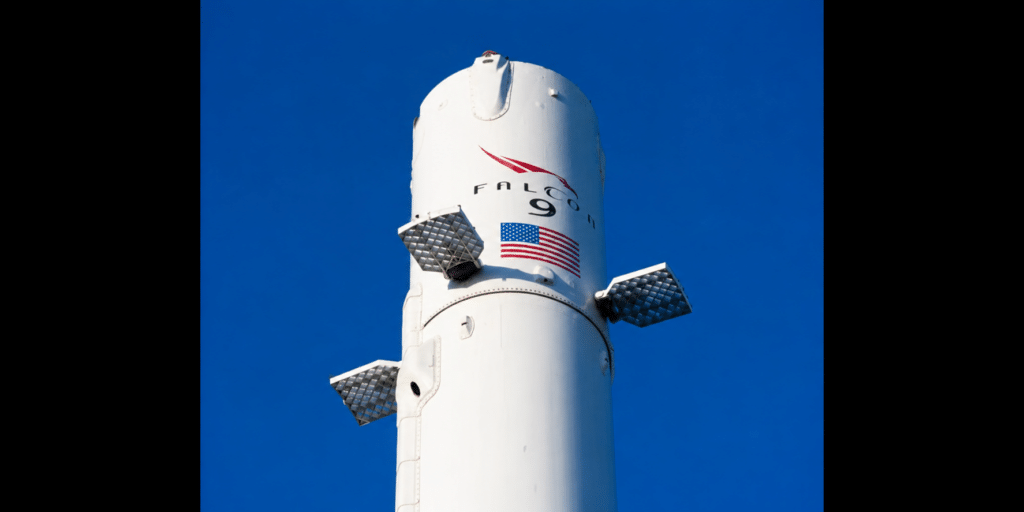
Kyrgyzstan plans to send its first national satellite into low Earth orbit on October 1. The roughly five-kilogram spacecraft, developed over about two and a half years, is due to launch from California aboard a SpaceX Falcon 9 rocket. President Sadyr Japarov has arrived in Los Angeles to attend events marking the launch, Kabar reported on October 1, citing the presidential administration. SpaceX is targeting October 1 for its Transporter-18 mission, a dedicated rideshare launch for small satellites, from Vandenberg Space Force Base in California. The 58-minute launch window opens at 11:18 a.m. Pacific Time, or 12:18 a.m. on October 2 in Bishkek. A backup opportunity is available the following day. Falcon 9 is scheduled to carry 130 payloads, including CubeSats and microsatellites. Under SpaceX’s rideshare model, several customers share capacity on the same rocket, making access to low Earth orbit more affordable for smaller countries. SpaceX does not separately name the Kyrgyz spacecraft in its published launch description. The satellite, equipped with high-resolution cameras, was unveiled on September 24 at the Lenin Plant in Bishkek. About 10 Kyrgyz engineers worked on the spacecraft, which is estimated to have cost 10–12 million soms, or approximately $115,000–140,000. Ilya Cherny, director of Kyrgyz Electronics, previously said that most of the technologies used were Russian. Developing all of the satellite’s systems from scratch, he said, would have taken considerably longer. The project also involves state-owned Kyrgyz Asman, which Kyrgyz authorities describe as the company responsible for developing and assembling the spacecraft. The satellite is intended for Earth observation. Its imagery is expected to be used to monitor crops and pastures for signs of drought and assess the effects of natural disasters. For mountainous Kyrgyzstan, satellite data are particularly important for monitoring water resources and glaciers because mountain rivers provide irrigation for farmland and feed the country’s hydropower system. Having its own spacecraft would give Kyrgyzstan an additional source of data on areas that are difficult to monitor from the ground. The developers say Kyrgyzstan may eventually need four or five satellites to meet these monitoring needs. Kazakhstan already operates communications and Earth-observation satellites, while Uzbekistan is also expanding its space program. In August, a Chinese-built satellite named Samarkand-2028 entered orbit carrying an artificial intelligence module developed by Uzbek engineers. Uzbekcosmos, the country’s space agency, has stressed that the spacecraft is not Uzbekistan’s national satellite. Uzbek engineers are separately working on the 6U-format Mirzo Ulugbek scientific satellite, which is planned for launch in 2028.
Kyrgyzstan Prepares to Launch Its First Homegrown Satellite

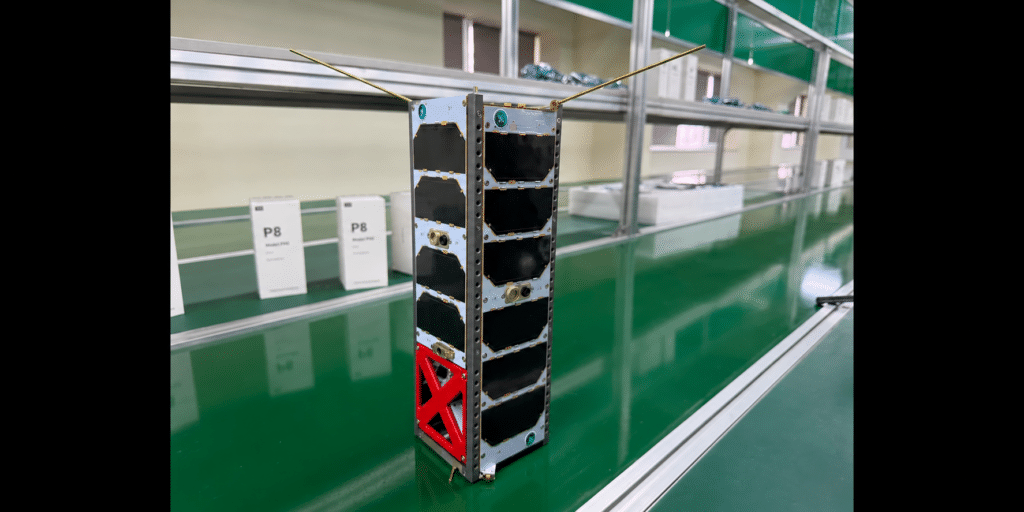
Kyrgyzstan plans to launch its first domestically developed and assembled satellite in early October, according to the Agriculture Ministry. The spacecraft is intended to collect imagery of farmland, pastures, glaciers, and water resources. The Agriculture Ministry plans to use the data to assess crop conditions and yields, detect drought, and monitor water resources. The satellite has been under development for about two and a half years. Final preparations are underway in Bishkek, including assembling its main components, installing electronic equipment, and testing the system. The launch is scheduled to take place from California during the first week of October. Kyrgyz media have reported October 1 as the planned launch date. The project is being carried out by the state-owned company Kyrgyz Asman. It was established in 2026 under the name Kyrgyz Sputnik and renamed in June. The Times of Central Asia previously reported that the company was created to develop the use of satellite technologies and data in agriculture and natural resource management. The company is to be based in Karakol in the Issyk-Kul region. The imagery is also expected to help assess areas affected by emergencies. For Kyrgyzstan, one of the most obvious applications of such imagery is water management. Mountain glaciers feed the rivers on which agricultural irrigation depends, while satellite observation makes it possible to regularly track changes across large and difficult-to-access areas. Similar projects are emerging elsewhere in Central Asia. In August, the Chinese-built Samarkand-2028 hyperspectral Earth observation satellite was launched carrying an artificial intelligence module developed by specialists from Uzbekistan’s Uzbekcosmos space agency. The data obtained from the satellite is expected to be used for agriculture, environmental monitoring, water and natural resource management, and other applications. Samarkand-2028 was built by China’s STAR.VISION Aerospace. Uzbekistan’s own scientific satellite, Mirzo Ulugbek, is being developed by a team of seven Uzbek engineers undergoing training at Japan’s Kyushu Institute of Technology. Its launch is planned for 2028.

Space Days Kazakhstan Highlights Push Beyond Baikonur

Kazakhstan is home to Baikonur, the cosmodrome from which the Space Age began, but the country has spent three decades trying to turn that Soviet inheritance into a space sector of its own. At Space Days Kazakhstan, held on September 7–9 in Astana and Baikonur, Kazakhstan presented new satellite projects and plans for international cooperation. A day later, talks with China were announced on a separate five-satellite network for Central Asia. By 2030, Astana plans to assemble an international constellation of nine Earth-observation satellites, six of them Kazakh. The country is also upgrading its national satellite communications system, developing new Earth-observation spacecraft at home, and expanding cooperation with China and other partners. Kazakhstan still relies heavily on Russia at Baikonur, and many of its newer projects depend on foreign technology and cooperation. Nevertheless, Astana is seeking greater control over the infrastructure and spacecraft on its own territory while widening the number of countries it works with. Taking More Control at Baikonur One of the clearest examples of Kazakhstan’s attempt to gain more control over its space sector is Baiterek, a joint project with Russia that dates back to 2004. The original agreement called for a new launch complex at Baikonur. But the project spent much of the next two decades being redesigned as Russia changed the rocket it planned to use. Baiterek was first intended for the Angara rocket, then Zenit, and finally Soyuz-5, known in Kazakhstan as Sunkar. Each change brought further delays. After launch targets in 2023, 2024, and 2025 slipped, Soyuz-5 finally lifted off from Baikonur on April 30, 2026. The rocket carried a dummy payload on the first flight in the test program. The launch mattered less for what it carried than for what it represented. Kazakhstan now operates the launch pad and ground infrastructure used by Baiterek, giving it a larger role at a cosmodrome long dominated by Russia. But Russia still builds the rocket. That reflects the wider relationship at Baikonur. The cosmodrome remained on Kazakh territory after the collapse of the Soviet Union, but Russia leases it through 2050 for $115 million a year and continues to use it for its human spaceflight program. In July 2026, Baikonur was again used for an international mission to the ISS. Kazakhstan is therefore not replacing Russia at Baikonur. It is trying to take a larger role in a space complex where Russia remains deeply embedded. But launch infrastructure is only one part of Kazakhstan’s attempt to develop capabilities of its own. Increasingly, the focus is on satellites. Building Satellites at Home KazSat is the country’s national satellite communications and broadcasting system. KazSat-3 currently provides data transmission, television, and other communications services. Its planned operating life ends in late 2029. KazSat-3R is being developed as its replacement. The national operator, the Republican Center for Space Communication, invited more than 40 spacecraft manufacturers to participate in the selection process. Fourteen companies responded: two from Kazakhstan and twelve from abroad. The operator plans to cover more than half...
