• KGS/USD = 0.01143 0%
  • KZT/USD = 0.00200 0%
  • TJS/USD = 0.10593 -0.19%
  • UZS/USD = 0.00008 0%
  • TMT/USD = 0.28575 0%
  • KGS/USD = 0.01143 0%
  • KZT/USD = 0.00200 0%
  • TJS/USD = 0.10593 -0.19%
  • UZS/USD = 0.00008 0%
  • TMT/USD = 0.28575 0%
  • KGS/USD = 0.01143 0%
  • KZT/USD = 0.00200 0%
  • TJS/USD = 0.10593 -0.19%
  • UZS/USD = 0.00008 0%
  • TMT/USD = 0.28575 0%
  • KGS/USD = 0.01143 0%
  • KZT/USD = 0.00200 0%
  • TJS/USD = 0.10593 -0.19%
  • UZS/USD = 0.00008 0%
  • TMT/USD = 0.28575 0%
  • KGS/USD = 0.01143 0%
  • KZT/USD = 0.00200 0%
  • TJS/USD = 0.10593 -0.19%
  • UZS/USD = 0.00008 0%
  • TMT/USD = 0.28575 0%
  • KGS/USD = 0.01143 0%
  • KZT/USD = 0.00200 0%
  • TJS/USD = 0.10593 -0.19%
  • UZS/USD = 0.00008 0%
  • TMT/USD = 0.28575 0%
  • KGS/USD = 0.01143 0%
  • KZT/USD = 0.00200 0%
  • TJS/USD = 0.10593 -0.19%
  • UZS/USD = 0.00008 0%
  • TMT/USD = 0.28575 0%
  • KGS/USD = 0.01143 0%
  • KZT/USD = 0.00200 0%
  • TJS/USD = 0.10593 -0.19%
  • UZS/USD = 0.00008 0%
  • TMT/USD = 0.28575 0%
22 February 2026

Viewing results 1 - 6 of 12

Opinion: Prospects for Central Asia’s Access to Persian Gulf Infrastructure

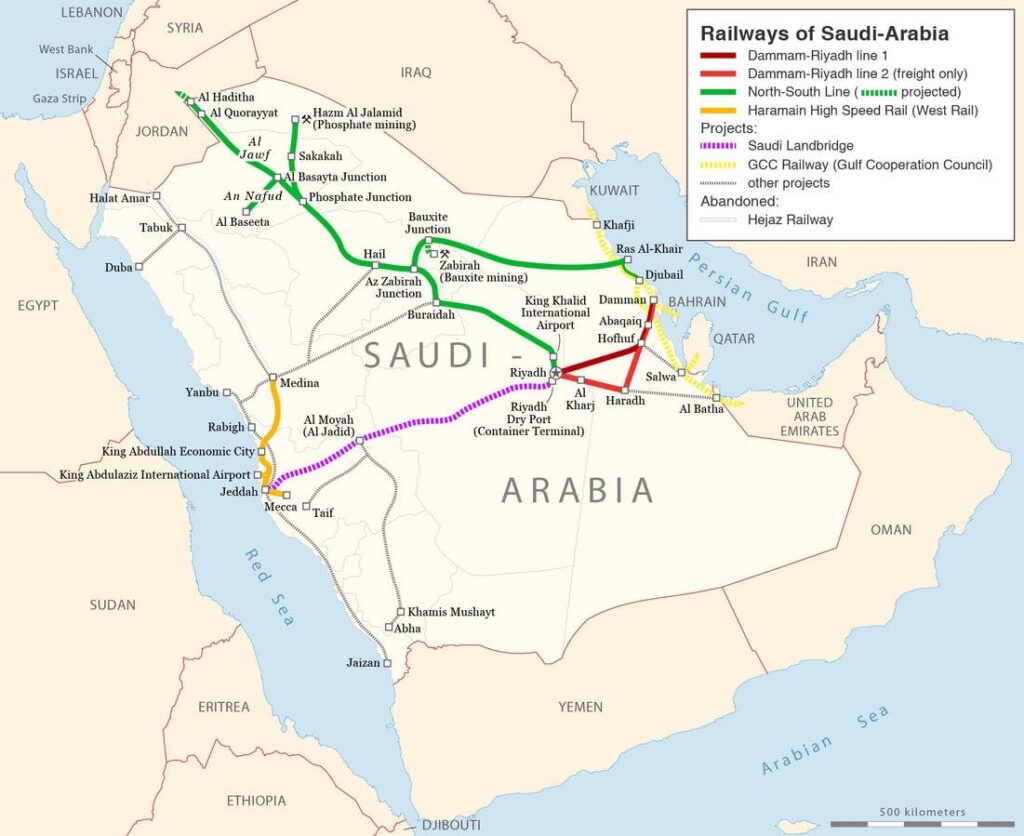
The agreement signed on December 8, 2025, between Saudi Arabia and Qatar to construct a high-speed railway linking Riyadh and Doha marks a pivotal development in transport connectivity across the Persian Gulf. Beyond its bilateral implications, the project could have broader consequences for transregional logistics, particularly for Central Asia and Kazakhstan. The 785-km railway will pass through key cities in Saudi Arabia’s Eastern Province, including Dammam and Al-Hufuf, and will connect King Salman and Hamad International Airports. Trains are expected to reach speeds exceeding 300 km/h, reducing travel time between the two capitals to approximately two hours. The six-year project is projected by officials to boost the combined GDP of both countries by around $30 billion and create up to 30,000 jobs. The Gulf Railway and New Regional Connectivity The Riyadh-Doha line is a central element of the Gulf Railway initiative, which is seeking to establish a unified railway network among Gulf Cooperation Council (GCC) member states, Saudi Arabia, Qatar, the UAE, Bahrain, Kuwait, and Oman, with a target date of around 2030. Originally envisioned primarily as a freight system, the Gulf Railway is increasingly incorporating high-speed passenger services alongside freight, reflecting the region’s push for greater internal integration and reduced dependence on air travel. The Riyadh-Doha segment forms a vital axis between the Gulf’s political and financial hubs and is expected to link with Saudi, Emirati, and Omani infrastructure, laying the groundwork for a more integrated regional transport system. Beyond the Peninsula While the Gulf Railway’s scope is geographically confined to the Arabian Peninsula, meaningful integration with Eurasia would require additional connectivity, particularly via land and multimodal routes through Iran, Turkey, and the Caspian region. Among these, the overland corridor through Iran is especially significant, though constrained by sanctions, financing risks, and political uncertainty. Kazakhstan-Turkmenistan-Iran Corridor Unlike many conceptual infrastructure proposals, the Kazakhstan-Turkmenistan-Iran railway, operational since 2014, is already a functioning freight corridor. It provides Central Asian nations with direct access to Persian Gulf ports and Middle Eastern markets. For Kazakhstan, the route offers strategic diversification away from traditional corridors. While no formal plans exist to link GCC rail infrastructure directly with Central Asia, the emergence of high-capacity Gulf rail corridors reshapes the long-term connectivity landscape. A future interface could allow Astana overland access to Gulf markets, while enabling reciprocal flows from the Gulf into Central Asia, China, and Europe. President Kassym-Jomart Tokayev has previously described Iran as a “gateway” to Southeast Asia and Africa. Kazakhstan has also outlined plans to establish its own logistics terminal in the Iranian port of Shahid Rajai in Bandar Abbas, further enhancing its position in Gulf-Eurasia trade flows. Iran’s Evolving Role Historically, Iran’s role as a transit state has been hampered by international sanctions and regional tensions. However, the 2023 normalization of relations between Saudi Arabia and Iran, brokered by China, has altered the regional calculus. Although still fragile, this diplomatic thaw improves prospects for long-term infrastructure projects involving Iran as a critical transit link between the Persian Gulf and Eurasia. Alternatives and Their...

Saudi Company to Launch 200 MW Power Plant in Samarkand

Saudi private company Pemco is set to begin construction of a new 200-megawatt gas-piston power plant in Samarkand by the end of this year, Uzbekistan’s Minister of Energy Jurabek Mirzamahmudov announced in an interview with the “Uzbekistan 24” TV channel. “The new power station will significantly strengthen the energy supply in the Samarkand region and support Uzbekistan’s efforts to ensure a stable electricity supply amid growing demand,” Mirzamahmudov said, following President Shavkat Mirziyoyev’s recent meeting with leading Saudi business representatives. The minister also outlined a range of ongoing energy projects in partnership with Saudi firms. “Together with ACWA Power, we have launched the first major thermal power plant,” he said. “Additionally, a solar power facility is operating in the Qibray district of Tashkent region, two large wind farms have started operations in Bukhara, and the first 100-megawatt wind power plant has been commissioned in Karakalpakstan.” Several new renewable energy initiatives are also in progress. “We have already begun practical steps on new wind and solar stations, and we plan to launch the first large-scale battery storage system in Parkent,” Mirzamahmudov added. He further noted that Uzbekistan is preparing to support operations at the new Tashkent airport with the production of renewable aviation fuel. This will be facilitated through a partnership between Saudi Arabia’s Vision Invest and U.S.-based Air Products, who have signed an agreement to develop a sustainable aviation fuel (SAF) plant. These developments come as Uzbekistan works to diversify its energy mix in anticipation of future demand. As previously reported by The Times of Central Asia, the country aims to bring a high-capacity nuclear power plant fully online by 2035. The first small modular reactor is expected to begin operations in 2029 in the Jizzakh region, followed by additional units in the early 2030s, according to Uzatom Director Azim Akhmedkhadjaev.

Tajik Government Seeks New Destinations for Labor Migrants

Tajikistan is intensifying international cooperation in the field of labor migration. According to the Ministry of Labor, Migration, and Employment, the country signed dozens of agreements in the first half of 2025 aimed at simplifying and legalizing the overseas employment of its citizens. However, actual employment figures continue to lag behind the government’s ambitious declarations. Expanding Employment Opportunities At a mid-year press conference, the ministry reported that Tajikistan currently holds 37 international agreements with 15 countries, 13 of which specifically address labor migration and are under implementation. Key partners include Russia, Kazakhstan, Belarus, the UAE, Qatar, Kuwait, South Korea, and Japan. Negotiations are also underway on nine new agreements with countries such as Georgia, Poland, Serbia, Saudi Arabia, and Croatia. Official data show that 9,478 Tajik citizens found employment through 29 licensed organizations in the first half of 2025. Of those, 5,648 were assisted by the State Employment Agency. Despite appearing significant, these numbers represent only a fraction of the working-age population seeking jobs abroad. South Korea, for example, allocated 800 worker quotas for Tajikistan in 2025. Yet only 26 of 35 citizens trained under the Employment Permit System (EPS) passed the required exam. A new group is now in training for the next selection phase. Japan also ranks as a priority destination, but the volume remains low. Of 68 registered candidates, four have begun working, and eight have passed interviews, underscoring Japan’s high entry standards and limited intake. Key Partners: Russia and Saudi Arabia Russia remains Tajikistan’s principal labor migration partner. From January 28 to 31, officials from both countries held “substantive talks” in Moscow, addressing the training of specialists, new employment channels, and joint initiatives. More than 80 Russian companies have reportedly expressed interest in hiring Tajik workers, a figure that the ministry says reflects rising demand for labor from Tajikistan. Saudi Arabia is emerging as a new strategic partner. During a visit by a Tajik delegation, officials held talks with the Saudi Minister of Human Resources and with executives from Arco, a major HR outsourcing firm in the Middle East. Ambitious Goals, Limited Impact While the Ministry of Labor and Migration continues efforts to expand cooperation, protect migrants’ rights, and promote safe, legal employment abroad, progress remains uneven. Despite active diplomacy, the scale of organized labor migration is still limited. The real measure of success will be the implementation of these agreements, not their number. With millions of Tajik citizens still seeking employment overseas, building effective systems and improving workforce skills will require sustained effort, time, and investment.

Uzbekistan Signs $78 Million Deal with Saudi and French Firms to Manage Hazardous Waste

Uzbekistan has signed a landmark $78 million agreement with Saudi Arabia’s Vision International Investment Company (VIIC) and France’s Suez International to improve hazardous industrial waste management and bolster environmental protection. The Ministry of Ecology announced the signing earlier this month. The agreement was formalized by Deputy Minister of Ecology Jusipbek Kazbekov, VIIC Director of Development Kapil Lalwani, and Paul Bourdillon, Regional Director for Europe and Central Asia at Suez. The project will be implemented in three phases. A Three-Phase Strategy The first phase will involve the construction of new waste stabilization facilities, landfills, and transfer stations to safely store and process hazardous industrial waste. The second phase will focus on developing engineering designs and piloting technologies to produce Refuse-Derived Fuel (RDF), a method that converts waste into usable energy. This phase will also test incineration and thermal treatment systems. In the third and final phase, the project will establish a full-scale RDF and waste-to-energy facility. Suez International, with over 160 years of experience, is a global leader in water and waste management, offering innovative solutions across Europe, Asia, the Americas, Africa, and the Middle East. Saudi-based VIIC, founded in 2002, manages nearly $96 billion in assets and is active in energy, infrastructure, and public-private partnership projects. The Ministry of Ecology views the agreement as a significant advancement for Uzbekistan’s environmental policy, aiming to reduce industrial pollution and support sustainable development. Broader Environmental Initiatives Uzbekistan’s Ministry of Ecology is also collaborating with the Food and Agriculture Organization of the United Nations (FAO) and the European Union to manage hazardous agricultural chemicals. A joint project launched in Tashkent last year aims to reduce pesticide use and improve waste handling in agriculture. Minister of Ecology Aziz Abdukhakimov emphasized the importance of these initiatives for public health and environmental safety. He also highlighted the need to update the national registry of contaminated areas, particularly former agricultural airfields, many of which have not been surveyed since the 1990s.

Opinion: How the Emerging Trump Doctrine Played at Astana International Forum

With His Riyadh Allocution, Trump Ripped Up the Foreign Policy Playbook The May 29–30 Astana International Forum (AIF) in Kazakhstan drew thousands of attendees — heads of state, senior diplomats, and entrepreneurs — eager for insights into Central Asia’s rising global significance. Topics ranged from foreign policy and water management to energy, trade, and economic integration. A key message from the organizers was that Middle Powers — Kazakhstan, Indonesia, Türkiye, South Africa, Argentina, and others — should serve as bridges to peace and solidarity amid growing global polarization and Great Power conflict. Unsurprisingly, lots of folk were trying to horn in on business opportunities – mainly agriculture, mining, and metals, of which there is an abundance in the region. Yet the real buzz in the hallways and cafés wasn’t about panel discussions, raw materials, or the next sound bite for the press. What had international policy mavens all atwitter was President Trump’s unexpected speech in Saudi Arabia – which might well prove to be the Trump Doctrine: global crises, he said, are better resolved through diplomacy and mutually beneficial business partnerships, not bayonets, diktat, and moral sermonizing. That message, coming from the President of the United States, landed with force. During the three days I spent in Astana, I noticed that many delegates who normally spoke in well-rehearsed sound bites designed not to offend, suddenly spoke more bluntly, even going off-script. They dropped the cautious language and the standard foreign policy group-speak. What was going on?  Was this the Trump effect? My guess is that Trump’s Riyadh allocution was intended to rip up the decades-old foreign policy playbook of Brussels, London, and prior U.S. administrations. Instead of promoting the globalist/woke agenda, which had been de rigueur at international diplomatic clambakes of the Astana sort, Trump called for détente and reciprocity – more the realism of Nixon and Kissinger (leavened with a pinch of Ronald Reagan) than the idealism of Wilson and FDR. He wanted to deliver on his promise to the American people to make America great again (including boosting domestic manufacturing) rather than squander precious resources beating down any country that looks at us cross-eyed. Trump’s Riyadh speech — like his inaugural address — called for a peaceable foreign policy.  That message reverberated in Astana: “Before our eyes, a new generation of leaders is transcending the ancient conflicts and tired divisions of the past and forging a future where the Middle East is defined by commerce, not chaos; where it exports technology, not terrorism; and where people of different nations, religions, and creeds are building cities together — not bombing each other out of existence.” Perhaps most cutting was Trump’s indictment of interventionist dogma: “This great transformation has not come from Western interventionists giving you lectures... The gleaming marvels of Riyadh and Abu Dhabi were not built by 'nation-builders,' 'neo-cons,' or 'liberal non-profits'... Instead, the birth of a modern Middle East has been brought about by the people of the region themselves – pursuing their own visions and charting...

Kazakhstan and World Bank Partner on Water Conservation at One Water Summit

A memorandum of understanding has been signed to enhance water resource management and environmental conditions, including in the North Aral Sea and its surrounding basin, between Kazakhstan’s Ministry of Water Resources and Irrigation and the World Bank. As climate change continues to significantly impact water resources in Central Asia, exacerbating water scarcity and management challenges, this agreement underscores a shared commitment to ensuring sustainable and equitable water resource management for future generations. The memorandum was formalized following a meeting between Kazakhstan’s President Kassym-Jomart Tokayev and World Bank Group President Ajay Banga during the One Water Summit in Riyadh, Saudi Arabia, on December 3. Co-organized by French President Emmanuel Macron, Tokayev, and World Bank Group President Banga, in partnership with Saudi Arabia’s Crown Prince and Prime Minister Mohammed bin Salman, the summit sought to accelerate progress toward Sustainable Development Goal 6 (clean water and sanitation) and discuss innovative solutions ahead of the 2026 UN Water Conference. During the summit, Tokayev stressed the importance of bolstering reservoir capacity, preserving glaciers, and adopting advanced irrigation systems to secure stable water access. Tokayev proposed creating a global partnership to unite research centers focused on glacier preservation. “Glaciers are integral to the global water cycle, sustaining rivers and lakes that supply water to nearly two billion people worldwide. Collaborative research and unified policies are essential to mitigate glacier loss and support water management strategies in vulnerable regions,” he said. He warned that water scarcity poses risks to food security, energy production, and industrial growth, adding that investments in water-efficient agriculture and renewable energy can enhance economic resilience while alleviating environmental pressures. “Water knows no borders; it binds communities and ecosystems,” Tokayev remarked. As Chair of the International Fund for Saving the Aral Sea, he emphasized Kazakhstan’s commitment to fostering regional cooperation and joint action. “It is vital for countries at the forefront of combating climate change to strengthen dialogue, build international partnerships, and pool resources to implement water projects. Kazakhstan is proud to join the One Water Vision coalition, uniting stakeholders to address the global water crisis and promote integrated water resource management. As part of these efforts, with United Nations support, Kazakhstan will host a Regional Climate Conference in 2026,” Tokayev concluded.