• KGS/USD = 0.01144 0%
  • KZT/USD = 0.00207 0%
  • TJS/USD = 0.10463 0%
  • UZS/USD = 0.00008 0%
  • TMT/USD = 0.28490 0%
  • KGS/USD = 0.01144 0%
  • KZT/USD = 0.00207 0%
  • TJS/USD = 0.10463 0%
  • UZS/USD = 0.00008 0%
  • TMT/USD = 0.28490 0%
  • KGS/USD = 0.01144 0%
  • KZT/USD = 0.00207 0%
  • TJS/USD = 0.10463 0%
  • UZS/USD = 0.00008 0%
  • TMT/USD = 0.28490 0%
  • KGS/USD = 0.01144 0%
  • KZT/USD = 0.00207 0%
  • TJS/USD = 0.10463 0%
  • UZS/USD = 0.00008 0%
  • TMT/USD = 0.28490 0%
  • KGS/USD = 0.01144 0%
  • KZT/USD = 0.00207 0%
  • TJS/USD = 0.10463 0%
  • UZS/USD = 0.00008 0%
  • TMT/USD = 0.28490 0%
  • KGS/USD = 0.01144 0%
  • KZT/USD = 0.00207 0%
  • TJS/USD = 0.10463 0%
  • UZS/USD = 0.00008 0%
  • TMT/USD = 0.28490 0%
  • KGS/USD = 0.01144 0%
  • KZT/USD = 0.00207 0%
  • TJS/USD = 0.10463 0%
  • UZS/USD = 0.00008 0%
  • TMT/USD = 0.28490 0%
  • KGS/USD = 0.01144 0%
  • KZT/USD = 0.00207 0%
  • TJS/USD = 0.10463 0%
  • UZS/USD = 0.00008 0%
  • TMT/USD = 0.28490 0%

Viewing results 1 - 6 of 12

Uzbekistan Repatriates Over 21,700 Citizens from Middle East

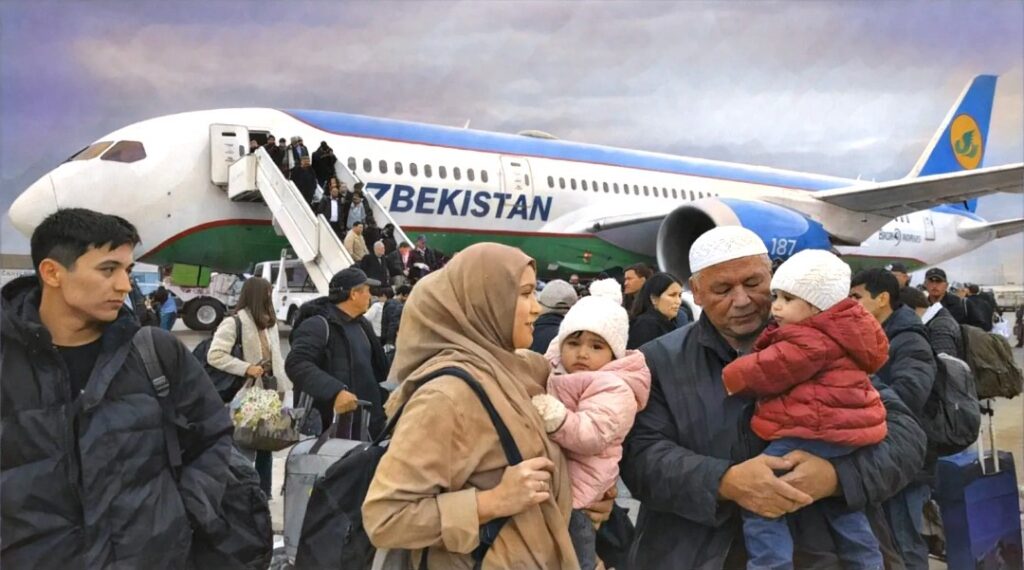
Uzbekistan has repatriated 21,712 citizens from several Middle Eastern countries as of 07:00 on March 9, the country’s Ministry of Foreign Affairs has said, as evacuation efforts continue amid regional instability. Most of those returned came from Saudi Arabia, where 17,963 citizens were brought back to Uzbekistan. Additional repatriations included 3,290 people from the United Arab Emirates, 378 from Qatar, 47 from Iran, 27 from Bahrain, and seven from Oman. The ministry said the return of Uzbek citizens is being carried out “systematically and in stages,” with authorities continuing to coordinate transport and logistics for those seeking to return. Officials noted that many repatriation flights are currently being organized through countries whose airspace remains open to civilian aviation. Uzbekistan’s evacuation reflects the scale of its citizens’ presence across the Gulf. In recent years, the country has expanded labor migration agreements with Saudi Arabia, the United Arab Emirates, and Qatar, sending thousands of workers into construction, hospitality, and service sectors. Saudi Arabia has also become a major destination for religious travel from Uzbekistan, with large annual flows of pilgrims traveling for the Hajj and Umrah. Kazakhstan has also evacuated citizens during the crisis, bringing 8,585 people home from Middle Eastern countries since the operation began. Central Asian citizens travel widely to Gulf states for work, tourism, and pilgrimage, leaving thousands affected when conflicts disrupt flights and close regional airspace. The number of returned citizens has risen steadily over the past several days. According to the foreign ministry, 19,347 Uzbek citizens had returned home as of 07:00 on March 8. Uzbek diplomatic missions in the region have also issued safety guidance to citizens who remain abroad. In a statement published by the Embassy of Uzbekistan in Israel, citizens were urged to follow official security instructions issued by local authorities. The embassy said red alerts issued by Israel’s civil defense authorities indicate a dangerous situation and require people to stay near protected shelters and immediately enter them if warning sirens sound. Blue alerts indicate that the threat has passed, and people may leave shelters. Other Central Asian countries have also organized evacuations of their citizens. According to Tajik media outlet Asia-Plus, more than 300 citizens of Tajikistan returned home on March 8 on two flights from Dubai. One charter flight brought 130 Tajik citizens to Dushanbe in the morning, while a later flight operated by Somon Air transported another 180 passengers. The charter operation was organized with support from the Tajik embassy in the United Arab Emirates, local authorities, and the airline Flydubai. About 550 Tajik citizens have returned home from Abu Dhabi and Dubai on charter flights in recent days amid the ongoing regional conflict.

Uzbek Citizen Evacuation Flights Continue from Middle East

More than 9,300 citizens of Uzbekistan had been evacuated from countries in the Middle East as of March 5. According to the press service of Uzbekistan’s Ministry of Foreign Affairs, between March 1 and 10:00 a.m. local time on March 5, a total of 9,361 Uzbek citizens safely returned home from several countries in the region. Officials said the largest number of evacuees arrived from Saudi Arabia, where 8,114 people were transported to Uzbekistan on both regular and specially arranged charter flights. Another 1,192 citizens have so far been repatriated from the United Arab Emirates. Smaller groups were also evacuated from other countries in the region, including 23 citizens from Iran, 25 from Bahrain, and seven from Oman. The ministry said the return of Uzbek nationals is being organized in a structured and phased manner. Officials added that evacuation operations are currently focused on countries whose airspace remains open to civilian flights, with additional flights to be arranged once airspace restrictions are lifted elsewhere in the region. Separately, Uzbekistan’s Ministry of Transport reported that by March 5 a total of 41 special flights had been carried out to bring citizens home from the Middle East. According to the ministry, several Uzbekistan-based airlines, including Uzbekistan Airways, Centrum Air, Qanot Sharq, Fly One Asia, Fly Khiva, and Air Samarkand, have been operating evacuation flights. These included routes from Jeddah and Medina in Saudi Arabia to Tashkent, Andijan, Namangan, Urgench, Qarshi, and Samarkand, as well as flights from Dubai to Tashkent. Transport officials said that 36 flights departing from Jeddah and Medina transported 7,988 passengers to Uzbekistan. An additional five flights from Dubai carried 838 people. Several flights were still operating at the time of the ministry’s latest update, including routes from Dubai and Jeddah to Tashkent and Samarkand. Authorities stated that the evacuation process is continuing step by step and urged Uzbek citizens abroad to remain calm, follow local laws, and rely only on official information issued by Uzbekistan’s diplomatic missions and government agencies.

Evacuation Through Turkmenistan: Dozens of Foreigners Leave Iran as Assistance Conditions Vary

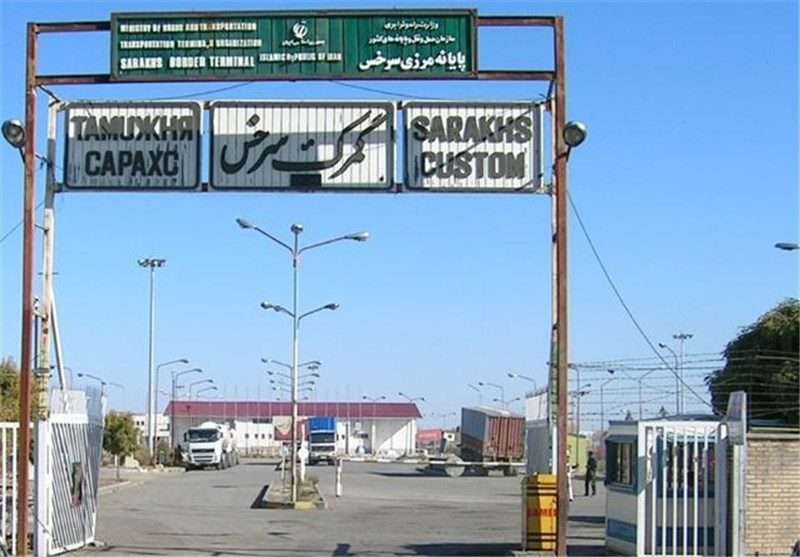
Amid the ongoing military conflict involving Iran, foreign nationals have begun leaving the country by land. One of the main evacuation routes has been through neighboring Turkmenistan, although the conditions for departure and the level of assistance provided to citizens of different countries have varied. Foreign citizens began leaving Iran after strikes were launched on its territory. With Iranian airspace closed, evacuation has only been possible by land. According to diplomatic sources in Kazakhstan, Russia, Uzbekistan, and South Korea, about 60 foreign nationals have already left Iran via Turkmenistan. Kazakhstan’s Minister of Transport, Nurlan Sauranbayev, said that on March 2, 18 Kazakh citizens were successfully evacuated from the northern Iranian city of Gorgan. The closest available route was through the Turkmen border. According to the minister, Turkmen authorities granted permission for the group to cross the border, although the specific checkpoint used was not disclosed. Serakhs remains the main transit crossing in this direction, while other checkpoints remained closed until March 2. On the same day, a group of eight Russian citizens crossed the border through the Serakhs checkpoint. According to Igor Samoshkin, head of the consular department of the Russian Embassy, Turkmen officials met the arrivals at the border and arranged transportation to Ashgabat as well as hotel accommodation. Russian diplomats later assisted the group with further travel arrangements. On March 3, the group flew home on an S7 Airlines flight. On March 3, 13 citizens of Uzbekistan crossed the border in an organized manner through the same Serakhs checkpoint. According to the Dunyo news agency, they were met by Uzbek embassy staff in official vehicles. After the Gaudan-Bajgiran crossing opened, diplomats also began meeting their citizens there. However, the subsequent route taken by the Uzbek nationals was not specified. There are currently no direct flights between Turkmenistan and Uzbekistan, and the distance from Serakhs to the nearest land crossing between the two countries, Farab-Alat, is about 460 kilometers. On the same day, a group of 23 South Korean citizens entered Turkmenistan. According to The Korea Times, they were accompanied by South Korean diplomats throughout their transit in the country before departing from Ashgabat on individual flights. Representatives of the South Korean embassy noted the prompt response of Turkmenistan’s Ministry of Foreign Affairs, as well as assistance with immigration procedures, consular support, accommodation, and flight reservations. Foreign citizens require a visa to transit through Turkmenistan, and this requirement has not been completely waived even during the evacuation. As Russian diplomat Igor Samoshkin explained, those seeking to leave Iran through Turkmenistan must first contact their country’s embassy in Iran and submit documents for a visa. The diplomatic mission then sends a request to the Turkmen authorities, after which further coordination takes place between Ashgabat and the relevant embassies accredited in Turkmenistan. Turkmen authorities directly accompanied only the Russian citizens. For other foreign nationals, their respective diplomatic missions were responsible for organizing further travel arrangements. The reasons for the differences in the level of assistance have not been publicly explained. It...

Mass Evacuation from Kyrgyzstan’s Seven-Thousanders, But One Climber Remains Trapped

A major rescue operation has concluded in Kyrgyzstan, where military pilots evacuated 62 climbers and tourists from the high-altitude peaks of Pobeda and Khan Tengri. The evacuation was prompted by life-threatening conditions, including strong winds and a heightened risk of avalanches that left hundreds stranded. An international group of climbers had earlier become trapped on Victory Peak, where an Italian citizen died during the descent. A helicopter dispatched by the Kyrgyz Ministry of Defense was forced to make an emergency landing on the slope. Fortunately, the crew and rescuers sustained only minor injuries. Given the extreme altitudes, only military helicopters are capable of operating in the area, prompting authorities to deploy additional forces. Once weather conditions temporarily improved, two military helicopters conducted six flights, evacuating climbers from various countries, including Germany, the United Kingdom, Russia, China, and Kazakhstan. Some were flown to the Yuzhny Enilchek and Polyana base camps at approximately 5,000 meters, while others were hospitalized in Karakol. Those seriously injured are expected to be transferred to Bishkek for further treatment. Meanwhile, a 47-year-old Russian climber remains stranded at around 7,000 meters after breaking her leg during the descent. German and Italian climbers provided emergency assistance, including a tent, sleeping bag, and food supplies. Two attempts to evacuate her without professional support failed. One of the rescuers, an Italian climber, succumbed to severe hypothermia and died. According to the Kyrgyz Ministry of Emergency Situations, the stranded climber has survived for seven days at this extreme altitude. “She is alive and has been in high-altitude conditions for seven days. Preparations are underway for a rescue operation to transport her,” the Ministry of Defense stated. The situation remains critical as weather conditions continue to shift rapidly, diminishing the chances of a successful rescue with every passing hour.

Kazakhstan Acts Swiftly on Middle East Crisis: Citizens Evacuated, Flights Suspended

In the wake of escalating hostilities in the Middle East, Kazakhstan has undertaken swift measures to safeguard its citizens and adapt its aviation policies. On the night of June 13, Israel launched “Operation Lion’s Roar,” targeting military and strategic sites in Iran, citing concerns over Tehran’s nuclear capabilities. The offensive triggered international concern and widespread flight restrictions, which affected Kazakhstani citizens in the UAE, Iran, and Israel. Stranded Tourists and Initial Evacuations In its immediate response, Kazakhstan’s Aviation Administration imposed a full ban on flights through the airspace of Iran, Israel, Syria, Jordan, Iraq, and Lebanon. The directive applied to all Kazakh carriers, both commercial and charter, requiring them to halt operations across the affected regions. As a result, around 300 Kazakh nationals, primarily tourists, were unable to return home. Despite prior warnings, flights to the UAE continued to depart with full passenger loads, according to Foreign Ministry spokesman Aibek Smadiyarov. Evacuations began the following day. On June 14, six Kazakh citizens were evacuated from Iran via Azerbaijan. By June 15, another 68 individuals, including diplomats and their families, crossed into Turkmenistan. Kazakhstan’s Ministry of Foreign Affairs expressed its gratitude to Iran, Turkmenistan, Azerbaijan, and other partner countries for facilitating the evacuations. Further operations saw 332 Kazakh tourists repatriated from the UAE to Almaty on two FlyDubai flights on June 15, with support from the Turistik Kamkor Foundation and the Ministry of Foreign Affairs. As of June 20, an additional 66 citizens had been evacuated from Israel via Egypt, while 78 others left Iran through Armenia, Azerbaijan, and Turkmenistan. “Thanks to joint efforts, more and more citizens are able to return home safely,” the Foreign Ministry noted. Ministry Advisories and Air Travel Disruptions On June 23, the Foreign Ministry issued an official advisory urging Kazakh citizens to refrain from traveling to the Middle East. Those already in the region were instructed to stay alert, avoid large gatherings, monitor official updates, and maintain contact with Kazakh embassies. Airlines also took precautionary measures. Air Astana extended its suspension of flights to Dubai and Doha through June 24, offering passengers the option of free rebooking or a full refund. SCAT Airlines announced delays to flights bound for Sharm el-Sheikh and Antalya, citing bird strikes and the volatile security environment. The airline also cancelled a flight from Astana to Doha. By June 24, Dubai’s Al Maktoum and Dubai International airports had resumed full operations. The airspace over Qatar, Bahrain, and Kuwait also reopened. UAE authorities have urged travelers to confirm flight details with their airlines and arrive early at airports.

As Conflict Rages, Kazakhstan Evacuates Citizens from Lebanon

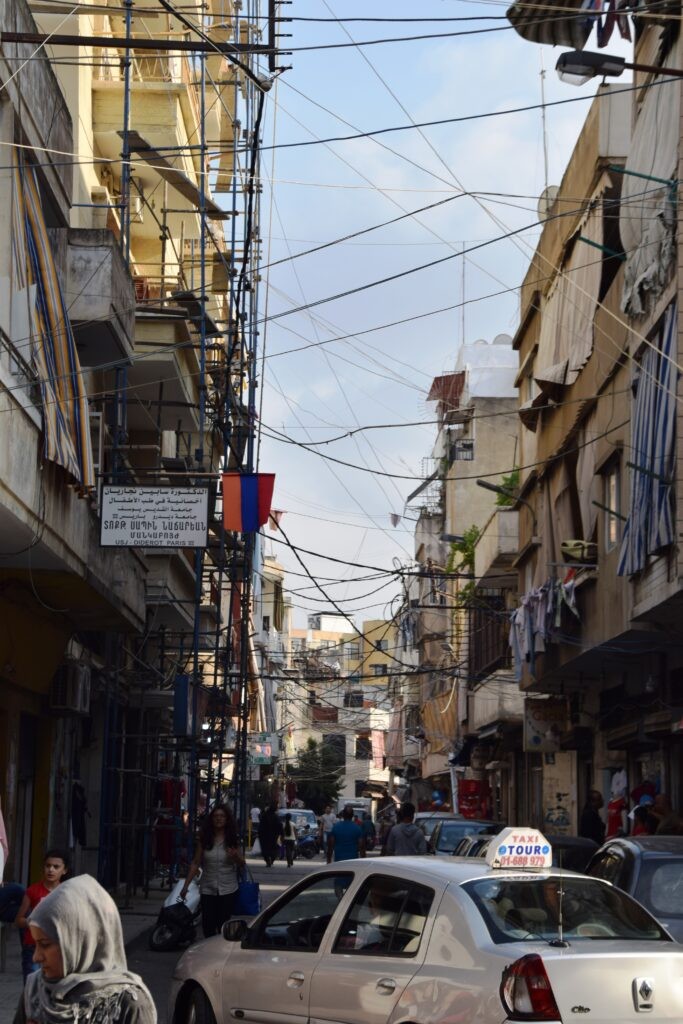
Kazakhstan has evacuated several dozen Kazakh citizens and their family members from Lebanon, the Ministry of Foreign Affairs said on Monday. It cited “escalating tensions in the Middle East,” a reference to fighting between Israel and its Iran-backed enemies, including Hezbollah in Lebanon. “This operation was organized through Istanbul and Dubai, resulting in the safe return of 41 people to Astana and Almaty from Beirut between October 17-31, 2024,” the ministry said in a statement. “The evacuation was conducted to protect the rights and interests of citizens of the Republic of Kazakhstan who were in the conflict zone,” it said. Other countries have also organized evacuations of their citizens from Lebanon. Türkiye assisted in the air evacuations of more than 2,000 people from 21 countries, including Uzbekistan, Türkiye’s state Anadolu Agency reported last month. Israeli air strikes have pounded parts of Lebanon and Israeli forces launched a ground incursion into southern Lebanon last month, a year after Hezbollah started firing rockets and other projectiles into Israel in support of Iran-backed Hamas in Gaza. The Hezbollah action was a show of solidarity with Hamas in the war that broke out after its Oct. 7, 2023 attack on Israel. Iran, meanwhile, has directly threatened Israel with retaliation for Israeli air strikes on Iranian targets last month, the latest in a series of tit-for-tat attacks between the two adversaries. The United States said it was sending more military aircraft to the region to deter Iran.