• KZT/USD = 0.00216
  • TJS/USD = 0.10800
  • UZS/USD = 0.00009
  • TMT/USD = 0.29850
  • KZT/USD = 0.00216
  • TJS/USD = 0.10800
  • UZS/USD = 0.00009
  • TMT/USD = 0.29850
  • KZT/USD = 0.00216
  • TJS/USD = 0.10800
  • UZS/USD = 0.00009
  • TMT/USD = 0.29850
  • KZT/USD = 0.00216
  • TJS/USD = 0.10800
  • UZS/USD = 0.00009
  • TMT/USD = 0.29850
  • KZT/USD = 0.00216
  • TJS/USD = 0.10800
  • UZS/USD = 0.00009
  • TMT/USD = 0.29850
  • KZT/USD = 0.00216
  • TJS/USD = 0.10800
  • UZS/USD = 0.00009
  • TMT/USD = 0.29850
  • KZT/USD = 0.00216
  • TJS/USD = 0.10800
  • UZS/USD = 0.00009
  • TMT/USD = 0.29850
  • KZT/USD = 0.00216
  • TJS/USD = 0.10800
  • UZS/USD = 0.00009
  • TMT/USD = 0.29850
19 August 2026

Viewing results 1 - 6 of 72

Trump 2.0: Security Implications for Central Asia – Diplomats and Analysts Weigh the Risks for Regional Stability

Narxoz University’s Eurasian Institute for Economic and Legal Research and the School of Economics and Management convened distinguished diplomats, military analysts, and academics from the Conference on Interaction and Confidence Building Measures in Asia (CICA), The National Institute for Defense Studies (Japan),  George Mason University (US), and Maqsut Narikbayev University (Kazakhstan) to analyze the geopolitical and security implications of a second Donald Trump presidency in Central Asia. Professor Ikboljon Qoraboyev, Director of the Center for Global and Regional Governance at Maqsut Narikbayev University, argued that Trump’s pragmatism will drive him to exploit every available opportunity to advance the financial and political interests of himself, his loyal corporate allies, and the United States. This approach, characterized by a “nothing-personal-just-business” mindset, makes his actions inherently unpredictable, keeping both allies and rivals on edge. Trump thrives on calculated ambiguity, using surprise as a strategic tool to gain the upper hand in negotiations and exert maximum pressure on his counterparts. [caption id="attachment_28674" align="aligncenter" width="936"] Image: Daniyar Kosnazarov[/caption] Professor Erzhan Issabayev, Deputy Director of the Eurasian Institute for Economic and Legal Research at Narxoz University, agreed that this unpredictability could shape a second Trump presidency, particularly in terms of global power dynamics. In Central Asia, where political stability and a carefully maintained multi-vector foreign policy are crucial, Trump’s erratic decision-making presents a significant challenge for regional leaders. Professor Issabayev suggested that if Trump escalates efforts to counter China globally or if negotiations to end the war in Ukraine falter, Central Asia could become an unintended yet significant geopolitical battleground. Building on this perspective, Olzhas Zhorayev, a World Bank Group Consultant and Doctoral Researcher at the Schar School of Policy and Government at George Mason University, examined the potential consequences of deepening U.S.-Russia and U.S.-China confrontations. According to Zhorayev, heightened tensions could push Central Asia further into Moscow’s and Beijing’s political and economic orbit, restricting the region’s strategic flexibility. However, Zhorayev also presented another possibility; if Russia and Ukraine reach a peace agreement, the Kremlin may redirect its focus and resources toward Central Asia, increasing its influence and reshaping the regional balance of power. Expanding on this idea, Marek Jochec, Associate Professor of Finance at Narxoz University, explored the varying perceptions of major global powers in Central Asia. Jochec noted that attitudes toward China and Russia are shaped by a combination of historical experiences, economic ties, and political considerations. While Chinese investment is often viewed as a driver of infrastructure and economic growth, concerns over dependency and influence persist. Russian engagement, deeply rooted in historical and cultural connections, continues to play a significant role, though perceptions vary across different countries. These contrasting views add layers of complexity to the region’s geopolitical positioning, making strategic decision-making increasingly delicate. Ultimately, the expert discussion at Narxoz University highlighted that Trump’s leadership — whether defined by unpredictability, pragmatism, or strategic maneuvering — will have a significant impact on Central Asia. As the region faces shifting geopolitical pressures, governments will need to adapt quickly, reassessing their alliances and economic strategies to...
NASA Discovers ‘Ghost’ Island in the Caspian Sea

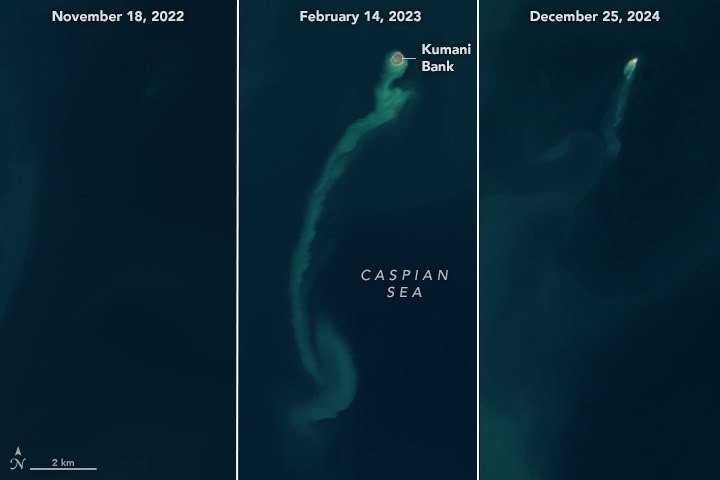
NASA satellites have detected a fascinating phenomenon in the Caspian Sea: the temporary formation of an island following the eruption of the Kumani mud volcano. According to data from NASA's Earth Observatory, the island emerged in early 2023 but had almost completely disappeared by the end of 2024, earning it the nickname “ghost island.” The island was first observed using Landsat 8 and 9 satellite imagery in January 2023, shortly after the volcano erupted. It measured up to 400 meters wide and was accompanied by a visible sedimentary plume extending from its surface. However, by late 2024, the island had diminished significantly, leaving only faint traces of its existence. The Kumani mud volcano, located 25 kilometers off the eastern coast of Azerbaijan, is no stranger to such occurrences. Since its first recorded eruption in 1861, the volcano has periodically created temporary islands, which vanish after short periods. Mud volcanoes like Kumani are common in regions with active tectonic activity. They eject high-pressure mixtures of water, gas, and sediment, forming landmasses that are often unstable and short-lived. The Caspian region is notable for its high concentration of mud volcanoes, with more than 300 such formations in Azerbaijan and on the Caspian Sea shelf. Many of these volcanoes emit combustible gases, particularly methane, which has drawn the interest of scientists and geologists. The connection between these mud volcanoes and the hydrocarbon systems of the South Caspian Basin makes them critical subjects for research. The emergence and disappearance of this “ghost” island in the Caspian Sea highlight how much remains to be understood about mud volcanoes. These transient landforms demonstrate the dynamic forces of nature and underscore the need for further exploration of geological processes occurring on the seafloor.

U.S. Magazine Highlights French Cave Explorers’ Discoveries in Koytendag, Turkmenistan

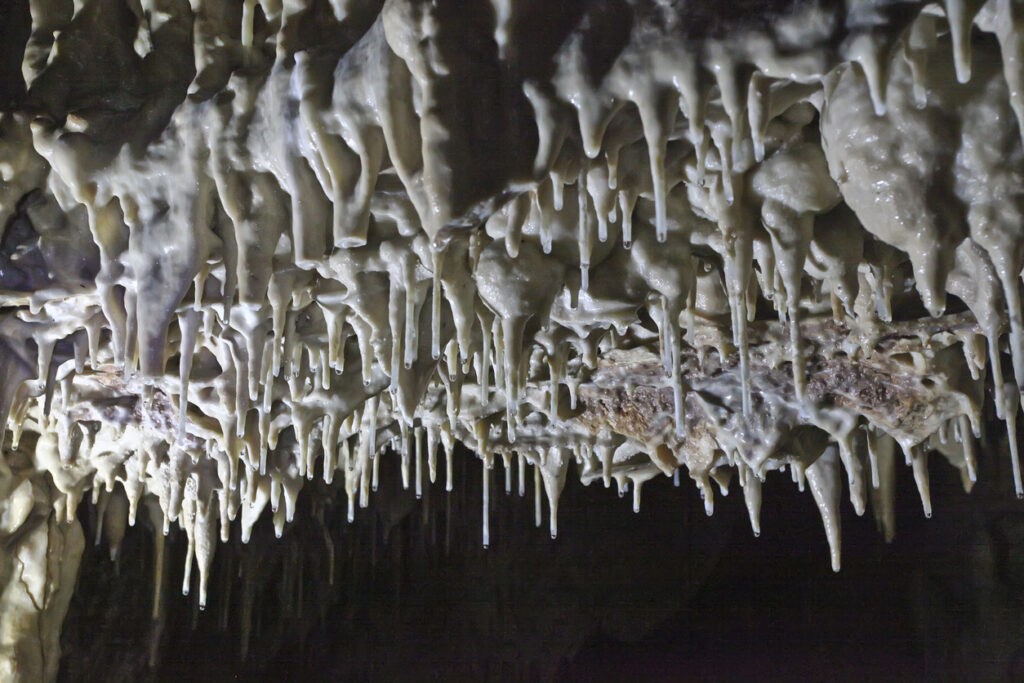
The December 2024 issue of NSS News, a U.S. magazine, featured an in-depth report on the spring expedition of French speleologists to Koytendag, Turkmenistan. The expedition brought together 17 specialists in topography, photogrammetry, biospeleology, geology, and karstology. Their primary objectives were to document existing cave systems, create updated maps, and identify unexplored caves. Over 21 days, the team surveyed approximately 19 kilometers of caves, conducted over 8,500 topographic measurements, and refined maps created by Russian researchers. A major focus of the expedition was 3D photogrammetric modeling of the Geophysical (Gulshirin) Cave, renowned for its stunning gypsum formations. Using a Disto X laser rangefinder and the Topodroid app, the researchers enhanced mapping accuracy and created a digital replica of the cave. This cutting-edge model serves both scientific and educational purposes. “We took more than 50,000 photos in four days, allowing us to produce a highly accurate 3D model,” one expedition participant explained. “This technology not only reveals the cave’s internal structure and unique gypsum formations but also offers an immersive viewing experience.” The team also explored the northwestern part of the massif, identifying small gypsum systems and passages several tens of meters in length. To the east, near the snowy peak of Airybaba at an altitude of 2,400 meters, they discovered a cave marked on their maps. However, adverse weather conditions delayed a full survey of the site. Despite challenges in accessing some areas, the expedition yielded significant results. Koytendag reaffirmed its reputation as a geologically and biospeleologically rich region. The expedition’s findings were presented at a conference held at the French Institute in Ashgabat. Koytendag’s unique caves remain an untapped treasure, holding immense potential for advancing scientific and ecological understanding.

Turkmenistan Develops Innovative Grapevine-Based Products

The International Science and Technology Park of the Academy of Sciences of Turkmenistan is conducting groundbreaking research on the use of local grape varieties in biotechnology, focusing on waste-free production. The biotechnology laboratory is studying grape varieties such as "Garauzyum," "Gelinbarmak," "Terbash," "Khalili," and "Dagtokga," analyzing the properties of grapes, including their leaves, seeds, and vines, to develop innovative technologies. Altyn Rakhmanova, head of the laboratory, highlighted the versatility of grapes, noting their significance beyond traditional wine-making. She emphasized their potential to produce biologically active substances, compound feed, and environmentally friendly fuel. “Our research is aimed at identifying the potential of this crop for use in various industries,” Rakhmanova explained. The laboratory has already developed several grapevine-based products, including the antioxidant resveratrol, animal feed, and fuel briquettes. These briquettes, made from grapevine combined with other wood-based materials, are particularly noteworthy for their environmental benefits. When burned, they emit no toxic resins, making them suitable for both domestic and industrial use. This innovative approach not only reduces waste but also diversifies the product range. The project’s uniqueness lies in its combination of environmental sustainability and broad applications. In addition to product development, the biotechnology laboratory is exploring opportunities for international collaboration. Scientists believe that partnerships with foreign companies and research organizations will facilitate the exchange of knowledge and foster the creation of advanced environmentally friendly technologies.

Uzbek-Chinese Team Uncovers Han Dynasty Relics

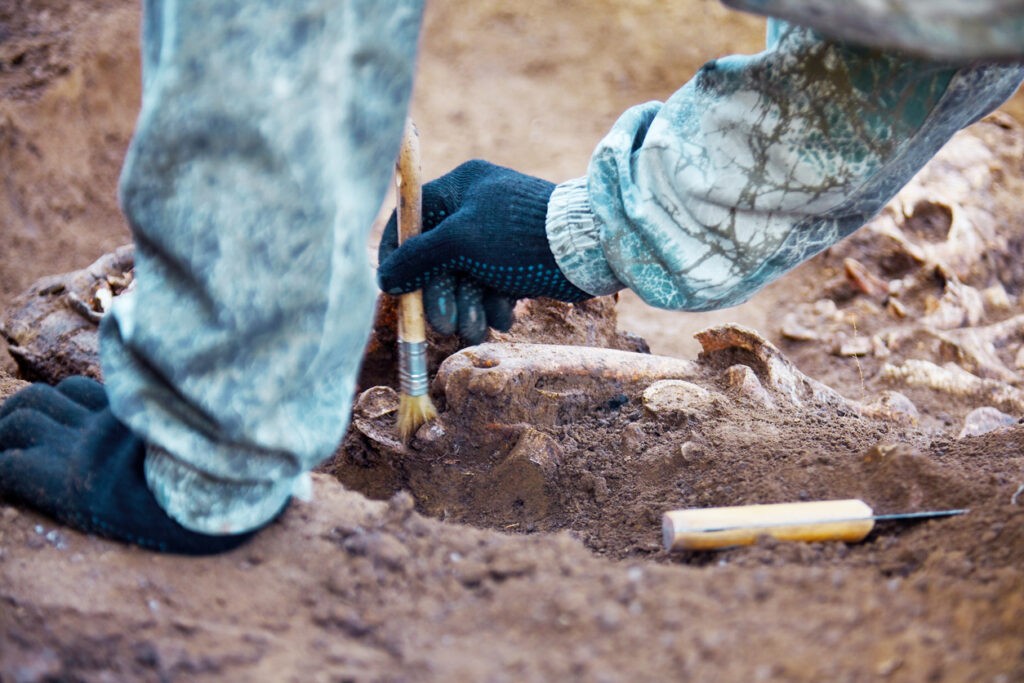
A joint archaeological team from China and Uzbekistan has unearthed significant cultural relics at the Mengchaktepa site in Uzbekistan. Among the discoveries are silk fragments, coins, and a bronze mirror dating back to the Han Dynasty (206 BC-AD 220). The excavation uncovered six tombs and two buildings. These findings could provide deeper insights into the Silk Road during the Wei (220-265), Jin (265-420), and Northern and Southern Dynasties (386-589). This marks the first discovery of silk at Mengchaktepa or anywhere in the Fergana Valley in nearly 40 years. The last such finding, in the 1980s, confirmed that the silk was produced in China. Since 2012, the China-Uzbekistan archaeological team has focused on excavating Mengchaktepa, uncovering relics that underscore frequent trade and cultural exchanges in the region. The area excavated in 2024 is located in the northwest corner of the site. Research from 1986 indicated that this part of the site was contemporaneous with the Wei, Jin, and Northern and Southern Dynasties in China. Liu Tao, a member of the Chinese Academy of Social Sciences and leader of the archaeological team, noted that silk fragments were discovered near the tibia of a tomb skeleton. These fragments are believed to be remnants of trousers. Further studies are underway to confirm the silk’s origin. Copper coins were also recovered, including one too rusted to identify markings. Researchers determined it to be a Chinese-style coin featuring a circular shape with a square hole, reflecting Chinese cultural influence. Both the silk and coins have been sent to a laboratory for detailed analysis, with results expected in 2025. The six tombs excavated feature unique designs distinct from ancient Chinese tombs. They employed reed coffins, constructed using locally available reed stalks braided and wrapped with wood. This adaptation likely utilized materials sourced near the Syr Darya River. However, the tomb structures resemble those of Central China. They include passages, adobe-sealed doors, and cave chambers. One of the larger tombs measures 3 meters wide, 4 meters long, and 2 meters high. It features an arched ceiling, steps connecting the passage to the chamber, and an adobe gate. Cave chamber tombs first appeared during the Warring States Period (475-221 BC) and became prominent during the Han Dynasty. The Times of Central Asia previously reported that this team had unearthed seven tombs, two buildings, and numerous artifacts, including silk fabrics, leather goods, bronze mirrors, square-holed coins, and beads at Mengchaktepa. These findings continue to shed light on the rich cultural and trade connections between Central Asia and China in ancient times.

AI in Central Asia: Kazakhstan Unveils Multilingual GPT Model

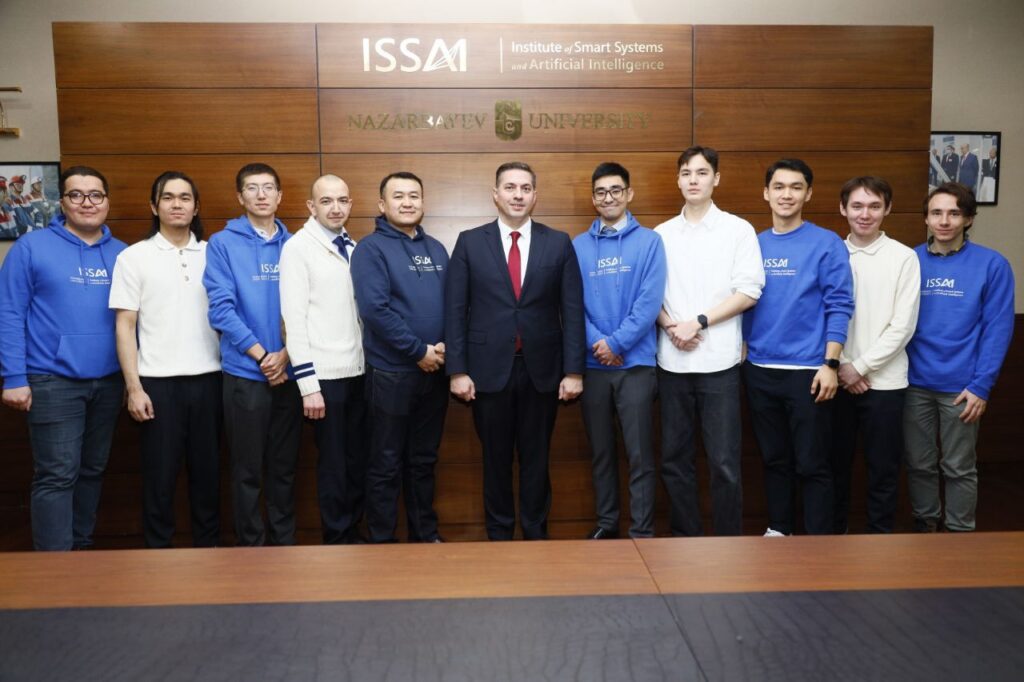
Researchers at the Institute of Intelligent Systems and Artificial Intelligence (ISSAI) at Nazarbayev University in Astana have introduced ISSAI KAZ-LLM, a large language model (LLM) specifically designed for the Kazakh language. Built on advanced neural network technology, the model serves as the foundation for Kazakhstan’s version of a generative AI system similar to GPT. ISSAI KAZ-LLM is tailored to Kazakhstan’s multilingual and multicultural environment, supporting Kazakh, Russian, and English, with additional functionality for Turkish. The model addresses language barriers and advances the field of generative artificial intelligence for resource-limited languages. The development team processed and synthesized over 150 billion tokens to ensure high-performance language capabilities. Beyond creating an AI tool, the project also fostered local expertise, involving Kazakhstani researchers at every stage, from data preparation to model implementation. Collaboration with international institutes enabled the creation of language-specific datasets and comparative analysis tools, utilizing input from linguists and state-of-the-art machine translation techniques. KAZ-LLM has a wide range of applications, including Kazakh language translations, content generation, and bulk text processing. Training data was sourced exclusively from publicly available materials, such as Kazakh websites, news articles, and online libraries, supplemented by contributions from various organizations. ISSAI director, Prof. Hussain Atakan Varol, told The Times of Central Asia: “This model reflects Kazakhstan's commitment to innovation, self-reliance, and the growth of its technology ecosystem. Our team developed two versions of ISSAI KAZ-LLM: one with 8 billion parameters and another with 70 billion parameters. Both are built on the Meta Llama architecture, optimized for use on high-performance systems as well as resource-constrained environments. Released under a CC-BY-NC license, the models are available for non-commercial use on the Hugging Face platform.” The ISSAI team is already exploring next-generation AI systems, including language-vision models, while expanding support for additional Turkic and regional languages. These initiatives aim to strengthen regional ties, promote linguistic integration, and create substantial economic and technological opportunities in Kazakhstan and beyond. Remarkably, this groundbreaking development was accomplished without government funding, with significant contributions from Kazakhstani IT companies. Kazakhstan is also gearing up to launch the International Center for Artificial Intelligence alem.ai. The center is set to become a hub for transforming the country into an AI-driven economy, fostering innovation, attracting investments, and supporting startups. By 2029, the export of Kazakhstani AI solutions is expected to reach $5 billion.