• KGS/USD = 0.01144 0%
  • KZT/USD = 0.00205 0%
  • TJS/USD = 0.10722 0.19%
  • UZS/USD = 0.00008 0%
  • TMT/USD = 0.28490 -0.28%
  • KGS/USD = 0.01144 0%
  • KZT/USD = 0.00205 0%
  • TJS/USD = 0.10722 0.19%
  • UZS/USD = 0.00008 0%
  • TMT/USD = 0.28490 -0.28%
  • KGS/USD = 0.01144 0%
  • KZT/USD = 0.00205 0%
  • TJS/USD = 0.10722 0.19%
  • UZS/USD = 0.00008 0%
  • TMT/USD = 0.28490 -0.28%
  • KGS/USD = 0.01144 0%
  • KZT/USD = 0.00205 0%
  • TJS/USD = 0.10722 0.19%
  • UZS/USD = 0.00008 0%
  • TMT/USD = 0.28490 -0.28%
  • KGS/USD = 0.01144 0%
  • KZT/USD = 0.00205 0%
  • TJS/USD = 0.10722 0.19%
  • UZS/USD = 0.00008 0%
  • TMT/USD = 0.28490 -0.28%
  • KGS/USD = 0.01144 0%
  • KZT/USD = 0.00205 0%
  • TJS/USD = 0.10722 0.19%
  • UZS/USD = 0.00008 0%
  • TMT/USD = 0.28490 -0.28%
  • KGS/USD = 0.01144 0%
  • KZT/USD = 0.00205 0%
  • TJS/USD = 0.10722 0.19%
  • UZS/USD = 0.00008 0%
  • TMT/USD = 0.28490 -0.28%
  • KGS/USD = 0.01144 0%
  • KZT/USD = 0.00205 0%
  • TJS/USD = 0.10722 0.19%
  • UZS/USD = 0.00008 0%
  • TMT/USD = 0.28490 -0.28%

Viewing results 1 - 6 of 4

Iran and Tajikistan Seek Closer Economic, Security Ties

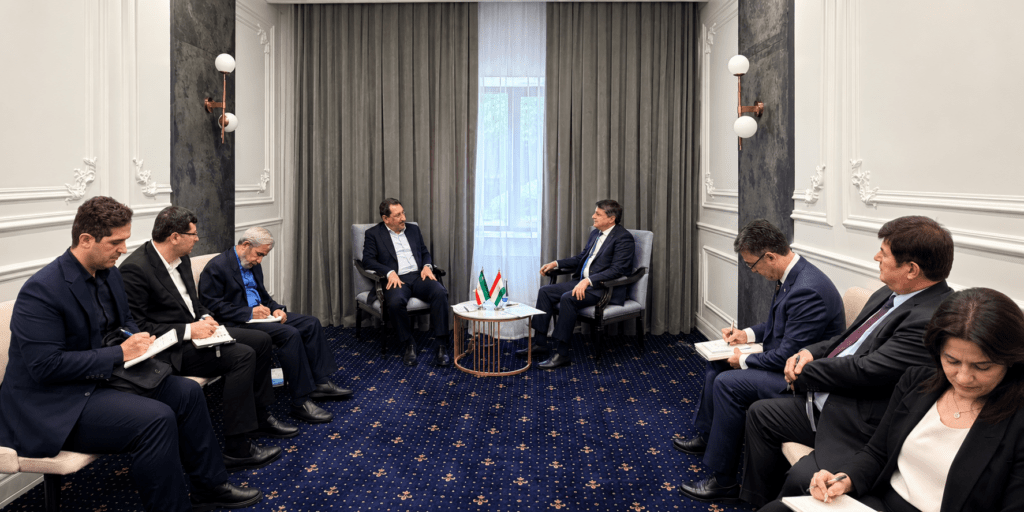
Tajikistan and Iran have moved to deepen a relationship steeped in close cultural ties, holding talks on trade, security and the environment last week even as conflict in the Middle East weighs heavily on Iran. Sherali Kabir, Tajikistan’s industry and new technologies minister, and his Iranian counterpart Seyed Mohammad Atabak agreed that industrial cooperation between their two countries had entered “a qualitatively new stage,” the Tajik ministry said after they met on the sidelines of a gathering of the Shanghai Cooperation Organisation, a regional forum that includes Russia and China. At the meeting on June 5 in Kyrgyzstan, the two men talked about “the establishment of textile clusters based on Tajik cotton raw materials and Iranian technologies; joint projects in metallurgy and mineral processing; the production of agricultural machinery; pharmaceuticals and biotechnology; construction materials; as well as the chemical industry and coal processing,” according to the ministry. They also reviewed a plan to open a joint industrial park in Tajikistan and the application of digital technologies and artificial intelligence in industrial management. Earlier this year, the two countries said they planned to increase bilateral trade to $1 billion, which would roughly double the current annual amount. Tajik officials said trade had increased in the first quarter of this year, and the government sent a convoy of more than 100 trucks carrying what it said was humanitarian aid to Iran in March. On Monday, Iran and Israel appeared to be de-escalating after carrying out airstrikes on each other as a regional ceasefire came under strain. However, Tajikistan has not publicly taken a side in the war and instead called for a diplomatic solution. It is also working to deepen trade and other ties with the United States, which is seeking access to critical minerals and energy resources in Central Asia. The U.S. joined Israel in launching airstrikes on targets across Iran in February. In a separate meeting in Bishkek on June 5, the internal affairs ministers of Tajikistan and Iran discussed ways to counter transnational organized crime and build cooperation between their law enforcement agencies. The two countries, which don’t share a border, have long been concerned about instability and militant threats from Afghanistan, which shares a long border with both countries. According to state-run Iranian media, Interior Minister Ramazon Rahimzoda of Tajikistan also praised Iran during the encounter with counterpart Eskandar Momeni, saying it had shown resilience against “superpowers” in what the minister described as a testament to its technological skills and leadership. In another meeting last week, Shina Ansari, Iranian vice president and head of the environment department, and Bahadur Shiralizadeh, Tajikistan’s environment minister, talked on the sidelines of a Global Environment Facility forum in Samarkand, Uzbekistan. They discussed endangered species protection and pollutant monitoring, and Shiralizadeh said Tajikistan would welcome Iranian specialists on biodiversity, Iran’s state-run IRNA news agency reported. Iranian experts are involved in major hydropower projects in Tajikistan, which sees the technology as a way to alleviate energy shortages and reduce pollution from the use of...
Tokayev Urges Central Asia and China to Strengthen Law Enforcement Cooperation

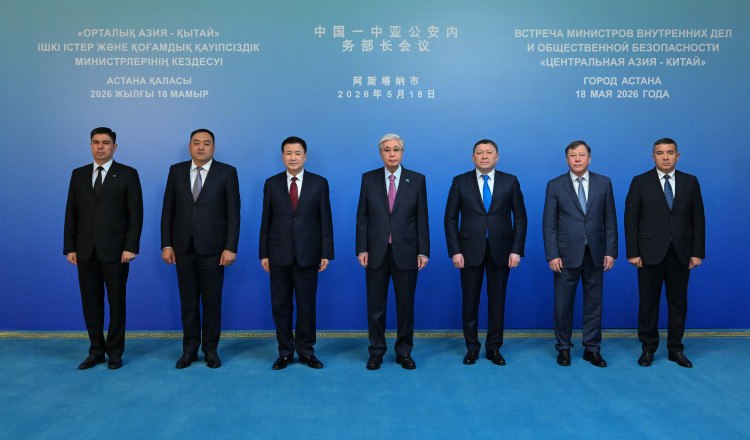
Kazakh President Kassym-Jomart Tokayev hosted the interior and public security ministers of the “Central Asia-China” format in Astana during the second meeting of regional law enforcement agencies. The meeting was attended by Chinese Minister of Public Security Wang Xiaohong, Kyrgyz Interior Minister Ulan Niyazbekov, Tajik Interior Minister Ramazon Rahimzoda, Turkmen Interior Minister Muhammet Hydyrov, and Uzbek Interior Minister Aziz Tashpulatov. Participants discussed transnational crime, drug trafficking, cybercrime, and extremism. Tokayev said strengthening cooperation between the law enforcement agencies of Central Asia and China is essential for maintaining regional stability. “Transnational organized crime is becoming increasingly flexible and interconnected. Cybercrime has evolved into a highly profitable global industry,” the president said. According to Tokayev, criminal groups are increasingly using digital platforms to coordinate activities, launder money, and carry out attacks that transcend national borders. He emphasized that Central Asia’s position at the crossroads of major transport and trade routes leaves the region particularly vulnerable to transnational criminal networks. Tokayev said Kazakhstan considers the rule of law a strategic state priority and is continuing the implementation of its “Law and Order” governance concept. He called for stronger efforts to block the financial flows of criminal organizations, suppress the spread of extremist ideology, and detect preparations for terrorist attacks. The president devoted particular attention to cybersecurity threats. “Artificial intelligence in the hands of destructive actors is becoming an information weapon,” Tokayev said. According to him, illegal content and disinformation are spreading online on an industrial scale, while existing mechanisms of international cooperation require substantial modernization. Tokayev also linked security concerns to the expansion of regional transport infrastructure, including the Trans-Caspian International Transport Route. “The growth of cargo traffic is associated with certain risks, including transnational crime and the trafficking of contraband, drugs, and weapons,” he said. In Tokayev’s view, the “Central Asia-China” format should evolve into a platform for developing coordinated and practical security measures across the region. Participants in the meeting reaffirmed their intention to expand operational information-sharing, strengthen professional cooperation, and introduce modern technologies into law enforcement activities.

The Silk Visa Deadlock: The Long Road to a Borderless Central Asia

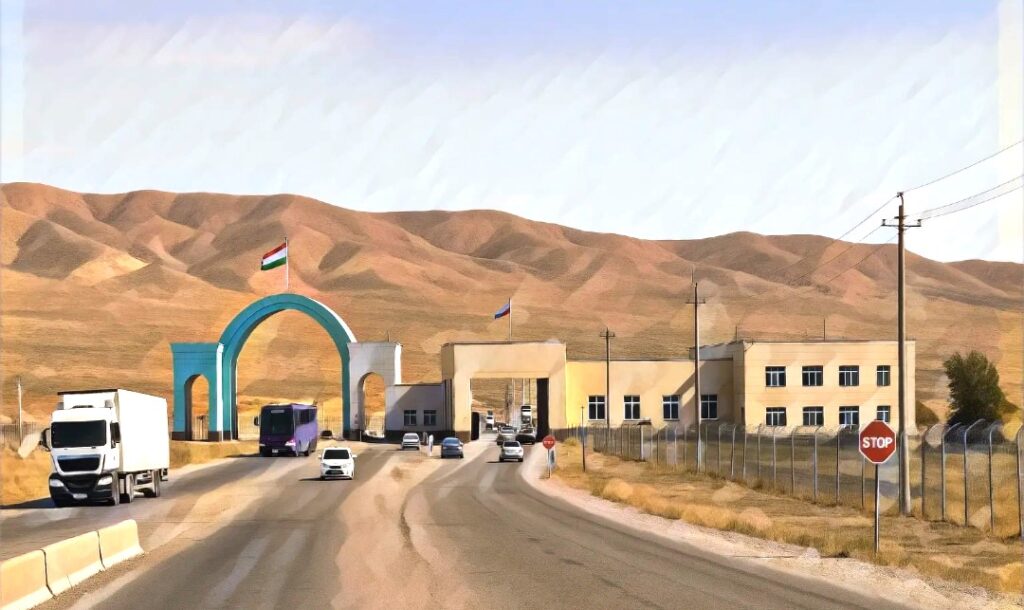
The year 2025 will likely be remembered as a milestone in Central Asian diplomacy. Regional leaders signed landmark agreements on water and energy cooperation and launched major investment projects. At high-level meetings, Central Asian presidents emphasized a new phase of deeper cooperation and greater unity, highlighting strategic partnership and shared development goals. But at ground level, at border crossings such as Korday between Kazakhstan and Kyrgyzstan, or the congested diversion routes replacing the closed Zhibek Zholy checkpoint, the picture is far less seamless. Long queues, heightened scrutiny, and bureaucratic delays remain the norm. While political rhetoric celebrates unity, the reality on the ground tells a different story. The region’s physical borders remain tightly controlled. A key symbol of unrealized integration is the stalled “Silk Visa” project, a proposed Central Asian version of the Schengen visa that would allow tourists to travel freely across the region. The project has made little headway, with experts suggesting that, beyond technical issues, deeper concerns, including economic disparities and security sensitivities, have played a role. Silk Visa: A Stalled Vision Launched in 2018 by Uzbekistan and Kazakhstan, the Silk Visa was envisioned as a game-changer for regional tourism and mobility. Under the scheme, tourists with a visa to one participating country could move freely across Central Asia, from Almaty to Samarkand and Bishkek. Seven years on, the project has yet to materialize. Official explanations point to the difficulty of integrating databases on “undesirable persons.” But as Uzbekistan’s Deputy Prime Minister acknowledged earlier this year, the delay stems from the need to harmonize security services and create a unified system. Experts also cite diverging visa policies and resistance from national security agencies unwilling to share sensitive data. As long as each country insists on determining independently whom to admit or blacklist, the Silk Visa will remain more aspiration than policy. Economic Imbalance: The Silent Barrier The most significant, albeit rarely acknowledged, hurdle to regional openness is economic inequality. Kazakhstan’s GDP per capita, at over $14,000, is significantly higher than that of Uzbekistan or Kyrgyzstan, which hover around $2,500-3,000. This disparity feeds fears in Astana that full border liberalization would trigger a wave of low-skilled labor migration, putting strain on Kazakhstan’s urban infrastructure and labor market. While Kazakhstan is eager to export goods, services, and capital across Central Asia, it remains reluctant to import unemployment or social tension. Migration pressure is already high: according to Uzbekistan’s Migration Agency, the number of Uzbek workers in Kazakhstan reached 322,700 in early 2025. Removing border controls entirely could exacerbate this trend, overwhelming already stretched public services. Security Concerns and Regional Tensions The geopolitical landscape further complicates the dream of borderless travel. A truly open regional system would require a strong, unified external border, something unattainable given Afghanistan’s proximity. The persistent threats of drug trafficking and extremist infiltration compel Uzbekistan and Tajikistan to maintain tight border controls. Kazakhstan, while geographically removed, remains cautious about loosening controls along its southern frontier. Moreover, despite recent agreements on delimiting the Kyrgyz–Tajik border, tensions in...

Uzbekistan Shares Rehabilitation Model for Returnees at UN Event

On November 11, 2024, a high-level event titled “Effective Rehabilitation and Reintegration of Returnees from North-Eastern Syria – Uzbekistan’s Experience: From Global to Local” took place at the UN Headquarters in Geneva. The event highlighted Uzbekistan’s successful approach to rehabilitating and reintegrating individuals returning from conflict zones, particularly through the work of the Regional Expert Council, established in 2024 at the initiative of President Shavkat Mirziyoyev. Vladimir Voronkov, head of the UN Counter-Terrorism Office, commended Uzbekistan’s efforts. “UN member states urgently need to develop strategies for rehabilitation and reintegration based on the experience of Uzbekistan. The Tashkent model aims to ensure the rights and dignity of the individual, which is important in these processes,” Voronkov stated. Khalid Koser, Director of the Global Community Engagement and Resilience Fund, described Uzbekistan’s model as a roadmap for other nations. He emphasized that the approach has proven to be effective, humane, and respectful of human rights in returning citizens from conflict zones. A focal point of the conference was the Regional Expert Council on Rehabilitation and Reintegration, established under the UN Office of Counter-Terrorism. The Council, based in Tashkent, aims to bring together Central Asian experts to share their knowledge and develop programs to assist reintegrated individuals in rebuilding their lives. “I am convinced that the Council, established in Tashkent at the initiative of the President of Uzbekistan, will contribute to strengthening the exchange of best practices and lessons learned in this area,” said Natalia Gherman, Head of the UN Security Council Counter-Terrorism Committee Executive Directorate. The Times of Central Asia has previously reported that Kazakhstan, Kyrgyzstan, Tajikistan, and Uzbekistan are collectively improving support systems for women and children returning from conflict zones, such as Iraq and Syria.