• KGS/USD = 0.01144 0%
  • KZT/USD = 0.00215 0%
  • TJS/USD = 0.10680 0.19%
  • UZS/USD = 0.00008 0%
  • TMT/USD = 0.28530 0%
  • KGS/USD = 0.01144 0%
  • KZT/USD = 0.00215 0%
  • TJS/USD = 0.10680 0.19%
  • UZS/USD = 0.00008 0%
  • TMT/USD = 0.28530 0%
  • KGS/USD = 0.01144 0%
  • KZT/USD = 0.00215 0%
  • TJS/USD = 0.10680 0.19%
  • UZS/USD = 0.00008 0%
  • TMT/USD = 0.28530 0%
  • KGS/USD = 0.01144 0%
  • KZT/USD = 0.00215 0%
  • TJS/USD = 0.10680 0.19%
  • UZS/USD = 0.00008 0%
  • TMT/USD = 0.28530 0%
  • KGS/USD = 0.01144 0%
  • KZT/USD = 0.00215 0%
  • TJS/USD = 0.10680 0.19%
  • UZS/USD = 0.00008 0%
  • TMT/USD = 0.28530 0%
  • KGS/USD = 0.01144 0%
  • KZT/USD = 0.00215 0%
  • TJS/USD = 0.10680 0.19%
  • UZS/USD = 0.00008 0%
  • TMT/USD = 0.28530 0%
  • KGS/USD = 0.01144 0%
  • KZT/USD = 0.00215 0%
  • TJS/USD = 0.10680 0.19%
  • UZS/USD = 0.00008 0%
  • TMT/USD = 0.28530 0%
  • KGS/USD = 0.01144 0%
  • KZT/USD = 0.00215 0%
  • TJS/USD = 0.10680 0.19%
  • UZS/USD = 0.00008 0%
  • TMT/USD = 0.28530 0%

Viewing results 1 - 6 of 36

Electronic Queue System Launched at Key Kyrgyz-Uzbek Border Crossing

An Electronic Queue Management System (e-QMS) has been launched at the Dostuk border crossing, the primary checkpoint between Kyrgyzstan and Uzbekistan along the Osh-Andijon road. The initiative, developed through cooperation between the Kyrgyz government, the European Union, and the International Trade Centre (ITC), is part of the “Ready4Trade Central Asia” project (2024-2028), which aims to streamline trade procedures and boost economic competitiveness across the Trans-Caspian Transport Corridor. Funded by the European Union, the project is designed to simplify cross-border operations and improve conditions for small and medium-sized enterprises. The e-QMS platform, developed by the ITC in collaboration with Kyrgyzstan’s State Customs Service and Ministry of Economy and Commerce, allows transport operators to pre-book border crossing times online or via a mobile app. The system is expected to reduce waiting times, ease congestion, and improve the predictability of border transit, benefiting both carriers and customs authorities through greater transparency, efficiency, and safety. “For Kyrgyzstan, the implementation of e-QMS is a cornerstone in creating a business-friendly environment for exporters. The new system simplifies procedures, reduces costs for exporters and carriers, and makes trade more transparent and efficient,” said Iskender Asylkulov, Kyrgyzstan's Deputy Minister of Economy and Commerce. The system was initially piloted at the Kyzyl-Kiya border crossing in November 2024, where it processed more than 12,000 vehicles in its first six months. Following positive feedback from transport operators and significant reductions in wait times, the system has now been expanded to Dostuk, one of the region’s busiest crossings. In 2024 alone, over 87,000 vehicles passed through Dostuk, including more than 21,000 import consignments, nearly 8,000 export shipments, and over 58,000 transit movements. The deployment of the e-QMS is expected to further boost trade between Kyrgyzstan and Uzbekistan, which reached $846 million in 2024. From January to June 2025, bilateral trade turnover totaled $430.2 million, $50 million more than during the same period in 2024, according to data from Uzbekistan’s National Statistics Committee.

Kazakhstan and Germany Extend Business Partnership Program Through 2028

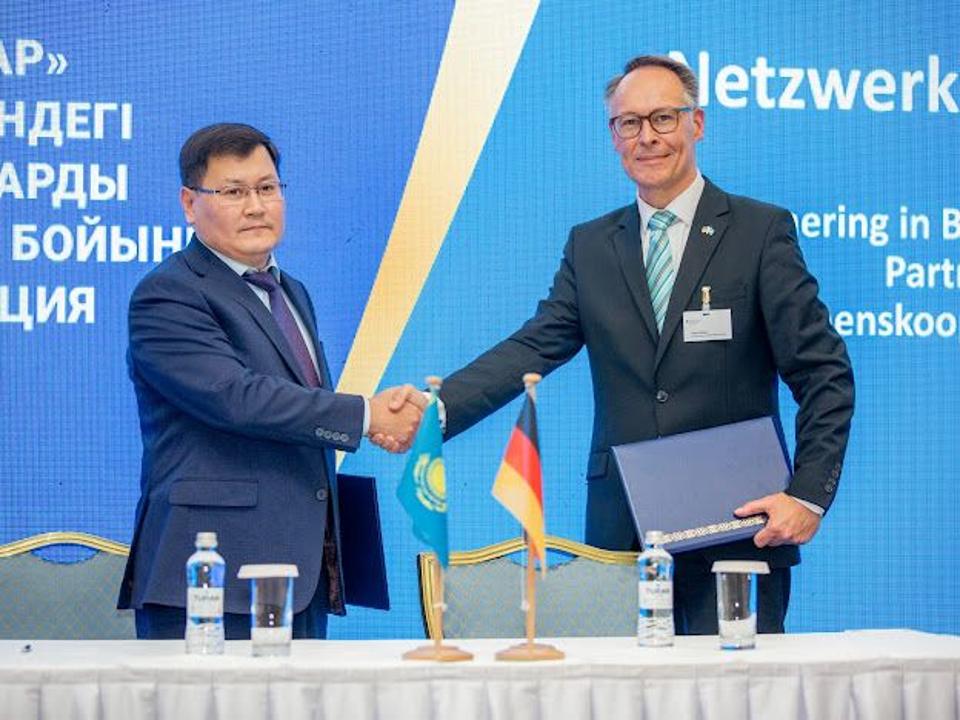
Kazakhstan and Germany have signed an agreement to extend their long-running “Partnering in Business with Germany” program until 2028, reinforcing bilateral economic cooperation with a particular focus on small and medium-sized enterprises (SMEs). Jointly implemented by Kazakhstan’s Ministry of National Economy and Germany’s Federal Ministry for Economic Affairs and Energy, the program has been in operation for 15 years. More than 800 Kazakhstani entrepreneurs have participated, gaining hands-on training in Germany, learning best business practices, modernizing their operations, and securing contracts, licenses, and franchise agreements. In 2025, the German side will continue to fully cover costs for participants, including training, insurance, and accommodation. Deputy Minister of National Economy Yerlan Sagnayev emphasized that the program not only fosters professional development among Kazakhstani entrepreneurs but also contributes to deepening long-term economic ties between the two nations. Germany is Kazakhstan’s largest trading partner within the European Union. At the 16th Kazakhstan-German Business Council meeting held in Astana in May, it was revealed that Kazakhstan ranked 43rd among Germany’s global trade partners in 2024 and accounted for 83% of Germany’s trade volume with Central Asia. Energy remains a central pillar of bilateral cooperation. Kazakhstan began exporting crude oil to Germany via the Druzhba pipeline in 2023, with volumes expected to rise to 1.5 million tons in 2025, up from 993,000 tons in 2023.

Kyrgyz Authorities Introduce Incentives for Businesses to Avoid Inspections

The Ministry of Economy and Commerce of Kyrgyzstan has announced that companies included in the newly created Register of Conscientious Entrepreneurs will receive a range of state-backed privileges, including financial incentives and regulatory relief. “The Register of Conscientious Entrepreneurs is an official list of companies and businesspeople recognized by the state as reliable, honest, and socially responsible. In other words, it is a kind of ‘white list’ of businesses operating transparently and lawfully,” the ministry stated. Officials explained that the register is designed to support ethical entrepreneurship, strengthen reputations, and increase trust from clients, partners, and the state. Inclusion is expected to encourage lawful conduct and promote contributions to Kyrgyzstan’s economic development. Businesses listed in the register will be eligible for several benefits, including free advertising airtime on state television channels, priority service at tax authorities, and free participation in international exhibitions and trade fairs. Notably, they will also be exempt from inspections by supervisory bodies for a period of three years, except for certain audits conducted by the State Tax Service. Additional incentives include access to preferential financing through state-backed lending programs, the right to display a government-issued quality mark, and official confirmation of reliability. To qualify for the register, businesses must meet several criteria: Operate for at least three years; Pay taxes and insurance contributions fully and on time; Have no debts to the state; Provide decent wages to employees (no lower than the sector average); Demonstrate annual growth of at least 5% in taxes and budget contributions; Comply with labor rights regulations; Have no convictions for economic crimes. An interdepartmental commission met earlier this week to evaluate applications. Of the 48 businesses that applied, only a few were denied entry into the register.

A Taste of Kazakhstan: Interview with Almaty’s Apple City Cider

Englishman Alexander Thomas is the passionate founder of Apple City Cider, an Almaty-based craft cidery dedicated to producing high-quality, locally sourced ciders that celebrate tradition with a modern twist. With a deep-rooted love for orchards and fermentation, Thomas blends innovation with time-honored techniques to create crisp, flavorful ciders. TCA: What first brought you to Almaty, and what kept you here? AT: I used to work for the world’s largest publishing group, where I reported on different market sectors. When I covered aviation, I used to fly around the world to speak to different airline CEOs to discuss their route strategies and fleets. I first came to Kazakhstan to interview Air Astana’s CEO, Peter Foster. I was supposed to fly to Paris to speak with KLM and Air France, but that meeting was canceled, so I flew back to London. Sitting next to me, little did I know, was my future wife. In the same company, I very much enjoyed the coverage of the drinks industry. I had originally wanted to make wine in the south of France, but after marrying a Kazakh girl, we decided to start our business in Kazakhstan. Instead of pressing grapes in the South of France, we began pressing apples in Almaty. TCA: Can you tell us the inspiration for Apple City Cider? AT: We started the business because no one was making cider in the birthplace of the apple, around that time, cider was not even available to purchase in Kazakhstan. Around the same time we went on sale, another alcohol manufacturer began to produce cider as well, but we are the only cider specialists; the main business of the others is spirits and other alcoholic drinks. [caption id="attachment_28689" align="aligncenter" width="1706"] Image: TCA, Henry Kuvin[/caption] TCA: How did Almaty respond to your business idea, and what were the main challenges when establishing your company? AT: Consumers are very happy with the product and happy that we started our business here. Like other local companies, Almaty Cider has received a lot of positive support from the city; they love how it’s called “Almaty Cider.” The concept of eating locally and supporting local businesses is a global phenomenon, and Almaty is no exception. The fact that Almaty is the birthplace of the apple, proven by science, made it the ideal location to start such a business. The Malus Sieversii apple, native to the Almaty region, is perfect for cider. The levels of tannins, fruit sugar, and acidity, while not ideal for eating, make a great-tasting cider. TCA: Almaty, the place of abundant apples, does not have a huge cider culture – how has this changed since you established the business, and where do you see it going? AT: Cider was not available even as an imported product until about three to four years ago. Since then, we have seen imported brands come to the market, and people have developed a taste for it. In Russia, for example, there are now over 100 independent cideries. The first person...

Kyrgyz Businesses and Government Meet to Discuss New Tax Initiative

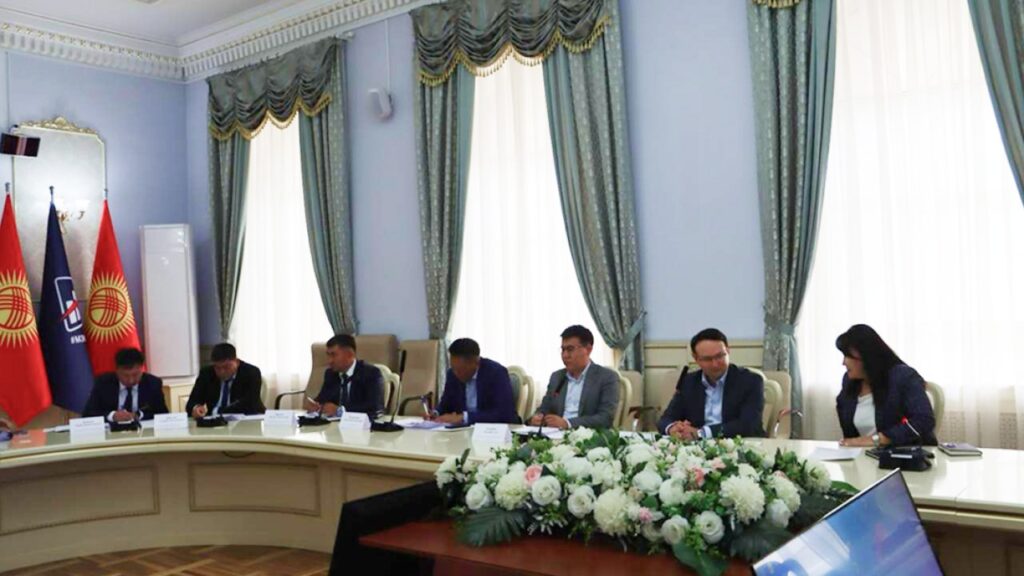
Government officials, members of parliament, and entrepreneurs gathered at one of Kyrgyzstan’s largest business associations to discuss pressing issues affecting the country’s business environment, including taxation and efforts to streamline processes for entrepreneurs. The primary focus of the meeting was the introduction of the electronic bills of lading (EBL) system. The Times of Central Asia has previously reported on the challenges businesses face with this new system. The State Tax Service (STS) has pledged to revise the EBL system by the end of the month to address concerns raised by the business community. Almambet Shykmamatov, head of the STS, acknowledged that authorities had rushed the implementation of the EBL system without adequately considering the interests of businesses. “We understand that the market is a complex system that cannot be changed overnight. We are committed to dialogue and compromise. Our goal is not only to regulate but also to support businesses. That’s why continuous engagement with the business community is essential,” Shykmamatov stated. Beyond electronic bills of lading, entrepreneurs raised concerns over the lack of preventive measures in Kyrgyzstan’s system of fines. Akzhol Isayev, general director of Dordoi Security, highlighted that unlike Russia and Kazakhstan, which have legal provisions for issuing warnings, Kyrgyzstan imposes penalties without warnings. “Kyrgyzstan has 11 articles with fines, but none that provide for warnings,” Isayev explained. He also noted that some fines, which can reach as high as one million KGS (approximately $12,000), often lead to business closures or encourage corruption. Shykmamatov admitted that excessive tax pressure can harm the business environment. Consequently, participants decided to establish a working group to review and reform the system of penalties, aiming for a more business-friendly approach. Sergei Ponomarev, president of the Association of Markets, Trade, and Services Enterprises, emphasized that protecting private property is critical for attracting investment. However, he warned that businesses in Kyrgyzstan are hesitant to invest in real estate due to legal uncertainties. “An entrepreneur might honestly purchase property, invest in it, and create jobs, only to later discover that the land was acquired illegally 30 years ago. This uncertainty makes businesses afraid to commit to long-term projects,” Ponomarev said. To address this issue, the business community has proposed the introduction of a statute of limitations for real estate transactions. “It’s encouraging when the state not only listens to our problems but also offers constructive solutions. I am confident that this approach will improve the investment climate and raise the standard of living for our citizens,” Ponomarev added. The STS noted that similar meetings have been held with representatives of logistics companies, the Chamber of Commerce and Industry, and the American Chamber of Commerce in Kyrgyzstan.

Kyrgyz Businesses React With Cautious Optimism To Tax Amnesty

The Kyrgyz government has announced a tax amnesty aimed at easing the financial burden on businesses and reducing the workload of the State Tax Service (STS). However, local entrepreneurs have received the initiative with cautious optimism. As part of the amnesty, President Sadyr Japarov has decreed the exemption of taxes on agricultural land, the cancellation of private vehicle taxes for citizens, and the write-off of all tax debts accrued before January 1, 2022. The initiative has been met with mostly positive reactions from Kyrgyzstan’s business community. Entrepreneurs noted that many small and medium-sized enterprises in the country are burdened with significant debts to the state. They believe this measure has the potential to improve the business climate - provided the government maintains a stable and predictable tax policy. “Such decisions were likely made to support entrepreneurs during a challenging economic period, stimulate economic activity, and improve the overall state of business in the country. It could also be part of a broader strategy to foster trust between the government and the business community,” the JIA Business Association, one of Kyrgyzstan’s largest business groups, told the Times of Central Asia. By writing off debts, the JIA representatives said, the government will significantly ease the financial strain on businesses across various sectors. This would allow many entrepreneurs to focus on recovery and growth, particularly after the economic setbacks caused by the COVID-19 pandemic. Despite these positives, the association expressed concerns over the fairness of the tax amnesty. “We hope that the amnesty will also include those businesses that were declared debtors by court decisions, but remain unable to pay their debts to this day. Additionally, there are social businesses - such as those in education and healthcare - that are registered as non-profit organizations but still face tax burdens. Including these entities in the amnesty would ensure greater fairness and also ease the workload of the tax service,” a JIA spokesperson explained. However, under the presidential decree, businesses or individuals with tax debts resulting from court rulings are not eligible for the amnesty. The Kyrgyz presidential administration estimates that the amnesty will result in the write-off of approximately 11 billion KGS (around $126 million) in tax debts for over 20,000 businesses. But while this decision is welcomed by many, it has drawn criticism from some quarters. Market representatives argue that the amnesty may be unpopular among diligent taxpayers who have consistently fulfilled their tax obligations and do not owe the state. Nonetheless, they acknowledged that the government’s decision demonstrates a willingness to be flexible. This includes addressing other concerns, such as issues surrounding the introduction of electronic commodity invoices, which have been controversial among entrepreneurs. “In the past three years, there has been significant progress in reforming tax administration. We anticipate further reforms, such as limiting the application of electronic goods invoices (ETNs) to specific types of goods or simplifying their use for small and medium-sized businesses. Efforts to improve digital tools for businesses, streamline tax administration, and increase public and business...