• KGS/USD = 0.01144 0%
  • KZT/USD = 0.00208 0%
  • TJS/USD = 0.10445 -0.57%
  • UZS/USD = 0.00008 0%
  • TMT/USD = 0.28571 0%
  • KGS/USD = 0.01144 0%
  • KZT/USD = 0.00208 0%
  • TJS/USD = 0.10445 -0.57%
  • UZS/USD = 0.00008 0%
  • TMT/USD = 0.28571 0%
  • KGS/USD = 0.01144 0%
  • KZT/USD = 0.00208 0%
  • TJS/USD = 0.10445 -0.57%
  • UZS/USD = 0.00008 0%
  • TMT/USD = 0.28571 0%
  • KGS/USD = 0.01144 0%
  • KZT/USD = 0.00208 0%
  • TJS/USD = 0.10445 -0.57%
  • UZS/USD = 0.00008 0%
  • TMT/USD = 0.28571 0%
  • KGS/USD = 0.01144 0%
  • KZT/USD = 0.00208 0%
  • TJS/USD = 0.10445 -0.57%
  • UZS/USD = 0.00008 0%
  • TMT/USD = 0.28571 0%
  • KGS/USD = 0.01144 0%
  • KZT/USD = 0.00208 0%
  • TJS/USD = 0.10445 -0.57%
  • UZS/USD = 0.00008 0%
  • TMT/USD = 0.28571 0%
  • KGS/USD = 0.01144 0%
  • KZT/USD = 0.00208 0%
  • TJS/USD = 0.10445 -0.57%
  • UZS/USD = 0.00008 0%
  • TMT/USD = 0.28571 0%
  • KGS/USD = 0.01144 0%
  • KZT/USD = 0.00208 0%
  • TJS/USD = 0.10445 -0.57%
  • UZS/USD = 0.00008 0%
  • TMT/USD = 0.28571 0%

Viewing results 1 - 6 of 232

Amid Discontent Among Entrepreneurs, Kyrgyz Authorities Ease Tax Burden

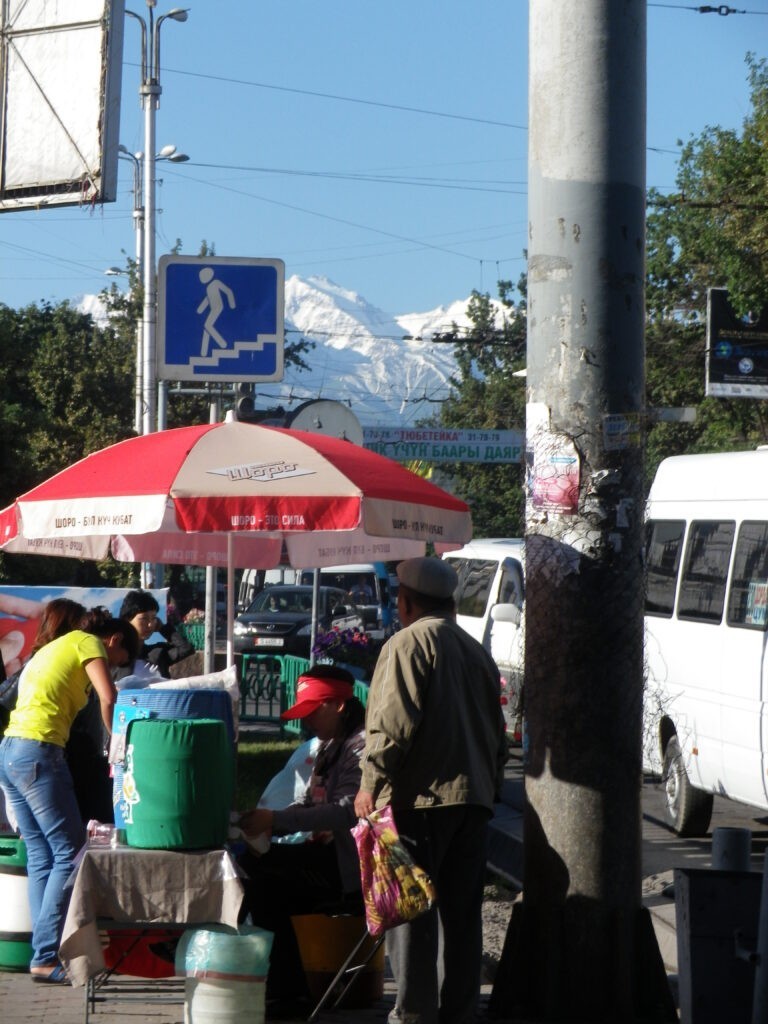
Kyrgyz President Sadyr Japarov has instructed the new Prime Minister Adylbek Kasymaliev and the head of the State Tax Service (STS) to develop a new fiscal policy that will not overburden citizens or force entrepreneurs to conceal their income. Special attention is to be paid to electronic bills of lading (EBL). Following a corruption scandal in the STS, the new head of the tax service, Almambet Shykmamatov, proposed abolishing the EBLs introduced by the government in the summer of 2024. At a parliamentary session, Shykmamatov explained that the EBLs were implemented to combat the shadow turnover of goods. However, the new reporting system has sparked numerous complaints from entrepreneurs. Shykmamatov stated, "I will find those who implemented the EBL system improperly and without analysis and ensure they are held accountable. I will explain what populism is and why simply raising taxes and calling it economic growth is unacceptable." EBLs (electronic bills of lading) replaced the so-called voluntary patents that entrepreneurs and market traders used to purchase monthly as a form of tax payment. Later, during a government meeting, Kasymaliev, head of the Kyrgyz Cabinet of Ministers, confirmed that despite widespread public protests, the authorities do not intend to abolish EBLs entirely but assured that the Cabinet will work to simplify the system and will study the possibility of revising the list of goods to be included in the reporting of EBL. The Times of Central Asia surveyed entrepreneurs who have been most affected by EBLs. Venera Mugalimova, a seller of electrical building supplies at a Bishkek market, said, "The introduction of EBLs has severely complicated my life. This system is unfeasible for me and all vendors working on consignment sales. In such cases, we first receive the goods, sell them, and only then settle the payment. The system doesn’t recognize 'consignment goods.' The company providing the goods on consignment cannot issue me an invoice without payment.” According to sellers, individuals offering paid training on how to use the EBL system have started to appear in Kyrgyzstan's online space, and their services are in high demand. "It’s a massive headache, although it depends on your business type. In my case, we deal with many small items—about 5,000 different products. Manually entering the name, price, and exchange rate for each product is problematic and very time-consuming," Alena, a wholesale seller of fabrics and clothing at Dordoi Market, told The Times of Central Asia. Her company not only sells goods but also imports them from nearby countries. "With EBLs, I lose a lot of time. Either I focus on reporting or work. Combining both is very hard, and we’d need to hire at least three accountants for the number of outlets we have. That’s additional expenses," the businesswoman noted. Sergey Ponomarev, President of the Association of Markets, Trade Enterprises, and Service Industries, commented to The Times of Central Asia that moving away from the patent system was crucial in combating the shadow economy. However, the current situation with EBLs looks less than optimistic.
EBRD Launches New Training Program for Female Entrepreneurs in Kazakhstan

The European Bank for Reconstruction and Development's (EBRD) Women in Microbusiness training program is being launched in Kazakhstan to support women entrepreneurs facing social or economic obstacles in their business activities. Statistics show that whilst  women manage 49 percent of all micro and small-sized businesses  in Kazakhstan, their representation in medium and large business sectors is only 36 percent and 19 percent, respectively. Reporting on the initiative, Alma Kasymova, head of the EBRD's SME (small- and medium-sized enterprises) Program in Kazakhstan, stated, "Our main goal and mission is to empower women entrepreneurs to grow and develop their micro-enterprises through affordable and quality training. We are confident that this program will help participants to expand their competencies and open new perspectives in larger business segments." The training, conducted online in Kazakh and Russian, will run for five months and comprise six business modules in marketing, sales, finance, human resources, operational management, strategic planning, as well as automation and the use of artificial intelligence (AI). Participants will be able to enrol at any time convenient for them.  . Welcoming its launch, an EBRD spokesperson announced, "This is the third implementation of the program -realized in collaboration with the training and consulting company Dialog . Previous projects allowed almost 1,500 women entrepreneurs to strengthen their skills and improve their businesses. "

Interest-Free Loans for SMEs in Kyrgyzstan

The Ministry of Finance of Kyrgyzstan has published a report on the amount of interest-free loans granted to enterprises under the project, "Emergency Support to Micro, Small and Medium Enterprises" as of January 1st, 2024. The report indicates that loans of 5,921,800,000 som ($6,629,870) were granted to 8,929 entrepreneurs. This includes loans of up to 1,000,000 som ($11,196) to 7,788 entrepreneurs totaling 4,219,300,000 som ($47,238,020), and up to 3,000,000 som ($33,587) to 1,141 entrepreneurs totaling 1,702,400,000 som ($19,059,561). The project, "Emergency Support to Micro, Small and Medium Enterprises," which started its activities in September 2021, and will continue until June 2027, is supported and financed by the World Bank and the Asian Infrastructure Investment Bank (AIB). Several agreements with commercial banks have also been signed under the project. Small and medium-sized businesses play a significant role in the private sector, which in turn forms the basis of Kyrgyzstan's market economy. The main reason for this is the lack of the need for large start-up investments, and the speed of resource turnover. Due to their scale, small businesses represent the largest layer of the economy, determining the socioeconomic and partly the political level of development within the country. They act as both direct producers and consumers of a wide range of goods and services. The small business sector operates mainly in local markets. Micro, small and medium-sized businesses account for approximately 50% of Kyrgyzstan's GDP, and are fundamental to job creation in the country.

ADB supports women-run businesses in Kazakhstan, Kyrgyzstan

NUR-SULTAN (TCA) — The Asian Development Bank (ADB) and RG Brands (RGB), a leading food and beverage group in Kazakhstan, have signed a $20 million loan to modernize operations along the company’s regional distribution chain. The assistance will improve the livelihoods of shopkeepers and support women’s empowerment in Kazakhstan and in neighboring Kyrgyzstan, ADB’s Country Office in Kazakhstan said on December 20. Continue reading

Uzbekistan: Small businesses to benefit from EBRD finance

TASHKENT (TCA) — Small private companies in Uzbekistan will benefit from better access to finance thanks to an €18 million loan provided by the European Bank for Reconstruction and Development (EBRD) to Ipoteka Bank, the country’s fourth-largest lender by total assets, the EBRD said on December 13. Continue reading

Kazakhstan’s women and small businesses to benefit from EBRD finance

NUR-SULTAN (TCA) — Small enterprises and women-led businesses in Kazakhstan are set to benefit from a US $40 million loan package provided by the European Bank for Reconstruction and Development (EBRD) for Bank CenterCredit (BCC), a leading local lender, the EBRD said on December 12. Continue reading