• KGS/USD = 0.01144 0%
  • KZT/USD = 0.00207 0%
  • TJS/USD = 0.10415 -0.19%
  • UZS/USD = 0.00008 0%
  • TMT/USD = 0.28571 0%
  • KGS/USD = 0.01144 0%
  • KZT/USD = 0.00207 0%
  • TJS/USD = 0.10415 -0.19%
  • UZS/USD = 0.00008 0%
  • TMT/USD = 0.28571 0%
  • KGS/USD = 0.01144 0%
  • KZT/USD = 0.00207 0%
  • TJS/USD = 0.10415 -0.19%
  • UZS/USD = 0.00008 0%
  • TMT/USD = 0.28571 0%
  • KGS/USD = 0.01144 0%
  • KZT/USD = 0.00207 0%
  • TJS/USD = 0.10415 -0.19%
  • UZS/USD = 0.00008 0%
  • TMT/USD = 0.28571 0%
  • KGS/USD = 0.01144 0%
  • KZT/USD = 0.00207 0%
  • TJS/USD = 0.10415 -0.19%
  • UZS/USD = 0.00008 0%
  • TMT/USD = 0.28571 0%
  • KGS/USD = 0.01144 0%
  • KZT/USD = 0.00207 0%
  • TJS/USD = 0.10415 -0.19%
  • UZS/USD = 0.00008 0%
  • TMT/USD = 0.28571 0%
  • KGS/USD = 0.01144 0%
  • KZT/USD = 0.00207 0%
  • TJS/USD = 0.10415 -0.19%
  • UZS/USD = 0.00008 0%
  • TMT/USD = 0.28571 0%
  • KGS/USD = 0.01144 0%
  • KZT/USD = 0.00207 0%
  • TJS/USD = 0.10415 -0.19%
  • UZS/USD = 0.00008 0%
  • TMT/USD = 0.28571 0%

Viewing results 1 - 6 of 33

Tajikistan Abolishes Criminal Prosecution for Social Media ‘Likes’

Tajikistan will no longer criminalize the use of “likes” or emoji reactions on social media posts. Amendments to the Criminal Code were unanimously approved on April 10 during the first session of the newly elected lower house of parliament, the Majlisi Namoyandagon. The legislative initiative, introduced by First Deputy Prosecutor General Umed Karimzoda, removes language from Articles 179(3) and 307(1) of the Criminal Code that allowed for punishment for “endorsing” extremist or terrorist content. Specifically, the phrase “liking or other sign of approval” will be eliminated from the law. The reform will take effect after approval by the upper house of parliament, a presidential signature, and official publication. Up to 15 Years for Liking: The Way It Used to Be Previously, Tajikistan’s legislation permitted real prison sentences for online activity. Article 179(3), concerning public incitement to terrorism, carried penalties of 5 to 15 years in prison. Article 307(1), concerning public justification of extremism, allowed for 3 to 12 years behind bars. This justification included simple actions such as liking or reposting flagged content. According to Karimzoda, 1,507 people are currently imprisoned for social media activity involving likes or comments on extremist-designated materials. This figure, cited from the Main Department of Corrections, had not been officially disclosed prior to his statement. The Supreme Court of Tajikistan has also consistently declined to release related statistics to the press or the public. Government Response and Rahmon’s Remarks President Emomali Rahmon had already voiced concern over such judicial practices in October 2024, calling on authorities to end prosecutions based on social media interactions. “Some bodies are bringing cases without grounds and this should be stopped,” Rahmon said at the time. Despite this directive, media reports indicate that security services continued to detain individuals, seize phones, and inspect social media activity. One high-profile example involved the family of journalist Shervon Umriddin. In April 2024, his brother was detained in the town of Penjikent after authorities inspected his phone and discovered likes on opposition-related posts. A similar incident had affected another relative a year earlier. Both were eventually released after paying fines. Legal Experts and Human Rights Concerns Media lawyer Ranget Yatimov recalled that as early as 2018, human rights defenders warned of the risk of abuse stemming from the vague interpretation of anti-extremist legislation. Courts began equating “likes” on controversial content with public justification of terrorism. Yatimov also highlighted that such court hearings are typically held behind closed doors, lacking transparency or external oversight. Following Rahmon’s remarks, lawyers and civil society activists emphasized that rhetorical criticism was insufficient. “If the president has a desire to change the situation, he should officially initiate the legislative abolition of such norms. Otherwise, it will remain in words,” said political migrant Farҳod Odinaev. International human rights organizations have repeatedly condemned Tajikistan for restricting freedom of expression. Criminal penalties for digital activity, including likes and comments, have been widely regarded as a violation of basic human rights. The repeal of this provision could mark a step toward more proportionate law...
TikToker Arrested for Insulting Uzbek Citizens Online

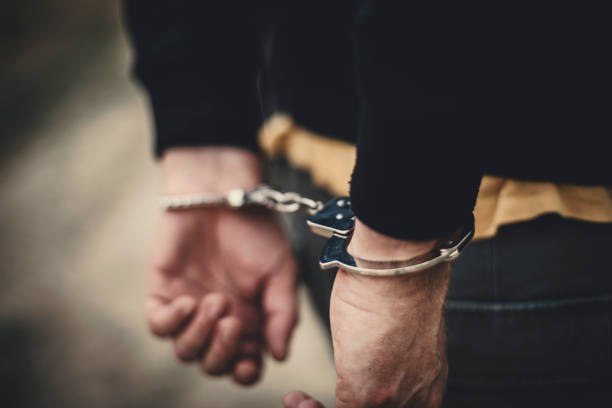
Valeriy Yugay, a TikToker from Uzbekistan’s Tashkent region known online as Abdullah, has been arrested after making a series of offensive videos targeting Uzbek citizens while abroad. According to Bobur Tulaganov, spokesperson for the Tashkent Regional Department of Internal Affairs, Yugay recorded and published the videos during his stay in South Korea in October and November 2024. In the videos, he allegedly insulted Uzbeks, made statements that could incite ethnic hatred, and expressed disrespect for national values and religious beliefs. Yugay was returned to Uzbekistan on March 25, arriving on a flight from Abu Dhabi to Samarkand, where he was immediately detained by law enforcement authorities. A criminal case has been opened against him under Uzbekistan’s Criminal Code, and a court has ordered his pre-trial detention while the investigation proceeds. The 26-year-old reportedly made several inflammatory statements, including denying the legitimacy of the Uzbek state, expressing regret about being born there, and vowing never to return. In one particularly controversial video, he insulted Uzbek women and claimed he would harm his own mother in exchange for social media likes and followers. The Internal Affairs Department stated that his remarks sparked widespread public outrage across Uzbekistan. Following his arrest, Yugay admitted guilt and issued a public apology. “I, Valeriy Yugay, insulted our people on social media. I did it for attention and recognition. But now I realize my mistake and deeply regret it. I sincerely apologize to everyone,” he said.

Kazakh Ex-Security Chief’s Wild Trump KGB Recruitment Story Gains Media Traction

A recent Facebook post by Major General Alnur Musayev, the former head of Kazakhstan’s National Security Committee (KNB), has drawn widespread attention after he claimed that the KGB recruited U.S. President Donald Trump in 1986 under the codename "Krasnov" (a Russian family name, derived from the word "krasniy," an adjective meaning "red"). The post apparently referenced Trump’s hair color in assigning him the pseudonym. Given Musayev’s checkered background, in Kazakhstan, the post was largely taken as satire - though it remains unclear whether it was meant as such. However, the claim was taken literally by several media outlets, particularly in Ukraine, where journalists and commentators circulated the story as fact. As a result, the post evolved into a larger media narrative. Falsehoods in Musayev’s Account Musayev’s version of events contains several factual inaccuracies that contradict both his own professional history and the operational structure of the KGB. Musayev began his post with the statement: "In 1987, I served in the 6th Directorate of the USSR KGB in Moscow." However, official records indicate that between 1986 and 1989, Musayev was assigned to the USSR Ministry of Internal Affairs, where he held senior positions in its 8th Main Directorate, overseeing Soviet law enforcement. He had no known connection to the 6th Directorate of the KGB. Musayev further stated: "The most important area of work of the 6th Directorate was the recruitment of businessmen from capitalist countries." This is also inaccurate. The 6th Directorate of the KGB, formed in 1982 from the former Directorate P of the 2nd Main Directorate, was not involved in foreign recruitment. Its primary responsibilities were: Industrial espionage - gathering intelligence on Western technology and economic developments, and Counterintelligence within the Soviet economy - protecting industrial assets from foreign espionage. The recruitment of foreign nationals, including businessmen, fell under the jurisdiction of the First Main Directorate (FMD) of the KGB, not the 6th Directorate. Finally, Musayev concluded with his most sensational assertion: "In that year, our Directorate recruited a 40-year-old businessman from the United States, Donald Trump, under the pseudonym Krasnov." While the pseudonym appears to be a play on Trump’s hair color, Musayev made no effort to clarify that his story was fabricated, allowing it to be widely circulated as a legitimate claim. Analysis from Kazakh Experts Kazakh political analyst Daniyar Ashimbayev dismissed Musayev’s statement as baseless, writing on his Telegram channel: "The global circus show continues. The former KNB (National Security Committee of the Republic of Kazakhstan) chairman, who is wanted for treason and enjoys portraying himself as a man with ‘inside knowledge,’ now claims that Donald Trump was recruited by the KGB’s 6th Directorate." Ashimbayev also pointed out that Musayev had failed to specify whether he personally recruited Trump, or if it was done by someone else. More importantly, he reaffirmed that the 6th Directorate was never responsible for recruiting foreigners. Musayev has a history of controversial intelligence claims. In the late 1990s, while serving as head of the KNB, he accused then-Kazakh Prime Minister Akezhan Kazhegeldin...

Uzbekistan Adds to List of Banned Extremist Content

The Supreme Court of Uzbekistan has significantly expanded its list of materials classified as extremist, terrorist, or fanatical, prohibiting their import, production, distribution, and display within the country. Compared to last year’s version, which included over 800 items, the updated list now features 1,389 banned materials in audio, video, and text formats​. The list has grown considerably across social media platforms: 203 Facebook pages (up from approximately 150); 713 Telegram channels (almost doubling from 400); 226 Instagram accounts (previously around 100); 135 YouTube channels; 35 Odnoklassniki pages; 44 TikTok pages; 13 websites; and 20 other sources. The identification of these materials is a joint effort by the Committee on Religious Affairs, the State Security Service, the Ministry of Internal Affairs, and the Agency for Information and Mass Communications​. Legal Framework Under Uzbekistan’s Law on Countering Extremism, the distribution, storage, or demonstration of such materials is strictly prohibited, and access to them must be restricted​. Violations of these provisions may result in criminal liability under the nation’s Criminal Code, as they pose a threat to public security and order​. Historical Context Uzbekistan has steadily tightened its measures to combat extremist content. In 2018, the government adopted a decree allowing the blocking of media outlets that “promote extremist, propaganda, or hateful content on the Internet”​. The following year, the Ministry of Justice published a list of 40 information resources identified as extremist​. Subsequent updates to the list have reflected the government’s evolving focus on countering online extremism.

Kyrgyzstan to Impose Fines for Online Insult and Libel

The Jogorku Kenesh, Kyrgyzstan’s parliament, has approved a bill in its second reading to impose fines for insult and libel on the Internet. Initially criticized for its steep penalties, the fines have been reduced fivefold following public backlash. The bill was first introduced to the parliamentary committee in June. Public dissatisfaction arose over the high penalties it proposed, which included fines of 100,000 KGS ($1,200) for individuals and 200,000 KGS ($2,400) for legal entities. Kyrgyz Ombudsman Jamilya Dzhamanbaeva was among the first to voice opposition, arguing that the fines were “unreasonably high” and violated the principle of proportionality. Media representatives also demanded public consultations, emphasizing that laws affecting citizens' rights and media freedom require parliamentary hearings under Article 115 of Kyrgyz law. Responding to the widespread criticism, lawmakers amended the bill to reduce the fines by 80%. “It is every citizen's absolute right to criticize the authorities. But every criticism must have a ‘red line’ that no one is allowed to cross. Constructive criticism should never be perceived as an offense by government bodies,” said social activist Alisher Tashmatov, speaking to The Times of Central Asia. Tashmatov supported the need for libel laws, pointing out that false information, particularly targeting high-ranking officials during election seasons, is a growing concern in Kyrgyzstan. Guli Almambetova, former head of the Bishkek City Hall press service, shared her perspective, having faced numerous online insults during her tenure. While unpleasant, she said such criticism often provided valuable insights into municipal shortcomings. “This kind of unflattering feedback helped us analyze the performance of city services and address specific issues,” Almambetova explained. Known for her blunt social media commentary, she also acknowledged that her sharp exchanges with citizens spurred her to establish press services within municipal agencies to handle complaints more constructively. Almambetova stressed the importance of balancing responsibility and freedom of expression: “A system of accountability for one’s words is essential. Citizens should channel their grievances about poor public service through proper contacts. That’s how we grow as a society and find the balance between insult and constructive criticism.” Until such a balance is achieved, however, the state is adopting stricter measures to curb online hostilities toward public officials and institutions.

Central Asia in the Crosshairs: Experts Warn of Intensifying Global Information Wars

The shift toward a multipolar world is unlikely to spark a nuclear conflict, but it is setting the stage for a global information war, according to Kazakh experts. They predict that Central Asia will soon become the focal point of this confrontation. At a roundtable in Astana titled "Humanitarian Aspects of Information Security and Soft Power as Factors of Sustainable Development and National Consolidation of Kazakhstan," participants discussed how Kazakhstan could address these challenges while leveraging "soft power" to its advantage. The Information Warfront Yerzhan Bagdatov, director of the information agency Toppress.kz, stated that Kazakhstan has long been a hotspot for hybrid warfare between Russia and the West. This is evident not only in sanctions threatening secondary effects on Kazakh enterprises, but also in external information campaigns targeting the country. “The methods of information warfare - sabotage, provocations - are already evident in Kazakhstan. A Third World Information War, though unlikely to involve nuclear weapons, could still result in casualties, economic losses, and damage to infrastructure,” said Bagdatov. Bagdatov noted that media, social networks, and mobile apps have become primary tools in this warfare. Across the globe, specialized information operation centers are deploying these tactics, including in Central Asia. Kazakhstan has experienced attempts to stoke inter-ethnic tensions, undermine trust in monetary policy, and spread misinformation about health policies, including vaccination. Bagdatov emphasized the urgent need to combat these tactics through better public awareness and “information hygiene.” He pointed to Russia’s example, where an institute under the Academy of Sciences counters information attacks. He suggested Kazakhstan could expand fact-checking efforts, such as those by stopfake.kz, into a regional network to address cross-border misinformation. Building Resilience Through Digital Hygiene Alexander Drogovoz, deputy director of the Alexei Kosygin Institute of International Education in Russia, advocated for a unified approach among Central Asian nations. This includes creating regional communication platforms to reduce reliance on Western platforms that frequently block or ban content from countries like Russia. Drogovoz also highlighted the need to combat online anonymity, citing Italy's law enforcement measures to identify anonymous users and prosecute illegal online activity. “Authorities must treat online crimes with the same seriousness as real-world offenses,” he stated. Galym Baituk, chairman of Manash Kozybaev North Kazakhstan University, underscored Kazakhstan’s unique position at the crossroads of civilizations, making it particularly vulnerable to misinformation and propaganda. He called for the development of national digital platforms to promote the Kazakhstani agenda and state-supported education programs to help citizens distinguish facts from manipulation. Turning Challenges Into Opportunities Despite the threats, Aidar Kurmashev of the Kazakhstan Institute for Strategic Studies (KISI) argued that the situation offers Kazakhstan new opportunities to assert itself as a regional leader in "soft power." Kurmashev emphasized the growing importance of middle powers, such as Kazakhstan, in a multipolar world. Drawing on the experiences of countries like South Korea and Turkey, he suggested that Kazakhstan could foster coalitions to address global challenges while strengthening its regional position. Another opportunity lies in engaging with the Kazakh diaspora. Kurmashev proposed studying the...