Viewing results 1 - 6 of 18
Construction of a small hydropower plant and a solar power station has begun in Kyrgyzstan’s Jalal-Abad region as part of efforts to expand domestic electricity generation and reduce reliance on energy imports. The groundbreaking ceremony took place on April 28 and was attended by the presidential envoy to the region, Tilek Tekebayev; the project’s scientific supervisor and former Prime Minister Akylbek Japarov; as well as representatives of the Chinese corporation SINOMACH. The project involves the construction of two facilities: a small hydropower plant with a capacity of 5 megawatts and an annual output of around 20 million kWh, and a solar power plant with a capacity of 1 megawatt, generating approximately 1.6 million kWh per year. The total investment, to be implemented under a public-private partnership model, is estimated at $259.8 million. Once operational, the facilities are expected to help reduce electricity shortages in the region and decrease dependence on imports. The project is also expected to create more than 100 jobs and provide irrigation for over 1,000 hectares of arid land. Kyrgyzstan is accelerating the development of small hydropower projects amid rising electricity demand and limited generation capacity. Currently, 48 small hydropower plants are operating in the country, with a combined capacity of around 180 megawatts. Another 50 facilities are under construction, which authorities say will strengthen the country’s energy independence.
Kyrgyzstan is launching a pilot project to construct a solar power plant through a public-private partnership (PPP). The project is supported by the International Finance Corporation (IFC), which has prepared technical, legal, financial, and environmental assessments. The project’s implementation was discussed during a meeting in Washington, DC between Kyrgyz Energy Minister Taalaibek Ibrayev and John Gandolfo, Vice President and Chief Financial Officer at the IFC. A key feature of the project is the selection of an investor through an open tender based on the lowest electricity tariff bid. Kyrgyzstan has agreed to a tariff proposed by China Power of 4.1 cents per kWh. The power plant will be built in the Naryn region. Construction is scheduled to begin in 2026, with electricity generation expected to start in 2027. Ibrayev noted that the project introduces new standards to Kyrgyzstan’s energy sector and will serve as an example of attracting investment through transparent and competitive mechanisms. Gandolfo expressed the World Bank’s support for Kyrgyzstan’s energy sector reforms. The meeting also addressed the second phase of the project, which envisages the construction of additional solar power plants in the Talas and Batken regions. As part of efforts to reduce chronic power shortages, Kyrgyzstan has accelerated the development of renewable energy. In December 2025, the country inaugurated its first solar power plant in the Chui region, approximately 100 kilometers east of Bishkek. The 100-megawatt facility was constructed with $56 million in Chinese investment and is expected to generate around 210 million kWh of clean electricity annually.
Authorities in Tajikistan’s Khatlon region are in talks with a Chinese company over the construction of a 500-megawatt solar power plant, a project that could significantly reshape the region’s energy landscape. The proposal was discussed at a meeting between Khatlon regional head Davlatali Said and representatives of the Chinese company SETS. For a region where power outages remain a persistent issue, the project could mark an important step forward. With population growth and rising energy demand placing increasing strain on the existing grid, authorities are turning to alternative energy sources. Regional officials expect the plant to help reduce electricity shortages and improve environmental conditions. The Chinese side has expressed readiness to invest in the project and introduce modern technologies. The company reportedly has experience implementing similar energy projects, including in Central Asia. Although the project remains at the discussion stage, the parties are already considering key aspects of implementation, including construction timelines and personnel training. If agreements are finalized, the solar power plant in Khatlon could become one of the largest renewable energy projects in Tajikistan.
Chinese company Dayu New Energy Limited plans to develop solar and wind power plants in the Kubodiyon and Jaihun districts of Tajikistan’s Khatlon region. With a combined installed capacity of 500 megawatts, the project would rank among the largest renewable energy initiatives in the region. During negotiations, it was emphasized that Khatlon has been strengthening its economic ties with Chinese firms and offers favorable conditions for the construction of infrastructure and energy facilities. The region is seen as a key zone for attracting foreign direct investment. Dayu New Energy CEO David Liu noted that the company has operated in the renewable energy sector since 2018, specializing in the construction and operation of solar and wind power stations. He added that the firm is currently implementing wind energy projects in Georgia and Kazakhstan, underscoring its practical experience and technological capacity. Following the meeting, the head of the Khatlon region expressed support for the project and confirmed his willingness to facilitate its development. As previously reported by The Times of Central Asia, Tajikistan has significantly accelerated its transition to green energy. The country has already launched its largest solar initiative to date: the construction of two photovoltaic power plants with a combined capacity of 500 MW, an unprecedented move for the republic. In a related development, the Asian Development Bank recently approved a $1 million grant to support technical assistance for floating solar photovoltaic systems in Tajikistan.
Tajikistan has launched its largest solar energy initiative to date, marking a significant step in its transition to green energy. The project entails the construction of two photovoltaic power stations with a combined capacity of 500 MW, an unprecedented scale for the country’s energy sector. An investment agreement formalizing the project was signed on 13 January 2026 between the government of Tajikistan and Ayon Energy. The project will involve the development of two equally sized solar power plants: 250 MW in Asht District 250 MW in Jaihun District These new facilities are expected to play a crucial role in mitigating seasonal electricity shortages. Tajikistan, which relies heavily on hydropower, frequently faces deficits during the winter months. The introduction of solar generation capacity will ease pressure on existing hydroelectric resources, improving the reliability of electricity supply for both households and businesses. Ayon Energy has committed to completing the design, construction, and commissioning of the plants within 2026. The total investment is estimated at $250 million. In addition to this approved project, Tajikistan is also evaluating a potential 400 MW solar power plant in partnership with the UAE’s state-owned company Masdar.
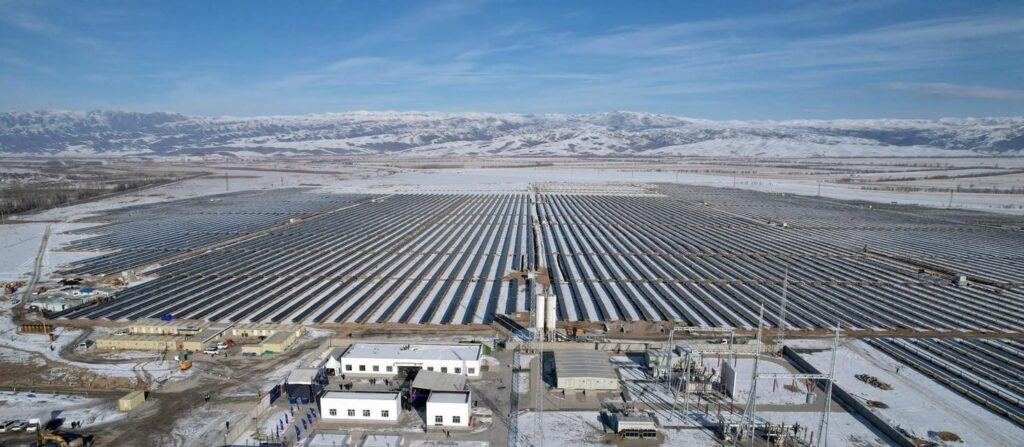
On December 24, Kyrgyzstan inaugurated its first solar power plant in the Kemin district of the Chui region, approximately 100 kilometers east of the capital, Bishkek. The 100-megawatt facility was constructed with $56 million in Chinese investment and is expected to generate approximately 210 million kWh of clean electricity annually. According to government estimates, this output will reduce carbon dioxide emissions by 120,000 tons per year. Speaking at the launch ceremony, President Sadyr Japarov described the project as one of the largest foreign investments in Kyrgyzstan’s renewable energy sector to date. He said the plant signals a new phase in the country’s energy transition and its commitment to sustainable development. “The opening of the solar power plant marks the beginning of an important stage in strengthening our country’s energy independence and developing renewable energy sources,” Japarov said. “We now recognize that without the active development of renewables, it is impossible to fully ensure stable electricity supplies for both the population and economic sectors.” Japarov added that the Cabinet of Ministers has signed 12 agreements with investors to build solar and wind power facilities with a combined capacity of over 5 gigawatts. The solar plant is part of a broader development plan for the Kemin area and the wider Chui region, including the creation of an environmentally sustainable urban center, Kemin City. In January 2025, Japarov signed a decree allocating 353 hectares for the project, which aims to provide modern housing, reduce outward migration, and retain local skilled labor. Located about 95 kilometers from Bishkek, Kemin and the nearby town of Orlovka were once industrial hubs during the Soviet era. The collapse of the USSR led to the closure of many enterprises, triggering significant out-migration. The development of Kemin City and supporting infrastructure is intended to reverse these trends and revitalize the local economy. Also on December 24, President Japarov visited the construction site of a major cement plant in the Kemin district, another project backed by Chinese investment. Scheduled to be commissioned in 2027, the facility is expected to produce 3,200 tons of clinker per day. The project will create more than 300 jobs during the construction phase and over 500 permanent positions once fully operational. Japarov emphasized the strategic importance of the plant for the region’s socioeconomic development and instructed government agencies to provide full support to the project’s investor.