• KGS/USD = 0.01144 0%
  • KZT/USD = 0.00217 0%
  • TJS/USD = 0.10625 -0.28%
  • UZS/USD = 0.00008 0%
  • TMT/USD = 0.28530 0%
  • KGS/USD = 0.01144 0%
  • KZT/USD = 0.00217 0%
  • TJS/USD = 0.10625 -0.28%
  • UZS/USD = 0.00008 0%
  • TMT/USD = 0.28530 0%
  • KGS/USD = 0.01144 0%
  • KZT/USD = 0.00217 0%
  • TJS/USD = 0.10625 -0.28%
  • UZS/USD = 0.00008 0%
  • TMT/USD = 0.28530 0%
  • KGS/USD = 0.01144 0%
  • KZT/USD = 0.00217 0%
  • TJS/USD = 0.10625 -0.28%
  • UZS/USD = 0.00008 0%
  • TMT/USD = 0.28530 0%
  • KGS/USD = 0.01144 0%
  • KZT/USD = 0.00217 0%
  • TJS/USD = 0.10625 -0.28%
  • UZS/USD = 0.00008 0%
  • TMT/USD = 0.28530 0%
  • KGS/USD = 0.01144 0%
  • KZT/USD = 0.00217 0%
  • TJS/USD = 0.10625 -0.28%
  • UZS/USD = 0.00008 0%
  • TMT/USD = 0.28530 0%
  • KGS/USD = 0.01144 0%
  • KZT/USD = 0.00217 0%
  • TJS/USD = 0.10625 -0.28%
  • UZS/USD = 0.00008 0%
  • TMT/USD = 0.28530 0%
  • KGS/USD = 0.01144 0%
  • KZT/USD = 0.00217 0%
  • TJS/USD = 0.10625 -0.28%
  • UZS/USD = 0.00008 0%
  • TMT/USD = 0.28530 0%

Viewing results 1 - 6 of 315

Taliban Dismiss Thousands of Tajik and Uzbek Fighters

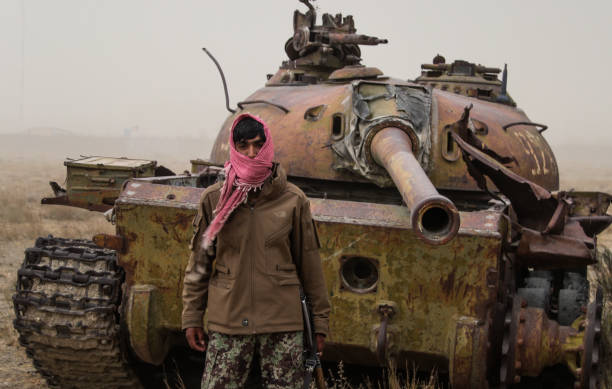
The United Nations Security Council has released a new assessment on Afghanistan, revealing that the Taliban have reduced their security forces by approximately 20%. According to Afghanistan International, which cited the UN document, thousands of ethnic Tajik and Uzbek fighters have been dismissed, particularly in provinces where these groups made up a significant portion of Taliban ranks. The downsizing order reportedly came from Taliban leadership and was attributed to budgetary constraints. While the UN document does not explicitly state that the dismissals were ethnically motivated, it notes that the concentration of personnel cuts in Tajik and Uzbek-majority provinces, most notably Badakhshan, Kapisa, Parwan, and Takhar, has raised concerns about possible ethnic discrimination. Taliban officials have previously justified the reduction by claiming their security apparatus had become excessively large. However, the UN warned that the force reduction is occurring amid rising security threats, especially from Islamic State Khorasan Province (ISKP). According to the report, ISKP has ramped up operations by leveraging modern technologies, including artificial intelligence, to create training materials, some of which reportedly instruct on the assembly of improvised explosive devices. UN sanctions monitors cautioned that this technological advancement, combined with a diminished Taliban security presence, could heighten instability across the country. Although the Taliban have conducted operations against ISKP since early 2025, the extremist group remains resilient. The UN also highlighted that the Taliban continue to publicly deny ISKP’s presence in Afghanistan while simultaneously accusing neighboring countries of supporting the group. Despite this, the Taliban have sought international counterterrorism assistance to confront ISKP. The report estimates that more than 20 international and regional terrorist organizations remain active in Afghanistan. These include Al-Qaeda, Tehrik-i-Taliban Pakistan, the Turkistan Islamic Movement, the Islamic Movement of Uzbekistan, and Jamaat Ansarullah. According to the UN, the Taliban have incorporated some former members of these groups into local security units, prompting concerns about ideological alignment and infiltration. The document further notes that advanced weaponry and military equipment are entering Afghanistan through cross-border smuggling and black market channels. Reports have also emerged of drone attacks targeting military sites in Pakistan. The Taliban are allegedly seeking technical support to expand their drone capabilities, with some countries reporting possible Al-Qaeda involvement in drone production sites in Logar and Kabul. Tensions also flared along the Tajik-Afghan border in late October. Armed clashes were reported on October 25 between Tajik border guards and Taliban fighters in the Davanga district of Shahr-e Buzurg, located in Badakhshan province. The confrontation reportedly stemmed from a dispute over water diversion from the Amu Darya river. The presence of Chinese-operated gold mining facilities in the area has further complicated the region’s security dynamics.

Taliban Arrests Suspects After Deadly Attacks on Chinese Citizens Near Tajik-Afghan Border

The Taliban has announced the arrest of two suspects following two deadly attacks on Chinese workers in Tajikistan’s border regions, which left five dead and several others injured. Afghan media, citing Taliban officials, reported that two individuals were detained in connection with the killings of Chinese nationals in Tajikistan. According to Ehsanullah Kamgar, a spokesperson for the Taliban’s security department in Afghanistan’s Badakhshan province, the arrests took place in the Maymay district. The identities of the suspects have not been disclosed. Tajikistan’s security services believe that the militants crossed the border from this area before launching an assault in the Darvaz district on November 30. The attack targeted Chinese workers from a road construction company in the village of Shodak, killing two and injuring two more. Authorities said the assault occurred around 6:45 p.m. local time. The border situation has deteriorated rapidly. Within one week, two armed attacks were carried out from Afghan territory targeting Chinese nationals in Tajikistan. The first incident occurred on November 26 in the Shamsiddin Shokhin district, where three employees of the Shokhin-SM company were killed and one other was injured in a drone strike. The second attack took place on November 30, when a terrorist group crossed from Ruzvayak, a village in Badakhshan, Afghanistan, and targeted workers from the China Road and Bridge Corporation. The outcome was again tragic: two Chinese workers were killed and two were wounded. Tajik border guards emphasized that these attacks have occurred despite heightened security in the border regions. “Criminal groups continue to destabilize the situation,” the border agency said in a statement. Following the violence, the Chinese embassy in Dushanbe issued a strong demand for the Tajik authorities to “take all necessary measures” to protect Chinese citizens and employees of companies operating near the Afghan border. On December 1, Tajikistan’s President Emomali Rahmon convened an emergency meeting with the heads of the country’s law enforcement agencies. He “strongly condemned the illegal and provocative actions of Afghan citizens” and ordered tighter security controls to prevent further cross-border attacks.

Uzbekistan and Taliban Sign Trade Deals as Coal Shipments Pivot from Pakistan

Afghanistan International has reported that the Taliban administration in Afghanistan’s Balkh province has signed new trade agreements with Uzbekistan, signaling a shift in Kabul’s commercial strategy amid growing tensions with Pakistan. According to Haji Zaid, spokesperson for the Taliban-appointed governor in Balkh, Afghan coal will now be exported to Uzbekistan under the newly signed agreements, replacing previous shipments to Pakistan. In exchange, Uzbekistan will export cement and pharmaceuticals to Afghanistan. Zaid stated that the Taliban, in response to border closures and disrupted trade with Pakistan, is seeking to strengthen economic ties with neighboring countries, particularly Uzbekistan and Iran. Persian-language media also reported that Taliban officials are increasingly urging Afghan traders to seek alternative commercial and transit routes. The Taliban’s Ministry of Finance has claimed that the deterioration of trade with Pakistan has had “no negative impact” on Afghanistan’s overall trade volume, asserting that customs revenues have remained stable. The ministry added that it would fully support traders using new trade corridors. However, Afghan economic experts have challenged the Taliban’s claims. Economist Reza Farzam told local media that assertions about Pakistan’s trade freeze having no impact are misleading, arguing that Afghanistan currently lacks sufficient substitutes for its traditional transit infrastructure through Pakistan. Earlier, Pakistan’s Dawn newspaper reported that the month-long closure of the Torkham border crossing caused more than $4.5 billion in economic losses on both sides of the border. The latest agreements build on earlier announcements that Uzbekistan plans to import Afghan coal as part of broader efforts to balance bilateral trade. During a recent visit to Kabul, an Uzbek delegation expressed interest in purchasing coal, resulting in private-sector deals worth $4.5 million. Discussions also covered trade incentives, joint exhibitions, and a proposal from Uzbekistan to construct a cement plant in Afghanistan’s Samangan region. The Taliban administration has further stated that Afghan agricultural products will be exported to Central Asia, South Asia, and Europe via air corridors through Uzbekistan, as part of a wider strategy to diversify the country’s trade routes.

Border Violence Between Afghanistan and Pakistan: A New Risk for Central Asia

The escalating tensions between Afghanistan and Pakistan are forcing a reassessment of Afghanistan’s viability as a “partner space.” With cross-border clashes increasingly resembling a prolonged pattern rather than isolated incidents, and with both sides showing little willingness to compromise, the question grows more urgent: Can Afghanistan realistically become a partner for Central Asian countries, or is it destined to remain a persistent source of regional instability? This confrontation is deeply unsettling for the countries of Central Asia. Still in the early stages of formulating coherent policies toward Afghanistan, they have tentatively linked their development strategies to the hope of having a stable neighbor to the south – one that might serve as a bridge to South Asia. Against this backdrop, deteriorating Afghan-Pakistani relations breed more frustration and anxiety than hope. No country in the world, except Russia, has recognized the Taliban regime de jure. This broad reluctance reflects deep skepticism; few are willing to assume legal obligations or share responsibility for Kabul’s actions. Yet, Afghanistan remains far from isolated. Its geographic centrality makes it impossible to ignore. Accordingly, Central Asia has developed a distinct approach to dealing with its southern neighbor. It can be summarized as: We do not recognize, but we cooperate; we do not trust, but we verify; we do not agree, but we engage. In essence, Afghanistan’s neighbors, particularly the ones in Central Asia, have adopted a pragmatic, long-term strategy: engage without illusions or formal recognition, while maintaining the flexibility to adjust based on Kabul’s behavior. For these countries, Afghanistan does not stand as an independent priority. Its role is evaluated solely within the broader regional framework. In the most favorable scenario, Afghanistan serves as a transit corridor linking South and Central Asia. Yet even this utility is not indispensable; viable alternatives through Iran, the South Caucasus, Turkey, and China already exist and are expanding. Looking ahead, three broad scenarios can be envisioned: Optimistic: The Taliban demonstrate readiness for responsible engagement. This would enable Afghanistan’s gradual integration into trade and transport initiatives, expansion of economic ties, and a firm establishment as a bridge between Central and South Asia. Pessimistic: Afghanistan remains a chronic risk factor and flashpoint for regional crises. The ongoing Afghan-Pakistani confrontation, no longer a fleeting episode but an entrenched conflict, is a clear warning sign. If this becomes the norm, it will deter serious investment, no stakeholder will commit to a country that cannot guarantee peace with its neighbors. Inertia: Central Asian states continue their cautious balancing act under the logic that “a bad peace is better than a good war.” While cooperation continues at a minimal level, countries prioritize alternative routes and avoid deep commitments. Under this status quo, ambitious projects like the Trans-Afghanistan Railway and the TAPI pipeline are unlikely to materialize. The former risks losing the “trans” prefix; the latter may, for now, become little more than a Turkmenistan-Afghanistan venture. Nonetheless, there remains a window for diplomacy. Pressured by Turkey and Qatar, Kabul and Islamabad have agreed to resume negotiations aimed...

Tajikistan and the Taliban – Talking and Fighting

Peaceful coexistence is turning out to be complicated for Tajikistan and the Taliban government in Afghanistan. The Tajik government has viewed the Taliban as a threat since the militant group appeared in Afghanistan in the mid-1990s. But now that modest efforts are underway to establish some sort of amicable ties, there has been an uptick of violence directly involving the two sides along the Tajik-Afghan border. Let’s Keep This Between Us Tajikistan is the lone government in Central Asia that remained hostile to the Taliban after the latter returned to power in Afghanistan in August 2021. In the weeks that followed, the Taliban again exerted control over Afghanistan, and the Tajik government and the Taliban sent reinforcements to their common border. Russia and Pakistan had to intervene to ease tensions. The other Central Asian states, Kazakhstan, Kyrgyzstan, Turkmenistan, and Uzbekistan, have all established a business relationship with the Taliban government since the Taliban again seized control, but Tajikistan has remained aloof. Which is why the visit of Muhammad Yusuf Vafo, the governor of Afghanistan’s northern province of Balkh, to the Tajik capital Dushanbe on October 23 came as such a surprise. The Tajik government did not say anything about Vafo’s trip. The independent Tajik news agency Asia-Plus cited Afghan media as reporting on the visit, during which Vafo met with the head of Tajikistan’s National Security Committee (GKNB), Saimumin Yatimov. Vafo and Yatimov reportedly discussed ways to improve ties in a variety of spheres and pledged not to let any “hostile elements” use their territory to plot or carry out attacks on the country. An estimated several hundred Jamaat Ansarullah militants of Tajik origin continue to operate in Afghanistan. The group allied with the Taliban during the last years foreign forces were in Afghanistan, propping up the government of Ashraf Ghani, and stayed in Afghanistan after the Ghani government fell. Jamaat Ansarullah fighters were among the reinforcements the Taliban sent to the Tajik border during the weeks of tension in late 2021. There were reports soon after the Taliban returned to power that Tajikistan was aiding the National Resistance Front (NRF), a mainly ethnic Tajik group of former government soldiers who continue to wage a guerrilla campaign against the Taliban. NRF leader Ahmad Masoud, the son of the legendary Afghan field commander and ethnic Tajik, Ahmad Shah Masoud, has been in Dushanbe several times since August 2021, and there was a report that the NRF opened an office in Dushanbe in October that year. Shortly after Vafo’s visit to Dushanbe, Taliban sources in Balkh Province told the Pakistani-based Khorasan Diary website that Tajik authorities had banned the NRF, but the Tajik authorities stated that no such decision was made. Yatimov’s meeting with Vafo was not the first time the Tajik GKNB chief had met with Taliban representatives. In September 2024, Yatimov went to Kabul to hold security talks with Taliban officials, though the Tajik authorities never confirmed that meeting. Both parties are concerned about militants from the Islamic State of...

Tajik Border Guards Clash with Taliban Fighters Along Afghan Border

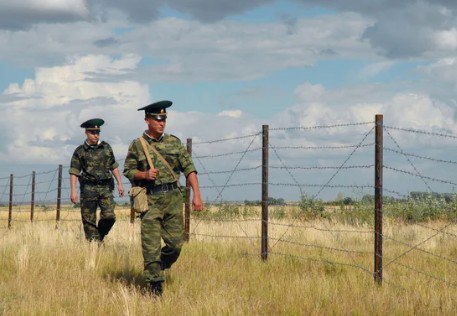
Armed clashes erupted between Tajik border guards and Taliban fighters on October 25 along the Tajik-Afghan frontier, according to local sources cited by the Afghan outlet 8 Subh. The confrontation reportedly occurred in the Davanga district of Shahr-e Buzurg, located in Afghanistan’s Badakhshan province. The dispute reportedly stemmed from disagreements over water diversion from the Amu Darya river, which serves as part of the natural boundary between Tajikistan and Afghanistan. The region is also home to Chinese-operated gold mining projects, further complicating the security landscape. Sources on the ground reported casualties and injuries, although official figures have not yet been released. The Tajik government has not issued an official statement. In response to the incident, Taliban representatives in Badakhshan held a meeting with the province’s appointed governor, Ismail Ghaznawi. This is not the first escalation in the area. On August 24, a shootout occurred near a Chinese-operated gold mining facility on the Afghan side of the border. That conflict was halted following emergency negotiations between the two sides, although accusations of harboring hostile groups persisted. The latest incident comes just days after a Taliban delegation visited Dushanbe. Led by Balkh province's Governor Yusuf Wafa, the delegation met with Tajikistan’s National Security Council Chairman Saimumin Yatimov and the Chairman of the Council of Ulemas, Saidmukarram Abdulkodirzoda. Despite this diplomatic contact, Tajikistan remains the only Central Asian country that has not recognized the Taliban government. Dushanbe continues to call for the formation of an inclusive government in Afghanistan and the protection of human rights. Nonetheless, limited trade and humanitarian engagement between the two countries persist. The Afghan embassy in Dushanbe is still headed by a diplomat appointed by the former government, while the Afghan consulate in Khorog is administered by a representative of the current Taliban-led administration. Tajikistan, in turn, maintains its embassy and consulate in Afghanistan.