• KGS/USD = 0.01143 0%
  • KZT/USD = 0.00200 0%
  • TJS/USD = 0.10593 0.09%
  • UZS/USD = 0.00008 0%
  • TMT/USD = 0.28575 0%
  • KGS/USD = 0.01143 0%
  • KZT/USD = 0.00200 0%
  • TJS/USD = 0.10593 0.09%
  • UZS/USD = 0.00008 0%
  • TMT/USD = 0.28575 0%
  • KGS/USD = 0.01143 0%
  • KZT/USD = 0.00200 0%
  • TJS/USD = 0.10593 0.09%
  • UZS/USD = 0.00008 0%
  • TMT/USD = 0.28575 0%
  • KGS/USD = 0.01143 0%
  • KZT/USD = 0.00200 0%
  • TJS/USD = 0.10593 0.09%
  • UZS/USD = 0.00008 0%
  • TMT/USD = 0.28575 0%
  • KGS/USD = 0.01143 0%
  • KZT/USD = 0.00200 0%
  • TJS/USD = 0.10593 0.09%
  • UZS/USD = 0.00008 0%
  • TMT/USD = 0.28575 0%
  • KGS/USD = 0.01143 0%
  • KZT/USD = 0.00200 0%
  • TJS/USD = 0.10593 0.09%
  • UZS/USD = 0.00008 0%
  • TMT/USD = 0.28575 0%
  • KGS/USD = 0.01143 0%
  • KZT/USD = 0.00200 0%
  • TJS/USD = 0.10593 0.09%
  • UZS/USD = 0.00008 0%
  • TMT/USD = 0.28575 0%
  • KGS/USD = 0.01143 0%
  • KZT/USD = 0.00200 0%
  • TJS/USD = 0.10593 0.09%
  • UZS/USD = 0.00008 0%
  • TMT/USD = 0.28575 0%
21 February 2026

Viewing results 1 - 6 of 107

TCA Interview: Director Yernar Nurgaliyev: “It’s Time for Kazakh Cinema to Make Its Mark on the World”

Yernar Nurgaliyev still describes painting as his first love. Only now, instead of a brush, he uses a camera, and instead of a canvas, a screen. Today he shoots comedies, and dreams of a Kazakh multiverse where heroes never die. He is certain of one thing: Kazakh culture will be eternal, and he is doing everything possible to make it so. The Times of Central Asia spoke with the director about how he entered film, what he plans to shoot next, and why he believes it is time for Kazakhstan to make itself known to the world. TCA: Your films are always visually striking. Is this because you were originally trained as an artist? Nurgaliyev: Yes. I graduated from art college, then enrolled at the Zhurgenov Academy of Arts to study set design. I thought I would deepen my craft, but the first courses turned out to be a repeat of the college programme. I was very bored, so I decided to go to work. I didn’t start with music videos, but as an assistant propmaster. At that time, senior students recruited assistants from among firstyear students. An energetic girl, a production designer, asked me to help her with her diploma. Before that, I wasn’t interested in cinema at all, I lived for painting: I painted from life and did portraits. But when I saw the filmset, it was “wow.” I realised I wanted to work there. And I stopped going to the academy. I wanted to quit, but they wouldn’t let me. TCA: But you still got your diploma? Nurgaliyev: Yes, although it was difficult. I had nothing to do at the academy, still life, portraits, I had already done all that in college. There, they didn’t break us but helped us find our own style. At the academy, it was the opposite: the teacher said, “Draw like me.” But I can’t draw like someone else. I can only draw in my own way. TCA: Do you paint now? Nurgaliyev: I hardly have any time, but I recently picked up a brush again, and my hand remembers everything. Oil, watercolour, gouache, it’s as if there was no break. I am grateful to my hand; it remembers everything it was taught. TCA: Which is more important, talent or perseverance? Nurgaliyev: There are people who are gifted by God. But a gift is only the beginning. If you slack off and don’t develop, nothing will come of it. The worst thing is when a person is gifted but does nothing with it. I don’t sit still. If I have one day without work, it feels like I haven’t filmed for a year. I always need to be on the move. If the pause drags on, I start calling my friends myself: “Let’s come up with something.” [caption id="attachment_39639" align="aligncenter" width="300"] @Galiya Baizhanova[/caption] TCA: This year, you turned down many projects, choosing instead to focus on another film. Is this a new stage? Nurgaliyev: I’ve matured. Next year, I plan to shoot three of...

TCA Interview: Kazakh Director Venera Kairzhanova on the Bravery of Children with Special Needs

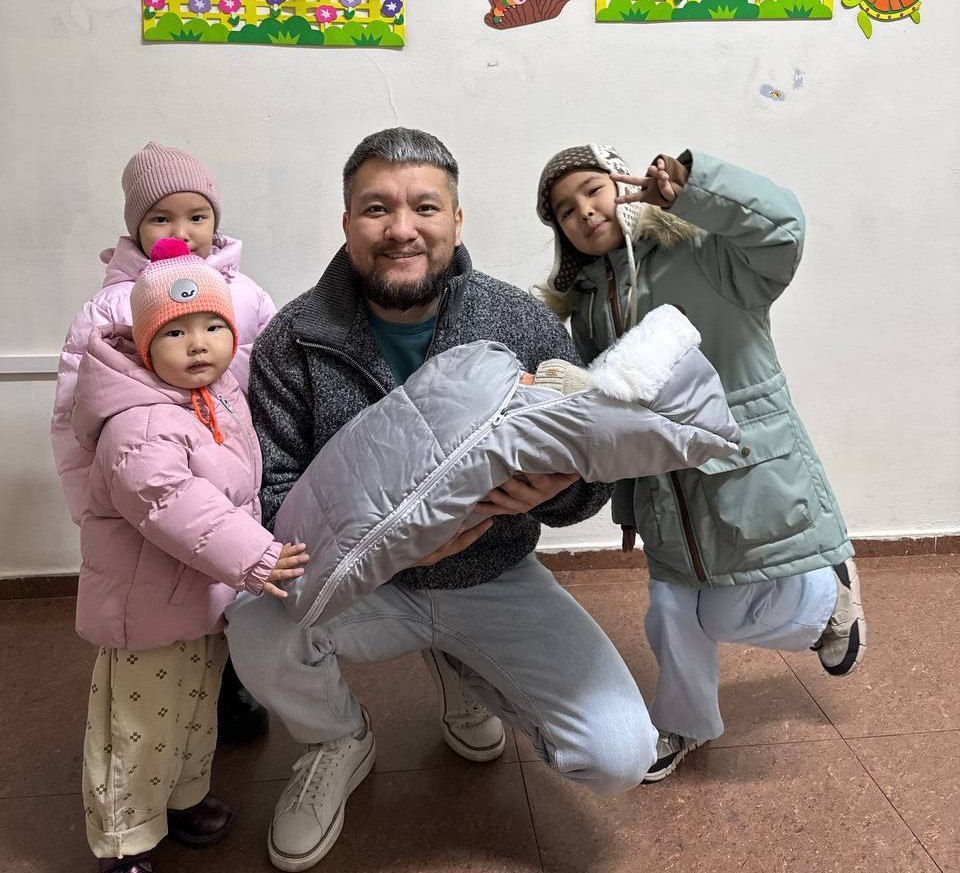
November saw the premiere of Venera Kairzhanova’s debut feature film, Second Mother. The documentary centers on the Meyirim rehabilitation center for children with developmental disabilities. But the film is more than a social chronicle; it’s a warm and luminous portrait of people who help children explore the world every day. Step by step, movement by movement. Kairzhanova spoke with The Times of Central Asia about the making of the film. TCA: Venera, congratulations on the premiere. How did you feel seeing your work on the big screen? Kairzhanova: It was very exciting, but everything went smoothly in a warm, friendly atmosphere. The film was well received, and the theater was full. The audience included employees of the Meyirim center, parents, media representatives, and industry colleagues. The first private screening was back in September, but it was in a small theater with limited guests. This time, it was a huge hall with lots of people, a completely different experience. What’s interesting is that when the project is finished and you watch it with the audience, you see it not just as a director, but also as a viewer. TCA: The audience cried. Did you? Kairzhanova: Yes. At the first screening, very much so. At the second, the emotions were a bit less intense, but the material still moves me: stories about the children, their teachers, their victories. After the screening, people came up to me to share their impressions and that was incredibly valuable. It’s important when a film is not just watched but really touches people’s hearts. [caption id="attachment_39501" align="aligncenter" width="300"] @Galiya Baizhanova[/caption] TCA: Working with children is always a special process. How did you prepare? Kairzhanova: Honestly, I didn’t prepare specifically. I arrived early, observed the classes and that was it. I was nervous, of course, because I didn’t know how the children would react to the cameras, lights, and equipment. But everything went surprisingly well. The children turned out to be incredibly open and sociable. They weren’t shy about the cameras; on the contrary, they played around and looked straight into the lens. Everything was so natural that we hardly interfered. We didn’t ask them to repeat anything or stage any shots. We just captured moments: in the dining room, during classes, and in their interactions. This project made me fall even more in love with documentary filmmaking, even though this is already my fifth documentary. TCA: Which episode was the most emotional for you? Kairzhanova: The film mainly focuses on the rehabilitation center’s educators. We filmed their daily routines: classes, meetings, celebrations. By the third day, everyone had gotten used to each other, and the atmosphere became very warm. One day, we filmed an individual session between instructor Anna Kosenko and a girl named Aisha. She was learning to walk with the help of an exoskeleton. Aisha, fragile, small, beautiful, was taking steps, and Anna was helping her. At one point, Anna asked, “Are you okay?” Aisha smiled and said, “Yes, I’m fine.” TCA: And you couldn’t...

Lifting Off: Kazakhstan’s Push Into Next-Gen Aviation Technologies

Kazakhstan’s plans to create an air taxi system based on electric eVTOLs in the city of Alatau have drawn attention to the country’s readiness to take the lead in implementing advanced unmanned technologies. The project would require large-scale changes in regulation and technological infrastructure, as well as personnel training and risk assessment. The Times of Central Asia discussed these futuristic developments with Aslan Satzhanov, acting CEO of the Aviation Administration of Kazakhstan JSC. Goals and Expected Results TCA: What is the Concept for the Development of Civil Unmanned Aviation in Kazakhstan, and what does it provide for? What are the key goals set out in the document? Satzhanov: In accordance with the government decree, the main goals for the development of civil unmanned aviation are to increase the volume of work using unmanned aerial systems (UAS), de-bureaucratize, digitize, and transform existing requirements, procedures, and processes. The principal aim is to simplify the formalities for performing UAS flights in designated airspace as much as possible. The development of the industry is based on the principles of safety, minimization of risks to people and objects, and the creation of the most favorable conditions for technological growth. Key approaches include establishing a scientific foundation, improving the training system, and expanding the scope of UAS applications. By 2031, it is planned that at least 80% of secondary and vocational education institutions will teach the basics of unmanned aviation. The share of enterprises in the agro-industrial complex (AIC), industry, and energy that use UAVs will grow by at least 30%. The localization of production of key UAS components in Kazakhstan will increase to 10%. In addition, Kazakhstani companies will be able to enter promising segments of the global market for unmanned aerial vehicles and software. Regulation and Legislative Framework TCA: How is the regulation of UAV flights and production structured today? To what extent does the regulatory framework meet modern requirements? Satzhanov: The fundamental document is the Rules for the Use of Unmanned Aircraft Systems, adopted back in 2020. Kazakhstan became the first country in the post-Soviet space to approve comprehensive rules for the use of UAS in its airspace. Later, amendments were made to the Law on the Use of Airspace. Based on these amendments, the rules for the use of airspace for UAS operations were updated in 2023. Thus, the regulatory framework has been fully established. It is in line with global trends from urban air mobility to unmanned taxis and strikes a balance between technological development and flight safety. The transition to eVTOL and urban air mobility will create a new transport ecosystem: it increases population mobility, reduces the load on ground infrastructure, improves the environmental situation, and promotes innovation. Training TCA: What measures are planned for training UAV operators and introducing unmanned technologies into educational programs? Satzhanov: The concept provides for the creation of a multi-level training and professional development system. Modules on civil unmanned aviation will be introduced into secondary and vocational education programs, covering at least 80% of educational...

Universities Join Kazakhstan’s Global Education Vision: An Interview with Minister of Education Sayasat Nurbek

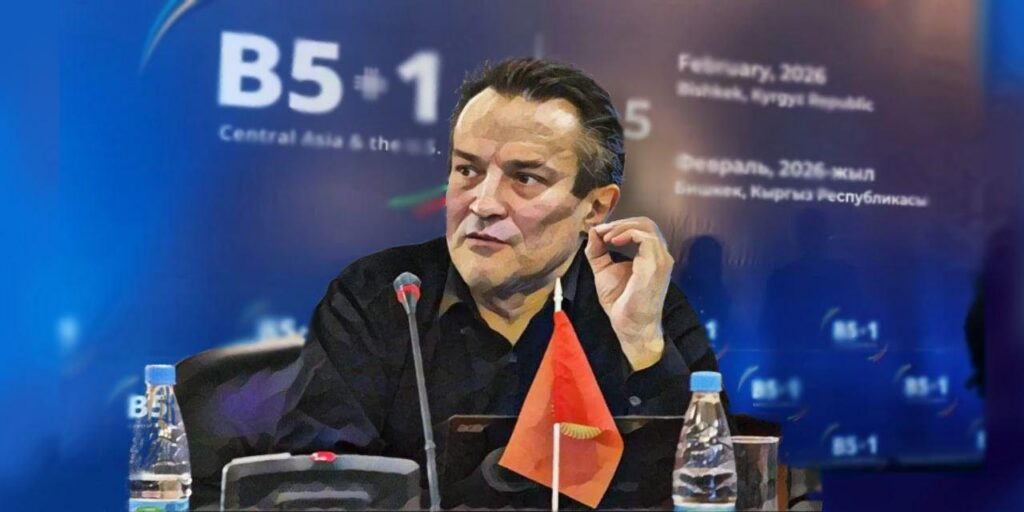
At the invitation of President Trump, on November 5-6, the Presidents of the five Central Asia Republics arrived in Washington, D.C. to celebrate and sign deals on the 10th anniversary of C5+1. They were accompanied by cabinet ministers and business leaders. The Times of Central Asia presents a wide-ranging interview with Kazakhstan's Minister of Education, Sayasat Nurbek. Minister Nurbek sat down with our Washington Correspondent, Javier M. Piedra, to discuss Kazakhstan’s education strategy. The interview offers U.S. academic and technical institutions a glimpse into Minister Nurbek’s educational philosophy and his plans to advance Kazakhstan’s higher education through new partnerships with U.S. universities, AI platforms, and private sector innovators—positioning Kazakhstan as a regional educational hub. Nurbek shared his insights on his understanding of traditional values, the human person, AI’s potential and risks, critical thinking, and building mutually beneficial partnerships in the context of education. (His responses have been edited for length and flow.)   TCA: The tenth anniversary of C5+1 was a landmark event, bringing together the Presidents of all five Central Asian nations at the White House. Kazakhstan President Tokayev has tasked you with transforming Kazakhstan into a fully digital nation within three years. In the last two days, you secured six key partnerships with U.S. universities and tech firms across education, testing, mining, and engineering. Minister, with that in mind, how is Central Asia important to the United States? Nurbek: My message to American academic institutions is straightforward. Kazakhstan has a lot to offer, and we are keen on deeper engagement with the outside world. Also, the timing to deepen U.S.-Kazakhstan relations is perfect given that the world is changing. Avenues are open for new relationships and business opportunities. America and Kazakhstan can have a great future as long as we work together to achieve that future. America should not miss this moment in history; the importance of Eurasia and of Central Asia in particular. Besides the education aspects – most important to me – academic and technical partnerships can serve as platforms to maintain U.S. influence, share values, and promote ideas, benefiting both the United States and Kazakhstan as friends in a non-geopolitical sense. TCA: In our earlier conversation, you referenced Sir Halford Mackinder, the early 20th-century British academic who emphasized geography’s role in geopolitics. Can you comment on the sensitivity of mixing education and geopolitics? Nurbek: In The Geographical Pivot of History in 1904, Halford Mackinder argued that control of Eurasia’s central “Heartland,” particularly Eastern Europe and Central Asia, could secure global influence. Mackinder’s theory stressed land power’s dominance over naval power in an increasingly rail-connected world in the early 20th century. Central Asia mattered then and still does today—but why do I mention Mackinder in the context of education? President Tokayev has been clear, especially in the sphere of education, that Kazakhstan seeks great gain, not a “Great Game” – the rivalry between Great Powers for influence and control in Central Asia. In other words, the main way to produce great gains in Kazakhstan and across the...

Inside Uzbekistan’s Regional Defense Strategy: An In-Depth Interview with Michael Hilliard

Michael Hilliard is Director of Defense & Security Analysis at the Oxus Society for Central Asian Affairs, where he leads a specialist project analyzing the armed forces of Central Asia. The Oxus Society’s latest report, focusing on Uzbekistan’s military, has just been released. The Times of Central Asia spoke with Hilliard about the report, Uzbekistan’s evolving defense doctrine, and its future role as a military power in the region. TCA: In light of the new report on Uzbekistan’s military, how would you characterize Uzbekistan’s overarching security and defense doctrine, especially in relation to the broader Central Asian region? Michael Hilliard: Uzbekistan’s primary defense doctrine is essentially internally focused. Since independence, and particularly since the events in Andijan in 2005, Tashkent has concentrated on transforming its forces into a rapid-response military with specializations in counterterrorism, crowd control, and dispersal operations. When you speak with officers or policymakers within the defense establishment, 2005 is a recurring reference point. During those early hours, protestors overran a motor rifle unit and seized weapons. Many defense personnel still believe that if they had been able to react faster, the final outcome in the square might have been different. This need for rapid adaptability has driven much of Tashkent’s defense policy since then. TCA: The report notes that Kazakhstan has now overtaken Uzbekistan as the region’s leading military power and that this gap is likely to widen. To what extent does this reflect Tashkent’s greater emphasis on regional cooperation and the resolution of border disputes, rather than competition? Hilliard: Kazakhstan’s economic dominance makes this outcome unsurprising. The country now accounts for just under 60% of Central Asia’s total GDP as of 2024. With that level of wealth, Astana naturally has greater resources to allocate to defense. However, Uzbekistan traditionally spends a higher proportion of its budget on the military. Despite having only half of Kazakhstan’s GDP, it has often matched Kazakhstan’s defense spending in real terms. If Kazakhstan simply accelerates its defense spending to the regional average, it will quickly surge ahead. Ultimately, it’s an issue of economics; Kazakhstan has more money to spend. TCA: What is the role of the Shanghai Cooperation Organisation (SCO) and its Regional Anti-Terrorist Structure (RATS) in shaping Uzbekistan’s regional military posture? Hilliard: While some once had ambitious visions for the SCO, today it’s primarily intelligence-focused. Joint exercises are still held but remain limited, and RATS’ influence has declined somewhat following China’s controversial maneuvering within the organization. At present, RATS focuses more on identifying individuals or groups, such as traffickers or terrorist networks, that all member states have a shared interest in apprehending. It’s quite different from the CSTO, where Moscow wields far greater control. TCA: How might Tashkent view the recent clashes between Taliban and Pakistani forces, given that Pakistan currently chairs RATS? Hilliard: Tashkent’s attention is mainly on northern Afghanistan, not the Taliban-Pakistan clashes in the southeast. These incidents appear limited, so they’re unlikely to alter Tashkent’s calculus significantly. However, they do make cross-regional initiatives such as the Tajikistan-Afghanistan-Pakistan-India (TAPI)...

AI Creator Ilona Brazhnik on Kazakh Myths and Creative Freedom

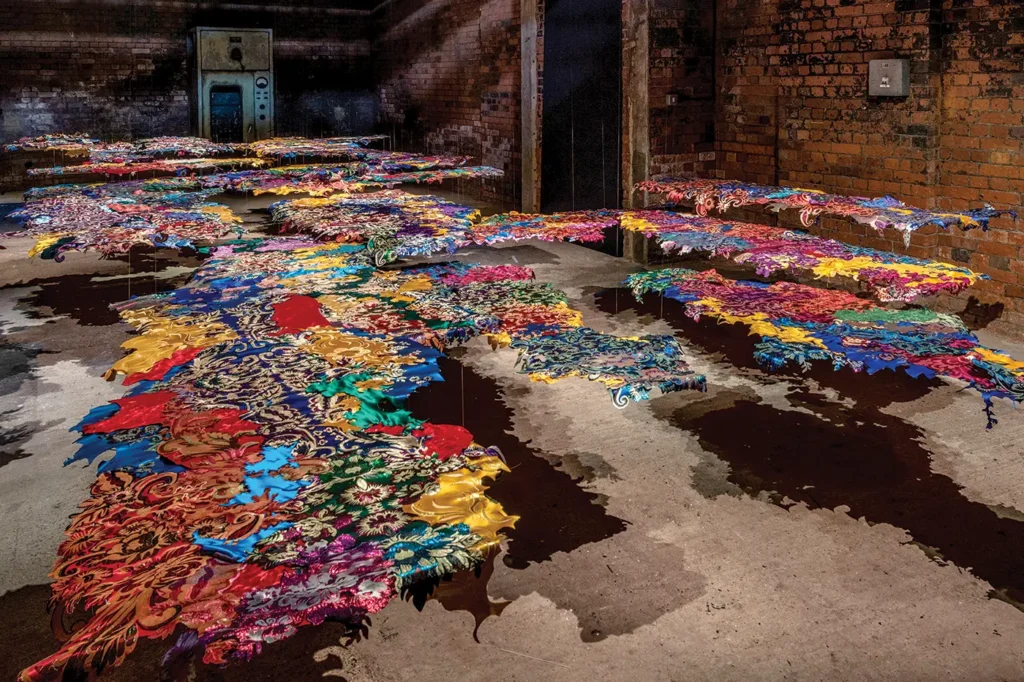
Alena Brazhnikova, better known by her pseudonym Ilona Brazhnik, is in many ways a product of her time. A decade ago, she was transferring art onto skin as a tattoo artist. Today, she creates viral videos powered by artificial intelligence, bringing to life mermaids, Zvezdy, and mythological girls with hooves and wings, symbols of a digital era in which neural networks replace paintbrushes, yet the pursuit of beauty, meaning, and freedom remains unchanged. TCA: Ilona, did your artistic journey begin with tattooing? Brazhnik: Yes, it all started rather quickly. When I began, there weren’t many artists in Karaganda, a mining town in central Kazakhstan, offering the style I worked in. At the time, "old school" tattoos with bold, rough lines were popular. But I wanted to explore subtlety, fine lines, and detailed work. Inspired by European artists, I posted an ad online. Within a month, I was fully booked for the next three months. My client base grew on its own because I was offering something different. TCA: Are there particular tattoo motifs that resonate with you? Brazhnik: I wouldn’t say I have one favorite. I rotate motifs regularly to avoid burnout. But I do love working with thin lines and soft dot shading, it gives the image depth and detail. [caption id="attachment_38469" align="aligncenter" width="417"] @ilona_brazhnik[/caption] TCA: The tattoo trend seems to have quieted. Is that your impression too? Brazhnik: Absolutely. The hype has passed. There was a time when everyone was getting tattooed just for the sake of it. Now, people are more thoughtful. They take their time, consult with others, and carefully choose their designs. The “everyone’s doing it, so I will too” trend ended around eight years ago. TCA: You’ve transitioned to AI and now earn money creating videos? Brazhnik: You could put it that way. There’s definitely demand for AI-generated content. But I didn’t start doing it for the money, I just found it interesting. When people started to respond positively to my work, I thought, why not? TCA: Your videos are visually striking. How much does a project like that cost? Brazhnik: It depends on the complexity. Is it a brand advertisement or a fantasy story? Do you need to showcase clothing, jewelry, or a specific location? Will the same character appear throughout? And of course, duration matters. I can only quote a price once I receive the technical brief. TCA: Are brand commissions more expensive? Brazhnik: Not necessarily. I never charged tattoo clients more just because they could afford it. It depends on the task. Brand work is usually more technically demanding. AI doesn’t like repetition; it redraws objects each time, so logos, packaging, and inscriptions often need to be added manually. I once made a video where glasses were disassembled into ornaments and then reassembled. When asked to replicate it, it took 20-30 failed attempts. AI just doesn’t do “exactly the same.” TCA: Did you start making videos to grow your TikTok and monetize content? Brazhnik: In Kazakhstan, you can’t earn money from...