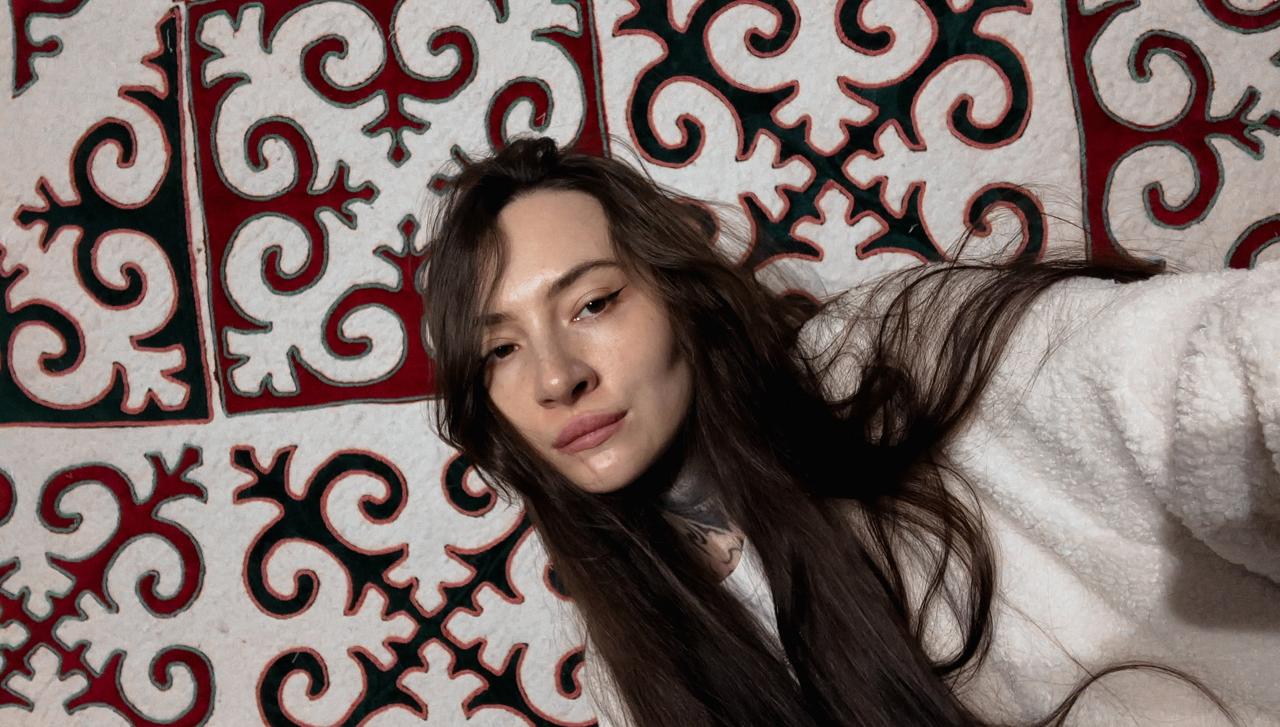
Alena Brazhnikova, better known by her pseudonym Ilona Brazhnik, is in many ways a product of her time. A decade ago, she was transferring art onto skin as a tattoo artist. Today, she creates viral videos powered by artificial intelligence, bringing to life mermaids, Zvezdy, and mythological girls with hooves and wings, symbols of a digital era in which neural networks replace paintbrushes, yet the pursuit of beauty, meaning, and freedom remains unchanged.
TCA: Ilona, did your artistic journey begin with tattooing?
Brazhnik: Yes, it all started rather quickly. When I began, there weren’t many artists in Karaganda, a mining town in central Kazakhstan, offering the style I worked in. At the time, “old school” tattoos with bold, rough lines were popular. But I wanted to explore subtlety, fine lines, and detailed work. Inspired by European artists, I posted an ad online. Within a month, I was fully booked for the next three months. My client base grew on its own because I was offering something different.
TCA: Are there particular tattoo motifs that resonate with you?
Brazhnik: I wouldn’t say I have one favorite. I rotate motifs regularly to avoid burnout. But I do love working with thin lines and soft dot shading, it gives the image depth and detail.
@ilona_brazhnik
TCA: The tattoo trend seems to have quieted. Is that your impression too?
Brazhnik: Absolutely. The hype has passed. There was a time when everyone was getting tattooed just for the sake of it. Now, people are more thoughtful. They take their time, consult with others, and carefully choose their designs. The “everyone’s doing it, so I will too” trend ended around eight years ago.
TCA: You’ve transitioned to AI and now earn money creating videos?
Brazhnik: You could put it that way. There’s definitely demand for AI-generated content. But I didn’t start doing it for the money, I just found it interesting. When people started to respond positively to my work, I thought, why not?
TCA: Your videos are visually striking. How much does a project like that cost?
Brazhnik: It depends on the complexity. Is it a brand advertisement or a fantasy story? Do you need to showcase clothing, jewelry, or a specific location? Will the same character appear throughout? And of course, duration matters. I can only quote a price once I receive the technical brief.
TCA: Are brand commissions more expensive?
Brazhnik: Not necessarily. I never charged tattoo clients more just because they could afford it. It depends on the task. Brand work is usually more technically demanding. AI doesn’t like repetition; it redraws objects each time, so logos, packaging, and inscriptions often need to be added manually. I once made a video where glasses were disassembled into ornaments and then reassembled. When asked to replicate it, it took 20-30 failed attempts. AI just doesn’t do “exactly the same.”
TCA: Did you start making videos to grow your TikTok and monetize content?
Brazhnik: In Kazakhstan, you can’t earn money from views on TikTok. The only monetization is through livestreams, donations, and gifts, and that’s not for me. I can’t even imagine doing it. I’d probably need another pseudonym to go live.
TCA: So, you work under a pseudonym now?
Brazhnik: Yes. My real name is Alena. The pseudonym helped me step into the public eye. I used to have a regular job, didn’t use social media, and didn’t share anything personal. But I wanted to express myself creatively. So, I chose: stay hidden or come forward. Ilona was born. Alena is reserved; Ilona is creative and media-savvy.

@ilona_brazhnik
TCA: Be honest, are you real, or is Ilona a fictional persona created by a team?
Brazhnik: (Laughs.) I’m real. You can check: scroll down my feed, and you’ll see it used to be a personal account with old photos. I never deleted them.
TCA: With the rise of neuro-actresses, are you concerned people might confuse you with them?
Brazhnik: I understand the concern. But neuro-characters are still distinguishable, at least to me. I once did a neuro-photo session using my face. It looked realistic to others, but I could tell it wasn’t me.
TCA: Your videos feature complex lighting and camera angles. Where did you learn that?
Brazhnik: My tattoo work taught me. For ten years, I photographed clients after their sessions. You learn how to light a shot, position the subject, and make the design look appealing.
TCA: Fog is notoriously hard to render in graphics, yet you use fog and underwater scenes. What’s most challenging for AI to generate?
Brazhnik: Water movement. Simple swimming is fine, but realistic motion with splashes is hard. I did a scene for a fitness club, someone swimming beside a dolphin. Nothing looked right. Limbs moved like propellers, and physics broke down. Fast movements are still difficult. Birds flapping their wings look off, though gliding birds are fine. But that’s for videos made from still photos, which is what I work with. Videos generated from scratch might fare better. Interestingly, AI handles animal movement better than humans.
TCA: One of your videos shows a knight in pierced chainmail with a cat on his shoulder, like a short film on loneliness. Have you submitted such works to AI festivals?
Brazhnik: Not yet, but I plan to. I heard about a competition in Dubai. Maybe I’ll enter.
@ilona_brazhnik
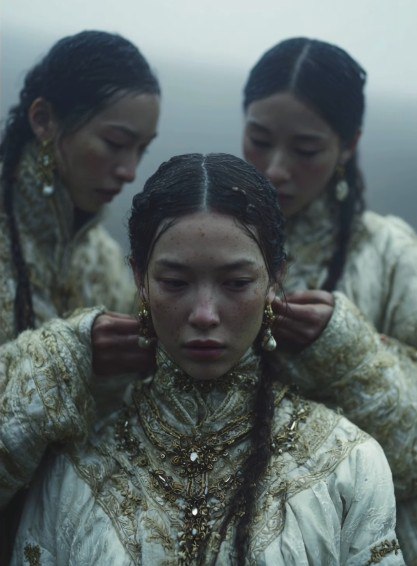
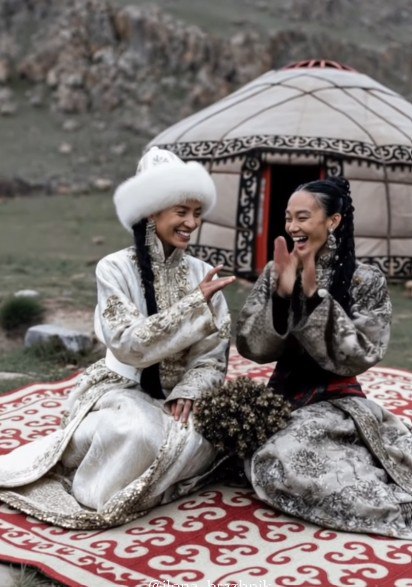
TCA: Many AI creators say neural networks struggle with Kazakh ornaments. Yet your work includes many. How do you manage it?
Brazhnik: I often add them manually. Sometimes AI gets close, but usually it’s off. For accurate Kazakh decorations, I use Photoshop, AI assistance, or draw by hand. The issue is the training data; AI has lots of Chinese elements, but very little Kazakh content. We don’t have enough users uploading such images.
TCA: You have a video featuring Tuyaqty Kyz (Tұяқты қыз), a girl with hooves. How did you achieve that effect?
Brazhnik: At first, AI didn’t get it. It showed furry slippers, paws, everything except hooves. Then I found a photo of hoof-shaped shoes in a museum. That helped. I used them as a visual reference and explained, “These are the shoes.” Then the AI understood.
TCA: Does your work get stolen often? Is there any protection?
Brazhnik: It happens a lot. Someone recently downloaded my mermaid video, removed my signature, and posted it as their own. Social media platforms are better now at detecting plagiarism, and exact copies are less likely to spread. I get alerts when someone reposts my work. If they credit me, great, it boosts exposure. But stealing for profit is frustrating. Legally, the only protection is copyright registration.
TCA: You were born in Karaganda, spent your childhood in Almaty, and now live in Astana. Which feels like home?
Brazhnik: Astana. I like its pace; everyone is moving, working, doing something. Almaty is more laid-back; I go there for the mountains. Karaganda is dear to me too. I suppose I’ll always be a Karaganda girl at heart.
TCA: What do you dream of as an artist?
Brazhnik: Freedom. The freedom to express myself, to show people my inner world. To tell my story, to show my soul, and to be understood. That’s what I dream of.