• KGS/USD = 0.01143 -0%
  • KZT/USD = 0.00191 0%
  • TJS/USD = 0.10833 0.28%
  • UZS/USD = 0.00008 0%
  • TMT/USD = 0.28575 0%
  • KGS/USD = 0.01143 -0%
  • KZT/USD = 0.00191 0%
  • TJS/USD = 0.10833 0.28%
  • UZS/USD = 0.00008 0%
  • TMT/USD = 0.28575 0%
  • KGS/USD = 0.01143 -0%
  • KZT/USD = 0.00191 0%
  • TJS/USD = 0.10833 0.28%
  • UZS/USD = 0.00008 0%
  • TMT/USD = 0.28575 0%
  • KGS/USD = 0.01143 -0%
  • KZT/USD = 0.00191 0%
  • TJS/USD = 0.10833 0.28%
  • UZS/USD = 0.00008 0%
  • TMT/USD = 0.28575 0%
  • KGS/USD = 0.01143 -0%
  • KZT/USD = 0.00191 0%
  • TJS/USD = 0.10833 0.28%
  • UZS/USD = 0.00008 0%
  • TMT/USD = 0.28575 0%
  • KGS/USD = 0.01143 -0%
  • KZT/USD = 0.00191 0%
  • TJS/USD = 0.10833 0.28%
  • UZS/USD = 0.00008 0%
  • TMT/USD = 0.28575 0%
  • KGS/USD = 0.01143 -0%
  • KZT/USD = 0.00191 0%
  • TJS/USD = 0.10833 0.28%
  • UZS/USD = 0.00008 0%
  • TMT/USD = 0.28575 0%
  • KGS/USD = 0.01143 -0%
  • KZT/USD = 0.00191 0%
  • TJS/USD = 0.10833 0.28%
  • UZS/USD = 0.00008 0%
  • TMT/USD = 0.28575 0%
08 November 2025

Viewing results 1 - 6 of 17

EU Grants Kazakhstan Exemption to Transit Coal Through Sanctioned Russian Ports

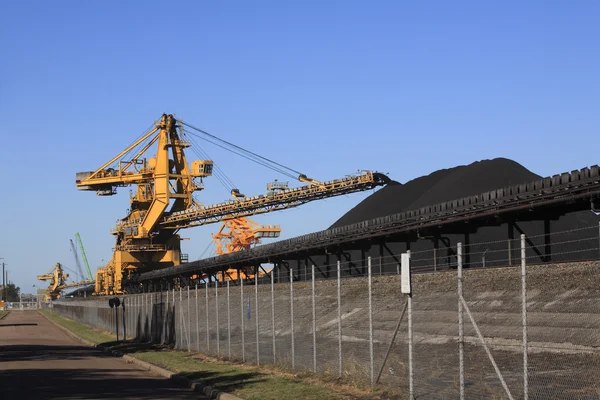
The European Union has granted Kazakhstan an exemption permitting the transit of Kazakh coal through select Russian ports previously restricted under EU sanctions. The decision, included in the EU’s 18th package of sanctions, aims to secure Kazakhstan’s coal exports to Europe. The exemption follows months of negotiations led by the Ministry of Trade and Integration, the Ministry of Foreign Affairs, and Kazakhstan’s Permanent Mission to the EU. The talks were prompted by sanctions introduced in February 2024 under the 16th EU sanctions package, which included a ban on transactions with Ust-Luga port, one of the main routes for Kazakh coal shipments to the EU. “To resolve the situation, work was carried out at various levels and an official request was sent to the European Commission asking for changes to the sanctions regime,” the ministry stated. “As a result, the 18th package of EU sanctions contains amendments allowing transactions with a number of Russian ports for the transit of coal of Kazakh origin.” Conditions of the Exemption The exemption is conditional and tightly regulated: Only coal of Kazakh origin may be transited; Ownership of the cargo must not involve entities from countries under EU sanctions, including Russia and Belarus; The designated Russian ports may be used solely for transit purposes, specifically loading and dispatch, without any procurement or production activities on site. Trade Impact Kazakhstan remains a key coal supplier to the European market. In 2022, it exported 4.4 million tons of coal to the EU, generating $419.2 million, representing 45% of total coal exports. Although volume increased to 6.1 million tons in 2023 (54.3%), falling global prices reduced revenue to $382 million. In 2024, exports declined to 5.2 million tons worth $312.5 million (51.8%). During the first five months of 2025, Kazakhstan exported 1.6 million tons to the EU, generating $82.9 million and accounting for 38.5% of total coal exports over that period. “Despite the temporary decline in indicators, the measures taken are creating conditions for the restoration of export flows and increased stability of logistics routes,” the ministry said. “Kazakhstan will continue to work to protect trade interests, support national exports, and strengthen economic ties with key partners.” As previously reported by The Times of Central Asia, domestic coal consumption in Kazakhstan is expected to decrease due to government plans to phase out pilot coal-fired power plants in favor of renewable energy and low-carbon technologies, including gas. 

The Turkic States Are Quietly Building a Geoeconomic Power Base

The Organization of Turkic States (OTS) has spent the past years assembling itself not through declarations or summit communiqués, but through shared transport and logistics, harmonized customs procedures, and coordinated capital flows. What began in 2009 as the Turkic Council, a lightly institutional and rhetorically cohesive forum for shared identity, has evolved, following its 2021 transformation into the OTS, into a logistical and regulatory organism. Its under-the-radar evolution has been systematized through agreed documents, deployed capital, and materialized infrastructure. The OTS has entered a phase of procedural coordination and structural intent. Its cooperation is now practical, strategic, and functionally embedded. This evolution has not followed a single arc, nor has it merely responded to outside pressures. Instead, it has progressed through an uneven sequence of internal adjustments, sometimes slow and technical, sometimes accelerated by external jolts such as the recent disruption in Azerbaijani–Russian relations. But such jolts only intensified a trajectory already underway. Member states had been converging long before this most recent bilateral crisis by aligning their policies, testing instruments, and developing the practical grammar of multilateral coordination. The current phase of renewed cooperation is not a reactive surge but a prepared transition that expresses an underlying structural shift in Eurasian geoeconomics at large. Digital Infrastructure and Networked Cooperation If there is a single domain where institutional convergence becomes immediately visible, this would be digital logistics. Once-fractured national processes — disjointed customs systems, mismatched permits, bureaucratic duplication — have begun to fold into a shared administrative architecture (including eTIR, eCMR, and ePermit) structured by international conventions that have been adapted to fit the particular alignments now emerging in the Turkic sphere. These procedures are no longer pilot projects but live systems. They digitize paperwork, synchronize border procedures, and build the kind of operational rhythms that trade corridors need in order to function. Negotiations continue, meanwhile, on a Free Trade in Services Agreement, targeted not at deregulation but at harmonization, viz., the alignment of technical and professional standards across a disparate set of economies. Kazakhstan and Azerbaijan, for example, are already piloting a Simplified Customs Corridor. Its eventual integration with the multimodal Uzbekistan–Türkiye axis is not a matter of if, but of how soon. Official observer states to the OTS are also beginning to move, with Hungary being the clearest case. Its $100 million injection into the Turkic Investment Fund made headlines, but the real story is downstream: Hungarian infrastructure now receives Azerbaijani gas via Türkiye. That is not diplomacy; that is energy dependence, structurally routed. Turkmenistan, long the holdout, has started to engage, first through planning meetings and now through signed agreements. Its ports, once idle in regional plans, are being fitted into the wider Caspian logistics network. The Turkish Republic of Northern Cyprus (TRNC), formally recognized only by Türkiye, is also a functional participant through educational exchanges, shared language, and soft institutions. Reciprocal Trade and Development The shift underway is as much geographic as it is institutional. Central Asia is no longer on the margins of the OTS...

Opinion: Mirziyoyev’s Historic Visit Opens New Era for Uzbekistan-Mongolia Ties

Uzbekistan’s President Shavkat Mirziyoyev embarked on a historic journey to Mongolia on June 24-25, marking a significant milestone in the relationship between the two nations. This landmark visit, the first of its kind in over thirty years since the establishment of diplomatic ties, signifies a new era of collaboration and potential growth in Central Asia. Accompanied by his wife, Mirziyoyev was warmly received in Ulaanbaatar by Mongolian Foreign Minister Batmunkh Battsetseg and a host of other dignitaries. Their arrival set the stage for discussions aimed at unlocking vast opportunities for multifaceted cooperation and development, reflecting a shared vision for a prosperous future. Despite the significant geographical distance that separates Uzbekistan and Mongolia, the two nations are witnessing a remarkable evolution in their bilateral relations. This burgeoning partnership spans several domains, including diplomacy, economics, transportation, culture, and humanitarian efforts. A pivotal moment in this relationship was marked by the recent inauguration of the Mongolian Embassy in Tashkent, which symbolizes a commitment to fostering closer ties. Additionally, the increased frequency of intergovernmental and interparliamentary dialogue reflects a shared ambition to enhance collaboration. The signing of 14 bilateral agreements further underscores a mutual desire to cultivate trust and strengthen the partnership, paving the way for a promising future. In recent years, the partnership between Uzbekistan and Mongolia has experienced a remarkable surge in trade and investment. This dynamic growth is underpinned by a robust and multifaceted cooperation that spans numerous sectors, showcasing the commitment of both nations to strengthening ties. Between 2018 and 2023, trade between Uzbekistan and Mongolia experienced a significant increase, rising by more than 8.8 times. This impressive upward trajectory has continued into the early months of 2025, with preliminary data indicating a sustained expansion. Uzbekistan exports a variety of goods to Mongolia, including vital agricultural and industrial products, while Mongolia has ramped up its livestock exports, enriching the trading landscape. The establishment of numerous joint ventures exemplifies, with many ventures operating in Uzbekistan featuring 100% Mongolian capital, primarily in the realms of trade and services. Both nations are actively identifying and pursuing opportunities for collaborative projects in critical areas, including logistics, agro-processing, and machinery manufacturing. A particular emphasis is placed on joint production initiatives in sectors such as leather, wool, and cashmere processing, as well as the fabrication of electrical equipment, machinery, and construction materials. Agricultural cooperation is also a key focus, with plans for joint clusters and projects aimed at the processing and production of meat, dairy, wool, and leather products. Enhancing transport interconnectivity and developing innovative logistics routes are prioritized, with a direct air service between the capitals anticipated to be in place by the end of the year. Cultural and humanitarian exchanges are being fostered through initiatives such as the Days of Uzbek Culture, which take place in Ulaanbaatar, and the return of Mongolian students to Uzbek universities. The recent meeting between the President of Uzbekistan and the President of Mongolia, Ukhnaagiin Khurelsukh, marked a significant step toward enhancing bilateral cooperation. Both leaders engaged in productive...

Beijing Meeting Charts Future of China-Kazakhstan-Turkmenistan-Iran Rail Corridor

On December 25, experts convened in Beijing to evaluate the performance and future potential of the China-Kazakhstan-Turkmenistan-Iran railway route. The meeting reviewed the route’s operational results for 2024 and explored opportunities for further development. Kazakhstan was represented by KTZ Express, a subsidiary of Kazakhstan Temir Zholy (KTZ), the national railway company. According to KTZ Express, cargo transportation volume along the route increased by 31% during the first 11 months of 2024 compared to the same period in 2023. This growth underscores the rising interest of market participants in the route and highlights Kazakhstan’s critical role as a transit hub in the global supply chain. Key Discussion Points Participants focused on several areas to enhance the route’s efficiency: Increasing cargo delivery speeds to further reduce transit times. Optimizing customs procedures to streamline cross-border operations. Implementing modern digital solutions to simplify logistics processes and improve transparency. Strategic Importance of the Route The China-Kazakhstan-Turkmenistan-Iran railway corridor is a vital link in Eurasian trade, facilitating the rapid movement of goods from China’s eastern coast to the Persian Gulf and Middle Eastern markets. This corridor has already achieved significant milestones, reducing delivery times between China and Iran to just 15 days. With its growing cargo volumes and strategic positioning, the China-Kazakhstan-Turkmenistan-Iran railway route is poised to become an even more significant player in Eurasian trade. Continued efforts to optimize its operations and infrastructure will further solidify its role in connecting key global markets.

Transforming Kazakhstan’s Railways: Strategic Infrastructure for Regional and Global Connectivity

Kazakhstan’s rail network is a strategic national asset, vital for a country of its vast size and landlocked geography. Without direct access to the world’s oceans, railways serve as critical arteries for trade and transit. Under new geopolitical and logistical conditions, the importance of modernizing and expanding this network has become increasingly urgent. Spanning 21,000 kilometers, Kazakhstan’s railroads form the backbone of its transportation infrastructure. By 2030, the country plans to modernize 11,000 kilometers of highways and construct over 5,000 kilometers of new railways. Among these ambitious projects are the construction of second tracks on the Dostyk-Moyinty railway section, a bypass railway line around Almaty, and two new lines: Darbaza-Maktaaral and Bakhty-Ayagoz. Expanding Trade with China: Increased Cargo Traffic The Dostyk border station has become a key hub for exports to China and a vital transit point for East-West trade. In recent years, growing cargo volumes and limited capacity have placed immense pressure on its infrastructure. The Dostyk-Alashankou junction point, with a current capacity of 20 million tons annually, handled 15.2 million tons in the first 10 months of this year alone - a 15% increase compared to the same period last year. To address these challenges, construction of second railroad tracks on the Dostyk-Moyinty section began in November 2022. Part of the National Project: Strong Regions - Driver of the Country's Development, this project aims to increase the section’s capacity fivefold, from 12 to 60 train pairs per day. Transportation speeds between China and Europe are also set to improve significantly, from the current 800 kilometers per day to 1,500 kilometers per day. Official data indicates that 635 kilometers of the planned 836 kilometers have already been completed. The project involves 62 bridges, 242 pipelines, and a workforce of 24 construction companies and over 440 units of equipment. Completion is expected by late 2025. Private Investments Driving New Railway Lines Kazakhstan’s second major rail crossing with China, Altynkol station, has also reached its maximum capacity. Together with Dostyk, the two stations handle 28 million tons annually. This makes the development of the new 272-kilometer Bakhty-Ayagoz railway line essential. Connecting the border to the Semey-Aktogay section and the China-Europe corridor, the new line is expected to boost goods transportation to and from China by an additional 20 million tons. This project, realized under a public-private partnership model, will feature the construction of 11 stations, 47 bridges, 23 railroad overpasses, and eight highway overpasses. It will also include five pedestrian bridges and 16 observation structures, utilizing over 500,000 locally manufactured sleepers and 36,000 rails. Approximately 1,700 jobs will be created during the construction phase, with priority given to local residents. Alleviating Traffic in Almaty: A New Bypass Line The 73-kilometer bypass railway line around Almaty is set to increase cargo capacity by 17 million tons annually. By redirecting traffic to the Zhetygen-Kazybek Bey line, this project will reduce congestion at the Almaty junction by 40%. Faster delivery times for goods and passengers - up to 24 hours shorter - are among...

Kazakhstan Opens Pavilion in Uzbek-Afghan Border Trade Center

Kazakhstan’s Ministry of Trade and Integration has announced the opening of a trade pavilion showcasing Kazakh products at the Termez International Trade Center, located in the town of Termez, Uzbekistan, near the Afghan border. The pavilion is expected to serve as a strategic platform for promoting Kazakh goods in the markets of Uzbekistan and Afghanistan. The Termez International Trade Center is a crucial hub at the crossroads of Central Asian trade routes, facilitating significant trade flows between Uzbekistan and Afghanistan. Opened on August 29, the center was inaugurated by Uzbek Prime Minister Abdulla Aripov and acting Afghan Deputy Prime Minister Abdul Ghani Baradar. The facility includes retail spaces, hotels, a medical center, and other amenities. Notably, it supports transactions in multiple currencies, such as U.S. dollars, euros, rubles, and yuan. Afghan citizens can visit and conduct trade at the Termez center for up to 15 days without requiring an Uzbek visa. Kyrgyzstan has also secured a presence at the Termez International Trade Center. As The Times of Central Asia previously reported, on November 11, the Kyrgyz Ministry of Economy and Commerce acquired a trade pavilion, providing a strategic foothold to expand Kyrgyzstan’s influence in the markets of Uzbekistan and Afghanistan. Kazakhstan and Kyrgyzstan have both removed the Taliban from their lists of terrorist organizations, aligning with broader efforts by Central Asian nations to deepen trade and economic ties with Afghanistan.