• KGS/USD = 0.01144 0%
  • KZT/USD = 0.00191 -0%
  • TJS/USD = 0.10838 0.37%
  • UZS/USD = 0.00008 0%
  • TMT/USD = 0.28571 0.28%
  • KGS/USD = 0.01144 0%
  • KZT/USD = 0.00191 -0%
  • TJS/USD = 0.10838 0.37%
  • UZS/USD = 0.00008 0%
  • TMT/USD = 0.28571 0.28%
  • KGS/USD = 0.01144 0%
  • KZT/USD = 0.00191 -0%
  • TJS/USD = 0.10838 0.37%
  • UZS/USD = 0.00008 0%
  • TMT/USD = 0.28571 0.28%
  • KGS/USD = 0.01144 0%
  • KZT/USD = 0.00191 -0%
  • TJS/USD = 0.10838 0.37%
  • UZS/USD = 0.00008 0%
  • TMT/USD = 0.28571 0.28%
  • KGS/USD = 0.01144 0%
  • KZT/USD = 0.00191 -0%
  • TJS/USD = 0.10838 0.37%
  • UZS/USD = 0.00008 0%
  • TMT/USD = 0.28571 0.28%
  • KGS/USD = 0.01144 0%
  • KZT/USD = 0.00191 -0%
  • TJS/USD = 0.10838 0.37%
  • UZS/USD = 0.00008 0%
  • TMT/USD = 0.28571 0.28%
  • KGS/USD = 0.01144 0%
  • KZT/USD = 0.00191 -0%
  • TJS/USD = 0.10838 0.37%
  • UZS/USD = 0.00008 0%
  • TMT/USD = 0.28571 0.28%
  • KGS/USD = 0.01144 0%
  • KZT/USD = 0.00191 -0%
  • TJS/USD = 0.10838 0.37%
  • UZS/USD = 0.00008 0%
  • TMT/USD = 0.28571 0.28%
11 November 2025

Viewing results 1 - 6 of 17

Kazakhstan and Afghanistan Seek to Increase Trade to $3 Billion

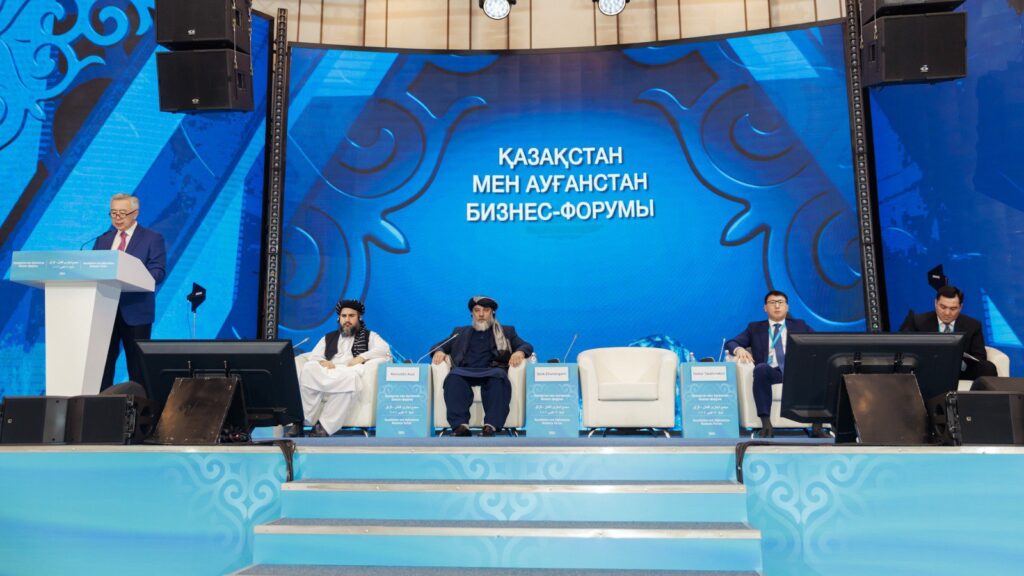
On October 22, Kazakhstan’s Deputy Prime Minister Serik Zhumangarin and Afghanistan’s Minister of Industry and Commerce, Nuriddin Azizi, signed a roadmap to increase Kazakh-Afghan trade turnover to $3 billion at a business forum in Almaty. This follows Kazakhstan’s removal of the Taliban from its list of terrorist organizations in June as part of an effort to develop trade and economic ties with Afghanistan. The roadmap includes Kazakhstan’s participation in constructing two railway lines in Afghanistan: Turgundi—Herat—Kandahar—Spin Boldak and Mazar-i-Sharif—Harlachi. It also aims to expand the range of goods in bilateral trade, develop cooperation in the chemical industry, and increase the export of Kazakh ammophos materials to Afghanistan. Additionally, the roadmap includes plans to export both new and used cars manufactured in Kazakhstan, set up service centers in Afghanistan, and build schools in the region. According to Kazakh officials, there is significant potential to increase grain and flour exports to Afghanistan while importing Afghan fruits, vegetables, dried fruits, and other food products. Kazakhstan is also interested in supporting Afghanistan’s economic development and integration into international transport corridors. In the first half of 2024, the volume of road transit from Afghanistan through Kazakhstan increased by 8%, exceeding 5,000 tons, compared to 10,000 tons last year. Deputy Prime Minister Zhumangarin noted at the forum that a railway corridor connects Kazakhstan and Afghanistan through Turkmenistan and Uzbekistan. Kazakhstan is also interested in using the Trans-Afghan corridor, which runs through the Karachi and Gwadar seaports in Pakistan, to facilitate the transit of Kazakh export cargo to markets in the Middle East and Southeast Asia. The Afghan delegation was offered access to the dry port of Khorgos on the Kazakh-Chinese border to ensure the smooth transit of Afghan goods to China via Kazakhstan. The business forum in Almaty coincided with Kazakh-Afghan negotiations on the logistics of transporting goods from China to Afghanistan and back through Kazakhstan. The event also featured an exhibition of Afghan food and industrial products.

Kazakhstan and Afghanistan Discuss Transport Links for Trade with China

At a meeting in Almaty on October 21, Kazakhstan's Deputy Prime Minister Serik Zhumangarin and Afghanistan's Minister of Industry and Commerce Nuriddin Azizi addressed the logistics of transportation of goods from China to Afghanistan and back through Kazakhstan. In June, Kazakhstan’s President Kassym-Jomart Tokayev announced that his country had removed the Taliban from its list of terrorist organizations in a move to develop trade and economic ties with Afghanistan. In late August, Kazakhstan’s Foreign Ministry accredited a chargé d’affaires of Taliban-led Afghanistan to expand trade, financial, and humanitarian cooperation between the two countries. As the Kazakh Ministry of Trade and Integration reported, one critical issue is the reverse loading of railcars and containers on their way back from Afghanistan. To reduce the cost of logistics, Kazakhstan is considering loading empty railcars with Afghan fruits and vegetables, persimmons, beans, and other food products for delivery to Kazakhstan. Bauyrzhan Urynbasarov, managing director of Kazakhstan Temir Zholy (KTZ), the country's national railway company, proposed two options for reverse loading empty containers and railcars. The first is a circular train route: container trains traveling from China through Kazakhstan to Afghanistan are loaded with Afghan goods bound for China. From there, they pass through the port of Karachi in Pakistan before returning to China. In the second route, trains reach Afghanistan, where they are reloaded and loaded with Afghan goods, then return to Kazakhstan, where, after unloading, they are packed with Kazakh goods and go to China. Zhumangarin proposed that the Afghan side use the capacities of the Kazakh terminal in the Chinese dry port in Xi'an, the Kazakh-Chinese logistics terminal in the port of Lianyungang, and the terminal currently under construction in the dry port of Urumqi in China’s Xinjiang. The parties also agreed to organize an interregional Kazakh-Afghan forum, where the provinces of Afghanistan and the regions of Kazakhstan could discuss cooperation projects. According to Kazakh statistics, trade turnover between Kazakhstan and Afghanistan amounted to $330.7 million from January to August 2024. Exports from Kazakhstan to Afghanistan totaled $316.5 million, including flour, sunflower oil, natural gas, and fertilizers. Afghanistan's exports reached $14.1 million, mainly mineral water, fruits, juices, and aluminum products. The Afghan delegation arrived in Almaty on October 20 to participate in an exhibition of Afghan food and industrial products.

Chinese Investment in Major Trade and Logistics Center in Northern Kyrgyzstan

On October 17, the Chairman of the Cabinet of Ministers of Kyrgyzstan, Akylbek Japarov, and the Chinese Ambassador to Kyrgyzstan, Du Dewen, attended a capsule-laying ceremony for the construction of a large trade and logistics center in the village of Leninskoye in the country’s northern Chui region. Located just north of the capital, Bishkek, and a few kilometers from the border with Kazakhstan, the Manas Trade and Logistics City, will include a trading hub, an international exhibition center, a warehouse and logistics center with bonded areas, retail marketplaces, hotels, and residential compounds. The facility will be built in partnership between a Chinese investor and a management company in which the Kyrgyz Cabinet of Ministers will have a 49% share. In his address at the ceremony, the Cabinet’s head, Japarov, stated: "We are launching a major project—not just the construction of a trade and logistics center, but an entire town. It will have 30,000 retail outlets, -cover-700 hectares, and a total investment of $4.2 billion. $700 million will be invested in the first stage of construction. This center can be compared with the largest sea ports in terms of its importance and functions." Japarov added that the creation of the facility will significantly contribute to the expansion of regional and international trade, the creation of new jobs, and the improvement of conditions for product exports. China is now one of Kyrgyzstan's largest trading partners. According to official statistics, bilateral trade reached $20 billion in 2023, 32% more than in 2022.

South Korea to Help Build Dry Ports in Uzbekistan’s Syrdarya and Jizzakh Regions

The Ministry of Transport of Uzbekistan announced on October 2 that it had signed a Framework Agreement with the Port Investment Department of the Ministry of Oceans and Fisheries of South Korea to jointly develop a feasibility study for the construction of dry ports and terminals in Uzbekistan’s Syrdarya and Jizzakh regions. According to the Uzbek ministry, the project will help improve the country's transport and logistics infrastructure. Creating inland terminals will be an important step towards increasing Uzbekistan's logistics independence and strengthening its role as the main logistics hub in Central Asia. The project is expected to significantly improve the country’s transport infrastructure and attract new investments to the Syrdarya and Jizzakh regions, supporting the goals of the "Development Strategy of New Uzbekistan for 2022-2026." The project is scheduled for completion in September 2025. As one of only two double-landlocked countries in the world (the other being Liechtenstein), Uzbekistan has to ship its exports over long distances through other landlocked countries — Kazakhstan, Kyrgyzstan, Tajikistan, Turkmenistan, and Afghanistan. In recent years, the government of Uzbekistan has made substantial progress in improving existing international transport corridors running through the country and in developing new corridors that will allow Uzbekistan to access the markets of the Eurasian Economic Union and European countries, Iran, Turkey, Afghanistan, Pakistan, India, and China.

China Officially Joins the Middle Corridor

It was announced during the 8th International Silk Road Expo in Xi’an in September 2024 that China will formally join the Middle Corridor under the guise of participation by the China Railway Container Transport Corporation (CRTC). This move signals a growing reliance on Central Asia’s trade-route infrastructure potential. China's shift to overland routes is part of a broader strategy to diversify away from traditional maritime routes through chokepoints like the Strait of Malacca, which carry geopolitical risk. Kazakhstan's strategic geographic location naturally makes it indispensable to China’s trade, and infrastructure projects currently underway represent a key component of the Middle Corridor’s potential. In July 2024, Kazakh President Kassym-Jomart Tokayev ratified agreements with China aimed at further developing the Middle Corridor, enhancing both road and rail infrastructure. The country has already been upgrading its rail infrastructure, modernizing dry ports like Khorgos on the Chinese border, and expanding transit facilities at the Caspian Sea port of Aktau. The increased flow of goods through Kazakhstan is evident: over 212 container block trains have passed through the country by September 2024, with the number projected to exceed 300 by the year’s end. These build-outs, and particularly Kazakhstan’s modernization of its railways, go hand-in-hand with the recently finished improvements along the Baku-Tbilisi-Kars (BTK) line, which connects Azerbaijan to Turkey via Georgia. The expansion of the BTK line's capacity from 1 million to 5 million tons per year has now been completed. As a result of all these efforts, the travel time for goods from China to the Black Sea has been reduced to just 10–12 days, highlighting the efficiency of the corridor. Azerbaijan also plays a crucial role in this economic ecosystem. Baku’s port of Alat serves as a critical transit point for cargo crossing between Central Asia and the South Caucasus. Azerbaijan’s collaboration with Kazakhstan, Georgia, and Turkey has led to significant investments in expanding port facilities and upgrading railway systems beyond the crucial BTK link mentioned above. The result is a smoother, more reliable flow of goods from China to Europe. Azerbaijan is winning its bet to become a regional logistics hub. In addition, a Chinese consortium recently secured the contract for the construction of the Anaklia deep-sea port in Georgia, a strategically important site on the eastern edge of the Black Sea. The project was initially awarded to a Georgian-American consortium, but was cancelled in 2020 due to political and legal disputes. Following a new tender process this year, the Chinese consortium emerged as the sole bidder. If supporting infrastructure is adequately developed and the Black Sea’s cargo transit capacity can be significantly enhanced, then the Anaklia port could become a critical node in the Middle Corridor, enhancing its role in Eurasian trade and bolstering regional connectivity. China’s increased reliance on Central Asian, trans-Caspian, and South Caucasus routes is not just about efficiency. It is also a strategic diversification to mitigate the risks posed by geopolitical instability in other regions. Traditional sea routes through maritime choke-points as well as overland routes like...