• KGS/USD = 0.01143 0%
  • KZT/USD = 0.00216 0%
  • TJS/USD = 0.10633 -0.28%
  • UZS/USD = 0.00008 0%
  • TMT/USD = 0.28571 0%
  • KGS/USD = 0.01143 0%
  • KZT/USD = 0.00216 0%
  • TJS/USD = 0.10633 -0.28%
  • UZS/USD = 0.00008 0%
  • TMT/USD = 0.28571 0%
  • KGS/USD = 0.01143 0%
  • KZT/USD = 0.00216 0%
  • TJS/USD = 0.10633 -0.28%
  • UZS/USD = 0.00008 0%
  • TMT/USD = 0.28571 0%
  • KGS/USD = 0.01143 0%
  • KZT/USD = 0.00216 0%
  • TJS/USD = 0.10633 -0.28%
  • UZS/USD = 0.00008 0%
  • TMT/USD = 0.28571 0%
  • KGS/USD = 0.01143 0%
  • KZT/USD = 0.00216 0%
  • TJS/USD = 0.10633 -0.28%
  • UZS/USD = 0.00008 0%
  • TMT/USD = 0.28571 0%
  • KGS/USD = 0.01143 0%
  • KZT/USD = 0.00216 0%
  • TJS/USD = 0.10633 -0.28%
  • UZS/USD = 0.00008 0%
  • TMT/USD = 0.28571 0%
  • KGS/USD = 0.01143 0%
  • KZT/USD = 0.00216 0%
  • TJS/USD = 0.10633 -0.28%
  • UZS/USD = 0.00008 0%
  • TMT/USD = 0.28571 0%
  • KGS/USD = 0.01143 0%
  • KZT/USD = 0.00216 0%
  • TJS/USD = 0.10633 -0.28%
  • UZS/USD = 0.00008 0%
  • TMT/USD = 0.28571 0%

Viewing results 1 - 6 of 50

International Recognition for the Kazakh Tazy Dog

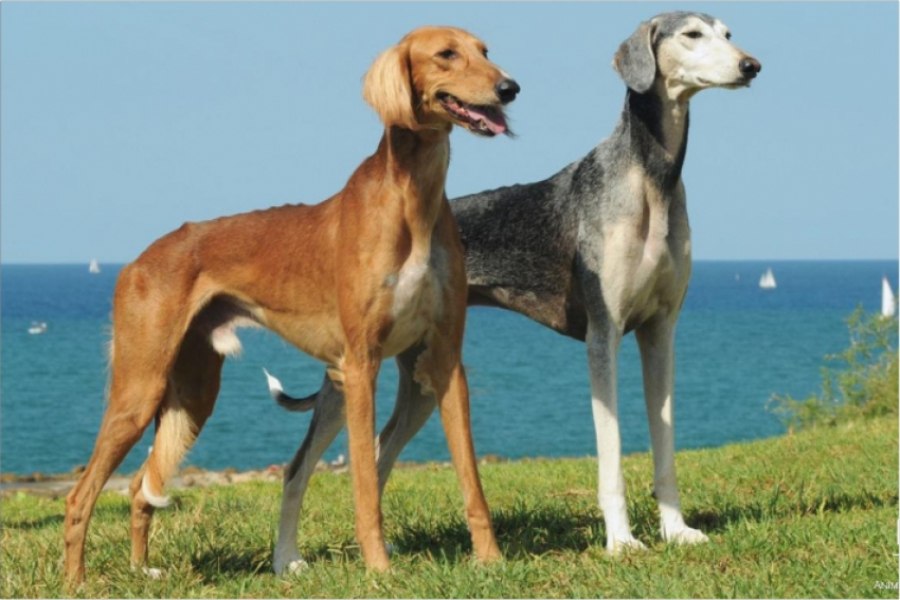
The Kazakh Tazy, one of the oldest dog breeds, is at last, poised to receive international recognition. The General Committee of the International Cynological Federation (FCI) has officially approved the preliminary recognition of the Kazakh Tazy as a unique breed. The move secures Kazakhstan as the holder of the breed standard and is a significant step towards the breed's global recognition. The next ten years will be devoted to collecting data on the health, characteristics, and registration of Tazy puppies, which will be submitted to the FCI for review. Since 2022, the Presidential Affairs Department (PAD) of the Republic of Kazakhstan has been working on preserving Kazakh dog breeds through scientific research, exhibitions and amendments to legislation regarding breeding. In August 2023, the Union of Cynologists of Kazakhstan, having fulfilled all of its requirements, became a full member of FCI which in turn, allowed the Kazakh Tazy to be declared a national breed. The Kazakh Tazy dog emerged over four thousand years ago and according to recent genetic studies, is unique in terms of genetic diversity, especially in Kazakhstan's southern and eastern regions. Renowned for its outstanding endurance, ability to withstand Central Asia's harsh climate, and skills in hunting hares, wolves, and other animals, the Tazy has long been an essential part of the nomadic people's lives.

Kyrgyzstan Proposes Ban on Face Coverings

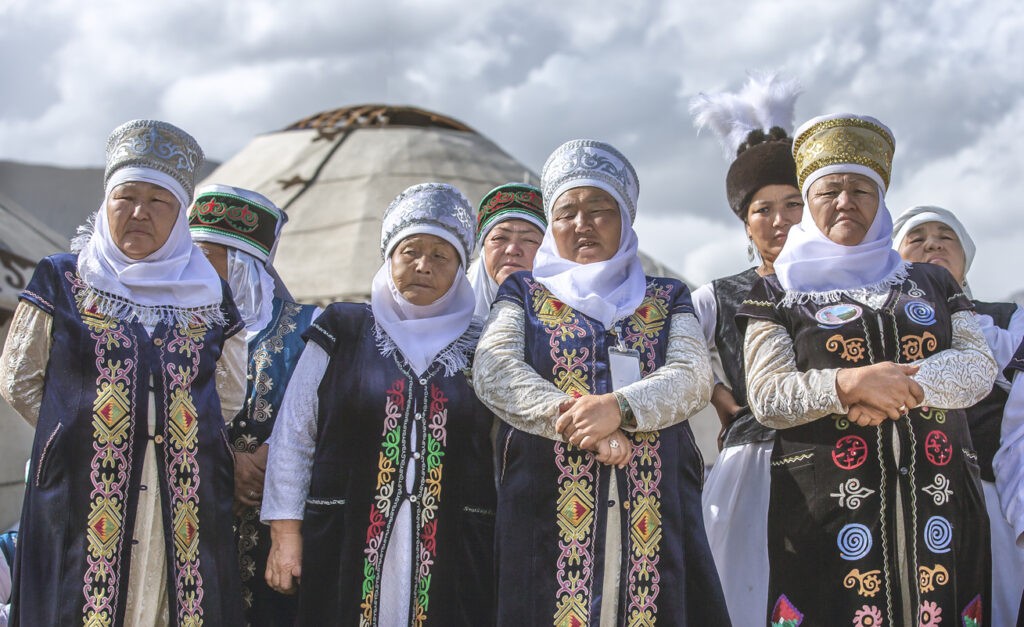
The State Commission on Religious Affairs of Kyrgyzstan has proposed several important initiatives to regulate religious activity in the country and in particular, a ban on face coverings that hinder citizen identification in state institutions and public places. The ban will not apply to protective masks, and a draft decree, carrying a proposed fine equivalent to 235 USD for violation of the law, has now been submitted for public discussion. In addition, the State Committee of Religion also proposes banning the distribution of religious literature and other materials in public places, residential premises, state and municipal institutions, and educational organizations. Recommendations have also been mooted to prohibit religious figures from foreign organizations from conducting ceremonies and events in nursing homes, correctional institutions, and military units without prior approval of the authorized body. A further proposal is the implementation of a ban on religious organizations' interference in the activities of public authorities and local self-government bodies, and on financing political parties by subjects of spiritual activity. Administrative liability is envisaged for violation of these prohibitions, the aim of which is to strengthen state control, and prevent abuse, of religious activity. Laws prohibiting face coverings are already in place in several countries. France and Belgium for example, have strict bans on burkas and niqabs in public places, and in Sri Lanka, similar measures have been introduced to combat religious extremism. In the Republic of Congo and Chad, such laws were imposed to improve security despite the low Muslim population. Post-Soviet countries have adopted similar laws but on a limited scale. Azerbaijan restricts religious dress in public institutions, whilst motivated by concern for national identity and the secular nature of the state, Tajikistan has imposed a law banning the hijab in public institutions and schools since 2017.

Uzbekistan Travel Tips from Professional Guide Eleonora Radjabova

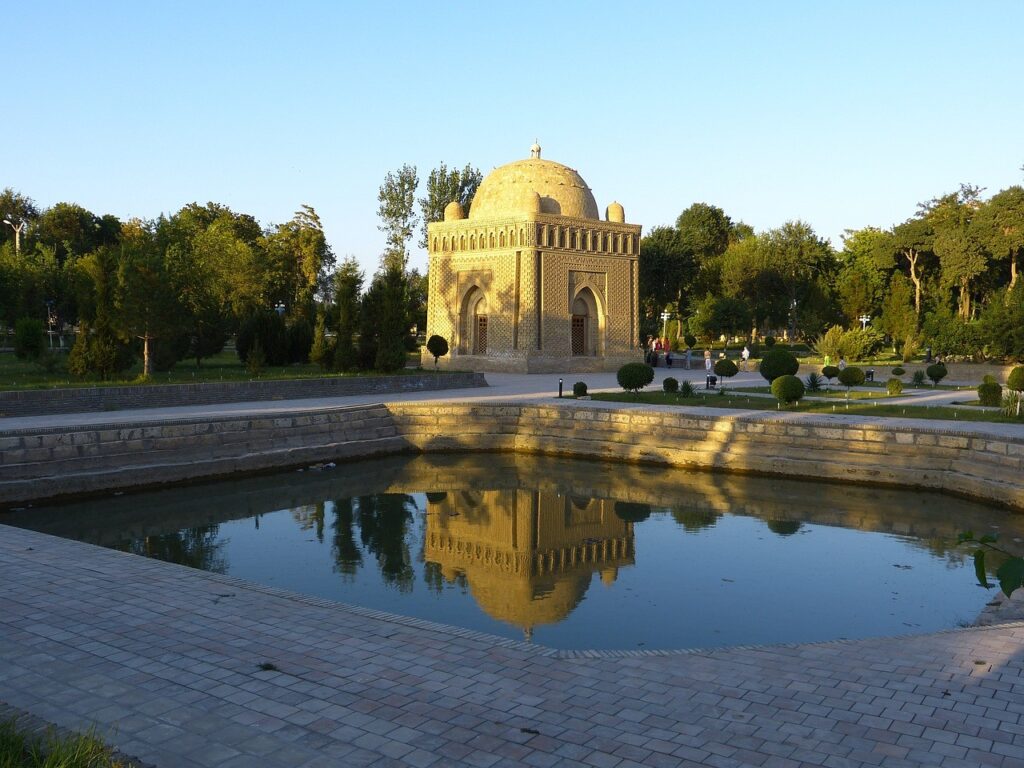
Uzbekistan is increasingly attracting tourists from all over the world, eager to experience its rich cultural heritage, unique architecture and spectacular landscape. Eleonora Radjabova, a professional guide in Uzbekistan since 2007, spoke to TCA about her own favorite locations and provided tips on how to make the most of your trip to her country. [caption id="attachment_22627" align="aligncenter" width="720"] photo: elya.uz.guide - Eleonora Radjabova[/caption]   TCA: What are your personal favorite places and activities in Uzbekistan? My favorite places and activities in Uzbekistan highlight the diversity and richness of the natural environment and cultural experiences my country has to offer. I especially love Bukhara for its ancient historical heritage and architectural masterpieces. Walking through the narrow streets and markets of this medieval city is a unique and immersive experience filled with dazzling, iconic monuments at every turn. [caption id="attachment_22628" align="aligncenter" width="1280"] photo: TCA -Bukhara[/caption]   For those wishing a flavor of Uzbekistan’s landscape, I recommend Chimgan and Amirsoy, both within easy reach of Tashkent. Chimgan, set in the Ugam Chatkal National Park and 85 kilometers from the city, is perfect for an active vacation. Sometimes known as ‘Uzbek Switzerland’ with mountains rising to 3309m above sea level, Chimgan has facilities for various extreme sports. In winter, it operates as a ski-resort whilst in summer, paragliding provides an exhilarating experience and breath-taking views of the terrain from high in the air. Apart from being ideal for day-trippers, the resort which specializes in eco-tourism, offers a wide range of accommodation for longer stays. [caption id="attachment_22630" align="aligncenter" width="1024"] photo: skipedia.ru -Chimgan[/caption]   Amirsoy, just 65 kilometers from Tashkent, offers an easily accessible respite from city life. Flanked by the Chaktal Ridge and Tian Shan mountains, its beautiful rolling landscape offers numerous trails for hiking and walking, alongside spas and pools. [caption id="attachment_22634" align="aligncenter" width="497"] photo: Uzbek Travel -Amirsoy[/caption]   Lake Aidarkul, a unique oasis of sorts in the Kyzylkum Desert, is another of my favorite places to relax and enjoy outdoor recreation. It is especially beautiful in August when people come to its shores to enjoy the sunset then gaze at the starry sky. A natural wilderness and home to rare species of birds as well as pelicans, herons, geese and black storks, the area is a mecca for birdwatchers. Visitors can also experience a unique taste of nomadic life by embarking on a trip through the desert on camels – “ships of the desert"-  to spend a night in a yurt. [caption id="attachment_22631" align="aligncenter" width="900"] photo:adantour.com -Lake Aidarkul[/caption]   TCA: Why are these places and activities especially dear to you? These places and activities recharge my vigor, positively influence my mood, and I return to the city, to my work, with new ideas and impressions.  TCA: What tips can you offer tourists to get the most out of their visit?  It’s all about forward planning! I recommend determining in advance, aspects of the country which interest you most -historical monuments, culture, nature, cuisine -to help pick a tour tailored to your preferences. Make...

The Yurt : More Than a Humble Abode

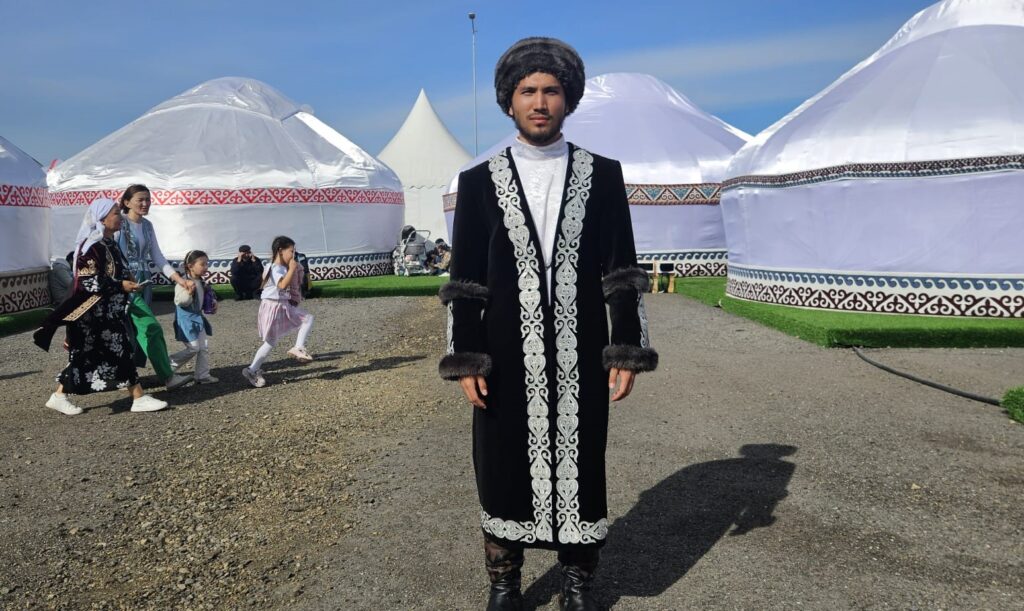
Attracted by the region's spectacular, natural landscape, an ever-increasing number of tourists descends on Central Asia each year. For many, one of the highlights, is to experience a night or two in yurts, traditional, humble felt-clad tents which in use for over 2,500 years, were homes to most of Central Asia’s nomads until the 1930’s. [caption id="attachment_21791" align="aligncenter" width="2560"] Photo LH: herders' yurts[/caption] Today’s Kazakh, and Kyrgyz herders are semi-nomadic. Winters are spent in villages but during the warmer months, they migrate with their animals to summer pastures and like their ancestors before them,  live in yurts. More than a humble abode, the yurt encapsulates the cultural, philosophical, and aesthetic values of both Kazakh and Kyrgyz people; a fact recognized by its inclusion in 2014, in the UNESCO Representative List of Intangible Cultural Heritage of Humanity. [caption id="attachment_21792" align="aligncenter" width="1013"] Photo LH: shanyrak[/caption] To gain a better understanding of the cultural significance of the Kazakh yurt in particular, TCA spoke to Art historian Raushan Yeschanova who explained: “A yurt is not just a dwelling; it is a space that reflects the entire philosophy of Kazakh nomadic culture. It is a house that carries the idea of harmony, freedom and connection with nature. The yurt serves not only as a home, but also as a place for rituals, festivals, and gatherings, making it a central element of Kazakh society." A yurt consists of several key elements, each of which has a meaning beyond its mere function. [caption id="attachment_21793" align="aligncenter" width="1962"] Photo LH: shanyrak in situ[/caption] The Shanyrak or Crown The most cherished component of the yurt, carefully preserved and passed down generations from fathers to sons, the ‘crown’ is a circular structure of steam-bent wood located in the center of the roof to ventilate the interior and allow the escape of smoke from the stove. The cultural importance of the Kazakh shanyrak and Kyrgyz tunduk, is such that it features on the national flags of both Kazakhstan and Kyrgyzstan. Regarding rules in erecting the yurt, Raushan states: "In spite of the fact that construction is, as they say, a ‘man's business’, women are actively engaged in the construction of the yurt which takes up to three hours. Its assembly is a special ritual in which each element has its own sacral meaning. Only men are permitted to handle the shanyrak which is lifted to the upper part of the frame with a forked pole known as a bakan. Perceived as a symbol of masculinity, women are forbidden to touch the bakan except during childbirth when it is retained in place for them to lean on to ease their labour.” Kerege The circular foundation of the yurt comprises four or more sections of folding wooden lattice linked together on diagonal axes and to the doorframe with braided rope known as saganak. Uyk Traditionally fashioned from wild willow, these long, steam-bent, or straight wooden poles, extend from the kerege and slot into the crown, to form the roof of the yurt. [caption id="attachment_21794"...

Turkmen Sewing: From Ancient Traditions to Modern Art

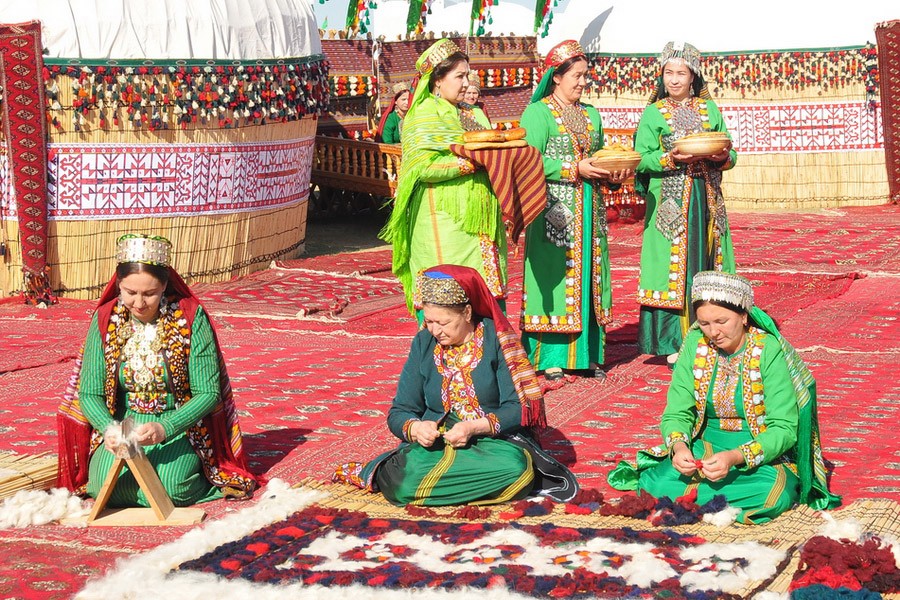
Turkmen sewing is not just a craft but a real art; its roots go deep into the past, to the Paleolithic era. In the Paleolithic era, people used fur and animal skins for sewing, needles made of bone, and threads made of tendons. Over the centuries, Turkmen's sewing has preserved its uniqueness. It is closely connected with national clothing and is an integral part of the people's cultural heritage. The national costume of Turkmenistan, especially women's, has always been and remains an integral part of everyday clothes for girls and women of all ages. The tradition has always been uninterrupted, and today, Turkmen women continue to wear outfits and jewelry similar to those worn by their ancestors in the 18th and 19th centuries. Women's everyday clothes consisted of dresses, robes, and scarves made of plain cotton fabrics. Festive outfits were made of bright silk fabrics with rich embroidery, and wedding dresses and robes combined exquisite embroidery with silver jewelry. The traditional costume of a Turkmen woman was a bright ensemble: a high headdress draped with silk or woolen shawl, a long red dress with a robe over it, shoes on the feet, a narrow strip of embroidered pants, and a lot of silver jewelry. [caption id="attachment_20018" align="alignnone" width="300"] @advantour.comTurkmen women in traditional clothes with a national carpet[/caption] The modern style of Turkmen clothing preserves the best national features, offering many variants of sleeve shapes and decorative trimming. Each dress is necessarily decorated with ornamental hand embroidery or artistic machine stitching. Even today, Turkmen women prefer traditional outfits, such as a long velvet dress decorated with modern embroidery and jewelry. Even the wealthiest European-style costume cannot compete with the beauty and traditionality of the Turkmen national dress. [caption id="attachment_20023" align="alignnone" width="300"] @iStockA group of dancers before the performance at the Kurban-Bairam Festival.[/caption] In addition, the ornaments used in Turkmen embroidery have a deep symbolic meaning, tying together passed-down knowledge and traditions. Each pattern's history is connected with nature, the cosmos, and mythology. Turkmen embroidery is famous for its skill and precision. It is done by hand, using thin needles and silk or cotton threads. Traditionally, Turkmen women begin sewing in childhood, mastering the embroidery technique from their mothers and grandmothers. Modern Turkmen sewing is actively developing, combining traditional techniques with contemporary trends. Masters use new materials and experiment with colors and ornaments, creating unique works and patterns. [caption id="attachment_20025" align="alignnone" width="200"] @tourstoturkmenistan.comTurkmen national carpets[/caption] Despite the development of technologies, Turkmen sewing remains a valuable type of hand labor passed from generation to generation. It is a bright symbol of Turkmenistan's national wealth and cultural heritage. In 2022, Turkmen embroidery was included in the Representative List of Intangible Cultural Heritage of Humanity.

Why Have Cases of Abduction of Women for Marriage Not Decreased in Kazakhstan?

In Kazakhstan, the statistics related to criminal cases regarding the abduction of women as brides does not show material change, a study conducted by analysts at Ranking.kz shows. Referring to the data of the Committee on Legal Statistics and Special Records of the General Prosecutor's Office of Kazakhstan, the authors of the study report that last year, 18 such criminal cases were recorded. Of these, two-thirds (12 cases) were registered in the southern regions, and two cases each in the eastern, western and central parts of the country. The report notes that the problem is characteristic not only of remote rural settlements, but also of large metropolitan areas. Thus, 6 out of 12 ‘southern’ criminal cases of abduction of women were in Almaty, and a single case was registered in Astana. But the number of registered criminal cases on another related criminal offense, namely illegal deprivation of liberty that occurs when a woman is forcibly kept in the house of her fiancé, has noticeably decreased since 2018 from 71 to 13 cases nationwide. It is worth noting that these statistics only partially reflect the situation on the ground as some Kazakhs continue to disguise this criminal offense as the ancient custom of "qyz alyp qashu" (bride kidnapping). According to Artur Lastaev, the Commissioner for Human Rights in Kazakhstan, at least two factors affect the situation. Firstly, Kazakhstan does not have a separate article for abducting women for the purposes of marriage, and therefore all abductions of women are registered under one crime, i.e. Article 125 of the Criminal Code of the Republic of Kazakhstan. Secondly, most of the abductions of women for marriage are not even included in statistical reports as they are often covered up. In his report last year, Lastaev wrote: "We can only guess about the real figures of bride theft. Stereotypes persist in society that do not allow women to report the use of this type of coercion. In most cases, perpetrators and victims are not even aware of the criminal nature of such acts and criminal responsibility for them." According to the data published by the Ombudsman within the framework of the International Scientific and Practical Conference, "Countering domestic violence: problems and solutions", 214 criminal cases have been initiated in Kazakhstan since 2019 for the abduction of women. Of these, 94.3% were terminated due to lack of corpus delicti. Only 10 cases were sent to the courts, and 27 people were brought to bear responsibility for their actions. The Commissioner for Human Rights believes that a separate article for abduction of women for forced marriage should be introduced into the Criminal Code of the Republic of Kazakhstan. According to Lastaev, this should have a preventative effect and reduce the level of crime against women. The General Prosecutor's Office, where the proposal has been sent, supported the initiative, but amendments to the laws have not yet been adopted. More than a year ago, experts from Kazakhstan’s Institute for Social Development conducted a sociological study on gender...