• KGS/USD = 0.01143 0%
  • KZT/USD = 0.00206 0%
  • TJS/USD = 0.10811 -0.18%
  • UZS/USD = 0.00008 0%
  • TMT/USD = 0.28571 0%
  • KGS/USD = 0.01143 0%
  • KZT/USD = 0.00206 0%
  • TJS/USD = 0.10811 -0.18%
  • UZS/USD = 0.00008 0%
  • TMT/USD = 0.28571 0%
  • KGS/USD = 0.01143 0%
  • KZT/USD = 0.00206 0%
  • TJS/USD = 0.10811 -0.18%
  • UZS/USD = 0.00008 0%
  • TMT/USD = 0.28571 0%
  • KGS/USD = 0.01143 0%
  • KZT/USD = 0.00206 0%
  • TJS/USD = 0.10811 -0.18%
  • UZS/USD = 0.00008 0%
  • TMT/USD = 0.28571 0%
  • KGS/USD = 0.01143 0%
  • KZT/USD = 0.00206 0%
  • TJS/USD = 0.10811 -0.18%
  • UZS/USD = 0.00008 0%
  • TMT/USD = 0.28571 0%
  • KGS/USD = 0.01143 0%
  • KZT/USD = 0.00206 0%
  • TJS/USD = 0.10811 -0.18%
  • UZS/USD = 0.00008 0%
  • TMT/USD = 0.28571 0%
  • KGS/USD = 0.01143 0%
  • KZT/USD = 0.00206 0%
  • TJS/USD = 0.10811 -0.18%
  • UZS/USD = 0.00008 0%
  • TMT/USD = 0.28571 0%
  • KGS/USD = 0.01143 0%
  • KZT/USD = 0.00206 0%
  • TJS/USD = 0.10811 -0.18%
  • UZS/USD = 0.00008 0%
  • TMT/USD = 0.28571 0%

Viewing results 1 - 6 of 27

From Security Threat to Economic Partner: Central Asia’s New ‘View’ of Afghanistan

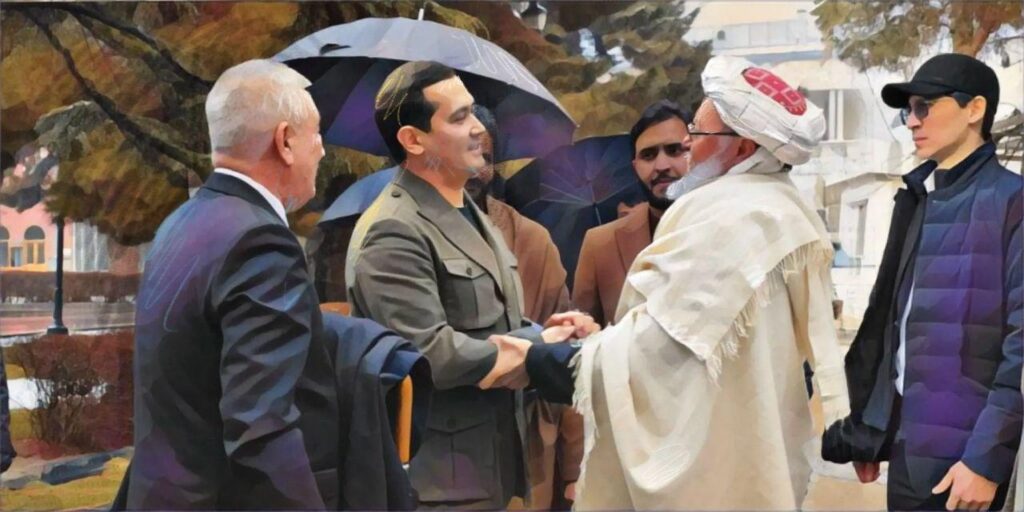
Afghanistan is quickly becoming more important to Central Asia, and the third week of February was filled with meetings that underscored the changing relationship. There was an “extraordinary” meeting of the Regional Contact Group of Special Representatives of Central Asian countries on Afghanistan in the Kazakh capital Astana. Also, a delegation from Uzbekistan’s Syrdarya Province visited Kabul, and separately, Uzbekistan’s Chamber of Commerce organized a business forum in the northern Afghan city of Mazar-i-Sharif. A Peaceful and Stable Future for Afghanistan The meeting in Astana brought together the special representatives of Kazakhstan, Kyrgyzstan, Tajikistan, and Uzbekistan for Afghanistan. The group was formed in August 2025. There was no explanation for why the fifth Central Asian country, Turkmenistan, chose not to participate. The purpose of the Astana meeting was to coordinate a regional approach to Afghanistan. Comments made by the representatives showed Central Asia’s changing assessment of its southern neighbor. Kazakhstan’s special representative, Yerkin Tokumov, said, “In the past [Kazakhstan] viewed Afghanistan solely through the lens of security threats… Today,” Tokumov added, “we also see economic opportunities.” Business is the basis of Central Asia’s relationship with the Taliban authorities. Representatives noted several times that none of the Central Asian states officially recognizes the Taliban government (only Russia officially recognizes that government). But that has not stopped Kazakhstan and Uzbekistan, in particular, from finding a new market for their exports in Afghanistan. Uzbekistan’s special representative, Ismatulla Ergashev, pointed out that his country’s trade with Afghanistan in 2025 amounted to nearly $1.7 billion. Figures for Kazakh-Afghan trade for all of 2025 have not been released, but during the first eight months of that year, trade totaled some $335.9 million, and in 2024, amounted to $545.2 million. In 2022, Kazakh-Afghan trade reached nearly $1 billion ($987.9 million). About 90% of trade with Afghanistan is exports from Kazakhstan and Uzbekistan. For example, Kazakhstan is the major supplier of wheat and other grains to Afghanistan, and Uzbekistan is the biggest exporter of electricity to Afghanistan. Kyrgyzstan’s trade with Afghanistan is significantly less, but from March 2024 to March 2025, it came to some $66 million. To put that into perspective, as a bloc, the Central Asian states are now Afghanistan’s leading trade partner, with more volume than Pakistan, India, or China. Kazakhstan’s representative, Tokumov, highlighted Afghanistan’s strategic value as a transit corridor that could open trade routes between Central Asia and the Indian Ocean. Kyrgyzstan’s representative, Turdakun Sydykov, said the trade, economic, and transport projects the Central Asian countries are implementing or planning are a “key condition for a peaceful and stable future for Afghanistan and the region as a whole.” The group also discussed humanitarian aid for Afghanistan. All four of these Central Asian states have provided humanitarian aid to their neighbor since the Taliban returned to power in August 2021. Regional security was also included on the agenda in Astana, but reports offered little information about these discussions. A few days before the opening of the meeting in Astana, Russian Ambassador to Kyrgyzstan Sergei...

Opinion: Central Asia and the Venezuelan Crisis

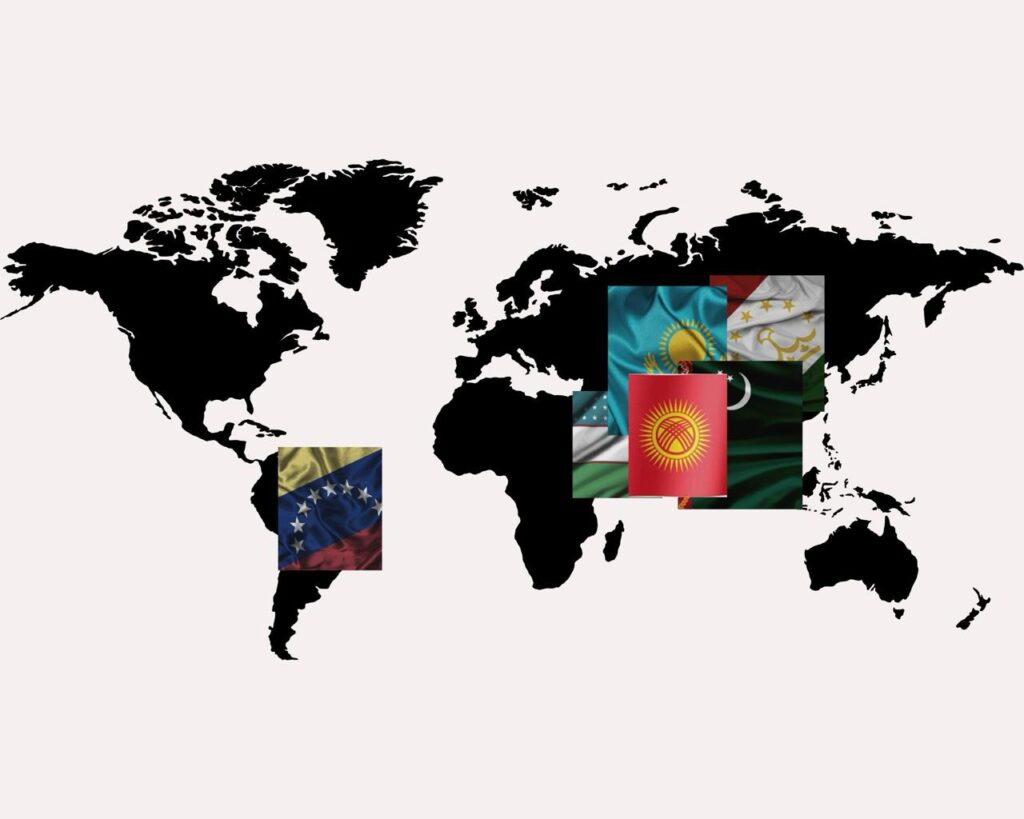
For Central Asian countries, the central challenge in international politics is no longer choosing alliances, but coping with external shocks and global turbulence that originate far beyond the region.  The unfolding crisis in Venezuela is a case in point. At first glance, the situation concerns Latin America and the global oil market, but its implications extend well beyond, directly affecting Central Asia’s strategic interests. The core issue is not oil per se, but the reemergence of force as a legitimate instrument for altering political and economic conditions. For a region positioned at the crossroads of major power interests and reliant on external stability, this shift is profoundly consequential. The Venezuelan crisis should be understood as a precedent, one that signals how global power centers may act as established norms erode. For Central Asia, this heralds a more unpredictable international environment in which regional states must navigate competing interests without the benefit of stable rules. While Venezuela is often reduced to an oil story, the broader economic stakes involve control over the architecture of strategic resource flows. This resonates with the situation in the C5, Kazakhstan, Kyrgyzstan, Uzbekistan, Tajikistan, and Turkmenistan, where resources such as oil, gas, uranium, and rare earth metals are also of significant external interest. The logistics and transit of these resources are increasingly entangled in geopolitical bargaining. The Venezuelan example reinforces a growing trend: the nexus of economics and security is tightening, and access to resources is increasingly secured through political leverage. In this context, Iran holds particular relevance. For Central Asia, Iran is not an abstraction; it represents transit routes, energy corridors, access to southern seas, and a component of regional balance. Heightened pressure on Tehran directly affects both the opportunities and risks facing the region. When viewed through the lens of Iran, developments in Venezuela serve as a psychological and political precedent, broadening what appears acceptable within Washington’s strategic calculus. While a direct replication of the Venezuelan scenario in Iran is unlikely, given the vastly different military, political, and regional risks, the mere lowering of the threshold for force-based solutions is significant. The cost of direct confrontation with Iran would be far higher, with potential repercussions for the entire Middle East security architecture. Operation Absolute Resolve has objectively increased the confidence of those who favor the use of force against Iran. This confidence is likely to grow if United States actions in Venezuela carry minimal international consequences, avoid triggering uncontrollable regional escalation, and are perceived as domestically successful. In either case, Venezuela’s “success” has already lowered psychological barriers to coercion, strengthening arguments for hardline scenarios and re-legitimizing force as a policy tool, rather than a measure of last resort. Broadly speaking, the Venezuelan crisis highlights a global shift from rules to precedents. For the five, and increasingly for the emerging six that includes Azerbaijan, the fragmentation of international norms raises costs and leaves each country more vulnerable to external pressure. In this environment, coordination and consistency on issues such as transit, security, and sanctions are...

Central Asia’s Road to the Southern Seas: A Search for Stability

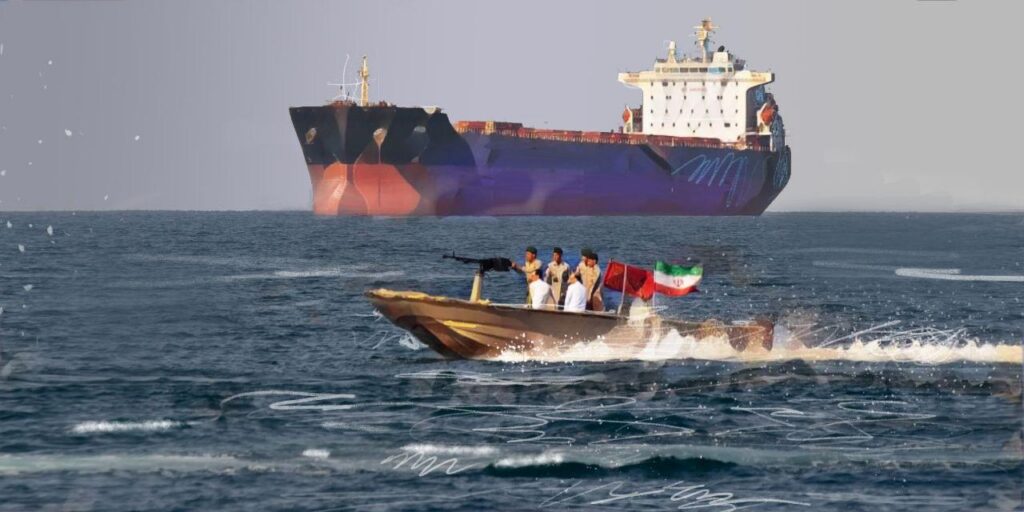
India has confirmed that it received a six-month sanctions waiver from the United States for its involvement in developing Iran’s Chabahar port. According to The Times of India, the decision followed intensive diplomacy by New Delhi, which convinced Washington that Chabahar provides India’s only practical overland access to Central Asia that avoids Pakistan. Through Chabahar, India is building a land-based counterpart to the China-Pakistan Economic Corridor, creating an alternative axis linking the Indian Ocean with Eurasia while bypassing Islamabad and Beijing. The exemption, valid until April 2026, gives India room to negotiate with Washington. For Central Asia, the episode reflects a broader challenge: choosing viable routes to the southern seas. Current debates about “Afghan transit” focus largely on the Trans-Afghan Railway and the so-called Kabul corridor connecting northern Afghanistan with Pakistan’s ports. Yet Afghanistan’s transport network is forming along multiple lines. Alongside the eastern route, a western corridor from Herat to Kandahar and Spin Boldak is also developing, offering access both to Pakistan and to Chabahar. The integration of western Afghanistan’s infrastructure with Iran’s transport network makes this corridor more reliable under today’s political and security conditions. It aligns with projects pursued by Iran, Turkmenistan, and Afghanistan and positions Herat as a major hub. It is also close to the North–South Transport Corridor, the Lapis Lazuli and Middle Corridors, and the Caspian and Persian Gulf regions. The planned Mazar-i-Sharif–Herat line fits the logic of the Five Nations Railway Corridor, potentially giving Tajikistan and Uzbekistan access to Chabahar and, if stability improves, to Pakistan’s ports as well. By contrast, the eastern route will remain constrained by the unstable Afghan–Pakistani border and the volatile relationship between Kabul and Islamabad. Afghanistan’s own priorities also differ from outside assumptions: the Herat–Kandahar–Spin Boldak line primarily serves as an internal transport spine linking the west and south. For Kabul, the route to Gwadar is more a political gesture than a practical goal. Some analysts note that developing the western corridor also helps rebalance the country’s economic geography toward its more diverse western regions. These dynamics strengthen the western route’s appeal. The Taliban leadership has even urged Afghan businesses to reduce reliance on Pakistani ports, signaling a structural shift in trade orientation. Both Chabahar and Gwadar face political risks. Pakistan’s transit routes pass through areas affected by insurgency, including Balochistan and Khyber Pakhtunkhwa, as well as the broader narcotics routes of the Golden Crescent. The greatest uncertainty remains the fluctuating relationship between Kabul and Islamabad. Gwadar, while technologically superior, is undermined by chronic instability. Chabahar’s capacity is more modest, but its integration with Iran’s road and rail network provides reliability. The United States adds another layer of complexity. The waiver suggests Washington is balancing its Iran sanctions regime with its strategic partnership with India. The United States is not directly involved in regional infrastructure but retains enough influence to shift the balance between the western and eastern routes. Under certain conditions, Gwadar may appear less problematic for Washington than Chabahar. At the same time, selective sanctions exemptions...