• KGS/USD = 0.01144 0%
  • KZT/USD = 0.00216 0%
  • TJS/USD = 0.10659 0%
  • UZS/USD = 0.00008 0%
  • TMT/USD = 0.28530 0%
  • KGS/USD = 0.01144 0%
  • KZT/USD = 0.00216 0%
  • TJS/USD = 0.10659 0%
  • UZS/USD = 0.00008 0%
  • TMT/USD = 0.28530 0%
  • KGS/USD = 0.01144 0%
  • KZT/USD = 0.00216 0%
  • TJS/USD = 0.10659 0%
  • UZS/USD = 0.00008 0%
  • TMT/USD = 0.28530 0%
  • KGS/USD = 0.01144 0%
  • KZT/USD = 0.00216 0%
  • TJS/USD = 0.10659 0%
  • UZS/USD = 0.00008 0%
  • TMT/USD = 0.28530 0%
  • KGS/USD = 0.01144 0%
  • KZT/USD = 0.00216 0%
  • TJS/USD = 0.10659 0%
  • UZS/USD = 0.00008 0%
  • TMT/USD = 0.28530 0%
  • KGS/USD = 0.01144 0%
  • KZT/USD = 0.00216 0%
  • TJS/USD = 0.10659 0%
  • UZS/USD = 0.00008 0%
  • TMT/USD = 0.28530 0%
  • KGS/USD = 0.01144 0%
  • KZT/USD = 0.00216 0%
  • TJS/USD = 0.10659 0%
  • UZS/USD = 0.00008 0%
  • TMT/USD = 0.28530 0%
  • KGS/USD = 0.01144 0%
  • KZT/USD = 0.00216 0%
  • TJS/USD = 0.10659 0%
  • UZS/USD = 0.00008 0%
  • TMT/USD = 0.28530 0%

Viewing results 1 - 6 of 197

Kyrgyz Official Concerned Over “High Barriers” in U.S. Visa Bond Policy

Kyrgyzstan should review its visa-free system for American citizens after the United States expanded its visa bond policy to include the Central Asian country, according to a senior Kyrgyz official who said there should be “mutual respect.” The suggestion that there should be some reciprocity following the U.S. measure came from Edil Baisalov, deputy chairman of Kyrgyzstan´s Cabinet of Ministers and a prominent ally of President Sadyr Japarov. Currently, U.S. travelers to Kyrgyzstan can stay for up to 30 days without obtaining a visa. “I believe that we should initiate a review of our visa-free regime for U.S. citizens following the new visa requirements announced yesterday by the State Department, under which Kyrgyz citizens are required to pay a visa deposit of up to $15,000 when submitting visa applications,” Baisalov said on X on Thursday. “Visa policy is a matter of parity and mutual respect. If such high barriers are introduced for our citizens, we cannot pretend that nothing has happened.” However, he did not offer any analysis about what, if any, changes should be made to the visa-free system for U.S. visitors. Any visa dispute with the far more powerful United States could be risky for Kyrgyzstan, which has meanwhile joined with other Central Asian countries in trying to develop closer ties to the administration of U.S. President Donald Trump. Nationals from 38 countries, including Kyrgyzstan, Tajikistan and Turkmenistan, are subject to visa bonds under the U.S. State Department policy, which is part of a wider crackdown on immigration. The policy took effect for citizens from Turkmenistan on January 1 and will be implemented for nationals from Kyrgyzstan and Tajikistan starting on January 21. “Any citizen or national traveling on a passport issued by one of these countries, who is found otherwise eligible for a B1/B2 visa, must post a bond for $5,000, $10,000, or $15,000.  The amount is determined at the time of the visa interview,” the State Department said. B-1 (business) and B-2 (tourism) refer to non-immigrant visas for people who want to stay temporarily in the U.S. Visa holders who have posted bond are also required to enter the United States via designated international airports, including seven in the U.S. and two in Canada. The U.S. visa bond policy is a setback for Kyrgyzstan, which had previously appealed to the United States to relax its visa requirements. Kyrgyz Foreign Minister Zheenbek Kulubaev raised the issue during a meeting with U.S. Deputy Secretary of State Christopher Landau on the sidelines of the U.N. General Assembly in New York in September.

The Trump Factor: Why Central Asia Has Remained Silent on Iran’s Protests

The wave of protests that erupted in Iran in late December and spread to at least 27 of the country’s 31 provinces has become the largest since 2022, when mass demonstrations followed the death of 22-year-old Mahsa Amini in the custody of Iran’s morality police. The unrest has raised new concerns across the region about political stability, energy markets, and the risk of external intervention. Rights monitors say protests have been reported in hundreds of locations nationwide, with death and detention tolls still contested. Human rights groups and independent monitoring organizations estimate that dozens of people have been killed and more than 2,000 detained, while Iranian officials have offered varying accounts and blamed violence on what they describe as “rioters.” In Kazakhstan, observers are drawing comparisons to the country’s own January 2022 unrest, officially labeled an attempted coup that ended in a violent crackdown. But beyond the parallels with Kazakhstan’s ‘Qantar’ events, analysts are focusing on the wider implications, particularly the potential impact of Iran’s domestic turmoil on global oil markets. For Kazakhstan, the stakes are heightened by the country’s reliance on hydrocarbon exports and the sensitivity of global energy markets to supply shocks. Any sharp change in Iranian output, even if temporary, could place downward pressure on prices and complicate budget planning for oil-dependent economies across Central Asia. Kazakh financial analyst Rasul Rysmambetov has voiced concern that unrest in Iran could trigger a surge in oil production aimed at funding social spending, a move that could drive down global oil prices and harm Kazakhstan’s oil-dependent economy. “Iran could add half a million barrels a day within six months and cause oil prices to collapse, but it would not do so casually. The Middle East is very sensitive and knows how to negotiate. Still, if the protests persist, Tehran might ramp up production to finance social needs. [This would be] painful for Kazakhstan. If Venezuela is a bear cub, then Iran is a grizzly bear in the bushes with its oil,” Rysmambetov warned on his Telegram channel. While political unrest typically raises oil prices by increasing supply risk, analysts note that Iran’s response could be atypical. Faced with fiscal pressure, Tehran may opt to increase production to stabilize revenues, a move that would push prices lower despite heightened instability. Iran’s chronic social issues, exacerbated by inflation and the collapse of the national currency, have fueled public discontent for more than a decade. While the Iranian authorities acknowledge the severity of the economic crisis and have conceded that some demands are legitimate, they have also warned of further hardships. On January 5, the judiciary announced that no leniency would be shown toward those detained during the protests. Russian experts, meanwhile, have framed the unrest in geopolitical terms. Irina Fedorova of the Russian Academy of Sciences’ Institute of Oriental Studies cited renewed sanctions, critical shortages of water and electricity, and foreign interference as the root causes. However, she dismissed the likelihood of regime change, pointing to disunity among opposition factions. “The difference...

Central Asia, Vanadium, and the U.S. National Security Strategy

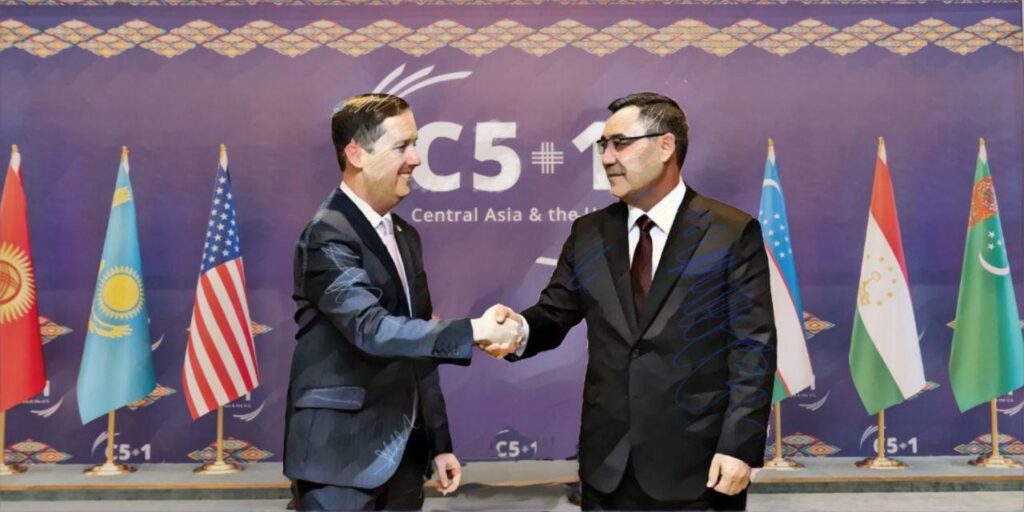
Dated November 2025 and released publicly in early December, the U.S. National Security Strategy links overseas trade and investment, but overlooks Central Asia as a target region for critical minerals. This oversight merits reconsideration in the NSS’s next iteration, given the region’s known natural resource base, openness to foreign investment, proficiency in mining operations, low processing costs, and manageable geopolitical risks. As governments and businesses review supply-chain resilience for critical minerals, vanadium – not one of the 17 rare earth metals – has increasingly become a strategically relevant rather than optional or cyclical commodity. It is widely used in high-strength steel, grid-scale energy storage functions such as redox flow batteries, and infrastructure with defense and industrial applications. A recent letter from the U.S. Congress highlights a critical shortfall of vanadium in the United States: with 14,000 metric tons consumed in 2024, only 3,800 tons were produced domestically. Imports, mainly from Brazil and South Africa, are at risk due to shifting market conditions, meaning the U.S. needs a more structured and focused industrial-like approach to counter unnecessary import dependencies and geopolitical stresses. U.S. supply is secured solely through imports and recycling, given that the mining of vanadium-bearing mineral precursors is minimal to non-existent in the United States. With mining dominated by China and Russia, and with South African production in decline, today’s need to secure primary materials and supply chains means the U.S. must invest overseas until domestic mining is viable. What is needed is vertical integration from mine to final product – vanadium pentoxide (V205), vanadium trioxide (V2O3), and vanadium sulfate (VOSO₄ / V₂(SO₄)₃) for batteries. In an October Development Finance Corporation media release, DFC CEO Ben Black said that “Securing critical minerals is a paramount matter of U.S. strategic interest and economic prosperity.” That’s clearly beyond dispute. Central Asia and Vanadium Central Asia as a region fits within the U.S.’s broader geostrategic goals and geographic diversification plans aimed at building solid asset-based partnerships that go beyond raw material extraction and precarious trading arrangements. Last November's gathering of Central Asia’s five presidents at the White House finally placed the region firmly on the global map. U.S. Assistant Secretary of State for South and Central Asian Affairs Paul Kapur has also been clear: “Under President Trump’s and Secretary Rubio’s leadership, we’re elevating the C5+1 partnership as a priority — a strategic priority and an economic priority.” Here, amongst critical minerals, vanadium surely emerges as a priority commodity, given the near absence of U.S. domestic mining. Kazakhstan leads Central Asia in vanadium mining and production, hosting the region’s most productive deposits. Established operations, strong infrastructure, cost advantages, supportive laws, tax incentives, and a free FX regime make the country highly attractive to investors. Kazakhstan has three vanadium assets—Balasausqandiq in advanced production and Lisakovsk and Kurumsak in exploration—making them attractive targets for miners or funds with long horizons and low-cost capital. Kyrgyzstan has scattered, under-explored vanadium deposits, including in the Jetim Mountain Range. Uzbekistan is expanding exploration, but the value is yet to...

Trump’s G20 Invitations: Why Kazakhstan and Uzbekistan Matter

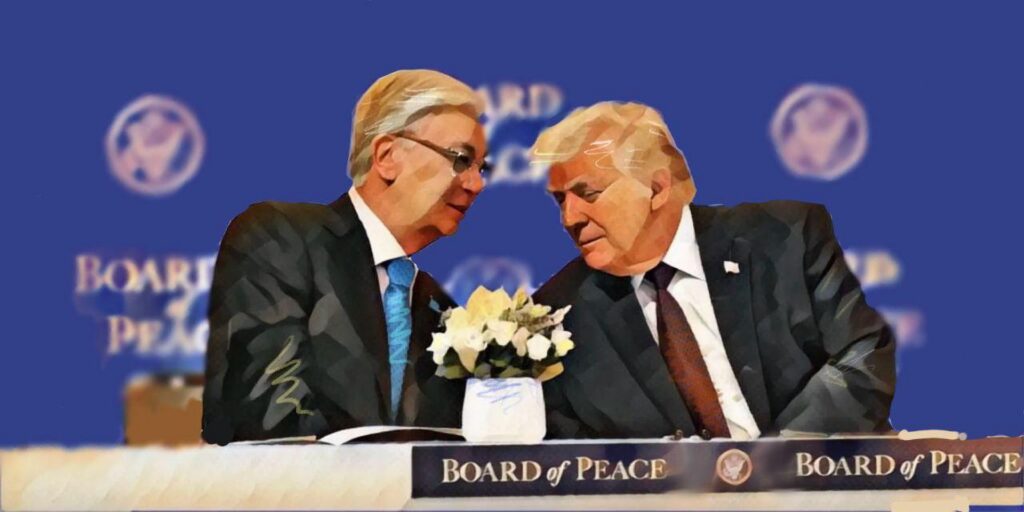
On December 23, President Donald Trump said he would invite Kazakhstan and Uzbekistan to attend the United States–hosted 2026 G20 summit in Miami. The meeting is planned at Trump National Doral. The announcement followed separate telephone calls with Kazakhstan’s President Kassym-Jomart Tokayev and Uzbekistan’s President Shavkat Mirziyoyev, which Trump described as focused on peace and expanded trade, and cooperation. The G20 is a group of major economies, with membership based mainly on large nominal GDP and global economic importance, collectively representing about 85% of global GDP. Kazakhstan is ranked roughly 50th in the world by nominal GDP, at approximately $300 billion, while Uzbekistan is ranked around 62nd, with a nominal GDP of about $137–140 billion. According to Polish radio, the president of Poland stated that his country would also be on the guest list. Poland is the world’s 21st-largest economy. The G20 is a forum, not a treaty body. Leaders’ summits include member governments and a limited number of host-selected guest countries. Invitations to Kazakhstan and Uzbekistan would place their leaders physically at the table with G20 heads of state, allowing them to be seen, heard, and recognized by other leaders, without conferring membership or a formal role in shaping the summit agenda. On average, the host invites six to seven guests. One official host-country explainer notes that guest invitations allow non-members to bring their own perspectives. For them, the significance of attending is access, not membership. What Washington Wants and What Can Be Transacted The host typically uses the guest invitations to signal which countries and regions they regard as priorities. U.S. interest in Kazakhstan and Uzbekistan rests on an immediate material basis. The United States is rebuilding its nuclear-fuel supply chain away from Russian-origin material. Federal law now bans imports of certain Russian uranium products, with waivers terminating no later than January 1, 2028. U.S. agencies have been explicit that supply diversification is a policy objective. In 2024, Kazakhstan-origin material accounted for 24% of uranium delivered to U.S. owners and operators, while Uzbekistan-origin material accounted for about 9%. Kazakhstan’s structural advantage is scale and reliability. It remains the world’s leading uranium producer, with 2024 output around 23,270 metric tons of uranium and the largest share of global mine production. Astana has also signaled an interest in moving beyond extraction toward higher value-added fuel-cycle activity. Uzbekistan’s advantage is growth potential and its fit with Western joint-venture structures. Its uranium sector has attracted major external entrants, including Orano’s South Djengeldi joint venture Nurlikum Mining with the state partner Navoiyuran to develop a new mine alongside an Itochu (Japan) minority stake. The second instrument is the resource-focused diplomacy under the C5+1 umbrella. The State Department frames the C5+1 as organized around economy, energy, and security, within which framework it has elevated critical minerals to a dedicated track. The United States launched a C5+1 Critical Minerals Dialogue in early 2024, and subsequent U.S. statements have described it as a vehicle for geological exploration, mining, processing, and investment opportunities across the region. This...

After Leaders’ Calls with Trump, Kazakhstan and Uzbekistan’s G20 Invitations Are a Signal to Central Asia

Reports of telephone conversations between the presidents of Kazakhstan and Uzbekistan with U.S. President Donald Trump came the day before a notable event on the international agenda. Trump has publicly announced his intention to invite the leaders of the two most influential Central Asian countries to the G20 summit, which the U.S. plans to hold in Miami in 2026. Despite the brevity of the official releases, they indicate not only the steady development of bilateral relations, but also a broader geopolitical signal. This statement has attracted increased interest from the international media, from the Los Angeles Times and Chicago Tribune to Agenzianova and Economic Times, which in itself highlights the increased attention to the Central Asia region. The report by Akorda, Tokayev’s press service, on the conversation between him and the U.S. president emphasizes that the conversation was “lengthy”. Tokayev noted the complexity of resolving the war in Ukraine, expressing his view that the territorial issue remains key and requires compromises, taking into account the real situation “on the ground.”  In this regard, Kazakhstan called on all parties to show patience and flexibility, stressing that it does not seek to act as a mediator but is ready to provide a platform for negotiations if necessary. It is noteworthy that the topic of peace talks is reflected in the Kazakh release but is absent from Trump's own statement. At the same time, the Akorda statement makes no mention of a possible invitation to Kazakhstan to attend the G20 summit. The situation is similar with the official statement from the administration of Shavkat Mirziyoyev. It focuses on the growth in political contacts, the launch of joint projects worth tens of billions of dollars, the creation of an American-Uzbek business and investment council, as well as the development of regional cooperation and the C5+1 format. However, possible participation in the G20 summit is also not mentioned. Meanwhile, Trump himself wrote directly on his social network Truth Social that the U.S. will host the G20 summit next year and intends to invite the presidents of Kazakhstan and Uzbekistan as guests. At this point, it appears to be only an intention, not a formal invitation. Nevertheless, even this signal indicates a noticeable shift in the priorities of U.S. foreign policy towards Central Asia. If Kazakhstan and Uzbekistan receive an official invitation (even as guests), this will be a de facto recognition of their role as “middle powers” in contemporary world politics. The context of what is happening also deserves attention. The telephone conversations with Trump took place immediately after an informal meeting of CIS leaders in St. Petersburg, an event that was more of a ritual in nature.  The last summit was notable for the conspicuous absence of the president of Azerbaijan, Ilham Aliyev, despite previously announced meetings in the Kremlin. Officially, Baku explained that this was due to Aliyev’s busy schedule. Although there is still considerable time before the G20 summit, preparations for it have already begun. In mid-December, the first meeting of G20 “sherpas” was held in Washington, featuring representatives of the...

U.S. Waiver of Sanctions on Iran’s Chabahar Port is Good News for Central Asia

U.S. sanctions on Iran’s Chabahar Port on the Gulf of Oman have been on again/off again since 2013, when the U.S. Congress passed the Iran Freedom and Counter-Proliferation Act (IFCA) to curb Iran’s regional influence and strategic capabilities through targeted economic pressure, aka sanctions. In the decade following IFCA’s passage, Washington’s sanctions on Chabahar had a negative impact on Central Asia, largely by complicating its efforts to deepen economic ties with South Asia and the Gulf. But geopolitics are shifting. Washington is increasing its involvement in Central Asia and India, and is doing the same in Afghanistan. These factors may well induce the U.S. Department of State to keep the waiver in place. Washington first waived its sanctions on Chabahar in 2018—a strategic move to support India's role in Afghanistan's post-war development and to provide a crucial trade route for that landlocked country. Six years later, India's Indian Ports Global Limited secured a 10-year deal with Iran to manage Chabahar port, in part, to offset Pakistan’s Gwadar port at the end of the China-Pakistan Economic Corridor, a mere 100 miles from Chabahar. For all the fanfare, Central Asia held little real priority in Washington in those years. Seven years later, the U.S. changed course. It announced on September 16, 2025, much to Central Asia’s surprise and concern, that “the State Department has revoked the sanctions exception issued in 2018 under the IFCA”, making individuals involved in Iran’s Chabahar port operations subject to penalties, resulting in another snag in Central Asia’s desire for a southern breakout route. And then, in a swift reversal, the U.S. restored India’s sanctions waiver some six weeks later, on October 30. Whatever might explain the sudden change, Central Asia breathed a sigh of relief, and, by all accounts, now feels confident that the waiver will be evergreened. Time will tell if this confidence is justified. The U.S. waiver enables India to work to enhance Chabahar’s infrastructure and functionality, offering Central Asian exporters a more direct and profitable trade route than those via China, Russia, or the Middle Corridor, which stretches from East Asia to Europe via Kazakhstan, the Caspian Sea, Azerbaijan, Georgia, and Türkiye. As a result, goods like minerals, cotton, and energy products can reach regional and global markets faster. Central Asian capitals are quietly reveling in Washington’s flexible realpolitik in the face of convulsive U.S.-Iranian relations and heated Indo-Pakistan tensions. Without fear of punitive measures, India can now continue its work at Chabahar.  To be sure, the waiver affirms India’s rising global presence and accelerates New Delhi’s drive into Central Asia, including Afghanistan. Washington’s decision signaled to traders, investors, and think tankers that it has no intention of spoiling India’s export ambitions and Central Asia’s desire for north-south economic integration. The waiver shows Washington’s pragmatism—and is welcomed by those who have little or no use for Washington’s penchant for foreign policy moralism. Chabahar Port complements not only the Trans-Caspian corridor—a multimodal trade route connecting Asia and Europe by linking China to Europe through Central...