• KGS/USD = 0.01144 0%
  • KZT/USD = 0.00215 0%
  • TJS/USD = 0.10599 -0.28%
  • UZS/USD = 0.00008 0%
  • TMT/USD = 0.28571 0%
  • KGS/USD = 0.01144 0%
  • KZT/USD = 0.00215 0%
  • TJS/USD = 0.10599 -0.28%
  • UZS/USD = 0.00008 0%
  • TMT/USD = 0.28571 0%
  • KGS/USD = 0.01144 0%
  • KZT/USD = 0.00215 0%
  • TJS/USD = 0.10599 -0.28%
  • UZS/USD = 0.00008 0%
  • TMT/USD = 0.28571 0%
  • KGS/USD = 0.01144 0%
  • KZT/USD = 0.00215 0%
  • TJS/USD = 0.10599 -0.28%
  • UZS/USD = 0.00008 0%
  • TMT/USD = 0.28571 0%
  • KGS/USD = 0.01144 0%
  • KZT/USD = 0.00215 0%
  • TJS/USD = 0.10599 -0.28%
  • UZS/USD = 0.00008 0%
  • TMT/USD = 0.28571 0%
  • KGS/USD = 0.01144 0%
  • KZT/USD = 0.00215 0%
  • TJS/USD = 0.10599 -0.28%
  • UZS/USD = 0.00008 0%
  • TMT/USD = 0.28571 0%
  • KGS/USD = 0.01144 0%
  • KZT/USD = 0.00215 0%
  • TJS/USD = 0.10599 -0.28%
  • UZS/USD = 0.00008 0%
  • TMT/USD = 0.28571 0%
  • KGS/USD = 0.01144 0%
  • KZT/USD = 0.00215 0%
  • TJS/USD = 0.10599 -0.28%
  • UZS/USD = 0.00008 0%
  • TMT/USD = 0.28571 0%

Viewing results 1 - 6 of 197

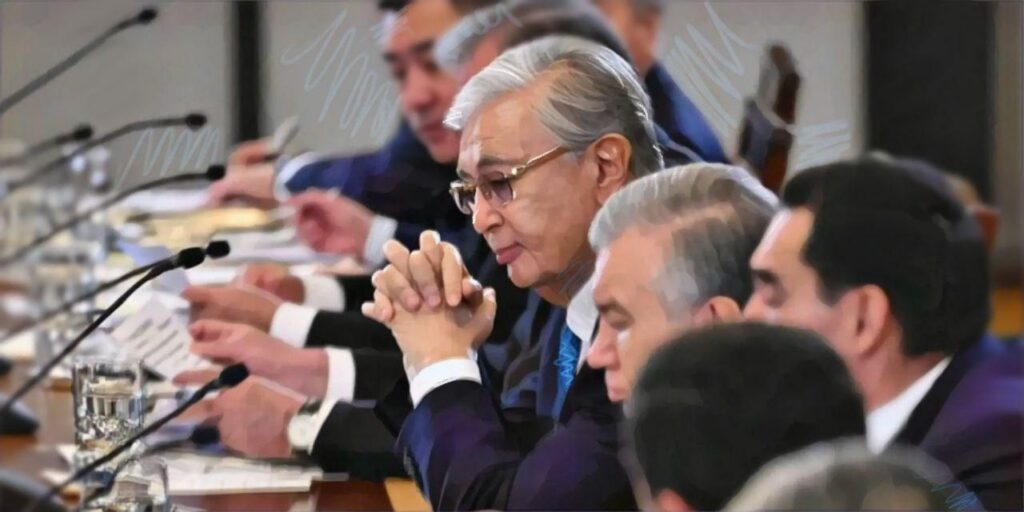
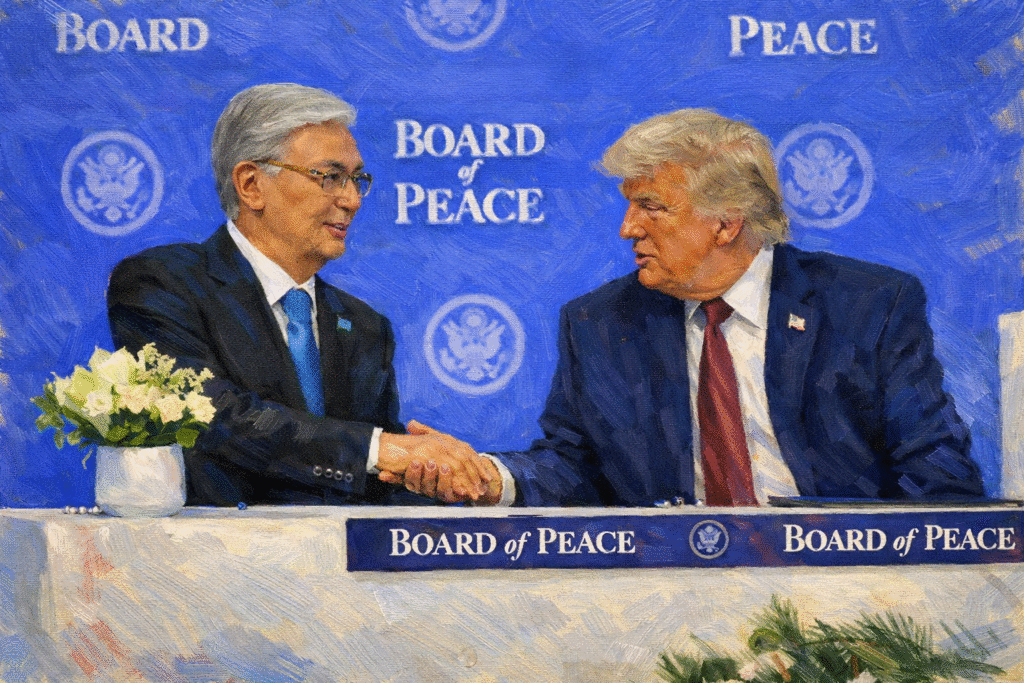
Tokayev to Join Trump at Davos for Board of Peace Ceremony

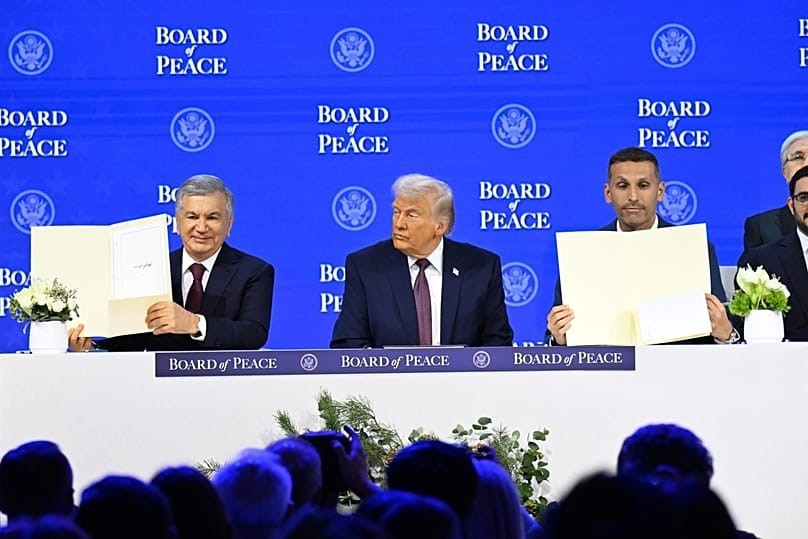
President Kassym-Jomart Tokayev of Kazakhstan will visit Davos, Switzerland on Thursday for the signing ceremony of the “Board of Peace,” an international mechanism set up by U.S. President Donald Trump to help rebuild war-torn Gaza and possibly address other conflicts in the world.  Tokayev will attend the board’s signing ceremony at Trump’s invitation, Kazakhstan’s presidential press office said on Wednesday.  The ceremony will occur during the annual World Economic Forum meeting in the mountain resort of Davos, where national leaders, business executives and other influential people gather to discuss global issues. This year’s event comes amid a widening rift between the United States and its traditional allies in Europe over U.S. plans to take over Greenland as well as the prospect of more trade tension between the two sides.  Trump is the inaugural chairman of the Board of Peace, and he has invited dozens of countries to join. Kazakhstan and Uzbekistan are among a number of countries that have agreed to do so, while others have expressed caution about the initiative, partly because they believe it could undermine the United Nations.  Another concern about U.S. intentions is that countries seeking permanent membership on the board have to pay more than $1 billion, according to the board’s charter text, which was published by The Times of Israel.  Uzbekistan is ready to join the Board of Peace as a “founding state,” said Sherzod Asadov, press secretary to President Shavkat Mirziyoyev.  Mirziyoyev “noted that this initiative is seen as an important step in resolving long-standing conflicts in the Middle East and ensuring peace and stability in the vast region,” Asadov said this week. 

Uzbekistan Agrees to Join U.S.-Proposed Board of Peace

Uzbekistan has received and accepted an official invitation from U.S. President Donald Trump to join a new international initiative aimed at promoting peace and resolving conflicts in the Middle East, according to the press secretary of the President of Uzbekistan. The invitation, addressed to President Shavkat Mirziyoyev, proposes Uzbekistan’s participation as a founding member of a newly established Peace Council. The initiative is anchored in a comprehensive plan to end the conflict in Gaza, which was announced on September 29, 2025, supported by several global leaders, and endorsed by United Nations Security Council Resolution 2803, adopted on November 17, 2025, the presidential press service stated. According to the letter from the White House, the initiative seeks to unite countries willing to take responsibility for fostering long-term peace, stability, and security in the Middle East. The Peace Council is envisioned as an international body that would initially focus on Gaza, with a broader mandate to address other conflicts over time. In his response, President Mirziyoyev affirmed Uzbekistan’s readiness to join the Peace Council as a founding member. He called the initiative a significant step toward resolving enduring conflicts in the Middle East and promoting peace and stability across the wider region. In recent years, Tashkent has sought to expand its international role through dialogue-oriented diplomacy while avoiding formal military or bloc alignments. As previously reported by The Times of Central Asia, Kazakhstan has also accepted an invitation to join the Peace Council. The offer, addressed to President Kassym-Jomart Tokayev, was confirmed by Ruslan Zheldibay, assistant to the Kazakh president’s press secretary. Zheldibay stated that Tokayev was among the first world leaders to receive an official invitation from President Trump. “Yes, President Kassym-Jomart Tokayev received an official invitation to join the Peace Council, and Kazakhstan was invited to become one of its founding states,” Zheldibay said. He added that Tokayev responded with gratitude, confirmed Kazakhstan’s participation, and reaffirmed the country’s intention to contribute to a lasting peace in the Middle East and broader global stability. According to a report by Reuters, international reactions to Trump’s proposal have been cautious. The initiative, sent to approximately 60 countries, has raised concerns among some diplomats who worry it could undermine the role of the United Nations. Reuters also reported that the Peace Council would be chaired for life by President Trump and would initially focus on Gaza before expanding its scope to other global conflicts. Member states would serve three-year terms, unless they contribute $1 billion each to gain permanent membership. The White House stated that permanent membership would be reserved for countries demonstrating a sustained commitment to peace, security, and prosperity.

Tokayev Aligns Kazakhstan With Trump’s Board of Peace Initiative

Kazakh President Kassym-Jomart Tokayev has agreed to join a new international body initiated by U.S. President Donald Trump that is intended to address post-war governance and reconstruction in Gaza, with the possibility of later expanding its remit to other global conflicts. Tokayev’s press secretary, Ruslan Zheldibay, said President Tokayev has accepted Trump’s invitation and sent a letter expressing his readiness to participate. The “Board of Peace” is a structure initiated by Trump as part of his broader Middle East agenda. Draft documents outline a body that would coordinate political oversight, reconstruction funding, and security arrangements in Gaza following the current conflict. They describe Trump as chair of the board on a permanent basis and outline different membership terms for participating states. Kazakhstan was invited as an early participant and is expected to be among the first countries to formally join. The decision aligns with Kazakhstan’s long-standing foreign policy approach, which emphasizes engagement with major powers and participation in multilateral diplomatic initiatives. Astana has previously hosted negotiations on regional security issues and has sought a visible role in international conflict mediation. The Board of Peace emerged from a U.S.-backed plan announced in late 2025 to stabilize Gaza following months of war. The plan was presented as a mechanism to oversee reconstruction and governance while preventing renewed conflict. Invitations to join the board were sent to roughly 60 countries, spanning Europe, Asia, the Middle East, and Africa. A draft charter reviewed by several governments sets out a tiered membership structure. Countries may serve on the board for an initial three-year term without a financial contribution. Longer participation is tied to a $1 billion payment to a central fund within the first year of the charter’s entry into force. The funding clause links longer participation to large upfront contributions, although U.S. officials have disputed that the payment would be mandatory in practice. The board’s initial focus is Gaza, but the charter allows for expansion to other conflicts if members agree. The documents describe responsibilities that include oversight of reconstruction projects, coordination with regional actors, and engagement with international financial institutions. The charter does not grant the board enforcement powers, leaving its authority dependent on political support from participating states. Kazakhstan’s participation follows earlier expressions of support for Trump’s Gaza initiative. In October 2025, Tokayev welcomed the U.S. peace plan as a potential step toward restoring stability and rebuilding trust among states involved in the conflict. The move places Kazakhstan alongside a diverse group of invited countries. Russia has confirmed receipt of an invitation for President Vladimir Putin to join the board, and Moscow has said it is examining the proposal and seeking clarification through diplomatic channels. Several other governments have acknowledged invitations, while responses have varied. Some countries have indicated interest in participation, while others have expressed reservations about the board’s structure and its relationship to existing international institutions. Concerns have focused on governance, accountability, and the potential overlap with United Nations-led mechanisms for peacekeeping and reconstruction. The United Nations remains central to...

U.S. to Pause Immigrant Visa Processing; Central Asia Affected

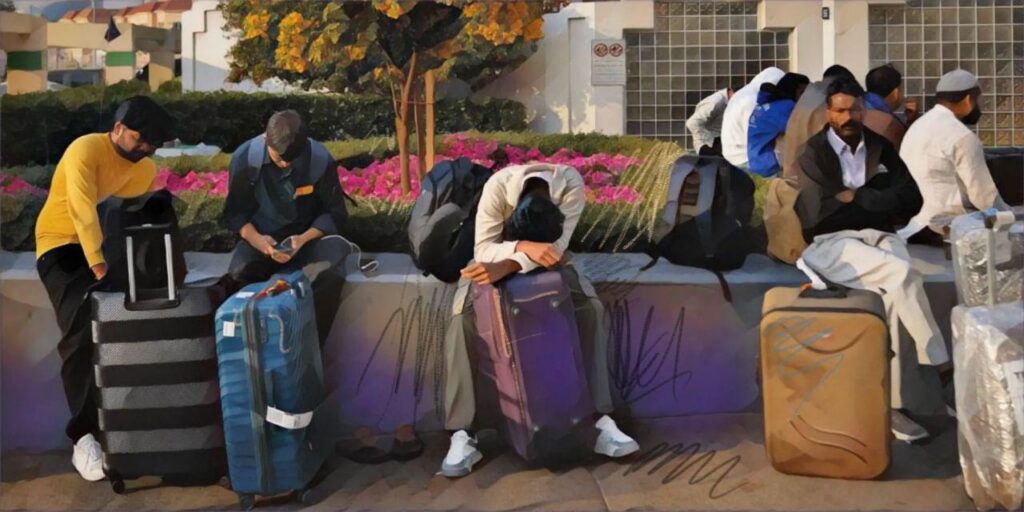
The U.S. State Department said on Wednesday that it will stop immigrant visa processing from 75 countries, and some reports said the affected nations include several in Central Asia.   The measure is part of a broad crackdown on immigration that has unfolded during the second term of U.S. President Donald Trump, who has said many people from other countries are threatening U.S. security and taking advantage of American resources. Critics say immigration raids and some other administration initiatives have gone too far, actually making U.S. cities less safe and violating basic rights.   “The State Department will pause immigrant visa processing from 75 countries whose migrants take welfare from the American people at unacceptable rates. The freeze will remain active until the U.S. can ensure that new immigrants will not extract wealth from the American people,” the U.S. agency said on X.  “The pause impacts dozens of countries – including Somalia, Haiti, Iran, and Eritrea – whose immigrants often become public charges on the United States upon arrival,” the State Department said. “We are working to ensure the generosity of the American people will no longer be abused.” The statement did not list all the countries affected by the new measure, which takes effect on January 21. Nor did it say how long the pause will last.  However, Fox News Digital, which reported that it had seen a State Department memo about the new policy, published a list of what it said were the 75 affected countries. It included Kazakhstan, Kyrgyzstan, and Uzbekistan. Tajikistan and Turkmenistan were not on the list. Some other media outlets reported the same information.  The State Department policy appeared to be partly linked to a Minnesota scandal in which dozens of people, including many Somali-Americans, were convicted of defrauding the state of welfare funds. Minneapolis, Minnesota’s biggest city, is currently a flashpoint for tension and protests over U.S. Immigration and Customs Enforcement (ICE) operations.   The new State Department measure does not apply to non-immigrant visas, which would include people traveling to the United States for tourism or business. But additional restrictions are also in place for people seeking those temporary visas.  Nationals from 38 countries, including Kyrgyzstan, Tajikistan, and Turkmenistan, are subject to U.S. visa bonds under a State Department policy. The policy took effect for citizens from Turkmenistan on January 1 and will be implemented for nationals from Kyrgyzstan and Tajikistan starting on January 21.

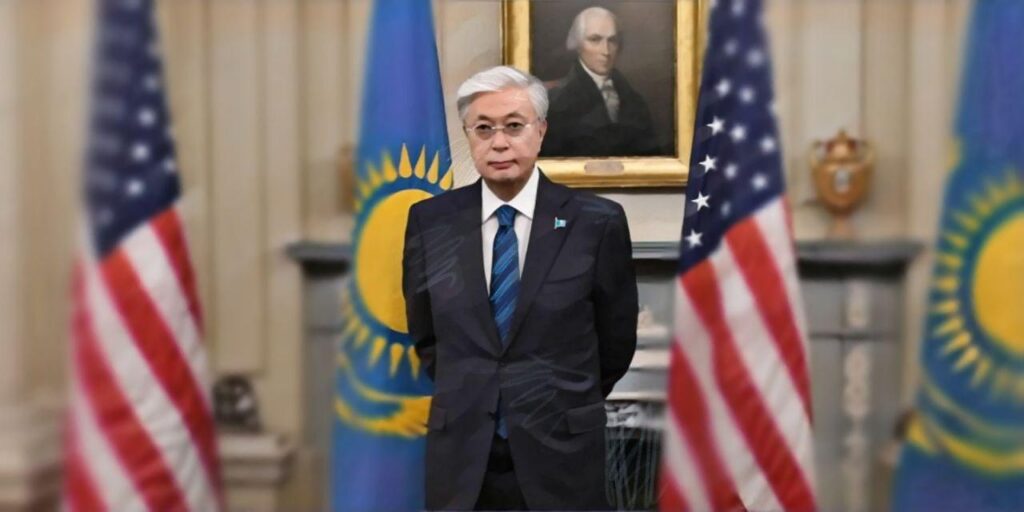
Kazakhstan Elevates U.S. Ties to Presidential-Level

Kazakhstan’s relationship with the United States is entering a more explicitly strategic phase under Kassym-Jomart Tokayev, marked by a shift in how Astana manages its most consequential external partnerships. As economic ties deepen and geopolitical coordination expands across energy, investment, and Eurasian connectivity, engagement with Washington is increasingly being treated as a presidential priority rather than a routine diplomatic file. In this context, Kazakhstan has formally elevated its engagement with the United States by appointing a presidential representative to steer bilateral negotiations on priority issues. By presidential decree, Ambassador Yerzhan Kazykhan—Kazakhstan’s Permanent Representative to the United Nations Office in Geneva and a veteran diplomat with prior postings as ambassador to the United States and the United Kingdom—has been designated as the President’s Representative for negotiations with Washington. The appointment places key aspects of the U.S. relationship under direct presidential oversight from the Akorda, the presidential office. Kazykhan has previously served as foreign minister and assistant to the president, and has held senior roles within both the Foreign Ministry and the presidential administration. His experience in Washington and in multilateral settings provides institutional continuity as the bilateral agenda broadens to encompass investment, energy security, and regional connectivity, while day-to-day execution remains within established diplomatic channels. Drivers Behind the Elevation of U.S.–Kazakhstan Engagement The decision reflects how rapidly the scope of U.S.–Kazakhstan engagement has expanded and how Kazakhstan is positioning itself as a major investment and strategic connectivity hub. The United States is Kazakhstan’s largest source of foreign direct investment, with hundreds of American companies operating across the economy. Chevron, Kazakhstan’s single largest foreign investor, has invested more than $50 billion over time, anchoring long-term U.S. corporate presence in the country’s energy sector. This investment relationship gained further momentum in 2025. At the C5+1 leaders’ summit in Washington, Kazakhstan and U.S. partners announced nearly $17 billion in new commercial agreements and investment commitments across energy, transport, and industrial cooperation. The package was publicly highlighted by U.S. Commerce Secretary Howard Lutnick, underscoring senior-level U.S. political backing for deeper economic engagement with Kazakhstan. Beyond investment, the bilateral agenda has expanded into strategic and geopolitical domains. Kazakhstan’s decision to join the Abraham Accords marked a notable political alignment with a U.S.-led diplomatic initiative, extending the framework’s reach beyond its original Middle Eastern focus. Connectivity has become central to U.S. policy thinking. The Middle Corridor is increasingly viewed as an eastward extension of the post-Azerbaijan–Armenia Caucasus transit framework, also called the ‘Trump Route for International Peace and Prosperity’, aimed at reopening and securing east–west routes across the South Caucasus. Extending it through Kazakhstan links Central Asia to Europe while reducing reliance on Russia or Iran. Trade and energy ties reinforce this trajectory. Kazakhstan is the world’s largest uranium producer and a major supplier to the United States, making the U.S. one of its most important export markets for nuclear fuel. As U.S. policy places greater emphasis on secure and diversified supply chains, Kazakhstan’s role in critical energy inputs and transit infrastructure has taken on added strategic...

New U.S. Ambassador to Kazakhstan to Build “Momentum” on Trade, Diplomacy

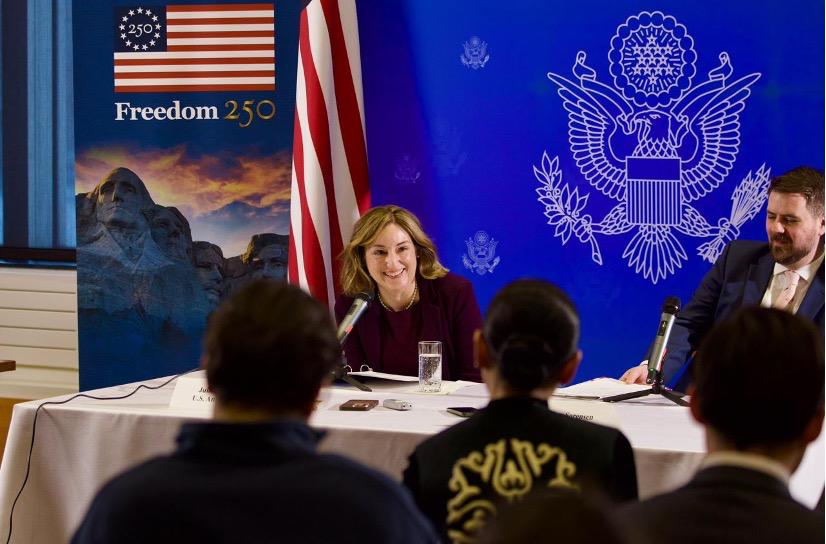
Julie Stufft, the new U.S. ambassador to Kazakhstan, is a career diplomat who has said her goal is to ensure that U.S. companies in the Central Asian country have not just an “even playing field” but are also “the partners of choice” in a region where Russia and China are the dominant trading partners. Stufft, who made those remarks during her confirmation hearing in the U.S. Congress in July, presented her credentials to President Kassym-Jomart Tokayev of Kazakhstan in Astana on Friday. She has previously worked on COVID-19 travel policies and U.S. visa processing worldwide and was most recently deputy assistant to the president and executive secretary of the National Security Council. Stufft has served as deputy chief of mission in the U.S. Embassies in Moldova and Djibouti, and was also a diplomat in Russia, Ethiopia, and Poland. One of Stufft’s daughters, Nora, is a student at the U.S. Air Force Academy in Colorado. After the credentials ceremony in Astana, Stufft said Tokayev and U.S. President Donald Trump have a “very close relationship” and that there was impetus for further collaboration between Kazakhstan and the United States. “We have so much momentum from President Tokayev´s recent visit to Washington that we have to build on this,” Stufft said in reference to a November summit hosted by Trump and attended by the leaders of Kazakhstan, Kyrgyzstan, Tajikistan, Turkmenistan, and Uzbekistan. The meeting focused on securing big trade deals as well as U.S access to minerals in Central Asia that are critical to energy and other industries. Another U.S. goal is to counter the longstanding influence of Russia and China in Central Asian countries, whose leaders seek to balance their relationships with the big powers. Last month, in another round of diplomatic outreach, Trump invited Tokayev and President Shavkat Mirziyoyev of Uzbekistan to attend the G20 summit in Miami later this year. In addition to holding large reserves of critical minerals, Kazakhstan is a top uranium producer and a major oil exporter. China and Russia are its biggest overall trading partners. While U.S. trade with Kazakhstan is relatively small in comparison, the relationship is growing. “My goal as ambassador, if confirmed, would be to make sure that U.S. companies have an even playing field so that they can do investment in Kazakhstan, and also that U.S. companies are the partners of choice in Kazakhstan, instead of Chinese or other companies,” Stufft said in her confirmation hearing last year. The previous U.S. ambassador to Kazakhstan, Daniel Rosenblum, resigned from the post in January 2025.