• KZT/USD = 0.00213
  • TJS/USD = 0.10800
  • UZS/USD = 0.00008
  • TMT/USD = 0.29850
  • KZT/USD = 0.00213
  • TJS/USD = 0.10800
  • UZS/USD = 0.00008
  • TMT/USD = 0.29850
  • KZT/USD = 0.00213
  • TJS/USD = 0.10800
  • UZS/USD = 0.00008
  • TMT/USD = 0.29850
  • KZT/USD = 0.00213
  • TJS/USD = 0.10800
  • UZS/USD = 0.00008
  • TMT/USD = 0.29850
  • KZT/USD = 0.00213
  • TJS/USD = 0.10800
  • UZS/USD = 0.00008
  • TMT/USD = 0.29850
  • KZT/USD = 0.00213
  • TJS/USD = 0.10800
  • UZS/USD = 0.00008
  • TMT/USD = 0.29850
  • KZT/USD = 0.00213
  • TJS/USD = 0.10800
  • UZS/USD = 0.00008
  • TMT/USD = 0.29850
  • KZT/USD = 0.00213
  • TJS/USD = 0.10800
  • UZS/USD = 0.00008
  • TMT/USD = 0.29850

Viewing results 1 - 6 of 190

The Turkic States Are Quietly Building a Geoeconomic Power Base

The Organization of Turkic States (OTS) has spent the past years assembling itself not through declarations or summit communiqués, but through shared transport and logistics, harmonized customs procedures, and coordinated capital flows. What began in 2009 as the Turkic Council, a lightly institutional and rhetorically cohesive forum for shared identity, has evolved, following its 2021 transformation into the OTS, into a logistical and regulatory organism. Its under-the-radar evolution has been systematized through agreed documents, deployed capital, and materialized infrastructure. The OTS has entered a phase of procedural coordination and structural intent. Its cooperation is now practical, strategic, and functionally embedded. This evolution has not followed a single arc, nor has it merely responded to outside pressures. Instead, it has progressed through an uneven sequence of internal adjustments, sometimes slow and technical, sometimes accelerated by external jolts such as the recent disruption in Azerbaijani–Russian relations. But such jolts only intensified a trajectory already underway. Member states had been converging long before this most recent bilateral crisis by aligning their policies, testing instruments, and developing the practical grammar of multilateral coordination. The current phase of renewed cooperation is not a reactive surge but a prepared transition that expresses an underlying structural shift in Eurasian geoeconomics at large. Digital Infrastructure and Networked Cooperation If there is a single domain where institutional convergence becomes immediately visible, this would be digital logistics. Once-fractured national processes — disjointed customs systems, mismatched permits, bureaucratic duplication — have begun to fold into a shared administrative architecture (including eTIR, eCMR, and ePermit) structured by international conventions that have been adapted to fit the particular alignments now emerging in the Turkic sphere. These procedures are no longer pilot projects but live systems. They digitize paperwork, synchronize border procedures, and build the kind of operational rhythms that trade corridors need in order to function. Negotiations continue, meanwhile, on a Free Trade in Services Agreement, targeted not at deregulation but at harmonization, viz., the alignment of technical and professional standards across a disparate set of economies. Kazakhstan and Azerbaijan, for example, are already piloting a Simplified Customs Corridor. Its eventual integration with the multimodal Uzbekistan–Türkiye axis is not a matter of if, but of how soon. Official observer states to the OTS are also beginning to move, with Hungary being the clearest case. Its $100 million injection into the Turkic Investment Fund made headlines, but the real story is downstream: Hungarian infrastructure now receives Azerbaijani gas via Türkiye. That is not diplomacy; that is energy dependence, structurally routed. Turkmenistan, long the holdout, has started to engage, first through planning meetings and now through signed agreements. Its ports, once idle in regional plans, are being fitted into the wider Caspian logistics network. The Turkish Republic of Northern Cyprus (TRNC), formally recognized only by Türkiye, is also a functional participant through educational exchanges, shared language, and soft institutions. Reciprocal Trade and Development The shift underway is as much geographic as it is institutional. Central Asia is no longer on the margins of the OTS...

Turkish Court Orders Deportation of Two Turkmen Bloggers

A Turkish court in the city of Samsun has ordered the deportation of two Turkmen bloggers, Alisher Sakhadov and Abdullah Orusov, despite their applications for international protection. The Turkmenistan Helsinki Foundation for Human Rights reported that the court issued its ruling on June 13, 2025, and officially notified the men's lawyer on June 27. The court found both men to be residing in Turkey illegally and rejected their asylum claims. According to documents reviewed by their lawyer, the decisions in the two cases were nearly identical, with some sections reportedly copied verbatim. Sakhadov applied for protection in April 2023 but was later issued a permanent entry ban under Code G-82, which Turkish authorities assign to individuals deemed threats to national security. The court concluded that he faced no credible risk of mistreatment if returned to Turkmenistan. Orusov’s case followed a similar pattern. He applied for protection in July 2023 and received the same security designation. The court similarly ruled that his return would not expose him to torture or degrading treatment. Their legal team plans to appeal the ruling to Turkey’s Constitutional Court. Requests for the release of both men from deportation centers were denied on June 25 and 26. Alisher Sahatov is one of the most prominent Turkmen activists in Turkey. He became a well-known figure within the diaspora through his YouTube channel Erkin Garaýyş, where he highlighted the challenges faced by Turkmen migrants. Abdullah Orusov was also active on social media, where he regularly criticized the Turkmen authorities. His posts often resonated widely among migrants and human rights advocates. As previously reported by The Times of Central Asia, another Turkmen activist, Dushemov, completed a four-year prison sentence in June 2025 but was transferred to a pre-trial detention center instead of being released. New charges were filed against him following an alleged altercation with another inmate. Dushemov and human rights organizations claim the case was fabricated to extend his detention, part of what they describe as a broader campaign of repression against government critics.

Joint Military Exercises to Strengthen Ties Between Azerbaijan, Kazakhstan, Pakistan, Turkey, and Uzbekistan

News sources in Azerbaijan citing the Ministry of Defense of the Republic report that five nations, Azerbaijan, Turkey, Uzbekistan, Kazakhstan, and Pakistan, are set to participate in a significant joint military exercise, signaling a coordinated effort to enhance military cooperation, strengthen regional security, and bolster strategic partnerships among the participating countries. Scheduled to take place in September, the Eternal Brotherhood-IV multinational exercise highlights the growing collaboration in defense and security among these countries, which share common geopolitical and strategic interests. Purpose and Objectives The forthcoming exercises aim to improve interoperability among the armed forces of Azerbaijan, Turkey, Uzbekistan, Kazakhstan, and Pakistan. The participating nations - each with their unique military capabilities - are seeking to tackle evolving security challenges such as terrorism, regional instability, and transnational threats. Joint maneuvers will include combat training, search-and-rescue operations, sharing tactical expertise, and honing operational coordination in various combat scenarios. Geopolitical Significance The joint exercises underscore a shared commitment to regional peace and stability at a time of shifting dynamics in global geopolitics. With Central and South Asia witnessing challenges such as the ongoing threats from militant groups, border conflicts, and the need for safeguarding vital trade and energy routes, these drills offer participating nations the opportunity to showcase unity and resilience. As a NATO member, Turkey brings extensive military experience and technological support to the table, while Pakistan has counterterrorism expertise. Kazakhstan and Uzbekistan, with their strategic positions in Central Asia, bring a regional focus to the exercises, ensuring operational relevancy in the heart of Asia. Azerbaijan, meanwhile, is eager to strengthen ties with regional and global partners after its recent military successes. These exercises also send a clear message of the countries’ commitment to multilateral defense strategies to any external adversaries seeking to exploit regional vulnerabilities. A Broader Vision for Partnership The exercises will serve as a platform to test state-of-the-art defense technologies, develop combined operational strategies, and examine responses to scenarios involving asymmetric warfare and hybrid threats. For participating nations, it is an opportunity to refine their respective military tactics and elevate their personnel's proficiency by working alongside allies. Furthermore, the drills are expected to solidify political and military relationships among the nations, extending cooperation beyond defense into economic and strategic realms. By aligning priorities and enhancing mutual trust, the exercises could pave the way for future joint programs and initiatives aimed at fostering long-term collaboration. Such initiatives are especially relevant in the context of securing critical infrastructure projects like transnational pipelines and trade corridors. The joint military exercises are part of ongoing efforts to deepen relationships across Eurasia and South Asia through defense diplomacy. They reflect a broader vision of building an integrated regional security framework while respecting the sovereignty and unique needs of each nation involved. For the participating countries, the exercises are a strategic step toward achieving a stable and cooperative future in an increasingly uncertain global landscape.

Ukraine Appoints New Ambassador to Türkiye, Born in Uzbekistan

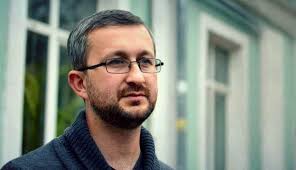
Ukrainian President Volodymyr Zelensky has appointed Nariman Dzhelal as Ukraine’s new ambassador to Türkiye, according to RBC-Ukraine. The appointment was formalized in a presidential decree signed earlier this month, the president’s press service reported. Dzhelal, a Crimean Tatar politician, journalist, and human rights advocate was born on April 27, 1980, in Navoi, Uzbekistan. His family returned to Crimea in 1989. According to Ukrainian media, Dzhelal graduated from the Political Science Department at Odesa National University. He began his career as a journalist at Avdet, a Crimean Tatar newspaper, and later worked for the ATR television channel. He also taught history and law at an international school in Simferopol. Dzhelal entered politics in 2013 when he was elected first deputy chairman of the Mejlis, the representative body of the Crimean Tatar people. Following Russia’s annexation of Crimea in 2014, Dzhelal remained in the region, where he continued to advocate for the rights of Crimean Tatars and Ukrainians. He monitored human rights abuses and participated in trials widely regarded as politically motivated. In 2021, after attending the inaugural Crimea Platform summit, Dzhelal was detained by the Russian security services and accused of sabotage. In 2022, he was sentenced to 17 years in prison. Ukrainian authorities confirmed that he was released in a prisoner exchange in June 2024 and returned to Ukraine. Dzhelal’s appointment to the post in Ankara underscores Türkiye’s pivotal role in Ukraine’s diplomatic strategy.

In Türkiye, Uzbek Man Faces Deportation After Photographing Woman Without Consent

An Uzbek man who photographed a Turkish woman in the Istanbul metro without her permission is in the process of being deported. Uzbekistan’s consulate in Istanbul said on Thursday that the man was arrested on April 13 after taking “unauthorized” photos of the woman, who then reported the alleged violation of her privacy to law enforcement authorities. The man’s work permit was revoked and he is being subjected to “forced deportation measures,” said the consulate, which intervened in order to prevent a criminal investigation. “According to Turkish law, photographing or videotaping another person, especially women, without their consent is strictly prohibited and may result in criminal prosecution,” the consulate said. It urged Uzbek citizens to follow local laws and said photographing or recording video of “strangers without their permission or causing them discomfort may result in serious action being taken against you.” Article 134 of Türkiye´s penal code provides for a punishment of up to several years in prison for violating the privacy of another person, including by disseminating images and sounds related to the personal life of the affected individual. ER&GUN&ER, an Istanbul-based law firm, says the country has “robust” laws to address privacy violations in the digital environment. It refers to a 2011 sex tape case and a 2016 political party data breach as high-profile cases involving such violations. “Taking pictures itself is not illegal in Turkey, but there are specific regulations that must be observed,” says Manolya Travel Agency, which is based in Istanbul. “While taking pictures, it is crucial to respect the privacy of individuals and refrain from capturing images of people without their explicit permission. This rule applies regardless of whether the person in the camera frame is a Turkish citizen or a foreign tourist.”

How Kazakhstan and Azerbaijan Are Rewiring the Middle Corridor

Kazakhstan's acceleration of its strategic alignment with Azerbaijan signals more than bilateral convergence. It reflects a deeper structural reconfiguration of Eurasian connectivity, a reconfiguration that is not additive but integrative. As documented in multiple announcements and institutional moves across March 2025, their cooperation has crossed the threshold from parallel development to systemic coordination. This evolving dynamic illustrates the emergence of a regionally endogenous axis that, without proclaiming itself as such, is shaping the wider functional geometry of Eurasia. At the material core of this shift is the Middle Corridor — the Trans-Caspian International Transport Route (TITR) — linking China to Europe via Central Asia, the Caspian Sea, and the South Caucasus. While long viewed as a technical alternative to the Northern and Southern corridors, the Middle Corridor is now exhibiting the dynamics of what in systems theory would be called self-amplifying dynamic feedback loops. (The technical term is “autopoiesis,” literally “self-creation” of “self-production.”) In particular, institutional feedback, infrastructure reinforcement, and regulatory adaptation are all feeding into one another in ways characteristic of an autonomously emergent macroregional logic. Kazakhstan’s announcement in December 2024 of the financing of a new terminal at Alat port in Azerbaijan, on which construction began in 2025, illustrates this logic in material form. Simultaneously, Kazakhstan is upgrading its Aktau port, backed by Chinese capital from Lianyungang, to triple its container throughput by 2028. This situation exemplifies the transformation of quantity into quality. Specifically, the upgrades are instantiating a network strategy that values not only volumes but also redundancy, flexibility, and strategic optionality. The new fiber-optic cable agreement signed in March 2025 further reinforces this convergence. A 380-kilometer undersea connection between Sumqayit and Aktau — part of the broader Digital Silk Road — will reduce latency between the two countries from hours to milliseconds. In system-theoretic terms, this is not merely a technical augmentation. It converts the corridor from a physical transit route into a distributed digital platform capable of supporting real-time adaptive coordination. This shift from “throughput” to “synchronization” is foundational. It also deepens the infrastructure-energy-information triad that has become characteristic of new macroregional systems. Kazakhstan’s expanded use of the Baku-Tbilisi-Ceyhan (BTC) pipeline, projected to carry 1.7 million tons of its oil in 2025, is not simply diversification. It is the strategic concretization of Azerbaijan’s role as a downstream node for Central Asian hydrocarbons. This is occurring alongside green transition signaling, including a modest floating solar project at Lake Boyukshor and a trilateral renewable energy agreement between Kazakhstan, Azerbaijan, and Uzbekistan. The repurposing of hydrocarbon corridors for hybrid energy flows is not substitution but overlay, in effect a dual-pathway system. Meanwhile, capital commitment is reinforcing the commercial aspect. A $300 million joint investment fund announced by the two countries has already designated the construction of an intermodal terminal at Alat as its inaugural project. Additional integration comes from the UAE-backed $50 million grain terminal at Kuryk, which will further diversify the system's carrying capacity by drawing agro-logistics into the corridor's functionality. In my recent article on the...