• KZT/USD = 0.00213
  • TJS/USD = 0.10800
  • UZS/USD = 0.00008
  • TMT/USD = 0.29850
  • KZT/USD = 0.00213
  • TJS/USD = 0.10800
  • UZS/USD = 0.00008
  • TMT/USD = 0.29850
  • KZT/USD = 0.00213
  • TJS/USD = 0.10800
  • UZS/USD = 0.00008
  • TMT/USD = 0.29850
  • KZT/USD = 0.00213
  • TJS/USD = 0.10800
  • UZS/USD = 0.00008
  • TMT/USD = 0.29850
  • KZT/USD = 0.00213
  • TJS/USD = 0.10800
  • UZS/USD = 0.00008
  • TMT/USD = 0.29850
  • KZT/USD = 0.00213
  • TJS/USD = 0.10800
  • UZS/USD = 0.00008
  • TMT/USD = 0.29850
  • KZT/USD = 0.00213
  • TJS/USD = 0.10800
  • UZS/USD = 0.00008
  • TMT/USD = 0.29850
  • KZT/USD = 0.00213
  • TJS/USD = 0.10800
  • UZS/USD = 0.00008
  • TMT/USD = 0.29850

Viewing results 1 - 6 of 190

Uzbekistan-Turkey Trade Reaches $2.6 Billion as Customs Cooperation Deepens

Uzbekistan and Turkey have significantly expanded their trade partnership, with bilateral trade turnover reaching $2.6 billion, according to the State Customs Committee of Uzbekistan. The milestone was announced during the fifth meeting of the Uzbekistan-Turkey Joint Customs Council, held in the historic city of Khiva. Friendly ties between the leaders of the two countries have laid the foundation for enhanced cooperation across a broad range of sectors, including politics, trade, investment, culture, and humanitarian initiatives. Since the inaugural Joint Customs Council meeting in 2018, trade turnover between the two countries has grown by 35%, rising from $1.9 billion to $2.6 billion by the end of 2024. Officials called this an impressive achievement in the context of ongoing global economic challenges and noted that there is still considerable room for further growth through deeper customs collaboration. One of the most impactful developments has been the 2022 agreement on the exchange of advance information on goods and vehicles. The agreement is currently undergoing preparations for full-scale implementation. Additionally, the two countries have improved mechanisms for foreign trade data exchange and made progress in addressing statistical discrepancies during a bilateral meeting in Samarkand in September. The next round of talks on this issue is scheduled to take place in Turkey. Another key topic at the Khiva meeting was the mutual recognition of authorized economic operators (AEOs), a proposal first introduced at the 11th meeting of customs authorities from Turkic states, held in Kazakhstan. A draft agreement on mutual recognition is currently under review by the Turkish side. Over the past five years, Uzbekistan’s trade volume managed by AEOs has more than doubled, increasing from $1.3 billion in 2020 to $2.7 billion in 2024. Council members also reviewed a joint cooperation plan for 2025-2026, which aims to further strengthen economic relations and streamline customs procedures.
Turkish Holding to Invest $10 Billion in Kyrgyz Hydropower Projects

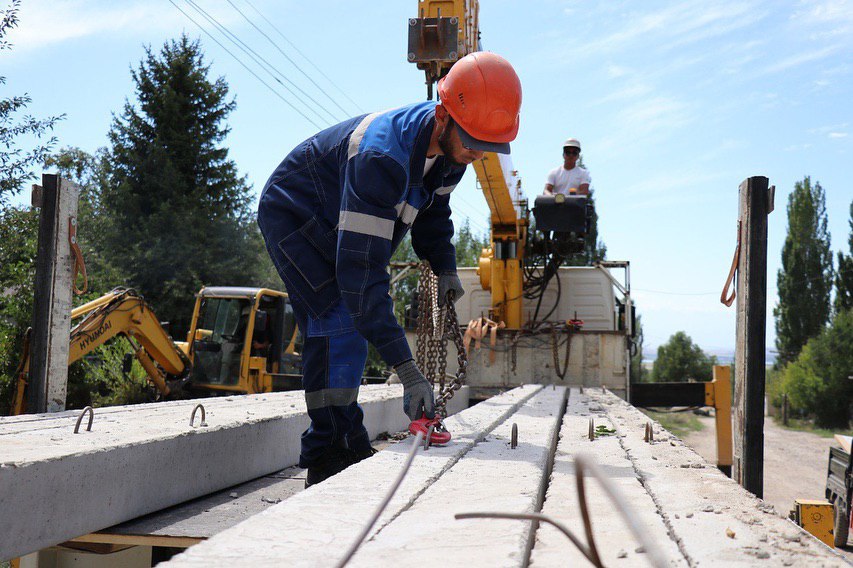
Turkish conglomerate Ihlas Holding plans to invest $10 billion in the construction of two major hydroelectric power plants in Kyrgyzstan, the 912 MW Kazarmanskaya plant and the 1,305 MW Kokomeren plant, according to the Kyrgyz Ministry of Energy. In Bishkek, Energy Minister Taalaibek Ibraev signed a final investment agreement with Central Asian Investment Holding, a subsidiary of Ihlas Holding, for a cascade of hydropower facilities on the Naryn and Kokomeren rivers. The total planned capacity is 2,217 MW. In addition to building the plants and associated infrastructure, the project will include training engineers to operate the new facilities and supplying the Ministry of Energy with specialized equipment. Under the agreement, the investor will provide $5 million in sponsorship funding annually from 2025 to 2030. The funds will support orphaned children and social programs in the regions where the hydropower plants will be built. According to Turkish media, the deal grants Ihlas Holding a 20-year operational right over the stations, with the Kyrgyz government guaranteeing to purchase the electricity produced in foreign currency. Ahmet Mujahid Eren, Chairman of Ihlas Holding’s Board of Directors, said Turkey faced similar energy challenges in the 1990s. “At that time, losses exceeded 50 percent. After privatizing distribution networks and modernizing infrastructure, we reduced this figure to a minimum. We want to apply this experience to create not only new energy capacity, but also modern, exemplary infrastructure,” he said.

The View From Ankara – President Tokayev’s Working Visit to Turkey

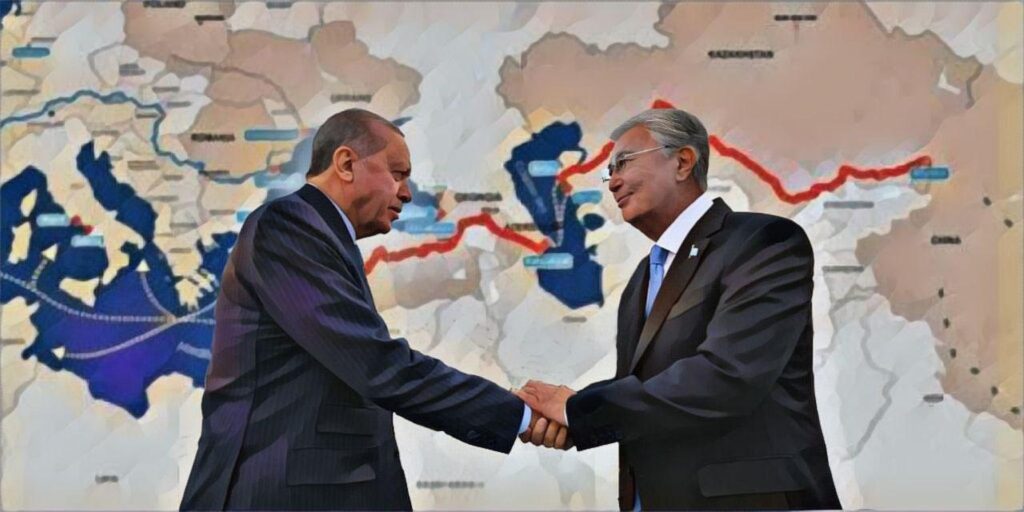
The official visit of President of Kazakhstan Kassym-Jomart Tokayev to Turkey on July 29, 2025, carries a multidimensional and strategic significance that extends far beyond the boundaries of diplomatic protocol. This engagement stands out as part of an ongoing multidimensional process of transformation marked by deepening regional alliances in the fields of science, energy, and logistics. Invited by President Recep Tayyip Erdoğan, Tokayev co-chaired the fifth meeting of the Turkey-Kazakhstan High-Level Strategic Cooperation Council. As a result of this summit, 20 bilateral agreements were signed, encompassing new frameworks of regional integration, especially in the fields of mining, energy, transportation, and higher education. Energy Diplomacy and Resource Geopolitics One of the most striking dimensions of the visit was the negotiation of new cooperation mechanisms aimed at transporting Kazakh oil to global markets via Turkey. According to President Tokayev, currently 1.4 million tons of Kazakh oil are transported annually through the Baku–Tbilisi–Ceyhan pipeline. Under the newly signed memoranda of understanding, the parties aim to increase this volume. This development not only strengthens Turkey’s ambition to become a regional energy hub but also holds critical importance for Kazakhstan’s strategy to diversify export routes and secure access to safe ports. Furthermore, the expressed intent of Turkish Petroleum Corporation (TPAO) to operate in Kazakhstan signals that the collaboration may extend beyond transport into production processes as well. Kazakhstan's reserves of rare earth elements and strategic minerals are of considerable value to both European and Asian economies prioritizing green energy transitions. In this context, the agreements signed in the mining sector may herald a new phase — one that mandates not only commercial but also technological and scientific R&D collaborations. Strategic Dimensions of the Middle Corridor Another key agenda item during the visit was the development and activation of the Trans-Caspian International Transport Route, commonly referred to as the ‘Middle Corridor.’ According to data shared by Tokayev, approximately 85% of road freight transported between China and Europe passes through Kazakhstan. This positions Kazakhstan as the backbone of the region’s logistics infrastructure. Turkey’s central role in the Middle Corridor makes it a decisive actor in the route’s integration with Europe. In this regard, Kazakhstan’s efforts to modernize its rail and road infrastructure, alongside its revival of maritime transport on the Caspian Sea, when combined with Turkey’s port capacity and transportation infrastructure, offer significant synergistic potential. These developments also underscore the strategic importance of the Zangezur Corridor and reinforce the value of uninterrupted transportation from China to Europe via Turkey, bypassing the Iranian route. Education and Academic Diplomacy The visit also drew attention for its scientific and cultural dimensions, in addition to its economic focus. Joint initiatives such as Gazi University’s planned establishment of a branch within the South Kazakhstan Pedagogical University can contribute to aligning the Turkish higher education model with Kazakhstan’s ongoing education reforms. Moreover, the Turkish Maarif Foundation’s new school initiatives in Kazakhstan signify a broadening and institutionalization of bilateral cooperation in education. These efforts may extend beyond student exchange programs to encompass joint research...

Kazakhstan and Turkey Reshape Their Eurasian Partnership

President Kassym-Jomart Tokayev’s visit to Ankara consolidated bilateral ties, but it also marked a deeper strategic inflection. The visit marks a broader regional convergence between two major Eurasian actors as they coordinate a strategic regional architecture. Thus, Tokayev’s language emphasized an “expanded strategic partnership,” signaling a move beyond traditional trade or cultural diplomacy. Ankara, for its part, went well beyond symbolic gestures in its response, with binding institutional agreements and substantive infrastructural commitments. The timing of the visit underscores its significance against the current geopolitical backdrop, where Central Asia is once again the object of keen attention from external actors vying for footholds and influence. In this context, the Kazakhstan–Turkey axis appears not as a knee-jerk reaction to outside machinations but as a deliberate autonomous regional vector that enhances the agency of both countries. Strategic Depth of the Tokayev Visit Tokayev’s trip to Turkey represents an assertion of multidimensional regional agency: Kazakhstan’s long-standing multi-vector foreign policy was once a balancing act among great powers, but it has now entered a phase of selective consolidation. This bilateral intensification indexes a shift in the configuration of Eurasian geoeconomics, as strategic weight disperses across an increasingly differentiated agentic field. The Astana–Ankara alignment means that both countries can act with diminished external dependence, even as global architectures become more unstable and contested. Tokayev’s diplomacy suggests the emergence of an equilibrium strategy anchored in regional connectivity rather than bloc affiliation. Ankara’s perspective is equally structural. The shared vocabulary — “coordination,” “deepening,” “integration” — signals a logic of long-horizon strategic cooperation. Complementarities Across the Bilateral Core The current Kazakhstan–Turkey relationship exhibits a structurally complementary relationship rarely sustained at this depth between two regional powers so geographically distant from one another. On one side, Kazakhstan brings economic scale, resource depth, and transit centrality to the Middle Corridor. On the other, Turkey brings not only industrial experience and defense sector credibility but maritime access, NATO membership, and a flexible political reach into Europe, the Middle East, and the Mediterranean basin. The evolution of mutual strategic trust based on converging structural interests binds these capacities of the two sides together. For Kazakhstan, Turkey provides logistical continuity and downstream industrial expansion; Ankara also diversifies Astana's international geoeconomic network. For Turkey, Kazakhstan provides resource access, eastward corridors, and meta-regional relevance beyond the Black Sea. These structural interests converge across multiple material economic sectors: energy, defense-industrial cooperation, agrotechnology, education, and digital logistics. Nor is this convergence driven solely by state policy: both countries’ private sectors increasingly perceive each other as entry points into economic systems adjacent to one another. The Organization of Turkic States (OTS) as an Institutional Amplifier The Organization of Turkic States (OTS), now maturing into an institutionalized platform for regional legitimacy with a shared symbolic and infrastructural vocabulary, enables Kazakhstan–Turkey cooperation to transcend the limits of bilateralism while maintaining its coherence. Joint positions on transport, trade, education, and foreign policy are advanced and discussed within a common multilateral setting where proposals are negotiated horizontally with other Turkic states. Through...

Kazakhstan and Turkey Tighten Ties Amid Shifting Caspian Dynamics

Kazakhstan’s President Kassym-Jomart Tokayev arrived in Turkey on an official visit late on Monday, where he held talks with President Recep Tayyip Erdoğan. The two leaders went on to co-chair the fifth meeting of the Kazakhstan–Turkey High-Level Strategic Cooperation Council. Coming amid heightened tensions in the Caspian region, particularly between Russia and Azerbaijan, the trip appears aimed at recalibrating regional dynamics, though analysts say its full implications remain unclear. Tokayev’s visit ended on a ceremonial high, as Erdoğan bestowed upon him the Devlet Nişanı, Turkey’s highest state honor. Accepting the award, Tokayev — who noted he had previously declined both domestic and foreign distinctions — thanked the Turkish president and people, highlighting Kazakhstan’s political and economic achievements. Erdoğan, in turn, praised Kazakhstan as the “center of peace and stability in its region.” Yet with Kazakhstan straddling both Central Asia and the Caspian basin — each a strategic priority for Ankara — it remains unclear which “region” Erdoğan had in mind. Much of the visit, however, played out behind closed doors. The official press release offered only general statements and few specifics. But the images released were polished and plentiful. Ahead of the summit, Tokayev met with prominent Turkish business leaders already active in Kazakhstan or planning future investments in the country’s economy. Political analyst Adil Kaukenov, a China specialist, weighed in on Tokayev’s business meetings via his Telegram channel, stating that the main topics were processing and logistics. His colleague Daniyar Ashimbayev, meanwhile, interpreted the visit as evidence that Astana is pursuing the foreign policy course it deems necessary. “I have already written about the logistical and geopolitical rivalry between Central Asia, the South Caucasus, and Asia Minor,” Ashimbayev observed. “A strange situation even arose when Kazakhstan signed one agreement on the Trans-Afghan Highway with Kabul, and Tashkent signed another. Or the constant discussion between Tashkent and Baku on the development of the Trans-Caspian corridor without the participation of Ashgabat and Astana. Tensions have risen in relations between Baku and Moscow, which could jeopardize Caspian logistics. Against this backdrop, the Kazakh authorities are methodically pushing through their agenda.” Ashimbayev also recalled Kazakhstan’s recent diplomatic successes, such as securing EU sanctions exemptions for agricultural and coal exports. “In this regard, Tokayev’s trip to Ankara was intended to resolve possible contradictions and misunderstandings in bilateral relations,” Ashimbayev concluded. While official sources emphasized economic and cultural-humanitarian cooperation as the main themes of the visit, Ashimbayev hinted that more sensitive topics may have been discussed privately. “The Turkish release mentions that the parties discussed defense issues, while the Kazakh release says they talked about IT,” he noted. “But by and large, the meaning of the talks is that both leaders calmly sorted out mutual issues, with no one acting as a supplicant or ‘vassal’ (as is sometimes the case at similar meetings). Kazakhstan methodically focused on the issues of interest to it and correctly discussed the issues raised by the host of the summit.” A closer analysis of publications on Akorda, the Kazakh presidential...

Turkish Safi Holding Eyes Sugar Factory Investment in Kazakhstan

Turkish industrial conglomerate Safi Holding has expressed interest in developing a high-tech sugar processing facility in Kazakhstan, according to the country's Ministry of Agriculture. The announcement followed a meeting between Agriculture Minister Aidarbek Saparov and Safi Holding CEO Safi Atakan. The two sides discussed the proposed plant’s specifications, which include the capacity to process up to 1 million tons of sugar beets annually and produce approximately 140,000 tons of sugar. The estimated investment ranges from $150 million to $200 million. Potential sites for the factory are currently under consideration. According to the ministry, the key criteria for site selection include the availability of arable land for beet cultivation and proximity to necessary infrastructure. Safi Atakan praised Kazakhstan’s agro-industrial potential, particularly in sugar production. "Kazakhstan presents favorable conditions for expanding sugar processing operations," he noted. A similar initiative is underway by UAE-based Al Khaleej Sugar, one of the world’s largest sugar producers, which is planning a plant in southern Kazakhstan. Industry Gaps and Import Dependence Kazakhstan’s sugar sector is currently under strain due to limited processing capacity. There are four sugar factories in operation: AksuKant (Taldykorgan district), Koksu Sugar Factory (Almaty region), and the Merken and Taraz factories in the Zhambyl region. Of these, three process locally grown sugar beets, while the facility in Taraz handles imported cane sugar. Despite a record harvest of 1.2 million tons of sugar beets in 2024, only about 700,000 tons were processed, exposing significant inefficiencies in the processing chain. In 2023, Kazakhstan produced 243,000 tons of sugar, less than half of its domestic demand. The remainder was imported, primarily from Russia. However, reliance on imports has proven volatile. In the summer of 2022, Russia’s temporary export ban led to a spike in domestic sugar prices. In response, the Kazakh government imposed seasonal export restrictions, which have been extended through 2025, to stabilize local markets.