• KGS/USD = 0.01144 0%
  • KZT/USD = 0.00208 0%
  • TJS/USD = 0.10440 0%
  • UZS/USD = 0.00008 0%
  • TMT/USD = 0.28571 0%
  • KGS/USD = 0.01144 0%
  • KZT/USD = 0.00208 0%
  • TJS/USD = 0.10440 0%
  • UZS/USD = 0.00008 0%
  • TMT/USD = 0.28571 0%
  • KGS/USD = 0.01144 0%
  • KZT/USD = 0.00208 0%
  • TJS/USD = 0.10440 0%
  • UZS/USD = 0.00008 0%
  • TMT/USD = 0.28571 0%
  • KGS/USD = 0.01144 0%
  • KZT/USD = 0.00208 0%
  • TJS/USD = 0.10440 0%
  • UZS/USD = 0.00008 0%
  • TMT/USD = 0.28571 0%
  • KGS/USD = 0.01144 0%
  • KZT/USD = 0.00208 0%
  • TJS/USD = 0.10440 0%
  • UZS/USD = 0.00008 0%
  • TMT/USD = 0.28571 0%
  • KGS/USD = 0.01144 0%
  • KZT/USD = 0.00208 0%
  • TJS/USD = 0.10440 0%
  • UZS/USD = 0.00008 0%
  • TMT/USD = 0.28571 0%
  • KGS/USD = 0.01144 0%
  • KZT/USD = 0.00208 0%
  • TJS/USD = 0.10440 0%
  • UZS/USD = 0.00008 0%
  • TMT/USD = 0.28571 0%
  • KGS/USD = 0.01144 0%
  • KZT/USD = 0.00208 0%
  • TJS/USD = 0.10440 0%
  • UZS/USD = 0.00008 0%
  • TMT/USD = 0.28571 0%

Viewing results 1 - 6 of 48

Future of Radio Free Europe Uncertain as U.S. Agency Weighs Support

The agreement between Radio Free Europe/Radio Liberty (RFE/RL) and the U.S. Agency for Global Media (USAGM) may be renewed, following recent developments that could secure the broadcaster’s future. On March 26, USAGM officials indicated that the agency would continue disbursing funds allocated by Congress for fiscal year 2025. This follows a ruling by Judge Royce Lamberth of the U.S. District Court for the District of Columbia, who granted RFE/RL’s request for a temporary restraining order against the termination of its federal grant. At stake is $77 million in funding designated for RFE/RL, which operates under a grant to a nonprofit organization. The court order was issued to prevent the broadcaster’s potential shutdown, which Judge Lamberth described as unlawful under current terms. “This is an encouraging sign for the media corporation's operations,” said RFE/RL President Steven Capus. “RFE/RL's operations will be able to continue as Congress intended. We await official confirmation from USAGM that grant funding will be promptly resumed.” In parallel, ten European Union countries issued a joint statement backing a Czech-led initiative to support RFE/RL. The statement expressed readiness to cover the broadcaster’s operating costs should U.S. funding not be reinstated. Despite the apparent reprieve, USAGM abruptly cut off satellite broadcasts of Radio Liberty on April 3. The move affected Russian-language programming of the “Present Time” TV channel, which targets audiences in Russia, Ukraine, Central Asia, and Eastern Europe. The Times of Central Asia spoke with Asem Tokayeva, a veteran journalist formerly based in RFE/RL’s Central Asia bureau. In the interview, Tokayeva shed light on internal challenges within the organization and the broader implications for freedom of the press in the region.

U.S.-Funded Plane Carrying Some Central Asian Migrants Lands in Costa Rica

A total of 135 migrants, including people from Central Asia, have arrived in Costa Rica on a flight from the United States, where the Trump administration has promised mass deportations and has enlisted several Latin American countries as transit points for migrants being transferred to their countries of origin. None of the migrants on the passenger plane that arrived at the international airport near the capital of San José on Thursday have been flagged by the United States as a security threat, said Omer Badilla, Costa Rica’s deputy interior minister.  Costa Rica is conducting its own checks, he said. “They’re families, they’re people who don’t have any record” of criminal or allegedly criminal conduct, Badilla told local media. About half of the group are children. Costa Rica has said the migrants will be held at a temporary facility in the south of the country for up to several weeks prior to their transfer to their countries of origin. The government originally said it was expecting to receive 200 migrants on Thursday’s flight. The operation is being supervised by the International Organization for Migration, a Geneva-based United Nations agency that will take care of the migrants while they are in transit, according to the Costa Rican government.  Human rights groups have expressed concern that deported migrants could face persecution in some cases if returned by force to their countries.

Central Asian Migrants In Group Being Deported by U.S. to Costa Rica

A group of 200 migrants from Central Asia and India is scheduled to be flown from the United States to Costa Rica this week as part of the Trump administration’s crackdown on immigration.    Costa Rica’s presidency said in a statement that it was collaborating with the United States on the repatriation of migrants who were illegally in the U.S. and that the “first group” of 200 would be transferred from Juan Santamaria International Airport, near the capital of San José, to a temporary facility for migrants in the Costa Rican area of Corredores. The area is in the south of the country, near the border with Panama.  The Costa Rican statement, which was issued on Monday, had said the U.S.-funded commercial flight was scheduled for Wednesday afternoon. However, several Costa Rican and international news reports said the flight was delayed until Thursday. The statement did not identify the nationalities of the migrants from Central Asia, though Costa Rican President Rodrigo Chavez subsequently said they were from countries including Uzbekistan, Kyrgyzstan, Kazakhstan, Pakistan and India. The operation is being supervised by the International Organization for Migration, a Geneva-based United Nations agency that will take care of the migrants while they are in transit, according to the Costa Rican government.   In a similar arrangement, Uzbek citizens are among a separate group of migrants from multiple countries who were recently flown from the United States to Panama prior to repatriation to their countries of origin. Panama has come under intense pressure from U.S. President Donald Trump, who has threatened to seize the Panama Canal. It is difficult for the United States to repatriate migrants to some countries, leading Washington to look for third countries as a transit point.    The Costa Rica flight received some attention in Uzbek media.  Costa Rica’s human rights watchdog, La Defensoría de los Habitantes, said on Wednesday that it didn’t know details of the negotiation and agreement between the United States and the Costa Rican government for the repatriation of migrants, nor whether there are children, elderly people, disabled people or families in the group arriving in the Central American country.  The Costan Rican government must guarantee their human rights, and provide medical checkups and adequate lodging space while they are in the country, according to the watchdog. It said Costa Rica, as a signatory to the U.N. convention against torture, must also confirm that none of the migrants will be subjected to “cruel, inhuman or degrading treatment” once they return to their countries of origin. The watchdog said it would remain vigilant, noting that it’s unclear whether the migrants will be safe from threats to their lives and freedom once forced to go back to their countries.  Last month, as the Trump administration began to implement deportation plans, Kyrgyzstan warned its citizens in the United States to follow immigration law and always carry relevant documents with them. Chicago, a focus of some federal raids, has a growing Kyrgyz population.

Kyrgyzstan’s Leadership and U.S. Partnership in Central Asia

Kyrgyzstan, or the Kyrgyz Republic, may be one of the smallest nations in Central Asia by population, but it has consistently played an outsized role in the region’s history and geopolitics. From bold governmental experiments to fostering regional cooperation, Kyrgyzstan continues to exceed expectations. Under President Sadyr Japarov’s leadership, the nation has made substantial progress in diplomacy, economic reform, and cultural preservation, while strengthening its relationships with the United States. On January 29, 2025, the Central Asia-Caucasus Institute located at the American Foreign Policy Council and TCA co-hosted a virtual event to examine the evolving U.S.-Kyrgyz bilateral relationship. The event focused on economic collaboration, security cooperation, cultural and educational exchanges, and a shared commitment to democratic values. It underscored the strengthening ties between the nations and their joint efforts to promote growth and stability in the region. Dr. S. Frederick Starr, Chairman of the Central Asia-Caucasus Institute at the American Foreign Policy Council, led a panel of experts, including Dr. Almazbek Beishenaliev, Professor at the Regional Institute of Central Asia, and Elena Son, Executive Director of the U.S.–Kyrgyzstan Business Council. Together, they explored Kyrgyzstan's diplomatic milestones, economic collaborations, and its rising profile in Central Asia. A Journey Toward Democracy and Cultural Significance Dr. Starr recounted Kyrgyzstan’s transition from Soviet rule to a developing democracy after gaining independence in 1991. Its first president, Askar Akayev, charted a vision of neutrality and openness, once calling Kyrgyzstan the "Switzerland of Central Asia." The nation experimented with a parliamentary system before reverting to a presidential model under President Japarov. Despite facing challenges, Kyrgyzstan remains culturally influential, particularly through the works of Chingiz Aitmatov, whose literary contributions continue to resonate across the globe. Transformative Leadership Under President Japarov President Japarov’s leadership since 2020 has, as highlighted by Dr. Starr, been marked by critical national reforms aimed at fostering stability and modernization. These efforts include tackling corruption, reclaiming control over vital national assets such as the Kumtor gold mine, and prioritizing energy and infrastructure investments to ensure long-term growth. Dr. Starr also emphasized President Japarov’s success in uniting Kyrgyzstan’s historically divided northern and southern regions. By enhancing connectivity through new transportation networks, such as airports and roads, Japarov has created economic opportunities while promoting national cohesion. On the regional front, Dr. Starr pointed to the landmark summit hosted by President Japarov in 2022 at Cholpon-Ata. This pivotal meeting resulted in agreements on 26 collaborative initiatives aimed at advancing shared objectives, further demonstrating Kyrgyzstan’s commitment to regional leadership and cooperative development within Central Asia. Strengthening Ties with the United States Dr. Almazbek Beishenaliev, Professor at the Regional Institute of Central Asia and former Minister of Education of Kyrgyzstan, highlighted the growth of U.S.-Kyrgyz relations, which date back to Kyrgyzstan’s independence in 1991. The U.S. played a key role in Kyrgyzstan’s accession to the World Trade Organization in 1998 and has provided substantial support over the last three decades, with $9 billion in assistance to Central Asia, $50 billion in loans, and investments exceeding $31 billion. These initiatives...

Kyrgyzstan Cautions Citizens as Trump Targets Chicago in Migrant Crackdown

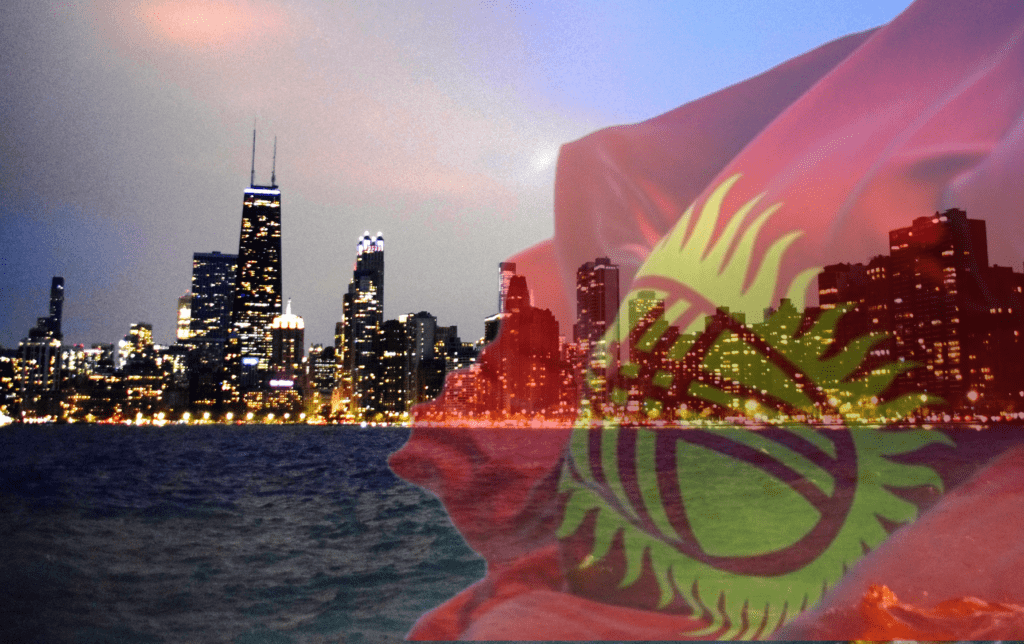
Kyrgyzstan opened a consulate in Chicago in 2022 because of the growing Kyrgyz population there. A Kyrgyz community center operates in a Chicago suburb. Kyrgyz cuisine can be sampled in the so-called “Windy City” as well. Now the city is a focal point of U.S. President Donald Trump’s plans for the mass deportation of migrants that he says are in the country without permission, and Kyrgyzstan is warning its citizens to follow U.S. immigration law and always carry relevant documents with them. Some people in immigrant communities in Chicago had been uneasy in the last week, expecting federal raids and arrests after Trump’s inauguration on Jan. 20. The U.S. Immigration and Customs Enforcement agency said on Sunday that operations were conducted in the city “to enforce U.S. immigration law and preserve public safety and national security by keeping potentially dangerous criminal aliens out of our communities.” Deportations of Central Asians increased in the last year of former President Joe Biden’s term. It is unclear to what extent Trump’s deportation plan, one of his key election campaign pledges, will affect people from Kyrgyzstan and other Central Asian countries who are in the United States. Many of the people likely to be affected on Trump’s watch are from larger immigrant communities, including those with roots in Latin America. But in an uncertain, fast-moving environment, Kyrgyzstan is warning its nationals not to take any chances. “Due to recent changes in the United States' immigration policy, the country's official authorities are taking measures to stop illegal immigration at the border and identify individuals residing in the country without legal grounds,” the Kyrgyz embassy in Washington said Monday on social media. Kyrgyzstan advised its citizens “currently in the United States or planning to travel there to strictly adhere to the new provisions of immigration laws and to carry all necessary documents confirming their legal status at all times,” according to the statement. It was accompanied by an image of a loudspeaker blaring the words: “Important message!” Chicago officials had promised to protect migrants under a “sanctuary city” policy in which they don’t cooperate with federal deportation efforts, placing the metropolis in the crosshairs of Trump’s plan. Chicago is the third-largest city in the United States, with a population of nearly three million. A 2023 commentary in the Chicago Council on Global Affairs quotes Nurdin Mamatzhan, president of the Kyrgyz Community Center, as saying there are more than 10,000 people from Kyrgyzstan in the Midwestern city. The number is several times higher, according to another estimate. --- The Kyrgyz government provided contact details for questions about staying in the United States: Embassy of the Kyrgyz Republic in the United States and Canada 2360 Massachusetts Avenue, NW, Washington D.C. 20008 Email: kgconsulate.washington@mfa.gov.kg Phone: +1 202 256 2924, +1 202 449 9823, +1 202 449 9822 Consulate General of the Kyrgyz Republic in Chicago 100 North LaSalle Street, Suite 1610, Chicago, IL 60602 Email: kgconsulate.chicago@mfa.gov.kg Phone: +1 312 929 3442, +1 312 994 2416

Kazakhstan Could Save America’s Energy Future

The energy crisis gripping Europe has made clear for all to see the limits of solar and wind power. Years of investment and unbridled ambition have not created renewable sources that can deliver the consistent, large-scale energy that modern economies need. Nuclear power has emerged as the only viable solution for achieving zero-emissions energy while maintaining reliability. Europe’s urgent need to reduce its dependency on Russian gas has made all that even clearer. Meanwhile, the United States faces its own energy challenges. Its nuclear industry urgently requires a secure and stable uranium supply; yet U.S. foreign policy has largely overlooked Kazakhstan, the world’s largest uranium producer. It gets worse. No sitting U.S. president has ever visited Kazakhstan, which produces over 40% of the world’s natural uranium. Russia and China have filled this diplomatic vacuum, embedding themselves deeply in Kazakhstan’s energy sector. The United States and Europe must act decisively to build stronger ties with Kazakhstan and Central Asia, if they are to achieve energy independence by securing their nuclear futures. Europe’s dependence on Russian natural gas has been its geopolitical Achilles’ heel for decades. Russia's illegal war of aggression against Ukraine, driving home the need to diversify energy sources, has further increased that vulnerability. Nuclear power offers Europe a path to energy independence. This hinges, however, on access to uranium, of which Europe imports 97% of its supply. Moreover, much of that uranium is enriched in Russia, creating a dependency analogous to that on Russian gas. That problem can be solved by deepening cooperation with Kazakhstan, the world’s largest uranium producer. Unfortunately, Europe’s engagement with Kazakhstan has been half-hearted at best; yet the country's reserves are essential for powering Europe’s nuclear plants. Strategic investments and partnerships are needed to unlock Kazakhstan’s role as a reliable uranium supplier to Europe, but logistical hurdles and a lack of political focus have so far stymied efforts to make that happen. Kazakhstan, the world's leading uranium producer, offers the United States a critical opportunity to secure its energy and national-security needs, yet Washington has ignored this and made little effort to deepen its ties with Kazakhstan. By contrast, China sources 60% of its uranium imports from Kazakhstan, supported by investments in mining and nuclear fuel facilities. Likewise, Russia has, through Rosatom, forged strong partnerships with Kazatomprom. These efforts give Beijing and Moscow significant leverage over global uranium markets. The U.S., however, has failed to foster the political and economic relationships necessary for long-term nuclear-energy security. Kazakhstan is a particularly glaring case in point. Over the past two decades, Kazakhstan has come to account for nearly half of global uranium production, giving it a key position in the global uranium supply chain. Neighboring Uzbekistan, the fifth-largest producer, adds another 6%, and Mongolia also has significant undeveloped reserves of future potential. Yet Kazakhstan remains heavily dependent on Russian infrastructure for uranium transport and enrichment. Until the late 2024 signature of an agreement to supply nearly half of its annual uranium ore production to China through the...