• KGS/USD = 0.01144 0%
  • KZT/USD = 0.00204 0%
  • TJS/USD = 0.10422 -0.1%
  • UZS/USD = 0.00008 0%
  • TMT/USD = 0.28490 -0.28%
  • KGS/USD = 0.01144 0%
  • KZT/USD = 0.00204 0%
  • TJS/USD = 0.10422 -0.1%
  • UZS/USD = 0.00008 0%
  • TMT/USD = 0.28490 -0.28%
  • KGS/USD = 0.01144 0%
  • KZT/USD = 0.00204 0%
  • TJS/USD = 0.10422 -0.1%
  • UZS/USD = 0.00008 0%
  • TMT/USD = 0.28490 -0.28%
  • KGS/USD = 0.01144 0%
  • KZT/USD = 0.00204 0%
  • TJS/USD = 0.10422 -0.1%
  • UZS/USD = 0.00008 0%
  • TMT/USD = 0.28490 -0.28%
  • KGS/USD = 0.01144 0%
  • KZT/USD = 0.00204 0%
  • TJS/USD = 0.10422 -0.1%
  • UZS/USD = 0.00008 0%
  • TMT/USD = 0.28490 -0.28%
  • KGS/USD = 0.01144 0%
  • KZT/USD = 0.00204 0%
  • TJS/USD = 0.10422 -0.1%
  • UZS/USD = 0.00008 0%
  • TMT/USD = 0.28490 -0.28%
  • KGS/USD = 0.01144 0%
  • KZT/USD = 0.00204 0%
  • TJS/USD = 0.10422 -0.1%
  • UZS/USD = 0.00008 0%
  • TMT/USD = 0.28490 -0.28%
  • KGS/USD = 0.01144 0%
  • KZT/USD = 0.00204 0%
  • TJS/USD = 0.10422 -0.1%
  • UZS/USD = 0.00008 0%
  • TMT/USD = 0.28490 -0.28%

Viewing results 1 - 6 of 63

Ukrainian Prosecutors Say 13 Uzbek Workers Held in “Inhumane Conditions”

Prosecutors in Ukraine say they have detained four members of a human trafficking operation that exploited 13 Uzbek laborers and subjected them to humiliating treatment that included scheduled visits to the toilet. Two Chinese citizens, an Uzbek national and a Ukrainian woman used coercion and deception to recruit vulnerable people with few resources outside Ukraine and move them to the Kyiv region for use in forced work for profit, the Kyiv Regional Prosecutor’s Office said on Thursday. Images provided by the office show the farm workers standing in front of greenhouse-like structures covered in plastic tarpaulins in a rural area. Other photos show the cramped, unsanitary conditions in which the men and women lived. “To maintain control, the perpetrators used coercion and restrictions on freedom of movement, which indicates the exploitative nature of their actions,” the Ukrainian prosecutors said. “The victims were humiliated to the extreme: even visits to the toilet were allowed only according to a set schedule, and any minor violation was punished with fines.” Ukrainian authorities said they searched the suspects’ residences and business sites on Wednesday, finding 13 Uzbek citizens who were being held in “inhumane conditions.” Officials from the Uzbek embassy in Ukraine visited the greenhouse facility in the Kyiv region following the publication of reports in Ukrainian media about Uzbek citizens being treated as “slaves,” the embassy said on Friday. “At present, it has been established that all our citizens are safe and in good health, and they have been placed in one of the local hospitals in the Kyiv region to receive the necessary medical treatment,” the embassy said. It said steps are being taken to return the group to Ukraine, while noting that court proceedings are underway against the suspects. In a reference to the war against Russia, the embassy repeated guidance that Uzbek nationals should avoid travel to Ukraine because of safety concerns. Under Ukrainian law, the four suspects could face long prison terms if convicted of human trafficking and other charges. Glavcom, a Ukrainian news agency, said a 51-year-old Chinese citizen with a temporary residence permit in Ukraine was the head of the alleged human trafficking operation. The Uzbek workers were between the ages of 22 and 42 and had been offered high salaries to persuade them to go to Ukraine, an enticement that turned out to be false, according to Glavcom. Once in Ukraine, the Uzbek nationals had to surrender their passports to their employers, the agency reported.

Central Asians in Putin’s War: Fighting for Ukraine, Forced for Russia

As the war in Ukraine continues to drag on, fighters from across Central Asia have found themselves on both sides of the frontlines. In Kyiv, Kazakh national Zhasulan Duysembin has traded his past life as a sales agent for a rifle, sporting a tattoo of Kazakhstan’s flag on his back as he battles to defend his adopted home. He now fights, he says, to protect his children and believes that “Russia will not stop in Ukraine, it will go further. We must make every effort to ensure that our Kazakhstan does not suffer.” Alan Zhangozha, an ethnic Kazakh who grew up in Kyiv and now serves as a public relations officer in the Ukrainian Army, echoes this sentiment. “Ukraine’s victory will also be a victory for my Motherland,” he told The Diplomat. But as the war drags on, in Kazakhstan, families mourn men like 22-year-old Kiril Nysanbaev - a labor migrant in Russia coerced into signing up for the war who only came home in a coffin. His sister recalls how her brother told her that Russian officers beat and forced him to enlist while he was detained on dubious charges in Chelyabinsk. Nysanbaev was killed in Ukraine’s Donetsk region in March 2024, news that only reached his family three months later. Citizens of all five Central Asian countries have been pulled into the conflict since Russia’s invasion in 2022. Some have volunteered to fight for Ukraine, driven by personal ties or ideals, while others, mostly labor migrants, have been recruited, enticed, or pressured into fighting for Russia. These parallel currents reflect the complex impact of the war on a region that remains officially neutral but was historically deeply entwined with Moscow. While a handful of Central Asians now wear the blue-and-yellow insignia in Ukraine’s defense, far more have ended up in Russia's ranks, often as expendable foot soldiers. From Bishkek to Bucha In November 2022, a Kyrgyz former labor migrant, Almaz Kudabek uulu, announced the creation of the Turan Battalion, a volunteer unit of Turkic-speaking fighters formed to assist Ukraine. “Kyrgyzstan is my homeland; I will always love it. But Ukraine is my home now; I am fighting for Ukraine,” he told reporters. The battalion, joined by volunteers from Kyrgyzstan, Kazakhstan, Azerbaijan, and elsewhere, operates as a semi-autonomous unit supported by private donations and allied Ukrainian brigades. Back in Kyrgyzstan, however, the authorities opened a criminal case against Kudabek, punishable by up to eight years in prison, and local media that covered his story faced pressure. Others have supported Ukraine in tangible, humanitarian ways. Early in the war, members of Ukraine’s Kazakh diaspora erected traditional yurts in cities like Bucha and Kyiv as heated shelters dubbed “Yurts of Invincibility.” These spaces provided food, tea, and electricity during blackouts, a gesture of solidarity that irritated Moscow but drew only a muted response from Kazakhstan’s government. Moscow’s Migrant Recruits: Coercion and Casualties Far greater numbers of Central Asians have ended up fighting for Russia, which hosts millions of migrant workers from...

Tokayev Congratulates Putin After Alaska Meeting; Russian Leader Briefs Mirziyoyev

Russian President Vladimir Putin spoke to the leaders of Kazakhstan and Uzbekistan by telephone on Sunday, briefing them about his talks in Alaska with U.S. President Donald Trump about ending the war in Ukraine. Trade and joint energy projects between Russia and the Central Asian countries were also discussed. President Kassym-Jomart Tokayev of Kazakhstan congratulated Putin on “the results” of the meeting with Trump and said “the negotiations contributed to a better understanding by the American side of the Russian position on Ukraine, which will help find common ground on this complex issue,” Tokayev’s office said. “Kassym-Jomart Tokayev considers the Alaska summit a breakthrough event in terms of strengthening Russia's international positions and mutual understanding on the world stage,” the office said. Even so, uncertainty remains. Putin and Trump provided few details about their meeting on Friday, leaving Alaska without the Ukraine-backed cease-fire that Trump had previously demanded. Ukraine and its European allies are concerned that Trump could back a proposed deal under which Moscow secures more Ukrainian territory as part of a resolution. Ukrainian President Volodymyr Zelenskyy and European leaders are scheduled to meet Trump at the White House on Monday to press their case for a peace with security guarantees. In their phone call, Putin informed President Shavkat Mirziyoyev of Uzbekistan of the “main results” of his meeting with Trump, Mirziyoyev’s office said. “The leader of Uzbekistan expressed support for the agreements reached and voiced hope for a swift settlement of the situation surrounding Ukraine,” the office said. Putin and Mirziyoyev spoke about accelerating trade between their two countries, while Tokayev thanked the Russian leader for collaborating in the field of energy, a possible reference to Russia’s leading role in building Kazakhstan’s first nuclear power plant. The Kremlin released similar statements about the phone calls.

Despite War’s Challenges, Kazakhstan Says Trump-Putin Meeting Was “The Beginning”

Kazakhstan has praised Russian President Vladimir Putin and U.S. President Donald Trump for their meeting in Alaska, describing it as “the beginning of high-level negotiations on the situation in Ukraine.” President Kassym-Jomart Tokayev “regards the summit as a historic event, made possible by the political will and sincere determination of both leaders to seek common approaches to resolving contemporary global challenges, including the cessation of hostilities in Ukraine,” Tokayev´s press secretary, Ruslan Zheldibay, said on X on Saturday. Tokayev’s statement generally aligned with the positive statements made by Putin and Trump after their meeting on Friday, even though the two leaders provided few details about how they envisioned resolving the conflict when they spoke briefly to the media after their discussion. Ukraine and its European allies have been concerned that Trump could favor Putin’s terms for ending the war, leaving Ukraine vulnerable to renewed Russian pressure in the future. Ukrainian President Volodymyr Zelenskyy is expected to meet Trump at the White House on Monday. In a Truth Social post on Saturday, Trump appeared to back away from his previous demand for a Ukraine-supported ceasefire, saying it was better to “go directly to a Peace Agreement, which would end the war, and not a mere Ceasefire Agreement, which often times do not hold up.” Despite their concerns, European leaders have welcomed Trump’s negotiation efforts, noting a statement by the U.S. president that the United States “is prepared to give security guarantees” so that Ukraine can defend its sovereignty. “It will be up to Ukraine to make decisions on its territory. International borders must not be changed by force,” a joint statement by European leaders said. Kazakhstan is not directly involved in negotiations over Ukraine, but it has become an intermittent venue for international diplomacy and has offered to assist as needed since it maintains ties with both Russia and Ukraine. Tokayev has spoken in support of Ukraine’s sovereignty and territorial integrity. But in a phone call a week ago, Tokayev told Zelenskyy that “A bad peace is better than a good war,” possibly a pitch to the Ukrainian leader to consider concessions such as giving up territory in order to preserve the country’s independence. Russia occupies an estimated 20% of Ukraine and has made gains in eastern Ukraine in recent days. At least publicly, Zelenskyy has opposed the idea of giving up territory, saying the Ukrainian constitution prevents him from doing so. On Saturday, he said on X: “A real peace must be achieved, one that will be lasting, not just another pause between Russian invasions.” Kazakhstan, which has sought neutrality over the war, shares a long land border with Russia and has closer trade and diplomatic ties with Moscow than Kyiv. Since Russia’s full-scale invasion of Ukraine in February 2022, Tokayev has spoken to Zelenskyy several times in phone calls that, according to Kazakhstan’s presidency, were initiated by the Ukrainian side. Tokayev has spoken to Putin by phone on more than twice as many occasions and has also met the Russian...

Trump-Putin Alaska Summit Ends Without Ceasefire

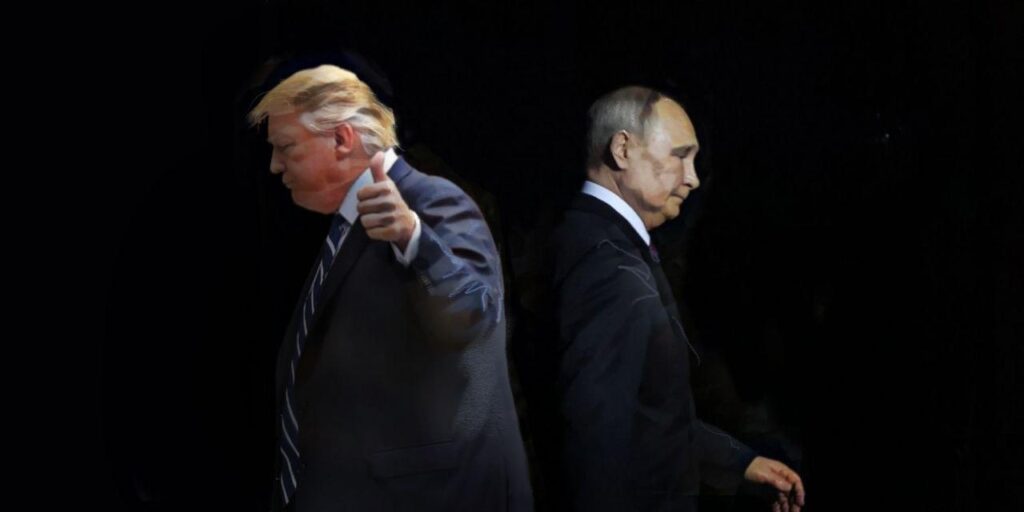
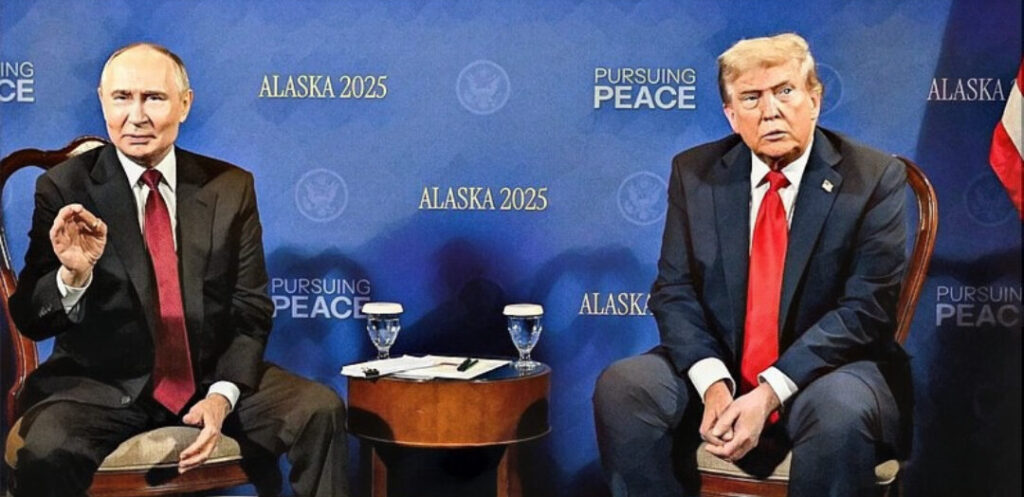
U.S. President Donald Trump and Russian President Vladimir Putin met on Friday in Alaska for their first face-to-face summit since the start of the Ukraine war. Despite optimism from the U.S. side, the talks ended without an agreement on a ceasefire. The leaders met for nearly three hours at Joint Base Elmendorf-Richardson in Anchorage, following a red-carpet welcome and military flyover. Only a handful of aides joined the private session. Afterward, Trump called the exchange “extremely productive” and said “some headway” had been made, but stressed that “there’s no deal until there’s a deal.” Putin described “progress” and “agreements,” though neither leader offered specifics, and neither took questions. No Ceasefire, Continued Dialogue Ending Russia’s invasion of Ukraine dominated the agenda. Trump had vowed to bring the war to a close quickly, but the Alaska talks produced no ceasefire. Ukrainian officials noted that Putin appeared to have “bought more time” as fighting continues. Air raid sirens sounded in Ukraine, and Russian border regions came under drone attack even as the summit unfolded. Having previously said on the way to his summit with Russian President Vladimir Putin that he wouldn’t “be happy if I walk away without some form of a ceasefire,” U.S. President Donald Trump walked away from the talks with no agreement in place, instead urging Ukrainian President Volodymyr Zelenskyy to “make a deal.” “I believe we had a very productive meeting,” Trump stated. “There were many, many points that we agreed on… I will call up NATO… I’ll of course call up President Zelenskyy and tell him about today’s meeting… We really made some great progress… I’ve always had a fantastic relationship with President Putin – with Vladimir…We were interfered with by the ‘Russia, Russia, Russia’ hoax,” he added. “Again, Mr. President, I’d like to thank you very much, and we’ll speak to you very soon and probably see you again very soon,” Trump said. “Thank you very much, Vladimir.” “Next time in Moscow,” Putin replied, chuckling, with a rare use of English, before Trump abruptly ended his press event, refusing to take any questions. Both leaders said the dialogue would continue. Trump claimed he and Putin agreed on “most things” and floated the idea of joining a future meeting between Putin and Ukrainian President Volodymyr Zelenskyy. Putin, while not referencing direct talks with Kyiv, urged Ukraine and its allies not to “derail” what he called constructive progress. Signals from Washington and Moscow Trump emphasized his desire to stop the fighting, stating, “I want the killing to stop,” and suggested he believed Putin wanted peace as well. He also said he would hold off on imposing new “severe” measures on Russia, a shift from earlier rhetoric. Trump also revealed that he would pause plans to levy tariffs on Chinese imports over Beijing’s purchases of Russian oil, saying progress in Alaska made that step unnecessary for now. Putin, meanwhile, repeated his long-standing demands that NATO expansion and other “root causes” be addressed before peace can be achieved. He warned that...

Ending the War: Tokayev and Zelenskyy Talk Ahead of Trump-Putin Meeting in Alaska

“A bad peace is better than a good war.” That was the advice from Kazakh President Kassym-Jomart Tokayev to Ukrainian President Volodymyr Zelenskyy in a phone call on Sunday in which the two leaders discussed prospects for a resolution to the war between Russia and Ukraine.  Whether Zelenskyy agreed with Tokayev’s comment is open to question. In a readout of the conversation from the Ukrainian presidency, he used other adjectives to describe the kind of peace that Ukraine wants –“reliable” and “real.”  The talk happened ahead of a meeting in Alaska on Friday between U.S. President Donald Trump and Russian President Vladimir Putin that Ukraine fears could leave it left out of deliberations and provide momentum for an end to the conflict on Russia’s terms.  Tokayev told Zelenskyy that Kazakhstan has advocated for a solution that adheres to the United Nations Charter and respects “the inviolability of the borders of sovereign states, and the territorial integrity of sovereign states.” While that statement implies criticism of the current state of affairs, in which Russia occupies an estimated 20 percent of Ukrainian territory, Tokayev also appeared to suggest that Ukraine should be prepared to make difficult compromises over territory because its independence as a nation was on the line.    “In his view, given the current highly complex situation, it is essential to approach the resolution of the conflict with balance and reason, ensuring the preservation and protection of Ukraine’s statehood,” Kazakhstan’s presidential office said. “He stressed that all parties should be guided by the wisdom that ´a bad peace is better than a good war.´” Tokayev stirred some debate last year when he said that Russia was too strong to be defeated on the battlefield. Critics interpreted the remark as defeatism in the face of Russian aggression, while others thought it was a blunt assessment of the war. Kazakhstan and other Central Asian countries have tried to be neutral in the conflict, not endorsing the Russian invasion but maintaining traditional ties with Moscow. The Ukrainian presidency said Zelenskyy, in remarks to Tokayev, “noted that attempts to partition any independent state are extremely dangerous for every nation. History has repeatedly shown that if such injustice is allowed against one state, it does not end there.” While Zelenskyy has ruled out territorial concessions to Russia, a poll conducted by the Kyiv International Institute of Sociology in May and June explored the nuance of the topic in a population that is both defiant and weary after years of war. The results show that “the only option where there is at least room for discussion is de facto recognition of Russian control without de jure recognition,” according to the institute.   Zelenskyy invited Tokayev to visit Ukraine, according to the Ukrainian presidency. The Kazakh statement didn’t mention the invitation.