• KGS/USD = 0.01144 0%
  • KZT/USD = 0.00203 0%
  • TJS/USD = 0.10731 0%
  • UZS/USD = 0.00008 0%
  • TMT/USD = 0.28490 0%
  • KGS/USD = 0.01144 0%
  • KZT/USD = 0.00203 0%
  • TJS/USD = 0.10731 0%
  • UZS/USD = 0.00008 0%
  • TMT/USD = 0.28490 0%
  • KGS/USD = 0.01144 0%
  • KZT/USD = 0.00203 0%
  • TJS/USD = 0.10731 0%
  • UZS/USD = 0.00008 0%
  • TMT/USD = 0.28490 0%
  • KGS/USD = 0.01144 0%
  • KZT/USD = 0.00203 0%
  • TJS/USD = 0.10731 0%
  • UZS/USD = 0.00008 0%
  • TMT/USD = 0.28490 0%
  • KGS/USD = 0.01144 0%
  • KZT/USD = 0.00203 0%
  • TJS/USD = 0.10731 0%
  • UZS/USD = 0.00008 0%
  • TMT/USD = 0.28490 0%
  • KGS/USD = 0.01144 0%
  • KZT/USD = 0.00203 0%
  • TJS/USD = 0.10731 0%
  • UZS/USD = 0.00008 0%
  • TMT/USD = 0.28490 0%
  • KGS/USD = 0.01144 0%
  • KZT/USD = 0.00203 0%
  • TJS/USD = 0.10731 0%
  • UZS/USD = 0.00008 0%
  • TMT/USD = 0.28490 0%
  • KGS/USD = 0.01144 0%
  • KZT/USD = 0.00203 0%
  • TJS/USD = 0.10731 0%
  • UZS/USD = 0.00008 0%
  • TMT/USD = 0.28490 0%

Viewing results 1 - 6 of 32

Kyrgyzstan Releases Its First Climate Action Transparency Report

On October 7, Kyrgyzstan’s Ministry of Natural Resources, Environment, and Technical Supervision unveiled its first Biennial Climate Action Transparency Report, marking a key step in aligning with international climate obligations. The report was developed with contributions from government agencies, academic institutions, the private sector, and civil society, with support from the United Nations Development Programme (UNDP). It outlines the country’s progress in addressing climate change, current greenhouse gas (GHG) emissions, climate risk preparedness, and the external support it has received. According to the report, Kyrgyzstan’s total GHG emissions in 2023 amounted to 19.38 million tons of CO₂ equivalent. At the same time, the country’s forests, soils, and other ecosystems absorbed 10.31 million tons, resulting in net emissions of 9.07 million tons of CO₂ equivalent. The report notes that this “climate safety net” provides a valuable natural buffer that should be protected and expanded. The energy sector remains the largest source of emissions, accounting for more than half of the total. However, emissions from transport, electricity generation, and heating have declined significantly since the early 1990s, largely due to the adoption of cleaner technologies and improved energy efficiency. Agriculture is the second largest contributor to emissions, primarily driven by livestock farming, with levels remaining relatively stable over recent decades. The submission of the transparency report is a requirement under the Paris Agreement, the international climate treaty signed by Kyrgyzstan in 2016. Beyond fulfilling a global commitment, transparent reporting is also a pathway to unlocking funding from international financial institutions, climate funds, and private investors. According to the report, improved transparency can help attract investment in energy efficiency, renewable energy, sustainable water management, climate-smart agriculture, and disaster risk reduction, critical elements in Kyrgyzstan’s strategy to achieve carbon neutrality by 2050.

UNDP and Eldik Bank Partner to Advance Green Finance in Kyrgyzstan

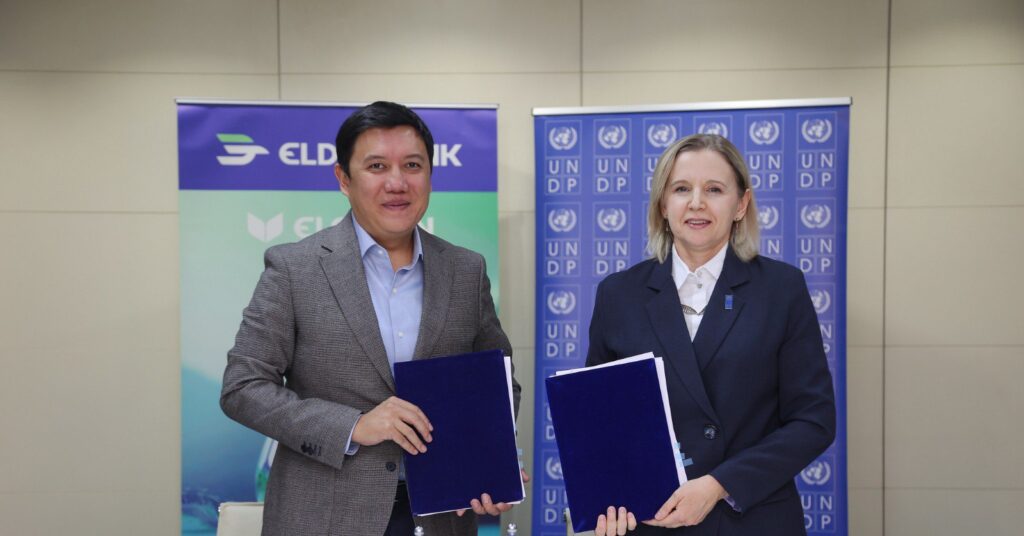
Kyrgyzstan is taking a significant step toward building a greener and more resilient economy. On September 9, state-owned Eldik Bank and the United Nations Development Programme (UNDP) signed a memorandum of understanding to deepen cooperation in sustainable finance. The agreement aims to mobilize climate-related investments, develop sustainable financial products, and integrate Environmental, Social, and Governance (ESG) principles into Kyrgyzstan’s banking sector. It also outlines plans for joint research and knowledge exchange in climate finance, including the creation of tools to assess climate risks in lending operations. This initiative supports Kyrgyzstan’s updated Nationally Determined Contributions (NDC 3.0) under the Paris Agreement, which commit the country to reducing greenhouse gas emissions, expanding renewable energy, and enhancing climate resilience. It also aligns with the National Development Program through 2030, which prioritizes expanding the regulatory framework for green finance. “UNDP supports the development of sustainable finance solutions that reduce the carbon footprint of the economy, enable the green transformation of businesses, and create new opportunities for investment,” said Alexandra Solovieva, UNDP Resident Representative in Kyrgyzstan. For Eldik Bank, the partnership represents more than a financial commitment; it is a strategic step toward becoming a catalyst for climate-conscious economic development. “Together with UNDP, we aim to introduce products that promote green growth and sustainable business development for our clients,” said Ulanbek Nogaev, Chair of the bank’s Management Board. Green finance is gaining traction across Central Asia, a region still heavily reliant on extractive industries but increasingly vulnerable to climate risks such as water scarcity, extreme weather, and glacial melt. Kyrgyzstan’s efforts to empower domestic financial institutions signal that achieving climate goals will require more than policy declarations; it will demand concrete investments and innovation. The Eldik Bank-UNDP partnership also underscores the importance of regional cooperation. Similar initiatives are under discussion in neighboring countries, as Central Asia seeks to attract international capital for renewable energy, sustainable agriculture, and green infrastructure projects. If effectively implemented, Kyrgyzstan’s model could serve as a regional benchmark, demonstrating how national banks can help transform global climate commitments into tangible, growth-oriented outcomes.

UNDP and Japan Launch Initiative in Uzbekistan to Reduce Emissions and Boost Energy Efficiency

Uzbekistan has launched a new international initiative aimed at cutting greenhouse gas emissions and improving energy efficiency in public infrastructure. Spearheaded by the United Nations Development Programme (UNDP) in partnership with the Government of Japan and Uzbekistan’s Ministry of Economy and Finance, the project targets key sectors including schools, hospitals, kindergartens, and public transportation.z According to UNDP Uzbekistan, the initiative seeks to bolster the country’s resilience to energy-related challenges driven by increasingly extreme weather conditions. Many public buildings in Uzbekistan suffer from outdated infrastructure and significant energy loss, resulting in elevated emissions and burdensome utility expenses. The project will focus on upgrading facilities with thermal insulation, energy-efficient windows, heat pumps, and solar panels to address these inefficiencies. A central objective is to enhance indoor comfort throughout the year, particularly in regions experiencing extreme seasonal temperatures. The installation of modern heating and cooling systems is expected to make classrooms and hospital wards more sustainable and livable. The initiative will also extend to green mobility, supporting the introduction of electric buses, the development of charging infrastructure, and the deployment of air pollution monitoring systems along urban transport routes. A distinctive feature of the program is its use of the Joint Credit Mechanism (JCM), which provides Uzbekistan with access to advanced Japanese technology and investment. This mechanism facilitates international collaboration on carbon reduction and supports the country's transition toward cleaner technologies. The initiative aligns with Uzbekistan’s climate commitments under the Paris Agreement. The government has pledged to cut greenhouse gas emissions by 35 percent and raise the share of clean energy to 25 percent by 2030. According to UNDP representatives and officials from the National Agency for Energy Efficiency, the project is not only designed to meet environmental targets but also to improve public health and alleviate the financial strain caused by inefficient energy systems. This latest endeavor builds on previous sustainable development projects in Uzbekistan. Notably, a European Union and UNDP-backed program has supported the country’s fish farming industry by providing eco-friendly equipment to enhance water quality and reduce energy consumption.

Kazakhstan Advances Water Sector Reform at High-Level Coordination Meeting

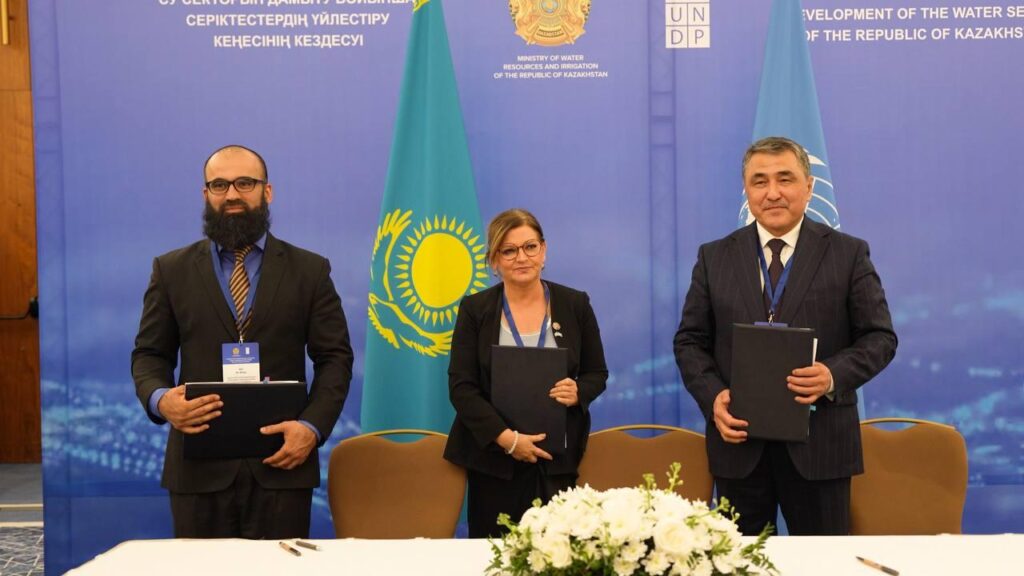
On April 10, the Coordination Council of Partners for the Development of the Water Sector of Kazakhstan held its second official meeting in Astana, co-chaired by Nurzhan Nurzhigitov, Kazakhstan’s Minister of Water Resources and Irrigation, and Katarzyna Wawiernia, United Nations Development Programme (UNDP) Resident Representative in Kazakhstan. The Council, which first convened on September 30, 2024, comprises the Ministry of Water Resources and Irrigation, the UNDP, and more than 30 international partners, including financial institutions and global development organizations. At the meeting, participants reviewed the Council’s work over the past six months and discussed strategic priorities for sustainable water management. A key topic was the 2024-2030 Partnership Water Initiative, adopted in September 2024, which outlines long-term goals for resilience and innovation in the sector. Nurzhigitov discussed the Council’s role in forging productive cross-sector partnerships. “In just six months, we’ve reached concrete agreements and launched new projects with partner countries, development institutions, financial organizations, and major companies. The Ministry has signed three agreements and sixteen memorandums with international partners from the Netherlands, France, Germany, Spain, the USA, Israel, China, the Islamic Development Bank, the Eurasian Development Bank, the International Bank for Reconstruction and Development, and UNDP,” he said. New Agreements Signed at the Meeting Five new cooperation agreements were concluded during the session: The Ministry signed a communiqué with Spain’s Xcalibur Smart Mapping to carry out underground water resource mapping in western Kazakhstan A Statement of Intent was signed with the Islamic Development Bank and UNDP to bolster the technical capacity of Kazakhstan’s water sector, with a focus on digitalization, flood forecasting, climate resilience, and policy development An agreement between the Ministry’s Information and Analytical Center for Water Resources and the Eurasian Development Bank established a grant to develop a National Water Resources Information System by 2026. The project aims to increase transparency, efficiency, and equity in water distribution Kazvodkhoz, the Ministry’s national enterprise, signed a communiqué with PowerChina International to expand cooperation, including training seminars in China for Kazakhstani specialists (the first group of 30 participants is already attending a two-week program) Kazvodkhoz also signed a memorandum of cooperation with Primus Capital Almaty LLP, aimed at developing small hydropower plants at national water facilities A Long-Term Challenge Kazakhstan has long faced serious water-related challenges from the shrinking Aral Sea, driven by reduced transboundary river flows, to destructive spring floods and chronic irrigation shortages in the southern regions. These challenges highlight the urgency of coordinated, international engagement and innovation in water governance.

UNDP and GIZ Renovate Osh Laboratory to Strengthen Tuberculosis Diagnosis in Southern Kyrgyzstan

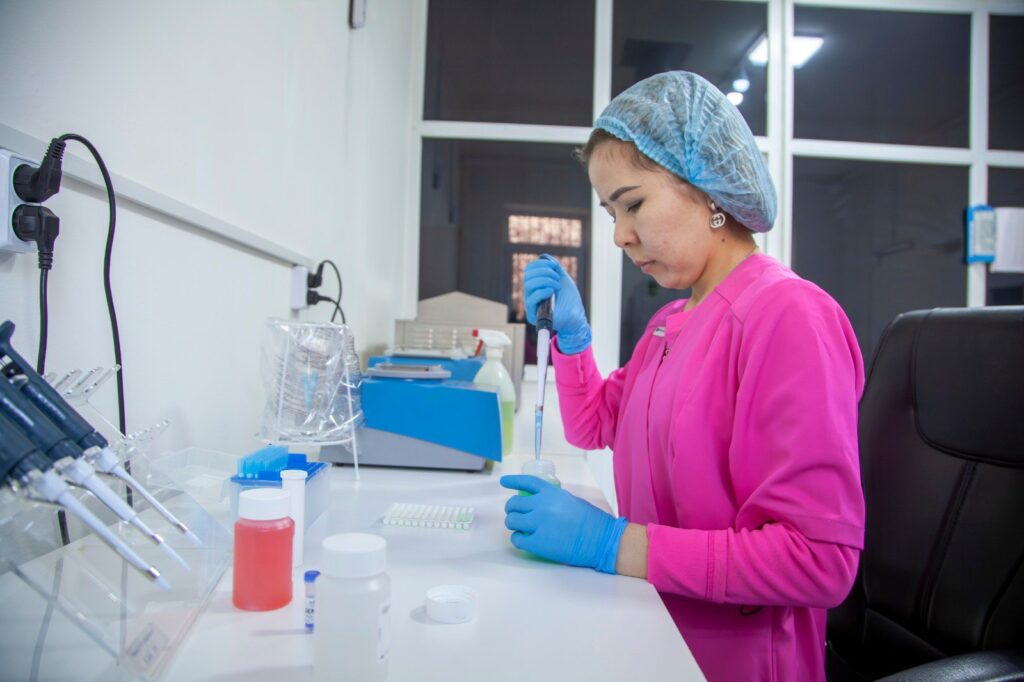
On April 7, the National Center for Phthisiology and the Osh Region Tuberculosis Center, with support from the United Nations Development Programme (UNDP) and the German Agency for International Cooperation (GIZ), inaugurated a renovated building of the Osh Interregional Reference Laboratory in southern Kyrgyzstan. UNDP, in partnership with GIZ, carried out a full-scale renovation, upgraded staff capacities, and certified diagnostic equipment. The modernization enables the facility to enhance tuberculosis (TB) diagnostics and improve treatment effectiveness, UNDP Kyrgyzstan reported. Accurate and timely diagnosis is essential for effective TB treatment. In this context, UNDP supports the Kyrgyz government's efforts to expand diagnostic capacity, improve treatment outcomes, and reduce the national TB burden, advancing the goal of a TB-free Kyrgyzstan. Until 2019, Kyrgyzstan operated two reference laboratories equipped with advanced TB diagnostic technologies. The National Reference Laboratory oversaw supervision, mentoring, and quality control across the country, with a focus on drug susceptibility testing in northern regions. Meanwhile, the Osh facility served the southern regions of Osh, Jalal-Abad, and Batken. Despite having modern equipment, the laboratory was housed in a deteriorating building that compromised diagnostic quality. Operations were scaled down in 2019 due to poor conditions and resumed only after the facility’s renovation in December 2024. The lab now provides full diagnostic services for Osh city and the Osh and Batken regions. U.S. Support Bolsters National TB Response Kyrgyzstan has made substantial progress in TB detection and treatment in recent years, with strong backing from the U.S. government. Since 2019, the United States has invested over $20 million in TB-related programs through the U.S. Agency for International Development (USAID). Declining TB Incidence and Mortality According to Abdullaat Kadyrov, Director of the National Phthisiology Center, Kyrgyzstan has seen a sustained decline in tuberculosis incidence and mortality over the past 15-20 years. In 2001, the country recorded 168 TB cases per 100,000 people and a mortality rate of 27 per 100,000. By 2024, this had fallen to 56.3 per 100,000, with mortality dropping to 2.6 per 100,000.

Uzbekistan Launches Two New Environmental Projects

Uzbekistan has initiated two major international projects aimed at environmental protection and advancing the green economy. The projects, spearheaded by the Ministry of Ecology, Environmental Protection, and Climate Change in partnership with the United Nations Development Program (UNDP), are funded by the Global Environment Facility (GEF) with a total budget of $6.5 million. Both initiatives are set to run through 2030. Project 1: Updating the National Biodiversity Strategy The first initiative, titled the “Comprehensive Programme to Support the Renewal of the National Biodiversity Strategy and Action Plan (NBSAP) and the Seventh National Report,” is part of a global effort involving 69 countries, including Uzbekistan. This project aims to update Uzbekistan’s National Biodiversity Strategy and Action Plan in alignment with the Global Biodiversity Framework. The updated plan will guide the country’s efforts to conserve its rich biodiversity and address environmental challenges. Project 2: Restoring Valuable Ecosystems The second project, named “Integrated Management for the Protection and Restoration of Highly Valuable Landscapes in Uzbekistan,” focuses on restoring ecosystems and exploring sustainable financing methods for biodiversity conservation. Pilot areas for this initiative include the Western Tien Shan, Nurata Mountains, and Kugitang landscapes. These ecologically significant regions are home to diverse flora and fauna and are considered critical for Uzbekistan’s environmental health. A key partner in the ecosystem restoration project is the International Union for Conservation of Nature (IUCN), which established a regional office in Tashkent in 2024 to support conservation efforts in Central Asia. Key Statements Deputy Minister of Ecology Iskandar Kutbiddinov highlighted the importance of these projects during their launch. “These initiatives align with Uzbekistan’s goals for a greener future and will play a vital role in preserving our country’s biodiversity and ecosystems,” Kutbiddinov said. UNDP Resident Representative Akiko Fujii also praised the country’s environmental efforts, noting that “Uzbekistan is taking significant steps to protect and restore its rich biodiversity and unique ecosystems.” With the launch of these two projects, Uzbekistan is strengthening its commitment to environmental protection and sustainable development. By aligning with global biodiversity goals and restoring vital ecosystems, the country is paving the way for a greener, more sustainable future.