• KZT/USD = 0.00221
  • TJS/USD = 0.10850
  • UZS/USD = 0.00008
  • TMT/USD = 0.29760
  • KZT/USD = 0.00221
  • TJS/USD = 0.10850
  • UZS/USD = 0.00008
  • TMT/USD = 0.29760
  • KZT/USD = 0.00221
  • TJS/USD = 0.10850
  • UZS/USD = 0.00008
  • TMT/USD = 0.29760
  • KZT/USD = 0.00221
  • TJS/USD = 0.10850
  • UZS/USD = 0.00008
  • TMT/USD = 0.29760
  • KZT/USD = 0.00221
  • TJS/USD = 0.10850
  • UZS/USD = 0.00008
  • TMT/USD = 0.29760
  • KZT/USD = 0.00221
  • TJS/USD = 0.10850
  • UZS/USD = 0.00008
  • TMT/USD = 0.29760
  • KZT/USD = 0.00221
  • TJS/USD = 0.10850
  • UZS/USD = 0.00008
  • TMT/USD = 0.29760
  • KZT/USD = 0.00221
  • TJS/USD = 0.10850
  • UZS/USD = 0.00008
  • TMT/USD = 0.29760
24 October 2026

Viewing results 1 - 6 of 34

UNDP and GIZ Renovate Osh Laboratory to Strengthen Tuberculosis Diagnosis in Southern Kyrgyzstan

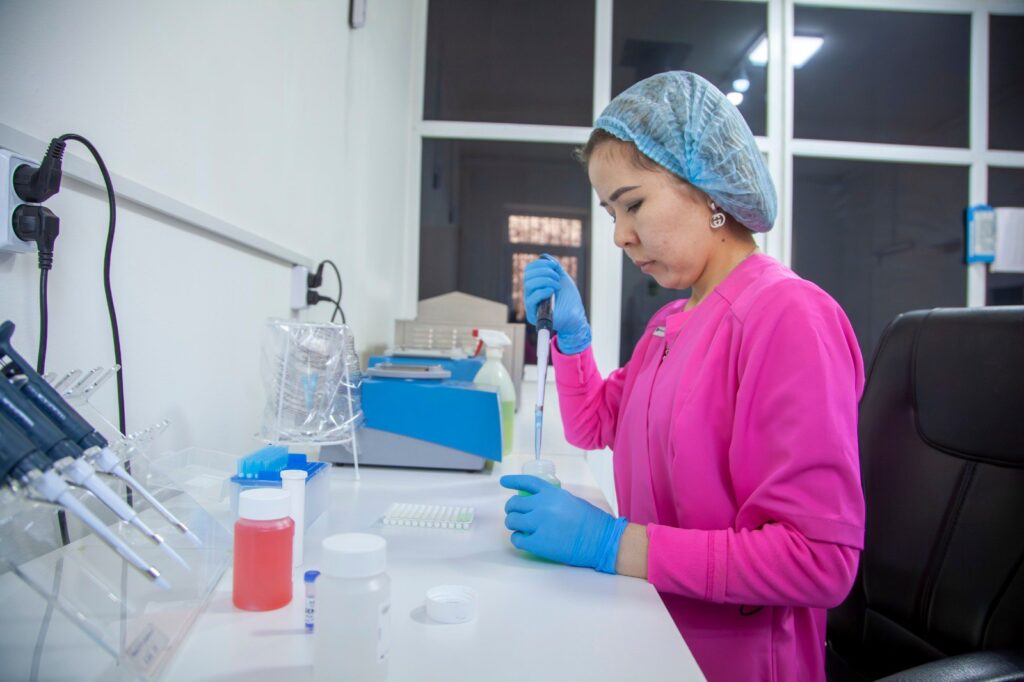
On April 7, the National Center for Phthisiology and the Osh Region Tuberculosis Center, with support from the United Nations Development Programme (UNDP) and the German Agency for International Cooperation (GIZ), inaugurated a renovated building of the Osh Interregional Reference Laboratory in southern Kyrgyzstan. UNDP, in partnership with GIZ, carried out a full-scale renovation, upgraded staff capacities, and certified diagnostic equipment. The modernization enables the facility to enhance tuberculosis (TB) diagnostics and improve treatment effectiveness, UNDP Kyrgyzstan reported. Accurate and timely diagnosis is essential for effective TB treatment. In this context, UNDP supports the Kyrgyz government's efforts to expand diagnostic capacity, improve treatment outcomes, and reduce the national TB burden, advancing the goal of a TB-free Kyrgyzstan. Until 2019, Kyrgyzstan operated two reference laboratories equipped with advanced TB diagnostic technologies. The National Reference Laboratory oversaw supervision, mentoring, and quality control across the country, with a focus on drug susceptibility testing in northern regions. Meanwhile, the Osh facility served the southern regions of Osh, Jalal-Abad, and Batken. Despite having modern equipment, the laboratory was housed in a deteriorating building that compromised diagnostic quality. Operations were scaled down in 2019 due to poor conditions and resumed only after the facility’s renovation in December 2024. The lab now provides full diagnostic services for Osh city and the Osh and Batken regions. U.S. Support Bolsters National TB Response Kyrgyzstan has made substantial progress in TB detection and treatment in recent years, with strong backing from the U.S. government. Since 2019, the United States has invested over $20 million in TB-related programs through the U.S. Agency for International Development (USAID). Declining TB Incidence and Mortality According to Abdullaat Kadyrov, Director of the National Phthisiology Center, Kyrgyzstan has seen a sustained decline in tuberculosis incidence and mortality over the past 15-20 years. In 2001, the country recorded 168 TB cases per 100,000 people and a mortality rate of 27 per 100,000. By 2024, this had fallen to 56.3 per 100,000, with mortality dropping to 2.6 per 100,000.

Uzbekistan Launches Two New Environmental Projects

Uzbekistan has initiated two major international projects aimed at environmental protection and advancing the green economy. The projects, spearheaded by the Ministry of Ecology, Environmental Protection, and Climate Change in partnership with the United Nations Development Program (UNDP), are funded by the Global Environment Facility (GEF) with a total budget of $6.5 million. Both initiatives are set to run through 2030. Project 1: Updating the National Biodiversity Strategy The first initiative, titled the “Comprehensive Programme to Support the Renewal of the National Biodiversity Strategy and Action Plan (NBSAP) and the Seventh National Report,” is part of a global effort involving 69 countries, including Uzbekistan. This project aims to update Uzbekistan’s National Biodiversity Strategy and Action Plan in alignment with the Global Biodiversity Framework. The updated plan will guide the country’s efforts to conserve its rich biodiversity and address environmental challenges. Project 2: Restoring Valuable Ecosystems The second project, named “Integrated Management for the Protection and Restoration of Highly Valuable Landscapes in Uzbekistan,” focuses on restoring ecosystems and exploring sustainable financing methods for biodiversity conservation. Pilot areas for this initiative include the Western Tien Shan, Nurata Mountains, and Kugitang landscapes. These ecologically significant regions are home to diverse flora and fauna and are considered critical for Uzbekistan’s environmental health. A key partner in the ecosystem restoration project is the International Union for Conservation of Nature (IUCN), which established a regional office in Tashkent in 2024 to support conservation efforts in Central Asia. Key Statements Deputy Minister of Ecology Iskandar Kutbiddinov highlighted the importance of these projects during their launch. “These initiatives align with Uzbekistan’s goals for a greener future and will play a vital role in preserving our country’s biodiversity and ecosystems,” Kutbiddinov said. UNDP Resident Representative Akiko Fujii also praised the country’s environmental efforts, noting that “Uzbekistan is taking significant steps to protect and restore its rich biodiversity and unique ecosystems.” With the launch of these two projects, Uzbekistan is strengthening its commitment to environmental protection and sustainable development. By aligning with global biodiversity goals and restoring vital ecosystems, the country is paving the way for a greener, more sustainable future.

Kyrgyzstan Invests Over $356 Million in Women’s Entrepreneurship

The development of women’s entrepreneurship in Kyrgyzstan has received significant financial backing, with more than $356 million directed to supporting women-led businesses since the establishment of the OJSC (Guarantee Fund). According to the OJSC, in the first ten months of 2024 alone, 1,088 guarantees were issued to women, accounting for 40% of the total guarantees provided by the Fund during this period. To date, the Fund has issued 4,071 guarantees totaling 3.166 billion soms ($356 million), empowering women across all regions of Kyrgyzstan to launch and expand businesses in various sectors. Women’s entrepreneurship is becoming an increasingly vital component of Kyrgyzstan’s economy. According to the United Nations Development Programme (UNDP), women currently lead 29% of the country’s small and medium-sized enterprises. Bishkek recently hosted Expo 2024 “Women’s Entrepreneurship,” which showcased the accomplishments of women entrepreneurs while highlighting their growing role in driving innovation and economic growth. Furthermore, the Women’s Entrepreneurship 2024 program reported that 48% of all loans issued this year were granted to women, reflecting the expanding support for women-led businesses across the country. This upward trend highlights the growing recognition of women entrepreneurs as key players in Kyrgyzstan’s innovation ecosystem and economic development.

Report Addresses Air Pollution in Almaty

On October 30, the United Nations Development Programme (UNDP) in Kazakhstan, together with the Urban Center of Almaty Management University, presented the results of their joint efforts within the Green and Safe Streets Initiative, which aims to address air pollution in Kazakhstan’s largest city, Almaty. This initiative is part of the regional City Experiment Fund program funded by the Ministry of Finance of Slovakia. The Green and Safe Streets Initiative included three interrelated clusters of activities: a social impact campaign, tactical urban actions on Berezovsky, Turgut Ozal, and Kazybek bi streets in Almaty, and the installation of air pollution measuring devices, which resulted in the development of methodological recommendations. These actions helped identify further steps to address the complex challenge of improving air quality in Almaty. The actions and approaches implemented within the City Experiment Fund framework are expected to help reduce air pollution by increasing green spaces, introducing energy-efficient technologies in the housing sector, improving infrastructure for pedestrians and cyclists, and prioritizing public transport. According to IQAir, Almaty, along with the industrial city of Karaganda, has the highest level of air pollution in Kazakhstan and is among the 25 most polluted cities in the world. The primary sources of air pollution in Almaty are motor vehicles and private-sector and municipal heating that burns coal. During the winter, Almaty is covered by a deep smog that causes severe health problems and a high prevalence of respiratory diseases in the local population. According to an Asian Development Bank report, the decline in Almaty’s air quality is attributable to the city’s population growth, rapid urbanization, inefficient public transportation, and heavy reliance on coal for power generation and residential heating. The city’s valley setting exacerbates these factors, creating ideal conditions for solid temperature inversions during the late fall and winter that trap pollutants in the lower atmosphere. Additionally, the ADB report concludes that the city’s low wind speeds cause pollutants to accumulate and recirculate at the city's surface level.

Uzbekistan Hosts IV Tashkent Anti-Corruption Forum

On October 17, 2024, Uzbekistan hosted the IV Tashkent Anti-Corruption Forum, gathering over 250 participants, including officials, international experts, and representatives from civil society. The event was organized by Uzbekistan's Anti-Corruption Agency and partners including the European Union, GIZ (German International Cooperation), and the United Nations Development Programme (UNDP). The forum highlighted Uzbekistan’s progress in fighting corruption and improving its position in key international rankings, such as Transparency International’s Corruption Perceptions Index. Uzbekistan’s successful completion of the OECD’s 2023 anti-corruption evaluation, scoring over 86 points, making it the highest ranked country in Central Asia, was also praised. Key achievements include implementing a national anti-corruption program, creating a long-term strategy for 2030, and actively involving civil society in the fight against corruption. At the forum, a major milestone was the signing of an agreement between Uzbekistan’s Anti-Corruption Agency and the World Bank’s Integrity Vice Presidency to work together on training, projects, and research to combat corruption. The forum also featured discussions on using new technologies to prevent corruption, building a culture to resolve social conflicts, and addressing conflicts of interest through compliance systems.

Kazakhstan Establishes Coordination Council of Partners for Water Sector Development

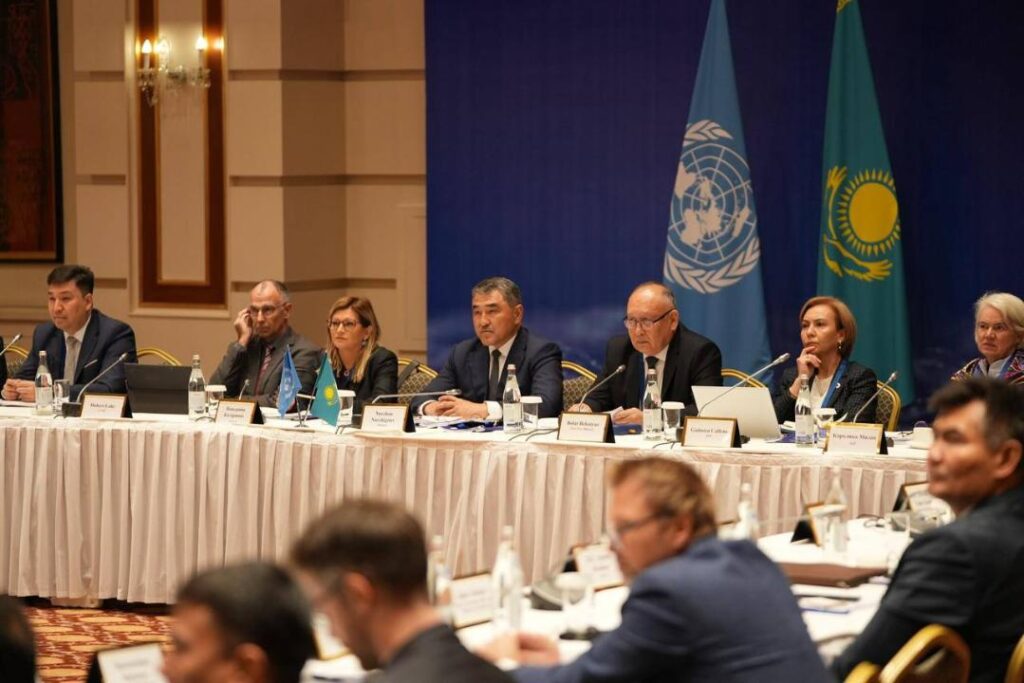
Kazakhstan has established a Coordination Council of Partners for the Development of the Water Sector. It includes the Kazakh Ministry of Water Resources and Irrigation representatives, the United Nations Development Programme (UNDP), and other international organizations and financial institutions. According to the ministry, the Coordination Council will coordinate the actions of government agencies, UNDP, international financial organizations, and donor communities according to national priorities in the water sector. The Council will mobilize and effectively distribute financial and technical resources to achieve the goals. The Council will support developing and implementing strategic documents, such as the Water Code, the Concept for the Development of the Water Resources Management System, and the Comprehensive Water Sector Development Plan, as well as strengthening the legislative framework and institutional mechanisms for sustainable water management. By implementing best international practices and innovative solutions in water resources management, the Council will organize the exchange of knowledge and experience, increase the capacity of specialists, and inform citizens about sustainable water resources management principles. Another key task for the Council is strengthening regional cooperation in water resources management and increasing resilience to climate change and natural disasters such as droughts and floods. Minister of Water Resources and Irrigation Nurzhan Nurzhigitov commented: “The establishment of the Coordination Council is an important step for the water sector in Kazakhstan. By coordinating the efforts of the Ministry, international organizations, and donor communities, the Council will play an important role in promoting the country's long-term environmental stability and economic development. The Coordination Council will help mobilize resources, strengthen governance, expand regional cooperation, and promote sustainable water resource management practices. These collective efforts will address growing climate challenges and ensure a stable future for Kazakhstan and Central Asia.” On September 30, the Coordination Council held its first meeting in Astana. The meeting discussed partnerships in managing Kazakhstan's water resources and presented a Water Partnership Initiative for 2024-2030, a joint proposal between the Ministry of Water Resources and Irrigation and UNDP. The document outlines specific activities, such as developing an information system for water resources, the modernization of water infrastructure to respond to climate challenges, implementing modern irrigation systems, and transboundary water cooperation. Katarzyna Wawiernia, UNDP Resident Representative in Kazakhstan, stated at the meeting: "Given the complexity of the water agenda, it is clear that no single government or organization can tackle these issues alone. Therefore, addressing these challenges requires combining resources, investments, technical expertise, and innovations. I hope that the Partnership Initiative proposed today by UNDP and the Ministry of Water Resources and Irrigation will be an important catalyst in this process." For decades, Kazakhstan has faced a host of water-related challenges, such as the shrinking Aral Sea, largely caused by decreasing water flows in transboundary rivers, devastating spring floods, and irrigation water shortages in the country’s southern regions.