• KZT/USD = 0.00214
  • TJS/USD = 0.10810
  • UZS/USD = 0.00008
  • TMT/USD = 0.29850
  • KZT/USD = 0.00214
  • TJS/USD = 0.10810
  • UZS/USD = 0.00008
  • TMT/USD = 0.29850
  • KZT/USD = 0.00214
  • TJS/USD = 0.10810
  • UZS/USD = 0.00008
  • TMT/USD = 0.29850
  • KZT/USD = 0.00214
  • TJS/USD = 0.10810
  • UZS/USD = 0.00008
  • TMT/USD = 0.29850
  • KZT/USD = 0.00214
  • TJS/USD = 0.10810
  • UZS/USD = 0.00008
  • TMT/USD = 0.29850
  • KZT/USD = 0.00214
  • TJS/USD = 0.10810
  • UZS/USD = 0.00008
  • TMT/USD = 0.29850
  • KZT/USD = 0.00214
  • TJS/USD = 0.10810
  • UZS/USD = 0.00008
  • TMT/USD = 0.29850
  • KZT/USD = 0.00214
  • TJS/USD = 0.10810
  • UZS/USD = 0.00008
  • TMT/USD = 0.29850
11 August 2026

Viewing results 1 - 6 of 28

Central Asian Countries Rank Among World’s Highest Water Consumers

Several Central Asian countries rank among the world’s highest consumers of water per person, according to data compiled by the Worldometer portal. The figures, based on statistics from UN agencies including UNESCO and the UN Food and Agriculture Organization (FAO), place Turkmenistan first globally, with Uzbekistan, Tajikistan, and Kyrgyzstan also in the top ten. The figures highlight a long-standing regional challenge: heavy dependence on water-intensive agriculture combined with aging irrigation systems that lose substantial amounts of water before it reaches fields. Turkmenistan leads the global ranking with daily water consumption of 15,445 liters per person. Uzbekistan ranks fourth worldwide at 4,778 liters per capita per day, followed by Tajikistan with 4,460 liters and Kyrgyzstan with 4,153 liters. Kazakhstan recorded the lowest level among Central Asian states, at 3,397 liters per person daily, though that still places it among relatively high-consuming countries internationally. In terms of total annual water use, Uzbekistan consumes the largest volume in the region at 54.56 billion cubic meters a year. It is followed by Turkmenistan with 27.9 billion cubic meters, Kazakhstan with 22.77 billion, Tajikistan with 11.49 billion, and Kyrgyzstan with around 8 billion cubic meters. Experts say agriculture explains much of the region’s high consumption. Globally, farming accounts for about 70% of freshwater use, compared with 20% for industry and 10% for households. In Central Asia, agriculture represents more than 80% of water consumption, while up to 40% of water is estimated to be lost through deteriorating irrigation infrastructure. The problem has become increasingly significant as freshwater demand rises worldwide. According to UN estimates, freshwater withdrawals have tripled over the past 50 years, while global demand continues to grow by around 64 billion cubic meters annually because of population growth, changing consumption patterns, energy production, and biofuel development. Several Central Asian governments have begun introducing reforms aimed at reducing water losses. In Uzbekistan, authorities joined the World Bank’s Water Forward initiative and announced plans to expand water-saving technologies across 4.1 million hectares of irrigated farmland while reducing irrigation losses by 25%. Kazakhstan has also faced recurring shortages. Seasonal water restrictions are regularly introduced in southern regions, and this year the government approved consumption limits because of expected shortages during the agricultural season. The issue is closely linked to energy production in upstream countries. Studies by the Organization for Economic Co-operation and Development (OECD) indicate that more than 80% of electricity generation in Kyrgyzstan and Tajikistan comes from hydropower, creating a close link between irrigation needs and energy supply. Limited coordination over water releases and electricity generation has contributed to summer shortages in some years. The figures show the scale of the challenge for Central Asian governments seeking to reduce water losses and manage shared rivers more effectively.

Central Asian Countries to Jointly Address Cryosphere Threats

As part of the Regional Ecological Summit (RES 2026) in Astana, the UNESCO Regional Office in Almaty organised a session titled “The Cryosphere of Central Asia: From Scientific Assessment to Joint Climate Adaptation Action,” in cooperation with Kazakhstan’s Ministry of Ecology and Natural Resources and Ministry of Science and Higher Education. The event was held under the GEF-UNDP-UNESCO Cryosphere project and in collaboration with Central Asian countries. The session focused on discussing the Joint Subregional Action Programme (JSAP) on the cryosphere, a framework document developed by Central Asian countries with UNESCO’s support. The programme is aimed at strengthening regional cooperation in monitoring and research on glaciers, snow cover, and permafrost, as well as aligning approaches to climate change adaptation, according to Kazakhstan’s Ministry of Ecology and Natural Resources. Central Asia is experiencing accelerated glacier melt. Under a high-emissions scenario, the region could lose up to 85% of its glacier volume by 2100 compared to 2020 levels. This would increase pressure on water resources, infrastructure, and communities, while also heightening the risk of natural hazards, including glacial lake outburst floods. As these processes are regional in nature, they require coordinated responses across Central Asian countries. “UNESCO has been actively supporting Central Asian countries in strengthening the scientific basis and advancing regional cooperation on the cryosphere. Today, the key priority is to move from scientific assessment to concrete action. The Joint Subregional Action Programme provides a practical framework for this transition and enhances coordination of adaptation efforts across the region,” said Amir Piric, Director of the UNESCO Regional Office in Almaty. As a key outcome of the session, heads of relevant government authorities from Kazakhstan, Tajikistan, Turkmenistan, and Uzbekistan responsible for environmental protection issued a joint statement supporting JSAP implementation, reaffirming their commitment to strengthened regional cooperation. “Today it is clear that no country can effectively address climate change challenges alone. Regional cooperation is therefore essential. The Joint Statement reflects the readiness of Central Asian countries to join efforts and develop coordinated approaches to climate change adaptation,” said Nurlan Kurmalayev, Deputy Minister of Ecology and Natural Resources of Kazakhstan. The JSAP provides a foundation for coordinated action among countries and partners, defines cooperation priorities, and supports the advancement of climate adaptation measures in the region. The joint statement also opens opportunities to mobilise funding from various sources, including donors, international financial institutions, and the private sector.

Bukhara Demolitions Resurface as Developer Faces Financial Trouble

Concerns over demolition works linked to the “Eternal Bukhara” tourism project have resurfaced following renewed questions directed at Uzbekistan’s Cultural Heritage Agency, as the project’s main developer faces financial difficulties. In 2024, The Times of Central Asia reported that construction of the large-scale tourism complex near the historic center of Bukhara had drawn criticism from local residents and UNESCO. The project, located in the buffer zone surrounding the ancient city, was seen as a potential threat to the integrity of one of Central Asia’s most significant cultural sites. According to Uzbek outlet Uzdiplomat, the issue was raised again during a recent briefing, where journalists questioned officials about the consequences of last year’s demolitions. The project’s main investor, Enter Engineering, has since encountered financial problems and is reportedly selling assets to repay debts to banks, the government, and employees. While construction has slowed, concerns remain over the damage already caused to the cultural environment. The demolitions carried out in 2024 sparked strong reactions from the public, architects, and international organizations. Several buildings, including administrative and social facilities in central Bukhara, were reportedly demolished as part of preparations for the tourism complex. At the time, international heritage group Alerte Héritage called for a halt to the process, arguing that it could contradict global preservation commitments. Responding to questions, a representative of the Cultural Heritage Agency said the works were conducted outside UNESCO’s core protected area and instead took place in the buffer zone. According to the agency, all required documentation, including a master plan and impact assessments, was submitted, and UNESCO was informed of the process. Officials also addressed criticism over the demolition of buildings that, while not officially listed as cultural heritage, were considered by some to have historical value. Deputy head of the agency Tursunali Kuziyev said the agency can only intervene in cases involving officially registered heritage sites. He added that granting such status requires a formal scientific review and legal procedure. Questions about whether the agency could take a broader stance in defense of the public interest were met with similar responses. Officials reiterated that decisions regarding non-listed buildings fall under the authority of local governments and urban planning bodies.

The History of Nauryz: An Ancient Festival That Continues to Unite Central Asia

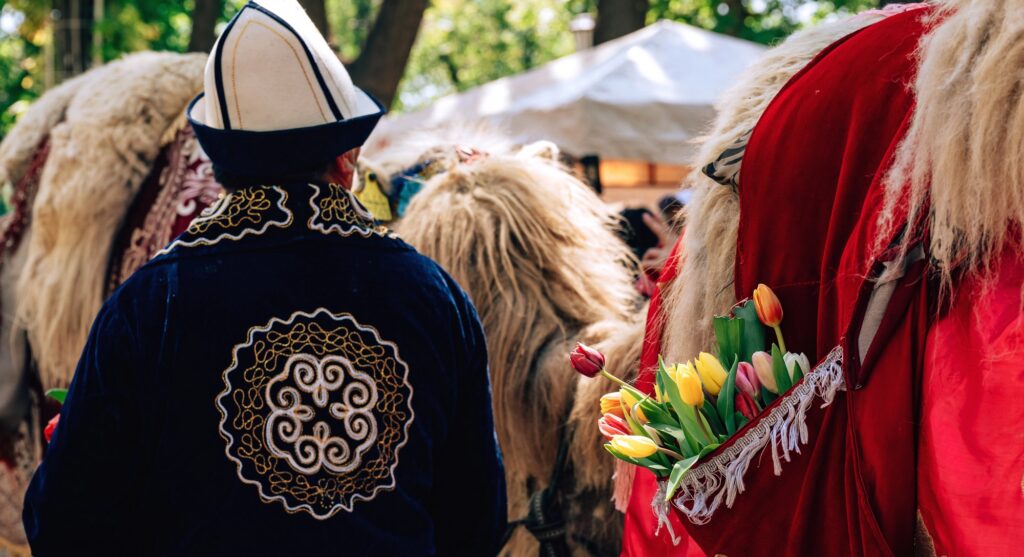
Ahead of the Nauryz holiday, The Times of Central Asia looks at the origins and enduring significance of one of the region’s oldest celebrations. More than a seasonal festival, Nauryz reflects a deep connection between people, nature, and cultural identity, a tradition that has evolved over thousands of years and remains central to life across Central Asia. Origins and Meaning Nauryz, also known as Nowruz, is one of the world’s oldest holidays, marking the arrival of spring and the beginning of a new year. It is celebrated on the day of the spring equinox, when day and night are approximately equal and nature appears to begin a new cycle. For many communities, the holiday symbolizes renewal, hope for prosperity, and the start of a new stage in life. The name “Nowruz” derives from ancient Iranian words meaning “new day.” This concept lies at the heart of the celebration: the renewal of life and the symbolic rebirth of nature after winter. With a history spanning more than 3,000 years, the holiday spread across Eurasia along the Silk Roads and became embedded in the cultural traditions of Central Asia, the Middle East, and the Caucasus. [caption id="attachment_45687" align="alignnone" width="300"] @depositphotos[/caption] Today, Nowruz is recognized not only as a calendar event but also as a cultural tradition that promotes values such as peace, mutual respect, and harmony with nature. Connection to the Spring Equinox Nauryz is traditionally celebrated during the spring equinox, which usually falls on March 20 or 21, when the Sun crosses the celestial equator and daylight and nighttime hours are nearly equal. Since ancient times, this moment has symbolized the awakening of nature and the beginning of a new agricultural year. Historical sources indicate that different communities once observed various dates in March, often guided by natural signs. Over time, however, the astronomical equinox, commonly observed on March 21, became the most widely accepted date. Medieval scholars paid close attention to this phenomenon. In the 11th and 12th centuries, astronomers such as Omar Khayyam refined calendar calculations to align the start of the year more precisely with the equinox. Alongside scientific knowledge, traditional methods were also used to forecast harvests and weather conditions, including observing seed germination or measuring the length of shadows before the holiday. Today, Nauryz is officially celebrated on March 21 in countries such as Kazakhstan and Uzbekistan, while UNESCO also recognizes Nowruz as marking the first day of spring. Rituals and Traditions For centuries, Nauryz has been marked by rituals symbolizing renewal, fertility, and prosperity. Among both nomadic and settled communities, it has traditionally been celebrated with public festivities, games, and family gatherings. Common customs include ritual cleansing with water, exchanging gifts, and offering food to neighbors and guests. The altybakan swing is widely regarded as a symbol of spring and joy. In some regions, the ancient practice of jumping over fire has been preserved as a purification ritual. Food plays a central role in the celebration. Although culinary traditions vary by country, they share a...

UNESCO Conference in Samarkand Highlights Uzbekistan’s Heritage

At the opening ceremony of the 43rd session of the UNESCO General Conference in Samarkand, Uzbek President Shavkat Mirziyoyev highlighted Uzbekistan’s growing role in global cultural dialogue and its expanding cooperation with UNESCO. Held on October 30, the event marked the first time in four decades that the conference had convened outside UNESCO’s headquarters in Paris. The ceremony welcomed high-level participants, including UNESCO Director-General Audrey Azoulay, Serbian President Aleksandar Vučić, Slovak President Peter Pellegrini, and representatives from UNESCO member states. In his address, Mirziyoyev said that hosting such a prominent international forum reflects global recognition of Uzbekistan’s reform efforts and its active role in cultural and educational cooperation. He commended UNESCO’s decades-long contributions to education, science, culture, and media, noting Samarkand’s symbolic importance as one of the world’s oldest cities. “Samarkand has always been a crossroads of civilizations, science, and tolerance,” Mirziyoyev said. The president highlighted the 2023–2027 cooperation program between Uzbekistan and UNESCO, which focuses on cultural heritage preservation, educational reform, and digital innovation. He also noted that Khiva, Bukhara, Shahrisabz, and Samarkand are inscribed on UNESCO’s World Heritage List, and that the Zarafshan-Karakum Corridor was recently added as part of the Silk Roads network. Uzbekistan’s rich intangible heritage, including Shashmaqom music, the Lazgi dance, Navruz celebrations, and traditional crafts such as embroidery and ceramics, has also earned UNESCO recognition, strengthening the country’s identity as a cultural hub in Central Asia. During the session, Mirziyoyev proposed several initiatives for UNESCO’s consideration: Establishing a UNESCO Platform for Inclusive Education with AI-integrated learning tools; Organizing a Global Summit on Vocational Education to prepare youth for future professions; Declaring November 19 as the International Day of Documentary Heritage; Creating an International Digital Heritage Institute under UNESCO auspices; Launching a UNESCO Academy for Women Leaders to advance women’s participation in science, culture, and education; and Hosting a World Forum of Women Researchers and Artists in Samarkand. Addressing global challenges, the president called for stronger international cooperation on climate issues and proposed designating a “UNESCO Ecological Capital” each year to recognize cities promoting sustainable environmental practices. Mirziyoyev also spoke about the dangers of misinformation, calling for improved media literacy among young people and greater support for responsible journalism and intercultural dialogue. Concluding his speech, the president reaffirmed Uzbekistan’s readiness to serve as a bridge between East and West and to actively support UNESCO’s mission to promote peace, sustainable development, and mutual understanding around the world.

Tajikistan’s Tigrovaya Balka Nature Reserve Under Threat

The International Union for Conservation of Nature (IUCN) has raised serious concerns about the condition of Tajikistan’s Tigrovaya Balka Nature Reserve, a UNESCO World Heritage site. The IUCN has classified the state of this rare ecosystem as “alarming,” citing deteriorating hydrological conditions and mounting risks to regional biodiversity. Located at the confluence of the Vakhsh and Panj rivers in southern Tajikistan, Tigrovaya Balka is home to Central Asia’s only remaining natural Tugai forest, a unique riparian ecosystem that depends on periodic flooding for its survival. The IUCN’s World Heritage Outlook uses four categories to assess sites: “good,” “good with some concerns,” “alarming,” and “critical.” In its latest report, the organization identifies water regulation on the Vakhsh River as the primary threat to the reserve. The construction of reservoirs and increased water extraction for agriculture have disrupted the seasonal floods that historically sustained the forest. Prior to the 1960s, before large-scale hydropower development began, spring floods replenished groundwater, restored ecosystems, and prevented soil erosion. Today, experts say, the Tugai forest relies almost entirely on surface runoff and drainage water, insufficient to maintain its ecological balance. The IUCN report notes that approximately one-third of the Vakhsh River’s flow is diverted for irrigation, while about 20% of the remaining water consists of chemically polluted wastewater. This contamination is degrading water quality across the reserve and contributing to the decline of rare aquatic species. “Pollution damages the aquatic ecosystem, and many species cannot withstand environmental changes,” the report states. The IUCN emphasizes that much of the available data is observational and requires further scientific validation. It recommends a comprehensive hydrological study that considers the effects of climate change to more accurately assess the threats facing the reserve and to develop effective conservation measures. Established on November 4, 1938, the Tigrovaya Balka Nature Reserve spans 49,700 hectares across the Dusti, Jaihun, and Kubodyon districts in the Khatlon region. Renowned for its natural beauty, it remains one of the Vakhsh Valley’s key ecological and tourist sites. The name “Tigrovaya Balka” (Russian for “Tiger Valley” or Beshaï Palangon in Tajik) commemorates the now-extinct Turanian tiger, which once roamed these lands. The last confirmed sighting of the species in the area dates back to the 1950s.