• KGS/USD = 0.01144 0%
  • KZT/USD = 0.00212 0%
  • TJS/USD = 0.10761 -0.09%
  • UZS/USD = 0.00008 0%
  • TMT/USD = 0.28571 0%
  • KGS/USD = 0.01144 0%
  • KZT/USD = 0.00212 0%
  • TJS/USD = 0.10761 -0.09%
  • UZS/USD = 0.00008 0%
  • TMT/USD = 0.28571 0%
  • KGS/USD = 0.01144 0%
  • KZT/USD = 0.00212 0%
  • TJS/USD = 0.10761 -0.09%
  • UZS/USD = 0.00008 0%
  • TMT/USD = 0.28571 0%
  • KGS/USD = 0.01144 0%
  • KZT/USD = 0.00212 0%
  • TJS/USD = 0.10761 -0.09%
  • UZS/USD = 0.00008 0%
  • TMT/USD = 0.28571 0%
  • KGS/USD = 0.01144 0%
  • KZT/USD = 0.00212 0%
  • TJS/USD = 0.10761 -0.09%
  • UZS/USD = 0.00008 0%
  • TMT/USD = 0.28571 0%
  • KGS/USD = 0.01144 0%
  • KZT/USD = 0.00212 0%
  • TJS/USD = 0.10761 -0.09%
  • UZS/USD = 0.00008 0%
  • TMT/USD = 0.28571 0%
  • KGS/USD = 0.01144 0%
  • KZT/USD = 0.00212 0%
  • TJS/USD = 0.10761 -0.09%
  • UZS/USD = 0.00008 0%
  • TMT/USD = 0.28571 0%
  • KGS/USD = 0.01144 0%
  • KZT/USD = 0.00212 0%
  • TJS/USD = 0.10761 -0.09%
  • UZS/USD = 0.00008 0%
  • TMT/USD = 0.28571 0%

Viewing results 1 - 6 of 56

Uzbekistan Eyes UKEF Backing and Market Access at C5–UK Talks

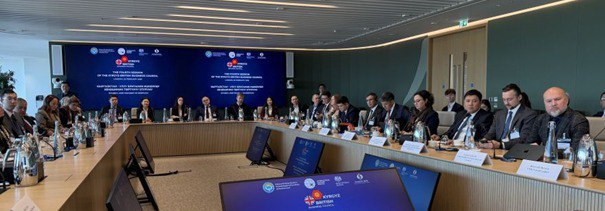
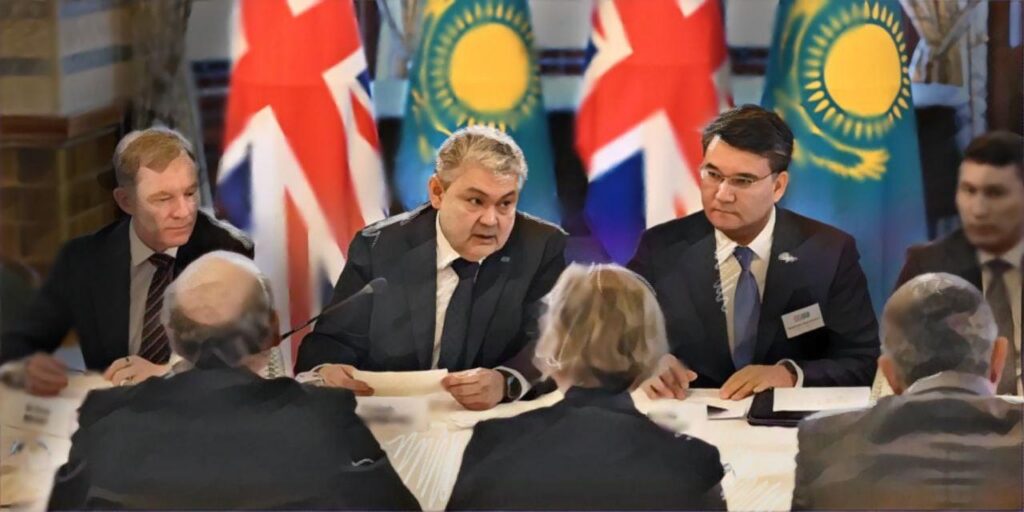
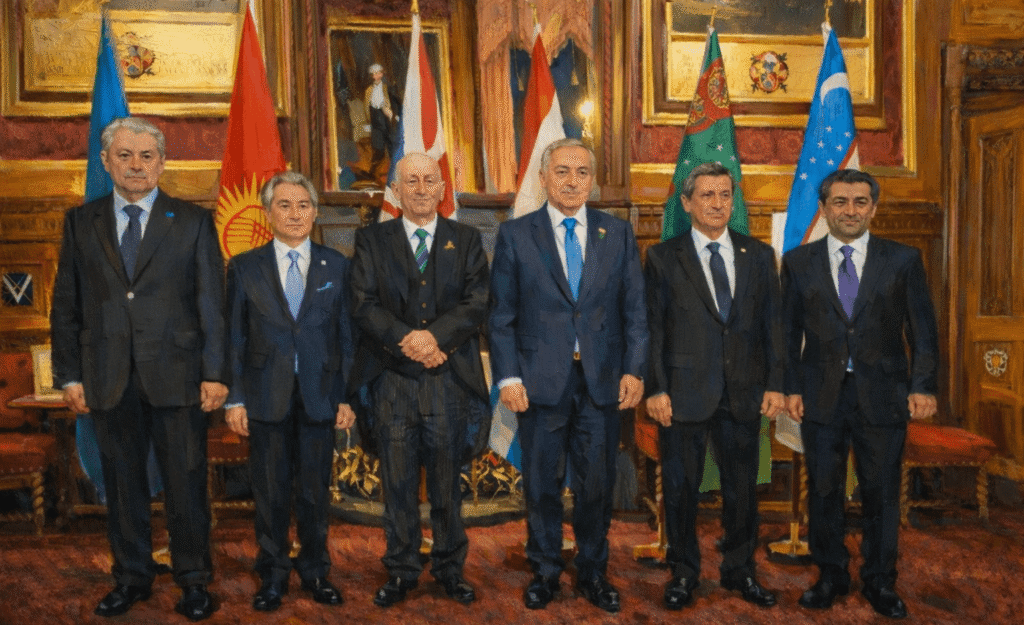
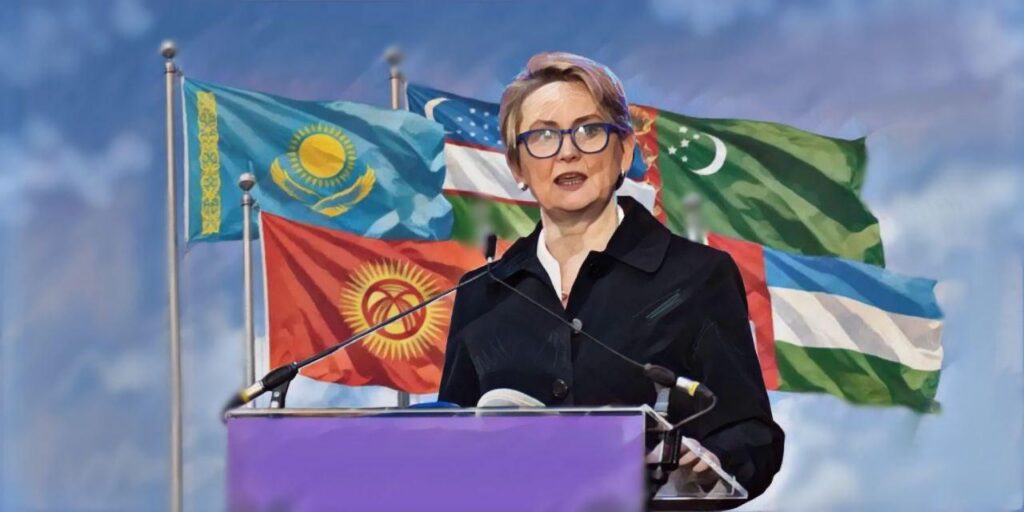
London is hosting the first formal meeting of Central Asian foreign ministers with the United Kingdom on February 26, opening a new “Central Asia–UK” ministerial track after a broader parliamentary program in London earlier in the week. Foreign ministers from Kazakhstan, Kyrgyzstan, Tajikistan, Turkmenistan, and Uzbekistan are attending. Kyrgyzstan’s Foreign Minister Jeenbek Kulubayev is expected to hold bilateral talks with UK Foreign Secretary Yvette Cooper, while Kazakhstan’s Foreign Minister Yermek Kosherbayev has also been holding meetings in London focused on trade, investment, and critical minerals cooperation. With delegations from all five Central Asian countries present, the format provides scope for further bilateral engagements on the margins. On the eve of the ministerial meeting, Central Asian foreign ministers, led by Kazakhstan’s Yermek Kosherbayev, held a session with the UK’s All-Party Parliamentary Group on Cooperation with Central Asia, with British MPs emphasizing political dialogue, legislative exchange, and deeper interparliamentary ties as foundations for advancing economic and regional cooperation. For Tashkent, the London meeting comes after a burst of bilateral engagement that has put finance and infrastructure at the center of the relationship. On February 17, President Shavkat Mirziyoyev received the UK Prime Minister’s Trade Envoy to Central Asia and Azerbaijan, Lord John Alderdice, and highlighted how heavily Uzbekistan has leaned on London’s markets: Uzbek sovereign and corporate bonds worth more than $15 billion have been placed on the London Stock Exchange, while trade turnover has doubled over the past five years, according to the presidential press service. Mirziyoyev also flagged potential projects spanning energy, finance, geology, and transport, and the sides agreed to prepare a joint roadmap. That roadmap is already acquiring project language. Uzbekistan’s Deputy Prime Minister and Minister of Economy and Finance, Jamshid Kuchkarov, met Alderdice in Tashkent with representatives of the London Stock Exchange Group, Arup, and UK Export Finance (UKEF), as well as the UK ambassador, Timothy Smart. According to the Uzbek government, talks focused on transport and logistics infrastructure—rail and road projects, airport modernization—alongside green energy and public–private partnerships. The same meeting produced a memorandum of understanding between Arup and the Ministry of Economy and Finance aimed at engineering and transport infrastructure planning and capacity-building for regions. Alderdice has also put a number on the UK’s offer. Speaking at a UK–Uzbekistan infrastructure conference, he said the UK has “about £4 billion available for export guarantees in Uzbekistan specifically,” linking the figure to potential backing for projects ranging from rail and airports to urban development. He pointed to London as a venue for Uzbek IPOs and bond issuance and said he was exploring potential collaboration with Uzbekistan’s mining sector, noting that the city also hosts the London Metal Exchange. The data suggests why Uzbekistan is pushing: the UK reported total trade in goods and services with Uzbekistan of £2.2 billion in the four quarters to the end of Q3 2025, including £545 million in UK exports and £1.6 billion in imports. Uzbek borrowers have already treated London as more than a diplomatic stop. In 2024, Uzbekistan’s National Bank...

UK Adds Uzbekistan-Based Companies and Tashkent Businessman to Russia Sanctions List

Britain has expanded its Russia sanctions regime to include four companies based in Uzbekistan and one Tashkent-born businessman, according to official documents published on 18 December 2025. The measures form part of a wider update that added 24 new individuals and entities to the UK’s consolidated sanctions list under the Russia (Sanctions) (EU Exit) Regulations 2019. The update was set out in a Financial Sanctions Notice issued by HM Treasury and an accompanying Foreign Office policy paper, “List of Russia sanctions targets, 18 December 2025.” The documents confirm that all newly designated names are now subject to an asset freeze and associated financial restrictions in the UK. The four Uzbekistan-linked companies named in the notice are Fargona Kimyo Zavodi LLC, also listed under the English alias Fergana Chemical Plant; Gelion Business Trade MCHJ, registered in Tashkent; Raw Materials Cellulose MCHJ, based in the Jizzakh region; and LLC JV Chemistry International, located in the Navoi region. Each company is subject to an asset freeze, requiring that any funds or economic resources they own or control in the UK be frozen and that UK persons do not make funds or resources available to them without a licence. The Treasury notice also applies restrictions on trust services. Under UK sanctions law, this restricts UK persons from providing trust services to or for the benefit of designated persons unless an exemption applies or a licence is granted. Compliance guidance is published by the Office of Financial Sanctions Implementation and linked through the British government’s Sanctions List. The documents do not provide detailed descriptions of the companies’ commercial activities, instead using standard statutory wording. In each case, the Secretary of State notes that there are reasonable grounds to suspect the entity “is or has been involved in destabilising Ukraine or undermining or threatening the territorial integrity, sovereignty or independence of Ukraine,” including by making available goods or technologies that could contribute to those outcomes. The sanctions update also includes Rustam Muminov, born in Tashkent in 1953. The Treasury notice lists his nationalities as Uzbek, Israeli, and Russian. Muminov is subject to an asset freeze and trust services restrictions, with the reason stated being that the British authorities have reasonable grounds to suspect he has been involved in destabilizing Ukraine by providing financial services or by making available funds, economic resources, goods, or technology. The Foreign Office policy paper groups the new designations with others added on the same date, which include entities linked to Russia’s energy sector, financial circumvention, and the military-industrial complex. The government says the measures are intended to limit access to financial services and resources that could support Russia’s actions against Ukraine.

UK-Based Really English Partners with Tajikistan’s Education Ministry

Tajikistan is deepening its educational cooperation with the United Kingdom through a new agreement between the Ministry of Education and Science and British digital learning firm Really English. The partnership aims to roll out English language and digital education programs across Tajikistan’s universities. First Deputy Minister of Education and Science, Homid Khoshimzoda, held talks in Dushanbe with Nigel Killick, head of Really English, to define the cooperation framework. The two sides explored ways to broaden English instruction, adopt modern pedagogical methods, and deploy innovative digital learning tools. Khoshimzoda welcomed the British initiative, saying that English proficiency remains a top priority in Tajikistan’s educational policy as it broadens students’ access to global academic and professional opportunities. Killick thanked the ministry for its support and affirmed Really English’s commitment to designing interactive English courses, boosting teacher training, and building university partnerships in Tajikistan. Founded in London in 1999, Really English creates digital tools for learning English—from foundational courses to test preparation. The company works with more than 1,000 corporate clients and over 300 educational institutions worldwide, offering academic, business, and conversational English courses, as well as tailored university programs. Advancing Tajik-British Educational Cooperation The agreement marks another milestone in Tajikistan’s broader push to internationalize its education system. In recent years, Dushanbe has actively built academic partnerships with British institutions. On May 31, representatives of the State Agency “Center for International Programs” met with officials from the University of Greenwich to discuss Tajik students’ access to international programs, scholarships, and internships, particularly in economics, finance, and management. British university representatives reaffirmed their support for joint initiatives and expressed readiness to expand academic exchanges and scholarship offerings for Tajik students. British Support for Innovation and Teacher Development The UK has increased its educational engagement across Central Asia in recent years. In 2022, the British Council resumed operations in Tajikistan with a focus on improving teacher training and English language instruction. Joint initiatives with the Ministry of Education and Science have helped modernize curricula and expand STEM and digital education. With UK support, robotics and programming courses have been introduced for schoolchildren, and Tajik universities, including the Tajik National University (TNU), have launched partnerships with British institutions such as the University of Central Lancashire. The UK is also strengthening educational cooperation in other Central Asian states. In Turkmenistan, British experts are working on teacher training and curriculum development, and Chevening Scholarships continue to be available to Turkmen students. In May 2025, Turkmenistan participated in the World Education Forum in London, where global education trends were discussed.

Tajik Asylum Seeker Wins UK Appeal Over Fear of Forced Beard Shaving

A Tajik man has been granted the right to remain in the United Kingdom after successfully arguing that he would face persecution in his home country for refusing to shave his beard. The case, first reported by The Telegraph, underscores how personal religious expression can form the basis of asylum claims. The asylum seeker, whose identity remains undisclosed, had his initial claim rejected by the UK Home Office. On appeal, he argued that Tajik authorities routinely detain bearded men, forcibly shave them, and collect their fingerprints. He maintained that he would only shave his beard out of fear of harm, not due to personal preference or societal expectations. Tajikistan has in recent years pursued an unofficial campaign linking beards to religious extremism. A BBC investigation found that in one region alone, police forcibly shaved nearly 13,000 men as part of an “anti-radicalisation” drive. Human Rights Watch has similarly documented cases of men with beards being detained, fingerprinted, and groomed under duress. The appellant’s legal team contended that his beard is a core element of his religious identity as a practicing Muslim, and that being compelled to shave it under threat would constitute a violation of his human rights. The appeal was evaluated under Article 3 of the European Convention on Human Rights, which prohibits torture and inhuman or degrading treatment. In his ruling, Deputy Judge Parminder Saini of the UK’s Upper Tribunal stated that the initial judge failed to adequately assess the true reasons the man would remove his beard. “If he wears a beard out of religious conviction but will conform for reasons of securing his safety, he may be entitled to international protection,” Saini wrote. The judge also noted that credible background evidence, such as widespread reports of arbitrary detentions and forced grooming, had not been properly considered in the original decision. “Thousands of Tajik men have had their beards forcibly shaved. These examples were relevant and should have informed the tribunal’s decision,” he added. The case has been remanded to the First-tier Tribunal for a fresh hearing. This ruling illustrates how deeply personal expressions of faith, such as maintaining a beard, can warrant legal protection when in conflict with state practices in the country of origin. It also reflects the complex legal and evidentiary hurdles asylum seekers must overcome to prove a credible fear of persecution.

Bulgarian Spy Ring Sentenced: Questions Linger Over Possible Unprosecuted Crimes and Future Threats

On March 7, 2025, six Bulgarian nationals living in the UK were convicted under the Official Secrets Act 1911 for espionage and the Identity Documents Act 2010 for possessing false identity documents. Following an investigation by the Metropolitan Police Counter Terrorism Command, the Crown Prosecution Service secured sentencing on May 12. Prosecutor Alison Morgan KC argued that lengthy sentences were justified for several defendants, stating that their actions had put lives at risk and compromised national security.  Ultimately, Orlin Roussev (47) received ten years and eight months, Biser Dzhambazov (44) ten years and two months, Ivan Stoyanov (33) five years and three weeks, Katrin Ivanova (33) nine years and eight months, Vanya Gaberova (30) six years and eight months, and Tihomir Ivanchev (39) eight years. While these sentences address their espionage activities, concerns remain over additional fraudulent schemes undertaken by the group. Central to their operations was their use of stolen identities to create companies and bank accounts designed to implicate victims in criminal activities and tarnish their reputations. During the investigation and subsequent raids in early 2023, law enforcement seized as stated in court documents “91 bank and other financial institution cards in 17 different names; 75 passport or identity documents, including those in 55 names other than those legitimately used”. The investigation revealed that the spy ring was allegedly organized at a higher level by fugitive Jan Marsalek who reportedly held a diplomatic passport from Uzbekistan. The spy ring was mercenary in nature, serving a private and public sector clientele to target individuals, organizations, and governments from the UK, Russia, Kazakhstan, the U.S., and Europe with a blend of espionage and fraudulent schemes. A recent report by The Telegraph reveals that Marsalek’s network of spies was far larger than this group of six, with a spy network extending to the UK, U.S., Germany, Austria, Israel, Italy, Switzerland, France, Croatia, Hong Kong, and Turkey. The Bulgarian spy ring’s activities can be traced back as far back as 2015, with Roussev reportedly in contact with Marsalek during this period. By 2016, Roussev, Dzhambazov, and Ivanova were seen participating in a Brexit-related event at the UK Parliament, part of their apparent effort to gain deeper access to information and influential networks. During the three-month-long trial, jurors examined messages and transactions dating back to 2019. While the case primarily focused on espionage, it is possible that broader charges, as well as those extending further back in time, were not fully addressed in court. The sentencing of the Bulgarian spy ring marks a significant step in addressing espionage activities in the UK, but it leaves critical questions unanswered about the full extent of their crimes. Beyond espionage, the group readily achieved identity theft, document forgery, and disinformation campaigns designed to frame individuals, manipulate public opinion, and exploit geopolitical tensions. Their calculated efforts to harm Bellingcat’s investigative journalist Christo Grozev and implicate innocent individuals in fraudulent schemes highlight the broader dangers posed by such operations. The use of front companies like Truth on the...

Mercenary Spies Unmasked: Guilty Verdict Exposes Global Disinformation and Sabotage Network

A spy cell in the UK, including five Bulgarian nationals, targeted multiple individuals and locations over nearly three years, according to court documents at The Old Bailey, officially known as the Central Criminal Court of England and Wales. The court case, which has played out over fourteen weeks, tells the story of a rogue group of six individuals aiming to leverage statecraft, intelligence, and a willingness to be ruthless for monetary gain. The trial has revealed that the defendants worked under the direction of Jan Marsalek, an Austrian national described by prosecutors as a Russian agent involved in espionage activities. Two men have already pleaded guilty to their role in the spy ring, Orlin Roussev, 46, and Bizer Dzhambazov, 43, whilst the whereabouts of Marsalek remain unknown. According to the prosecution, the defendants stood accused of "monetizing a gap in the market," engaging in what was described as "high-level espionage with very high stakes." A money flowchart presented as evidence revealed that approximately €380,000 had been transferred between three of the suspects, further supporting the allegations. The case has offered a window into the dark world of commercialized clandestine services where criminal organizations offer espionage, psyops, misinformation, assassinations, and other illegal activities for a fee. As for the outcome of the trial against the remaining three defendants, Katrin Ivanova, 33, Vanya Gaberova, 30, and Tihomir Ivanchev 39, following 32 hours of deliberation, the jury returned a guilty verdict on all three of being involved in a conspiracy, contrary to section 1 of the Criminal Law Act 1977, to commit an offence under section 1 of the Official Secrets Act 1911. Only Ivanchev was present in court, whilst Ivanova and Gaberova joined by video-link from HMP Bronzefield. Their crimes carry a maximum sentence of 14 years imprisonment. Court testimony, evidence documents as well as volumes of Telegram and WeChat messages, reviewed by The Times of Central Asia reveal a chilling account of the sinister services these dark mercenaries plotted, offered, and in some cases, partially executed. The Times of Central Asia is finalizing its review of court documents and conducting follow-ups with sources to provide a comprehensive analysis and perspective on this case. Please check back for further insights.