• KGS/USD = 0.01144 0%
  • KZT/USD = 0.00213 0%
  • TJS/USD = 0.10562 0%
  • UZS/USD = 0.00008 0%
  • TMT/USD = 0.28530 0%
  • KGS/USD = 0.01144 0%
  • KZT/USD = 0.00213 0%
  • TJS/USD = 0.10562 0%
  • UZS/USD = 0.00008 0%
  • TMT/USD = 0.28530 0%
  • KGS/USD = 0.01144 0%
  • KZT/USD = 0.00213 0%
  • TJS/USD = 0.10562 0%
  • UZS/USD = 0.00008 0%
  • TMT/USD = 0.28530 0%
  • KGS/USD = 0.01144 0%
  • KZT/USD = 0.00213 0%
  • TJS/USD = 0.10562 0%
  • UZS/USD = 0.00008 0%
  • TMT/USD = 0.28530 0%
  • KGS/USD = 0.01144 0%
  • KZT/USD = 0.00213 0%
  • TJS/USD = 0.10562 0%
  • UZS/USD = 0.00008 0%
  • TMT/USD = 0.28530 0%
  • KGS/USD = 0.01144 0%
  • KZT/USD = 0.00213 0%
  • TJS/USD = 0.10562 0%
  • UZS/USD = 0.00008 0%
  • TMT/USD = 0.28530 0%
  • KGS/USD = 0.01144 0%
  • KZT/USD = 0.00213 0%
  • TJS/USD = 0.10562 0%
  • UZS/USD = 0.00008 0%
  • TMT/USD = 0.28530 0%
  • KGS/USD = 0.01144 0%
  • KZT/USD = 0.00213 0%
  • TJS/USD = 0.10562 0%
  • UZS/USD = 0.00008 0%
  • TMT/USD = 0.28530 0%

Viewing results 1 - 6 of 29

Automotive Shift in Central Asia: China Edges Out Russia

In the 2020s, Central Asia has emerged as an increasingly attractive market for the automotive industry. A combination of investment inflows, technological development, and improved logistics, much of it initiated by China, has fueled this transformation. Since the onset of the COVID-19 pandemic, China has rapidly expanded its influence in the region’s automotive sector and is becoming the dominant external supplier in import-reliant markets, even in countries with domestic manufacturing capabilities. Manufacturing Hubs and Import Markets The Central Asian automotive landscape reflects the region’s economic diversity. Uzbekistan and Kazakhstan serve as the main manufacturing hubs, while Kyrgyzstan, Tajikistan, and Turkmenistan rely heavily on imports. By the end of 2024, while the global automotive sector faced a slowdown, Uzbekistan recorded modest growth in car production, up 0.8% year-on-year. In contrast, Kazakhstan saw a 1.6% decrease. During the first seven months of 2025, Uzbekistan produced 212,200 passenger vehicles, a 3.5% increase compared to the same period in 2024. Truck production rose sharply by 28%, from 1,800 to 2,300 units. With a population of approximately 37 million, Uzbekistan remains the region’s industrial center. The state-owned UzAuto Motors, formerly GM Uzbekistan, dominates more than 90% of the domestic passenger car market. Models such as the Chevrolet Cobalt, Nexia, and Tracker are built on General Motors platforms and produced at the main plant in Asaka, which has a capacity of 280,000 vehicles per year. Some of this output is exported to Russia, Azerbaijan, and Georgia. In a bid to stay competitive with Chinese brands, Uzbekistan launched a joint venture with BYD in 2023 and announced the construction of a $1.5 billion electric vehicle (EV) plant in the Ferghana region with Chinese support. Kazakhstan’s key market players include Allur and Hyundai Trans Kazakhstan. Allur’s Kostanay plant produces up to 125,000 Kia, Chevrolet, Skoda, JAC, Jetour, and Hongqi vehicles annually, and accounts for 61% of the national output. Hyundai Trans Kazakhstan in Almaty has a capacity of 50,000 units, covering 31% of production. Two new car plants are expected to open in 2025. The first, a $200 million investment by Kia, will be located in the Kostanay region and marks the company’s first Central Asian plant. With a planned capacity of 70,000 vehicles per year, the move underscores Kia’s long-term commitment to Kazakhstan. “We are excited about the promising opportunities opening up in the Kazakh market. Kazakhstan's economy is developing dynamically and on a large scale. We see great potential for our business in this market,” said Kia President and CEO Ho Sung Song. The second plant, in Almaty, will assemble Chinese brands with a target of 90,000 vehicles annually. Rather than compete with Chinese imports, Kazakhstan has opted to localize production in partnership with Chinese manufacturers. Import-Dependent Markets and China’s Tailored Approach While Kyrgyzstan and Tajikistan host minor assembly operations, primarily with Chinese partners, their automotive fleets, along with Turkmenistan’s, are largely replenished through imports. Since 2020, shifts in global logistics have transformed China from an alternative supplier into the dominant source of vehicles in these...

Kyrgyz Authorities to Confiscate Vehicles Damaging Mountain Ecosystems

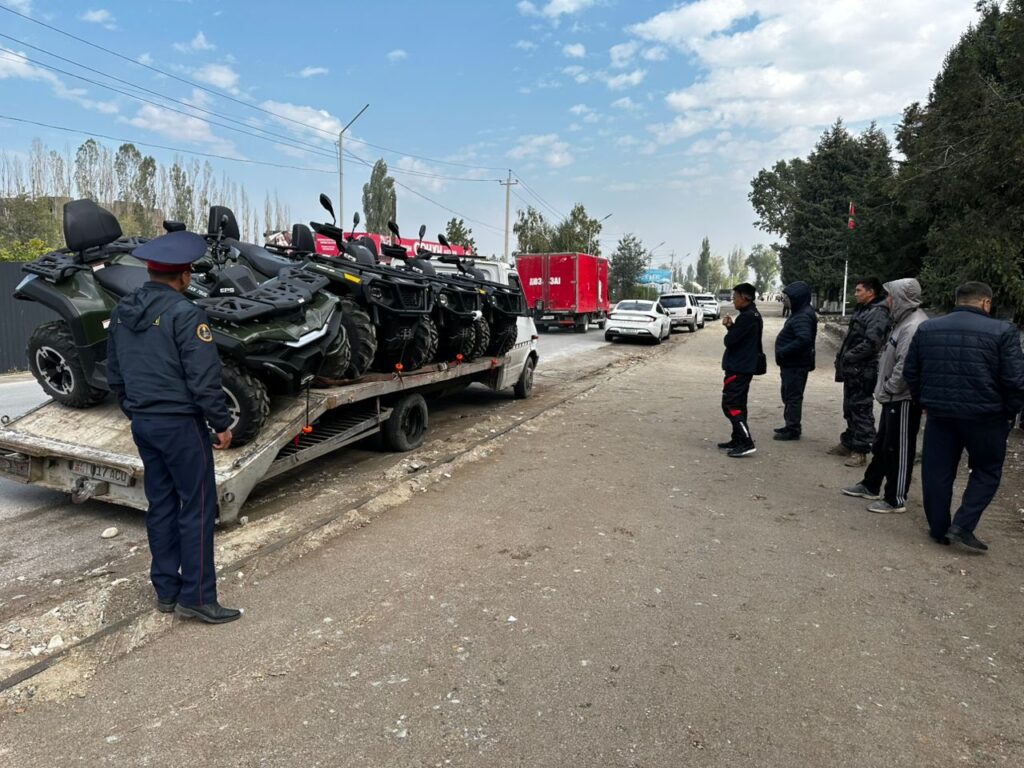
Kyrgyz President Sadyr Japarov has ordered law enforcement and environmental agencies to begin fining and in severe cases, confiscating vehicles used in a manner that damages mountain ecosystems, particularly in nature reserves and alpine pastures. In a social media post featuring a video of individuals riding quad bikes through mountainous terrain, reportedly within a protected area, Japarov called on the Ministries of Internal Affairs and Natural Resources to take immediate action. “Those driving gasoline-powered vehicles in mountain reserves and pastures should have them confiscated,” the president declared. Japarov said such incidents are occurring nationwide, with the reckless use of off-road vehicles and quad bikes leading to the destruction of fragile slopes and pastureland. “As seen in the video, quad bikes tear up slopes, burn grass, and destroy pastures. Most often these are our youth, but also adults and tourists. Despite existing roads, some choose to drive onto pastures, carving new tracks and damaging the natural landscape,” he said. He emphasized that this behavior degrades mountain ecosystems by trampling vegetation, damaging soil, and accelerating erosion. The president has directed the government to draft legislation authorizing the police and the Ministry of Nature to issue fines and seize vehicles used in ecologically harmful ways. “Where the road ends, continue on foot or horseback. Nature is our shared heritage, and we must preserve it for future generations,” he added. Japarov also called on local authorities to help identify violators and enforce ecological protection measures. Following the president’s directive, the Ministry of Natural Resources, Ecology and Technical Supervision, in coordination with local police, detained a group of individuals operating quad bikes in mountain areas. “They were informed about environmental safety rules, nature conservation, and relevant legislation,” the ministry said. The offenders were each fined 5,500 KGS (approximately $60).

Survey Reveals 41% of Bishkek Residents Use Private Cars, Exacerbating Air Pollution

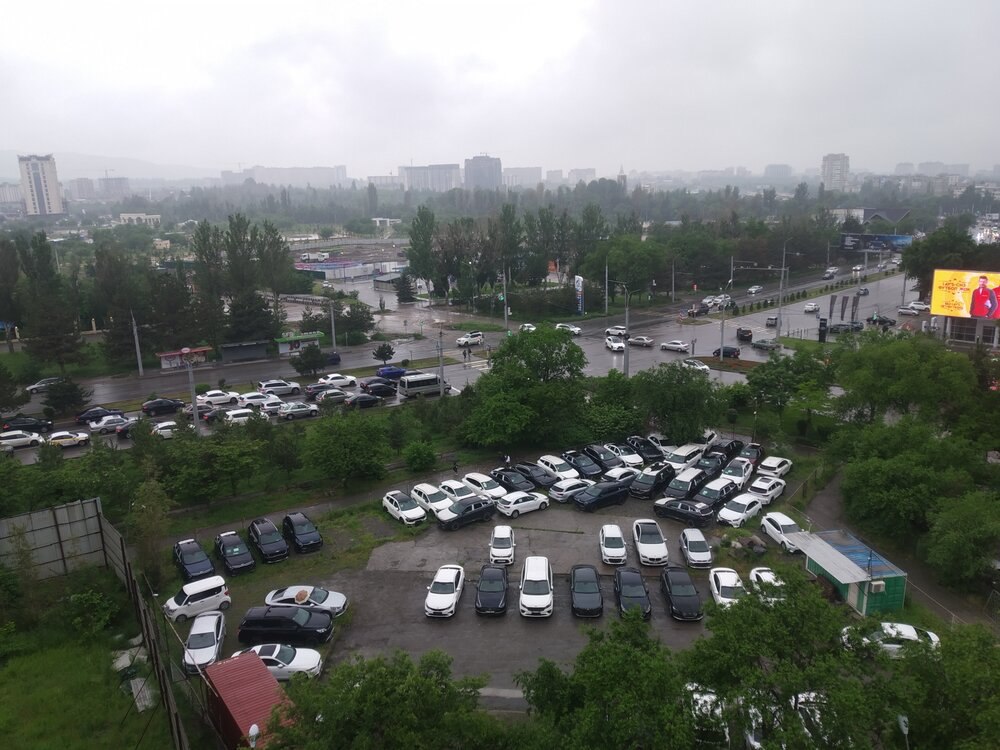
As part of preparations for a new urban development plan, Bishkek’s municipal authorities have conducted a comprehensive survey to understand how residents of the capital and its suburbs navigate the city. According to the results, 41% of respondents rely on private transportation, including personal vehicles and taxis, while 38% use municipal public transport, primarily buses. The remaining 21% get around on foot, by bicycle, or by scooter, including electric scooters. The most frequented destination for city residents is the downtown area, which accounts for the majority of work-related and other daily trips. The Bishkek City Administration stated that the survey data will be used to design a more efficient and balanced urban transportation system aimed at enhancing public transit services. Traffic congestion remains a critical issue in Bishkek, a city experiencing rapid population growth. According to the Ministry of Natural Resources, Ecology, and Technical Supervision, motor vehicles, particularly older models lacking catalytic converters, are responsible for approximately 30% of the city’s air pollution. Vehicle numbers in the capital have surged in recent years. Bishkek now hosts more than 700,000 vehicles, nearly double the road infrastructure’s intended capacity of 350,000. Over 300,000 of these vehicles are more than 15 years old, making them significant contributors to harmful emissions. In response, the city has taken steps to modernize its public transportation fleet. Recent initiatives include replacing diesel-powered buses with larger, more environmentally friendly models powered by liquefied petroleum gas (LPG).

Kazakhstan’s Automotive Industry Boosts Revenues by Over 50% in July

Kazakhstan’s automotive industry posted strong growth in July 2025, producing 11,700 vehicles valued at KZT 164.9 billion ($305.3 million), according to the Kazakhstan Automobile Union. This represents a 50.1% increase in production volume compared to July 2024. Data from the National Statistics Bureau shows that in July 2024, the country produced 7,800 vehicles worth KZT 100.9 billion ($186.8 million). Over the past year, the industry has not only expanded output but also significantly boosted revenue. From January to July 2025, Kazakhstan produced 83,200 vehicles valued at KZT 1.16 trillion ($21.4 billion), marking a 16.7% year-on-year increase. The automotive sector now accounts for 40.7% of the national engineering industry. Passenger cars led the growth, with 75,400 units produced, up 19% from the same period last year. Bus production also saw a 5.5% uptick, totaling more than 1,300 units. In contrast, truck output declined by 10.5% to 4,100 vehicles. Manufacturers also turned out 1,900 trailers and semi-trailers, along with 453 special-purpose vehicles. Regional Breakdown Kostanay remains the top manufacturing hub, producing 45,700 vehicles, a 6.9% increase, at Allur’s facilities. In Almaty, the Hyundai Trans Kazakhstan and Hyundai Trans Almaty plants reported a record 41.8% increase, assembling 31,200 vehicles. Production trends varied in other regions: Semey: Down 17.5% (2,400 units) Karaganda region (QazTehna): Up 28.1% Kokshetau (KAMAZ-Engineering): Up 34.6% Top Brands and Models The most produced brands from January to July were: Hyundai: 30,800 units Chevrolet: 16,500 Kia: 14,800 Jetour: 7,100 Jac: 5,600 Leading models included the Chevrolet Cobalt (13,600 units), Hyundai Tucson (11,900), Kia Sportage (nearly 7,000), Hyundai Elantra (4,900), and Hyundai Mufasa (4,600). Anar Makasheva, President of the Kazakhstani Automobile Union, credited the industry's progress to the expertise of more than 8,000 specialists: “The growth in production strengthens the position of the domestic automotive industry and opens up new opportunities for enterprises.” She also announced the upcoming launch of two new plants: the multi-brand Astana Motors Manufacturing Kazakhstan facility in Almaty and a new KIA production line in Kostanay. Together, these projects are expected to create over 5,000 jobs. As previously reported by The Times of Central Asia, Kazakhstan set a record for car sales in 2024. Domestic automotive production is projected to reach approximately 150,000 vehicles in 2025.

Kazakhstan’s Tax Cut on Old Vehicles Sparks Debate

Kazakhstan will implement an updated Tax Code beginning January 1, 2026, following its signing on July 18. Among the most debated changes is the revision of the transport tax for vehicles over 10 years old. Under the new code, owners of cars aged 11 to 20 years will receive a 30% tax discount, while those with vehicles older than 21 years will benefit from a 50% reduction. The decision stands in contrast to recent trends of increasing the overall tax burden. Yet experts warn that behind the populist optics lie significant environmental and road safety risks. A Political Gesture Ahead of Elections? Tax consultant Aidar Masatbaev views the reform as more political than economic in nature. “People complained that the tax on old cars was too high. Apparently, the advocates of a softer tax policy prevailed,” he said in an interview with inbusiness.kz. Masatbaev added that the measure is unlikely to meaningfully reduce the cost of car ownership. Instead, factors like rising fuel prices and declining real incomes play a more critical role. “The problem is that most people cannot afford to buy a new car,” he noted. Technical and Environmental Risks According to official statistics, more than 80% of Kazakhstan’s vehicle fleet comprises cars over 10 years old. Of these, over 2.2 million vehicles are more than 20 years old. These aging cars not only lag in efficiency but also pose serious safety risks. “Old cars are becoming a source of increased danger. Their consumables are more expensive, and the desire to save on repairs leads to risks on the roads,” Masatbaev warned. He cautioned that offering tax incentives could further entrench the use of obsolete, potentially unsafe vehicles. Additionally, the secondary car market lacks transparency. Many transactions go unregistered, reducing the effectiveness of fiscal measures and minimizing the impact of tax relief on state revenues. Masatbaev also questioned proposals to increase taxes on old vehicles, arguing that such moves would only heighten public dissatisfaction and strain the tax system. He recommended automating debt collection to improve efficiency, but acknowledged this could erode public trust in the tax authority. Kazakhstan’s Aging Car Fleet, by the Numbers According to Ranking.kz, in May 2025, Kazakhstan had 5.34 million registered passenger vehicles, an 11.4% increase from the previous year. Two-thirds, approximately 3.54 million cars, were more than 10 years old. While the share of aging vehicles has slightly declined (from 70.3% in April 2023 to 68.3% in April 2024), the number of cars aged 10-20 years rose 12.4% to 1.27 million. Vehicles over 20 years old now number 2.27 million, a 5.7% increase. The highest concentrations of old cars are found in the Almaty region (449,600), Almaty city (355,200), Karaganda (237,300), Zhambyl (236,200), Turkestan (235,000), and East Kazakhstan (220,100). Zhambyl holds the highest percentage of cars over 10 years old at 83%, followed by Zhetysu (79.3%) and Almaty (78.4%). While tax breaks may offer temporary relief to car owners, analysts argue that without a comprehensive strategy for renewing the vehicle fleet, promoting...

China’s “Used” Car Exports to Central Asia Raise Questions Over Trade Practices

China has recently surpassed Japan to become the world’s largest automobile exporter. Yet behind this headline lies a controversial trade tactic: the mass export of brand-new vehicles categorized as “used.” Since 2019, this strategy has become a key component of China’s vehicle trade with regions including Central Asia, Russia, and the Middle East. A Reuters investigation has revealed that these so-called “zero-mileage used cars” are new vehicles that are briefly registered in China to obtain domestic license plates, then exported abroad without being driven. This approach allows automakers to classify the cars as “sold,” enabling local governments to boost export figures and manufacturers to reduce unsold inventory from an increasingly saturated domestic market. “This is the outcome of an almost four-year price war that has made companies desperate to book any sales possible,” said Tu Le, founder of the Michigan-based consultancy Sino Auto Insights. Local Governments Fuel the Export Boom At least 20 provincial and municipal governments in China, including major industrial hubs like Guangdong and Sichuan, actively support this model. Local incentives include issuing additional export licenses, offering tax breaks, investing in export-related infrastructure, and providing free warehouse space near border zones These measures align with national macroeconomic objectives and offer local officials a tool to demonstrate economic performance through export statistics. Central Asia: A Strategic Destination Central Asia has emerged as one of the primary destinations for these vehicles. Many of the exported models are gasoline-powered, as China pivots to electric vehicles (EVs) domestically. Nonetheless, EVs, often heavily subsidized at the production stage, are also part of the export mix. William Ng, international director at Chongqing-based Huanyu Auto, reported strong profits in 2022-2023. “We were able to earn 10,000 yuan ($1,400) in profit on an electric sedan purchased for 40,000 yuan by selling it in Central Asia,” he told Reuters. However, Ng warned that the market is becoming oversaturated. “Small dealers and even livestreamers are getting involved. They used to sell wine or vases, now they’re selling cars. This is chaos.” Industry Pushback and Regulatory Scrutiny Despite short-term export gains, several Chinese automotive leaders have expressed unease. Zhu Huarong, chairman of Chang'an Auto, warned that the practice could tarnish the global image of Chinese carmakers. Xing Lei, founder of AutoXing, echoed this sentiment. “How many [sales] are real or inflated? No one knows,” he said, pointing to a growing distrust of industry data. Importing nations are starting to react. Russia has banned zero-mileage used cars from brands that already have authorized dealerships in the country. Jordan and several Middle Eastern countries have tightened regulations, redefining what qualifies as a “used” vehicle to close loopholes. These moves reflect mounting concern over what some consider a “dumping” strategy, flooding foreign markets with low-cost or subsidized vehicles that disrupt local competition and undercut domestic dealers. Why the Practice Continues China’s centrally managed economy allows for considerable leeway in how provinces achieve growth targets. Export volume, employment figures, and retail sales data are often tied to the promotion prospects of local officials....