• KGS/USD = 0.01144 0%
  • KZT/USD = 0.00211 0%
  • TJS/USD = 0.10582 0%
  • UZS/USD = 0.00008 0%
  • TMT/USD = 0.28530 0%
  • KGS/USD = 0.01144 0%
  • KZT/USD = 0.00211 0%
  • TJS/USD = 0.10582 0%
  • UZS/USD = 0.00008 0%
  • TMT/USD = 0.28530 0%
  • KGS/USD = 0.01144 0%
  • KZT/USD = 0.00211 0%
  • TJS/USD = 0.10582 0%
  • UZS/USD = 0.00008 0%
  • TMT/USD = 0.28530 0%
  • KGS/USD = 0.01144 0%
  • KZT/USD = 0.00211 0%
  • TJS/USD = 0.10582 0%
  • UZS/USD = 0.00008 0%
  • TMT/USD = 0.28530 0%
  • KGS/USD = 0.01144 0%
  • KZT/USD = 0.00211 0%
  • TJS/USD = 0.10582 0%
  • UZS/USD = 0.00008 0%
  • TMT/USD = 0.28530 0%
  • KGS/USD = 0.01144 0%
  • KZT/USD = 0.00211 0%
  • TJS/USD = 0.10582 0%
  • UZS/USD = 0.00008 0%
  • TMT/USD = 0.28530 0%
  • KGS/USD = 0.01144 0%
  • KZT/USD = 0.00211 0%
  • TJS/USD = 0.10582 0%
  • UZS/USD = 0.00008 0%
  • TMT/USD = 0.28530 0%
  • KGS/USD = 0.01144 0%
  • KZT/USD = 0.00211 0%
  • TJS/USD = 0.10582 0%
  • UZS/USD = 0.00008 0%
  • TMT/USD = 0.28530 0%

Viewing results 1 - 6 of 15

Kazakhstan to Raise Minimum Wage in 2026

Kazakhstan’s Minister of Labor and Social Protection, Svetlana Zhakupova, has announced that the government plans to raise the minimum wage starting January 1, 2026. While the exact amount was not disclosed, Finance Minister Madi Takiev suggested the minimum wage could increase to just over 90,000 KZT ($189) per month. Speaking on the sidelines of a joint meeting of both chambers of the Kazakh parliament, Zhakupova noted that last year her ministry approved a new methodology for calculating the minimum wage. The formula is based on labor productivity, median wages, and inflation. As all these indicators, especially inflation, have risen this year, an adjustment is being prepared. “Today, several institutions are conducting research to determine accurate indicators of labor productivity and median wages by region and by industry, all of which will inform the new minimum wage,” Zhakupova said. “By the end of the year, we expect to finalize the amount so that the increase can take effect from January 1.” Finance Minister Takiev echoed this projection, estimating the new figure at approximately 90,000 KZT. Currently, the minimum wage in Kazakhstan stands at 85,000 KZT ($164). If the forecast is accurate, the planned increase would be the smallest in seven years. For context, the minimum wage rose from 28,200 KZT to 42,500 KZT ($54 to $81) in 2019, to 60,000 KZT ($116) in 2022, and to 70,000 KZT ($135) in 2023. The current level was established in January 2024. Inflation for the first five months of this year reached 11.3%, according to official data. Earlier, parliamentary deputy Askhat Rakhimzhanov called for revising key social indicators, including the minimum subsistence level, minimum wage, and consumer basket. He argued the subsistence minimum, currently 46,000 KZT ($89), should be raised to at least 115,700 KZT ($223). Deputy Prime Minister Serik Zhumangarin, who also heads the Ministry of National Economy, agreed that the minimum wage should rise but cautioned against abrupt increases. “Raising the minimum wage is complex. It must be balanced with efforts to contain inflation, as it leads to higher production costs and stimulates demand, which can further drive inflation,” Zhumangarin said. He acknowledged the sharp rise in prices and admitted he could not live on 85,000 KZT. According to the National Statistics Bureau, the average monthly nominal wage in Kazakhstan during Q1 2025 was 423,100 KZT ($816), while the median wage stood at 300,300 KZT ($579). Only 6.1% of the working population, or around 170,000 workers, earn less than 100,000 KZT monthly, according to the Applied Economics Research Centre (AERC). The majority, 53%, earn between 150,000 and 350,000 KZT ($290 to $675). As previously reported by The Times of Central Asia, medical personnel remain among the lowest-paid occupational groups in the country.

Kyrgyzstan’s Wages Lowest Among EAEU Countries

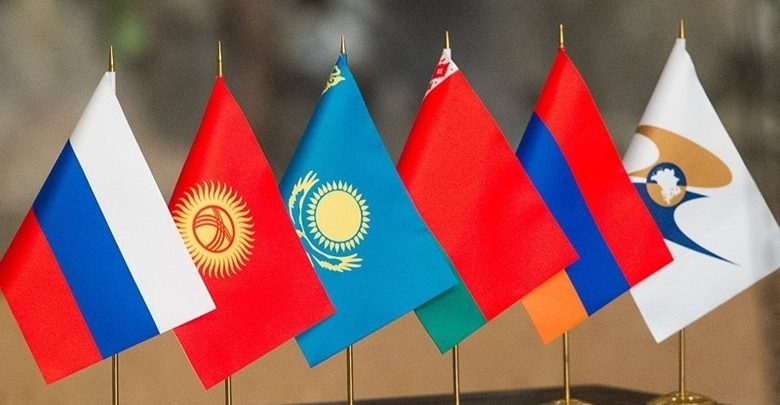
Kyrgyzstan has the lowest average monthly wage among its fellow Eurasian Economic Union (EAEU) members, an economic integration bloc that includes Armenia, Belarus, Kazakhstan, and Russia. According to the Eurasian Economic Commission, the EAEU’s governing body, in January–June 2024, the average monthly nominal wage in Kyrgyzstan was $398, in Belarus $666, in Armenia $704, in Kazakhstan $875, and in Russia $922. Compared to the same period in 2023, wages increased in all EAEU member states with the highest growth recorded in Belarus (113%) and Russia (109.4%). Lower wages in Kyrgyzstan are however, somewhat compensated by the cost of food. In a survey conducted by Kyrgyzstan’s Ministry of Water Resources, Agriculture and Processing Industry, it was found that the price of comparable food products in the country are 13.59% lower than in Kazakhstan and 16.17% lower than in Russia.

Central Asia as an Emerging Economic Region

Central Asia, spanning an area from the Caspian Sea in the west to China in the east and from Afghanistan in the south to Russia in the north, is rapidly emerging as a significant economic block. Comprising five post-Soviet states — Kazakhstan, Kyrgyzstan, Tajikistan, Turkmenistan, and Uzbekistan — this region is distinguished by its rich natural resources and strategic geographic position, as well as its natural beauty and cultural heritage. With a combined population of around 75 million people, Central Asia has emerged as a dynamically developing market that is increasingly attracting global interest. The transformation unfolding in Central Asia holds both promise and significant challenges for its residents and foreign investors alike. This shift is driven by increasing calls for political reform, the dynamism of a youthful population, and an imperative for sustainable development alongside the pressing need to diversify economic bases.   Structural changes following independence in 1991 set the stage for robust growth from 2000s onward Following the collapse of the Soviet Union in 1991, Central Asian countries faced the challenge of transitioning from centrally-planned to market-oriented economies. This period was marked by significant economic difficulties across the region including negative GDP growth and hyperinflation, compounded by the complexities of privatization, legal reforms, and both social and political instability. The nations responded with different development strategies aimed at market liberalization, infrastructure improvement, and the utilization of natural resources. By 2000, Central Asia experienced a noticeable economic resurgence, marking a striking contrast to the conditions in 1991. In that year, Uzbekistan's GDP growth was at -0.5%, Kyrgyzstan at -7.9%, and Kazakhstan at -11%. A decade later, these countries reported positive growth rates of 4.2%, 5.3%, and 13.5%, respectively. This remarkable turnaround can be attributed to the "low base effect," where the initially low economic indicators set the stage for significant improvements over time. The total GDP of Central Asian countries has grown seven times since the beginning of the 2000s. In comparison with the global economic growth rate of +2.6% annually, the Central Asian region grew by an average of 6.2% between 2000 and 2023 according to IMF data. All Central Asian states are forecasted to outpace the IMF’s projected growth rate for emerging markets and developing economies 2024 which stands at 4.2%; however, actual growth will depend on reforms and foreign investment. Kazakhstan has set the highest growth goal with a five-year target GDP increase to $450 billion, which would require an achievable but challenging 6% annual growth. As illustrated below, Kazakhstan stands out as the economic powerhouse of Central Asia with a GDP almost 1.5 times that of all the other countries combined.     Labor markets: Optimal demographics for growth and innovation According to United Nations data, approximately 75 million people live in Central Asia, representing 1% of the world’s population. Relative to the global median age, all of Central Asia boasts a young population. A youthful population fuels economic growth by replenishing the workforce, driving innovation, and expanding consumer markets. It supports older demographics...