• KGS/USD = 0.01144 0%
  • KZT/USD = 0.00205 0%
  • TJS/USD = 0.10685 -0.37%
  • UZS/USD = 0.00008 0%
  • TMT/USD = 0.28490 0%
  • KGS/USD = 0.01144 0%
  • KZT/USD = 0.00205 0%
  • TJS/USD = 0.10685 -0.37%
  • UZS/USD = 0.00008 0%
  • TMT/USD = 0.28490 0%
  • KGS/USD = 0.01144 0%
  • KZT/USD = 0.00205 0%
  • TJS/USD = 0.10685 -0.37%
  • UZS/USD = 0.00008 0%
  • TMT/USD = 0.28490 0%
  • KGS/USD = 0.01144 0%
  • KZT/USD = 0.00205 0%
  • TJS/USD = 0.10685 -0.37%
  • UZS/USD = 0.00008 0%
  • TMT/USD = 0.28490 0%
  • KGS/USD = 0.01144 0%
  • KZT/USD = 0.00205 0%
  • TJS/USD = 0.10685 -0.37%
  • UZS/USD = 0.00008 0%
  • TMT/USD = 0.28490 0%
  • KGS/USD = 0.01144 0%
  • KZT/USD = 0.00205 0%
  • TJS/USD = 0.10685 -0.37%
  • UZS/USD = 0.00008 0%
  • TMT/USD = 0.28490 0%
  • KGS/USD = 0.01144 0%
  • KZT/USD = 0.00205 0%
  • TJS/USD = 0.10685 -0.37%
  • UZS/USD = 0.00008 0%
  • TMT/USD = 0.28490 0%
  • KGS/USD = 0.01144 0%
  • KZT/USD = 0.00205 0%
  • TJS/USD = 0.10685 -0.37%
  • UZS/USD = 0.00008 0%
  • TMT/USD = 0.28490 0%

Viewing results 1 - 6 of 67

New Drought Monitoring System Could Save Tajikistan Millions

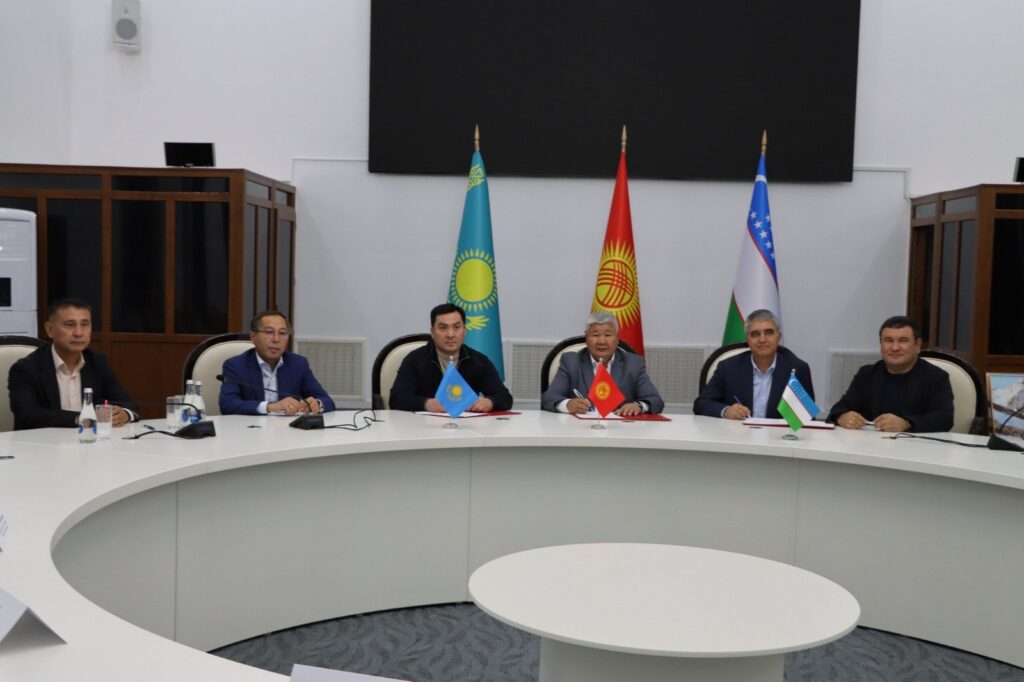
Tajikistan stands to save between $4 million and $6 million annually by adopting a satellite-based drought monitoring system designed to reduce crop losses and improve water management. Regional Project Launch On August 20, a major regional initiative to monitor droughts in Central Asia was launched in Tashkent. The project, spearheaded by the United Nations Economic and Social Commission for Asia and the Pacific (ESCAP), will employ Earth Remote Sensing (ERS) technologies. The budget for the first phase is $300,000. The system will initially be piloted in Uzbekistan for two years, with implementation in Tajikistan and Kyrgyzstan expected by 2027. According to project analysts, Tajikistan’s annual savings will come from reduced agricultural losses, more efficient water use, and timely responses to drought conditions. Agriculture at High Risk Climate change poses a significant threat to Tajikistan. Over the past three decades, average temperatures in Central Asia have risen by 1.2°C, well above the global average of 0.85°C. Meanwhile, precipitation has decreased by 15-20%, increasing the frequency and severity of droughts. Agriculture accounts for 22% of Tajikistan’s GDP, and approximately 1.5 million people -- 15% of the population -- live in drought-prone areas. The country’s mountainous landscape and limited water resources further magnify the impact of even minor climate shifts. Current meteorological stations lack the capacity to monitor local variations. Weather conditions in mountainous areas can differ dramatically over short distances, rendering traditional methods insufficient. The new system will rely on satellite data from Europe’s Sentinel-2 and the U.S.’s Landsat-8. These satellites measure the normalized difference vegetation index (NDVI), soil moisture, and surface temperature. Forecasts are updated every 5-10 days and have an accuracy rate of 80-85%. This will enable farmers to better plan irrigation schedules, select suitable crops, and conserve water resources. Implementation Timeline The initiative builds on a 2024 pilot project that developed monitoring methodologies and collected baseline data. In 2025, trials began in Uzbekistan (in Karakalpakstan and the Fergana Valley). Nationwide implementation in Uzbekistan is scheduled for 2026, followed by rollout in Tajikistan and Kyrgyzstan in 2027. As part of the program, 150 specialists will be trained, and satellite data will be integrated into national meteorological systems. Tajikistan is expected to cut annual crop losses by 10-15%, boosting food security and delivering $4-6 million in economic benefits. The project also aims to mitigate social pressures in rural areas. In Uzbekistan, similar climate stresses displaced an estimated 120,000 people between 2018 and 2023 due to water shortages. By reducing drought-induced income loss, the system could help slow climate-related migration in Tajikistan as well. The initiative draws on successful international models. Australia’s Drought Watch program has cut agricultural losses by 12%, while India’s INSAT-3D satellite has improved forecast accuracy to 78%. Both approaches will be adapted for Central Asian conditions. Challenges Ahead Despite the promise, Tajikistan faces several hurdles. Internet access reaches only 55% of rural communities, there is a shortage of trained remote sensing specialists, and the system’s annual maintenance is estimated at $50,000. To address these challenges, ESCAP will provide...

Strained Currents: Managing the Syr Darya’s Waters

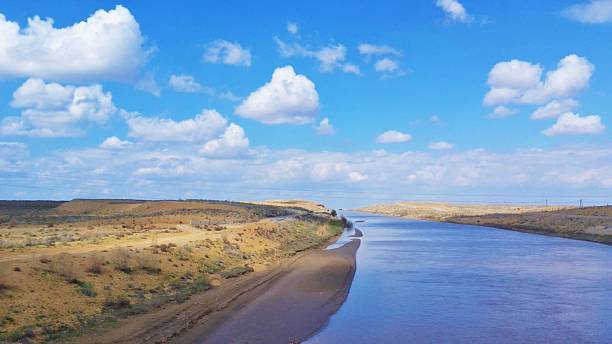
On both banks of the Syr Darya, apartments are springing up. The embankment itself is undergoing extensive renovation. Trucks crawl along, their weight pounding the freshly lain asphalt into shape. Its acrid whiff rankles in the nose for some distance. Kyzylorda’s new Akim, Nurzhan Akhatov, appointed in August 2024, is determined to make the most of his short term in office, explains Kanat Utegenov, founder of LLP ECO GUARD, an ecological laboratory. This makes the new landscaping important. “There is a lot of construction… it is visually noticeable to the population,” he told The Times of Central Asia. “Unfortunately, the economics of it have not necessarily been calculated.” Utegenov cites a new stadium on the left bank of the river as an example of one of these potential white elephant projects. Worse still, all this landscaping is dependent on one critical factor which is only partly under the control of the Akim, and only partly under the control of Kazakhstan. That issue is water. [caption id="attachment_32630" align="aligncenter" width="1600"] The low-running Syr Darya passing through Kyzylorda, Kazakhstan; image: TCA, Joe Luc Barnes[/caption] In late April, the view that a ritzy new apartment buys you is one of sad, sandy banks. Wading birds plod methodically through the mud, looking for worms. The dirty grey river does not so much flow but keeps up a ponderous momentum, inching its way northwest. Some of this water will reach the North Aral Sea, which is being propped up on life support by the Kokaral Dam. Utegenov attributes the low water level as being partly due to climatic change. “Winter has become milder and almost snowless,” he said, adding that it’s not unusual to see a low river in spring. “This is when the rice is planted; all the water goes to the irrigation canals.” Governments across the region are doubling down on rice production, says Bulat Yessekin, an expert on environmental and water policy in Central Asia. However, he points out that growing rice is incredibly inefficient in this part of the world. “If we take into account the full irrigation cycle, five tons (5,000 liters) of water are used to cultivate just one kilo of rice,” he told TCA. However, Kazakhstan’s government is keen to trumpet successes. The use of laser leveling technology in rice fields has helped save over 200 billion liters of water by distributing it more evenly. According to Kazakh state media, this has meant that the yield from each hectare of rice crop has increased by around 60-70%. This has done little to convince Yessekin, who believes this is little more than a sticking plaster. “There was no such need for technology before as there was enough water. Now, such technology has become necessary because otherwise, they will simply not be able to grow the crop. In countries with much greater precipitation, such as Thailand or India, you can grow it, but here there are no prospects for rice. Sooner or later people need to move to other crops.” Yessekin...

Opinion – Central Asia’s Looming Water Crisis: A Ticking Time Bomb

When people think of Central Asia, they often picture vast deserts, ancient Silk Road cities, and oil pipelines stretching to distant markets. Yet the region’s most urgent and combustible resource is not buried underground — it flows above it. Water, or more precisely the lack of it, is rapidly becoming the defining fault line of Central Asia’s future. For decades, the five Central Asian republics have tiptoed around a growing water crisis. The two major rivers that sustain life in this arid region, the Amu Darya and the Syr Darya, are now so contested and depleted that what was once a technical issue has metastasized into a geopolitical threat. The region's major rivers, the Amu Darya and the Syr Darya are under immense pressure, threatening agriculture, livelihoods, and regional stability. At the heart of the crisis is a tragic irony. The upstream countries, Kyrgyzstan and Tajikistan, are rich in water but poor in energy and cash. They need to release water in winter to generate hydropower. Downstream nations, particularly Uzbekistan and Turkmenistan, want water stored until the summer to irrigate vast cotton and wheat fields. The result? Mutual distrust, occasional diplomatic spats, and an accelerating race to dam, divert, and hoard water in a region already gasping under the weight of climate change. A Region Parched Central Asia annually utilizes over 60 billion cubic meters of water for irrigation from the Amu Darya and Syr Darya basins. However, recent years have seen a decline in river flows, with the actual flow of the Syr Darya being 20–23% less than the norm. Further, the ghost of the Aral Sea — a once-thriving inland lake that has now shrunk by over 90% in its volume and 74 % in surface area — serves as a haunting reminder of the cost of mismanagement. The Soviet legacy of excessive irrigation has morphed into a post-Soviet scramble for control, where water is not just a tool of survival but a lever of power. This desiccation has transformed the region, leading to the emergence of the Aralkum Desert and causing severe ecological and health issues. Climate Change Intensifies the Crisis Climate change is exacerbating water scarcity in Central Asia. A recent study revealed that an extreme heatwave in March 2025, with temperatures soaring 5 to 10°C above pre-industrial levels, was significantly amplified by global warming. Such temperature surges accelerate glacier melt and increase evaporation rates, further reducing water availability. By some estimates, Central Asia could lose over 30% of its freshwater resources by 2050. Yet, rather than galvanize cooperation, this existential threat has sparked more competition. International efforts have largely fallen flat. The International Fund for Saving the Aral Sea (IFAS), the region’s main water cooperation body, is riddled with inefficiencies and lacks enforcement power. External actors like China and Russia have their own interests, often deepening the regional divide rather than healing it. Inefficient Water Management Inefficient agricultural practices remain one of the most profound and persistent contributors to water mismanagement across Central Asia. In...

Report Addresses Cross-Border Challenges in Irtysh River Basin

The Eurasian Development Bank (EDB) has released a report titled “The Irtysh River Basin: Transboundary Challenges and Practical Solutions”, analyzing the water resources of the transboundary Irtysh River basin, shared by China, Kazakhstan, and Russia. The report highlights growing water demand in all three countries and proposes practical solutions to address cross-border challenges. Strategic Importance of the Irtysh River The Irtysh River, the world’s longest transboundary tributary, stretches 4,248 km and, together with the Ob River, forms Russia’s longest waterway, the second longest in Asia and the seventh longest globally. Flowing from China through Kazakhstan into Russia, the river is crucial for all three countries, necessitating strategic cooperation in its management. [caption id="attachment_29111" align="aligncenter" width="1950"] The Irtysh River Basin; image: eabr.org[/caption] Key Challenges in Each Country China In China, the upper Irtysh River is essential for the Xinjiang Uygur Autonomous Region (XUAR), where the population has surged from 15.2 million in 1990 to 25.87 million in 2022. Rapid regional development has made water stress a pressing issue. Research forecasts that annual water withdrawals from the Irtysh could more than triple, from the current 1.5 - 2.0 km³ to 7 km³, out of an average natural flow of 8.3 km³. Kazakhstan In Kazakhstan, the Irtysh and its tributaries support 30% of the population and contribute 45% of the country’s total agricultural output. The Irtysh HPP Cascade accounts for 10% of Kazakhstan’s electricity generation and 80% of its hydropower capacity. Increased water withdrawals by China pose significant risks to Kazakhstan’s water security. Russia For Russia, upstream water policies in China and Kazakhstan are major concerns. Excessive Chinese withdrawals could reduce Kazakhstan’s downstream flow, impacting Omsk and the surrounding Omsk Municipal District. Changes in water availability and quality over the next decade present serious socio-economic challenges for the region. Key Recommendations from the Report The EDB report outlines four major recommendations for managing transboundary water challenges: Expanding Bilateral and Trilateral Cooperation The report urges stronger water agreements between Kazakhstan and Russia, as well as between Kazakhstan and China, incorporating international water management principles. Recommended cooperation areas include: Ensuring international navigation on the Irtysh-Ob River system Controlling water pollution Regulating safe water usage Improving efficiency during floods, droughts, and low-water periods This groundwork would help establish a future trilateral water management agreement between the three countries. Strengthening Water Management Infrastructure The report calls for soft infrastructure development, such as: Creating an interstate river flow monitoring system with open data access Developing joint training programs for water management specialists Expanding interdisciplinary water research involving experts from all three nations Coordinating Hydraulic Infrastructure Operations The report stresses the importance of joint management of existing and future hydropower plants, dams, reservoirs, and irrigation canals to ensure stable water supplies without harming other nations' resources. Priority projects include: Shulbinsk HPP (Phase 2) in Kazakhstan Semipalatinsk HPP in Kazakhstan Modernization of the Satpayev Irtysh-Karaganda Canal in Kazakhstan Construction of the Krasnogorsk hydro-system near Omsk, Russia Developing a Multimodal Transport Corridor The report proposes a multimodal transport corridor linking Russia,...

Securing Central Asia’s Future: EBRD’s Regional Head on the Fight for Water Sustainability

Every fourth inhabitant of Central Asia, home to more than 83 million people, does not have regular access to safe drinking water. The region spans more than four million square kilometers, and over 15% of its territory is covered by the Karakum and Kyzylkum deserts, as well as waterless places such as the Ustyurt Plateau (similar in size to the United Kingdom), which stretches across Kazakhstan, Uzbekistan, and Turkmenistan. The extreme heat common to Central Asia in summer makes water a precious resource. To make matters worse, irresponsible human activity, particularly wasteful water use for irrigation, has led to one of the most devastating ecological catastrophes globally. The Aral Sea, where up to 60,000 tonnes of fish were caught annually only 30 years ago, has practically ceased to exist. Most of Central Asia’s freshwater intake relies on glacial melts affected by global warming.  The World Resources Institute forecast in its 2023 Aqueduct Water Risk Atlas that an additional one billion people globally will live with extremely high water stress by 2050. This will disrupt economies and agricultural production. Most Central Asian countries will be severely affected. While the European Bank for Reconstruction and Development (EBRD) cannot reverse the global warming process or tackle its impacts alone, it can certainly contribute to climate change mitigation efforts, securing better water access, and promoting its rational use. There is frequently no water supply or water treatment infrastructure in rural areas of the regions where it invests.  Most municipal water supply and treatment utilities across Central Asia have not seen much investment or refurbishment over the last 30 years. The EBRD has been working to address this issue, and many of its investment projects are already impacting people’s lives. [caption id="attachment_29070" align="aligncenter" width="1600"] Image: EBRD[/caption] In Kazakhstan, the Bank’s work with Vodnye Resoursy Marketing (VRM)/Shymkent water company, the country’s only privately owned municipal water utility, perfectly illustrates why the EBRD is such a strong advocate of private-sector involvement in the provision of municipal services. Over many years, we have enjoyed excellent cooperation with this company, which has translated into high-quality water supply services for more than 1.2 million residents of Shymkent. It has become a benchmark for the region for its effective and efficient operations. Thanks to VRM’s efforts, with 1.2 million residents, Shymkent became the first city in Kazakhstan to install a water meter for every consumer. User habits have changed: personal daily water consumption has decreased from 456 liters 27 years ago to 150 liters. The water savings achieved during this period will enable Shymkent to meet the needs of its population for another 20 years.  The EBRD started working with VRM in 2009 and has financed five projects totaling €60 million. With the Bank’s financial assistance, VRM has introduced an automated network monitoring system, improved power supply at twelve pumping stations, constructed eleven electrical substations, and built a European Union standards-compliant biogas facility (the only one of its kind in Central Asia), which helps VRM to meet all of its thermal...

ADB to Help Uzbekistan Introduce Smart Water Management

The Asian Development Bank (ADB) has approved a $125 million loan to support Uzbekistan’s government in modernizing water management, improving water security, and expanding access to safe and reliable water. Advancing Smart Water Management ADB’s Climate-Smart Water Management Improvement Project will assist Joint Stock Company Uzsuvtaminot, the country’s national water utility, and its regional branches in enhancing water infrastructure and efficiency. Key initiatives include: Completing the nationwide installation of bulk flow metering and telemetry systems at major water sources. Conducting a comprehensive asset inventory and geographic mapping of all water supply and wastewater infrastructure, covering approximately 4 million customer connections. Implementing climate-smart, IT-based utility management systems, including training programs for national water utility staff. Upgrading customer service centers with new financial management software, ensuring transparent financial statements aligned with international standards. Addressing Water Security Challenges ADB Country Director for Uzbekistan Kanokpan Lao-Araya emphasized the urgency of improving water management in the face of climate change and inefficient usage. “Uzbekistan’s water resources are under acute threat from climate change and inefficient usage. ADB’s project introduces smart water management systems to improve water usage, reduce energy consumption, and increase operational efficiency to lower Uzbekistan’s carbon footprint,” she stated. ADB’s Ongoing Support for Uzbekistan Since Uzbekistan joined ADB in 1995, the bank has committed $14.3 billion in public sector loans, grants, and technical assistance to support the country’s development.