• KGS/USD = 0.01144 0%
  • KZT/USD = 0.00198 0%
  • TJS/USD = 0.10857 -0.18%
  • UZS/USD = 0.00008 0%
  • TMT/USD = 0.28571 0%
  • KGS/USD = 0.01144 0%
  • KZT/USD = 0.00198 0%
  • TJS/USD = 0.10857 -0.18%
  • UZS/USD = 0.00008 0%
  • TMT/USD = 0.28571 0%
  • KGS/USD = 0.01144 0%
  • KZT/USD = 0.00198 0%
  • TJS/USD = 0.10857 -0.18%
  • UZS/USD = 0.00008 0%
  • TMT/USD = 0.28571 0%
  • KGS/USD = 0.01144 0%
  • KZT/USD = 0.00198 0%
  • TJS/USD = 0.10857 -0.18%
  • UZS/USD = 0.00008 0%
  • TMT/USD = 0.28571 0%
  • KGS/USD = 0.01144 0%
  • KZT/USD = 0.00198 0%
  • TJS/USD = 0.10857 -0.18%
  • UZS/USD = 0.00008 0%
  • TMT/USD = 0.28571 0%
  • KGS/USD = 0.01144 0%
  • KZT/USD = 0.00198 0%
  • TJS/USD = 0.10857 -0.18%
  • UZS/USD = 0.00008 0%
  • TMT/USD = 0.28571 0%
  • KGS/USD = 0.01144 0%
  • KZT/USD = 0.00198 0%
  • TJS/USD = 0.10857 -0.18%
  • UZS/USD = 0.00008 0%
  • TMT/USD = 0.28571 0%
  • KGS/USD = 0.01144 0%
  • KZT/USD = 0.00198 0%
  • TJS/USD = 0.10857 -0.18%
  • UZS/USD = 0.00008 0%
  • TMT/USD = 0.28571 0%
05 December 2025

Viewing results 1 - 6 of 24

Uzbekistan Aims to Develop Agriculture with Smarter Water and Energy Use

Uzbekistan's President Shavkat Mirziyoyev recently held a meeting on the efficient use of water and energy in agriculture. More than 1,600 pumping stations currently use 6.8 billion kilowatts of electricity to irrigate 2.5 million hectares. Through the partnership, electricity consumption can be reduced by 20% by upgrading pumps and solar panels. For example, 92 farmers installed modern pumps in the Khorezm region, saving 20% of electricity. Some sold excess solar energy to the state and received an additional monthly income of 7-8 million UZS ($548-626). Water-saving technologies have helped Uzbekistan save 2 billion cubic meters of water in an area of more than 2 million hectares, and more than 50 local companies are producing these devices. However, some drip irrigation systems are still not working, and the 10 billion UZS ($780,000) subsidy allocated for laser leveling in Karakalpakstan hasn’t been used. Khorezm was also instructed to extend the subsidy for laser leveling to 1 million UZS ($78.00) per hectare and improve control over these technologies. Next year, 700 billion UZS ($54 million) in subsidies and 2.5 trillion UZS ($195 million) in credit will be used for water-saving technology. Additionally, flood reservoirs will be built in 13 districts, improving the water supply for 50,000 hectares. Mirziyoyev emphasized that real change requires digitization. About 1,700 online monitoring devices and 12,000 smart water devices are already in place, but Uzbekistan needs a system to collect and analyze this data. To address this, a Water Management Digitization Center will be set up to manage a new unified system for tracking water use.

Afghanistan to Boost Oil Production in the Amu Darya Basin

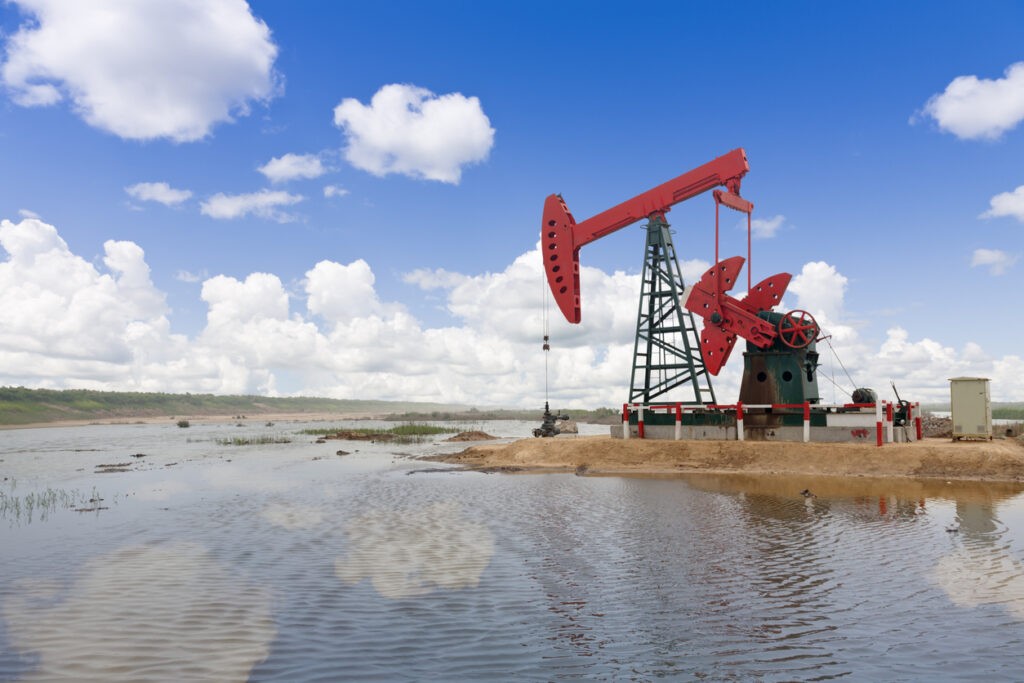
Afghanistan plans to launch 25 new oil wells in the Amu Darya basin, increasing daily oil production to 3,000 tons. Hamdullah Fitrat, the deputy spokesman of the Islamic Emirate of Afghanistan, shared that there are currently 24 active wells in this field, from which 1,300 tons of oil are extracted daily. According to Fitrat: "The Ministry of Mines and Petroleum plans to activate 25 more wells by the end of this year, of which 18 will be newly drilled, two will be exploratory wells, and five will be rehabilitated.” Economic experts stress that officials should carefully plan new well drilling and attract investors to process the extracted oil. Economic expert Abdul Zahoor Madaber stated that Afghanistan has abundant natural resources but lacks modern machinery to process them, and cooperation with other countries is needed to import this equipment. Mohammad Asif Stanekzai, another economic expert, added: “The production and processing of natural resources can create job opportunities and have a positive impact on reducing inflation in Afghanistan.” According to the Ministry of Mines and Petroleum, only 10% of Afghanistan’s oil needs are currently met from domestic production. The Amu Darya is a vital river for Central Asian countries. While 72-73% of its water originates in Tajikistan, the majority is used by neighboring countries. In April of this year, the countries of Central Asia distributed Amu Darya and Syrdarya water for the summer of 2024. Under the agreed quota, the draw on water from the Amu Darya watershed will be 56 billion cubic meters for the year, with about 40 billion cubic meters used in the April-to-October growing season. As stated in the Interstate Commission for Water Coordination (ICWC) agreement, Uzbekistan will receive 16 billion cubic meters, Turkmenistan will receive 15.5 billion cubic meters, and Tajikistan will receive 6.9 billion cubic meters. The ICWC claims that the total number of irrigated lands in Central Asian countries is 4.3 million hectares in Uzbekistan, 2.5 million hectares in Kazakhstan, 1.9 million hectares in Turkmenistan, 1 million hectares in Kyrgyzstan, and 680,000 hectares in Tajikistan.

Water Supply Plan to the Aral Sea is Almost 100% Complete

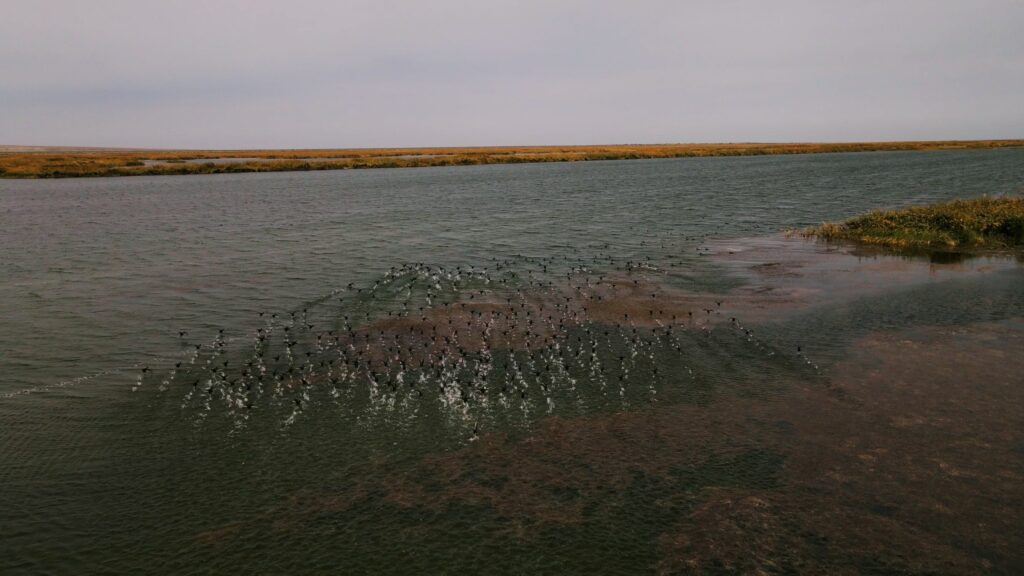
This year, the Aral Sea received 977 million cubic meters of water, which allowed it to fulfill the water supply plan by almost 100% during the irrigation period. This is the first time in the last five years it has got close to 100%. Deputy Head of Aral-Syrdarya Basin Inspection Zeinollah Kaztoganov noted that this year, the volume of water flowing into the Northern Aral increased to 60-70 cubic meters per second, ten times more than in previous years when the figure was 7-10 cubic meters per second. Now, the total volume of water in the Northern Aral is about 22 billion cubic meters. Additionally, more than 45 million cubic meters of water were directed to Akshatau, Sorgak, and Kamystybas lakes, which positively impacted fishing and tourism: water salinity decreased, and fish populations increased. If the catches of local fishermen earlier were only 400 tons a year, this year they reached over 7,500 tons. Kuntugan Turganbayev, a 76-year-old fisherman from the village of Karateren who has been fishing all his life, said that with the inflow of water into the Aral Sea, there is a prospect for the development of fisheries. He noted that this year, there are more fish than last year, and if the current water level in the Aral Sea is maintained, the fishery will continue to grow. Meanwhile, Uzbekistan's Ministry of Water Resources and Irrigation and the World Bank are developing the second phase of a program to conserve the Northern Aral Sea. This program is aimed at improving water supply, construction, and modernization of water infrastructure. The main objective is to support sustainable water use, which includes the development of agriculture, tourism, and fisheries in the region. The project also provides for the establishment of an automated water management system, which will help control water flows effectively and ensure stable water levels in the Northern Aral Sea.

Kazakhstan to Cooperate with China and Russia in Combating Floods

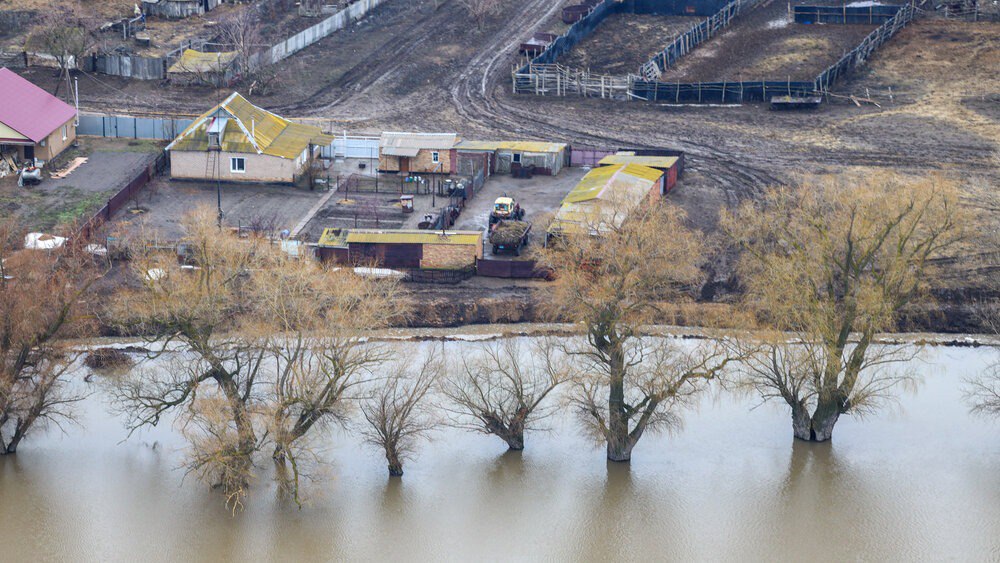
Kazakhstan’s Ministry of Water Resources and Irrigation will sign a memorandum of cooperation with the Ministry of Water Resources of China to combat future spring floods together. The Kazakh ministry has also agreed with Russia to create a joint working group to coordinate actions during spring flood periods. Kazakhstan’s Minister of Water Resources and Irrigation, Nurzhan Nurzhigitov, announced this at a government meeting on September 24. The conference addressed eliminating the consequences of unprecedented spring floods in the country’s northern and western regions and preparing for future spring floods. Massive floods in the spring of 2024, caused by the rapid snow-melt, destroyed thousands of homes and forced almost 100,000 people to evacuate from flood zones. Much of the spring flood water comes to Kazakhstan via trans-boundary rivers flowing from Russia and China. "To ensure the collection and safe passage of flood water in the future, the ministry plans to build 42 new reservoirs with a total capacity of 2.6 billion cubic meters, as well as to reconstruct 37 reservoirs with a total capacity of 3.7 billion cubic meters and about 14,500 km of irrigation canals. This year, the construction of two reservoirs in the Turkestan region and the reconstruction of three reservoirs in the Aktobe, Turkestan, and West Kazakhstan regions began," Nurzhigitov stated, adding that the spring floods led not only to negative consequences, but also allowed reservoirs to collect more than twelve billion cubic meters of water used for economic needs. As of the beginning of September 2024, 8.4 billion cubic meters of that water were used for agricultural purposes. Nurzhigitov reported that the reservoirs of Kazakhstan's northern, central, eastern, and western regions are now 80% full and added that the spring floods have also helped improve the environmental situation by directing excess water to places where it had not flowed for a long time. For example, 80 million cubic meters of flood waters were directed to the Kamysh-Samar lakes of the West Kazakhstan region. For the first time in decades, water arrived in the lakes of the Kyzylorda region through the Sarysu River. Since the beginning of the year, twelve billion cubic meters of water have been sent to Lake Balkhash, and 7.4 billion cubic meters to the Caspian Sea. Nurzhigitov also stated that, together with the Ministry of Digital Development, Innovation, and Aerospace Industry, work is underway to create an information system for forecasting and modeling floods, which will be launched before the end of the year. "This information system will allow for flood forecasting to make strategic decisions. It will show potential flood risk zones on the map," Nurzhigitov explained. At the same meeting, Deputy Prime Minister Kanat Bozumbayev reported that the 2024 spring floods had affected more than 120,000 people across 12 regions. Bozumbayev emphasized that new housing for families affected by the flood was constructed in an unprecedentedly short space of time. In under four months, 2,576 new houses were built, and 5,767 houses and apartments were purchased on the secondary market. In addition,...

Kazakhstan and Uzbekistan Agree To Establish Stations for Syr Darya Water Measurement

The press service of the Ministry of Water Management and Irrigation of Kazakhstan reports that Kazakhstan and Uzbekistan have agreed to install ten automated measuring stations in Syr Darya to accurately measure water resources. Shavkat Hamroyev, the Minister of Water Management of Uzbekistan, met with Nurzhan Nurzhigitov, his counterpart in Kazakhstan, with the two reportedly discussed automating measuring stations and digitizing water accounting in Syr Darya. Nurzhigitov emphasized that negotiations with international financial organizations and companies are in progress for the joint implementation of the project. The ministers also discussed the modes of operation of the Norin-Syr Darya cascade reservoirs for next year’s pre-irrigation season. “Many thanks to our colleagues from Uzbekistan for their active participation in the International Fund for Saving the Aral Sea (IFSA) meeting and the proposals voiced," Nurzhigitov stated. "Over the year, we have become convinced that our joint work produces positive results, so we intend to continue close bilateral cooperation. We have common views on many issues. This allows us to resolve most of the existing issues on a mutually beneficial basis.” In return, Hamroyev expressed Uzbekistan’s desire to strengthen cooperation within the IFSA. “Uzbekistan fully supports Kazakhstan’s chairmanship of the International Fund... We want to strengthen cooperation in this direction and work on joint projects. For example, preserving the ecosystems of the Syr Darya and Amu Darya basins, providing residents with quality drinking water, restoring small and local water bodies.” In addition, the parties discussed developing a regional strategy for the use of water resources. In May of this year, Hamroyev told a parliamentary hearing that watersheds from the Amu Darya and Syr Darya rivers are forecasted as being favorable this year.

Kazakhstan and China in Talks on Feeding Lake Balkhash

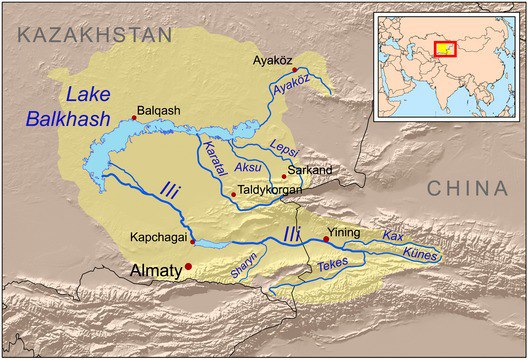
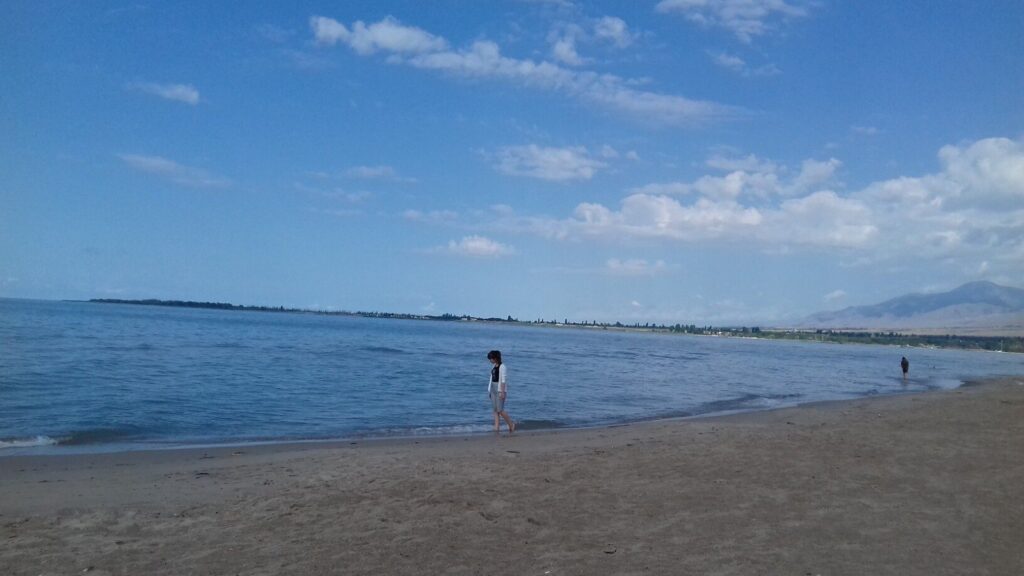
The Kazakh Ministry of Water Resources and Irrigation announced on August 19 that Kazakhstan and China are drafting an agreement on dividing trans-boundary river waters between the two countries. The main objective of the agreement is to ensure that the water in Kazakhstan’s Lake Balkhash remains at an optimal level. Located 280km northwest of the country’s largest city, Almaty, Lake Balkhash is the fifteenth largest lake in the world. It is fed by several trans-boundary rivers flowing from China, the largest of which is the Ili River, which provides about 80% of the lake's water. [caption id="attachment_21931" align="aligncenter" width="1056"] Image: Wikimapia[/caption] Environmentalists in Kazakhstan have been concerned about Lake Balkhash's shallowing. Balkhash has been gradually drying up in recent years, including due to the decline in water volumes in the Ili River. Upstream China has extensively diverted the river over the past half century to produce hydroelectric power and agricultural crops on irrigated land. According to research, as of 2021 China was blocking 40% of the river’s inflow. Moldir Abdualieva, a spokesperson of the Kazakh Ministry of Water Resources and Irrigation, said that the ministry has been paying great attention to providing Lake Balkhash with the necessary volume of water. “Since the beginning of this year, more than 12 billion cubic meters of water have been sent to the lake," she said. In May, it was reported that the water level in Balkhash had risen by 23cm since the beginning of the year due to increased rainfall and floods caused by snow melt this past spring.