• KGS/USD = 0.01143 0%
  • KZT/USD = 0.00205 0%
  • TJS/USD = 0.10433 0%
  • UZS/USD = 0.00008 0%
  • TMT/USD = 0.28577 0%
  • KGS/USD = 0.01143 0%
  • KZT/USD = 0.00205 0%
  • TJS/USD = 0.10433 0%
  • UZS/USD = 0.00008 0%
  • TMT/USD = 0.28577 0%
  • KGS/USD = 0.01143 0%
  • KZT/USD = 0.00205 0%
  • TJS/USD = 0.10433 0%
  • UZS/USD = 0.00008 0%
  • TMT/USD = 0.28577 0%
  • KGS/USD = 0.01143 0%
  • KZT/USD = 0.00205 0%
  • TJS/USD = 0.10433 0%
  • UZS/USD = 0.00008 0%
  • TMT/USD = 0.28577 0%
  • KGS/USD = 0.01143 0%
  • KZT/USD = 0.00205 0%
  • TJS/USD = 0.10433 0%
  • UZS/USD = 0.00008 0%
  • TMT/USD = 0.28577 0%
  • KGS/USD = 0.01143 0%
  • KZT/USD = 0.00205 0%
  • TJS/USD = 0.10433 0%
  • UZS/USD = 0.00008 0%
  • TMT/USD = 0.28577 0%
  • KGS/USD = 0.01143 0%
  • KZT/USD = 0.00205 0%
  • TJS/USD = 0.10433 0%
  • UZS/USD = 0.00008 0%
  • TMT/USD = 0.28577 0%
  • KGS/USD = 0.01143 0%
  • KZT/USD = 0.00205 0%
  • TJS/USD = 0.10433 0%
  • UZS/USD = 0.00008 0%
  • TMT/USD = 0.28577 0%

Viewing results 1 - 6 of 19

Rhetoric, Disinformation, and Regional Responses: Central Asia Reacts to Debates in the Russian Media Space

In recent months, a series of sharp and at times openly threatening statements circulating within the Russian media space have drawn growing attention in Central Asia. As previously reported by The Times of Central Asia, rhetoric targeting several Central Asian states has become increasingly frequent on Russian television and social platforms, raising concern among analysts and the public over issues of sovereignty, coercive tactics, and broader regional security. Russian officials have repeatedly stressed that commentary aired on television talk shows or circulated on social media does not necessarily reflect official state policy. Moscow has, on several occasions, distanced itself from provocative remarks made by media personalities, emphasizing that Russia’s foreign policy is articulated only through formal government channels. Analysts note that such episodes unfold within a highly polarized information environment, where sensational or confrontational statements can spread rapidly online, often detached from their original context or intent. Even when later denied or debunked, these narratives can contribute to heightened tensions by reinforcing existing anxieties and testing political and societal reactions in neighboring states. One recent and widely discussed episode involved a video that went viral on social media, allegedly showing Russian State Duma deputy and former heavyweight boxing champion Nikolai Valuev calling for a shift in Russia’s approach toward former Soviet republics from “carrots” to “sticks”, while also hinting at the possibility of a “special operation” in Central Asia. The footage sparked an immediate backlash and skepticism, particularly in Uzbekistan. According to RIA Novosti, Valuev later publicly denied the authenticity of the video, asserting that it was a deepfake. The Russian news agency quoted him as saying the video “has nothing to do with me” and had been produced using AI. “I’m glad that technologies are developing so fast, but this was done with artificial intelligence,” he said, noting that he often discusses AI and deepfakes and that “apparently, AI has taken offense at me.” Doubts about the video’s authenticity emerged almost immediately. Among those questioning it was Ruslan Chagaev, the former world boxing champion from Uzbekistan and one of Valuev’s former opponents, who publicly expressed his disbelief that the statements reflected Valuev’s actual views. Nonetheless, the incident fueled broader discussions in Central Asia about information manipulation, the role of deepfakes, and how aggressive narratives can gain traction, even when later debunked. These concerns were echoed at a recent session of the analytical forum “Fikrat,” held in Tashkent under the theme National Interest and Global Pressure. The gathering brought together political scientists, economists, and historians to assess the growing volume of inflammatory rhetoric emerging from Russia and its implications for Central Asia. Participants stressed that, even when such narratives do not reflect or translate directly into policy, they can shape public perception and test societal and governmental responses. [caption id="attachment_43140" align="aligncenter" width="1598"] The Firkat Forum in Tashkent; image: TCA, Sadokat Jalolova.[/caption] Economist Abdulla Abdukadirov, First Deputy Director General of Uzbekistan’s Agency for Strategic Reforms under the President, addressed the ideological underpinnings of these narratives, identifying Russian nationalist figure Alexander Dugin...
Uzbek Migrants Face Growing Risks in Russia as Tashkent Seeks Probe Into Alleged Abuse

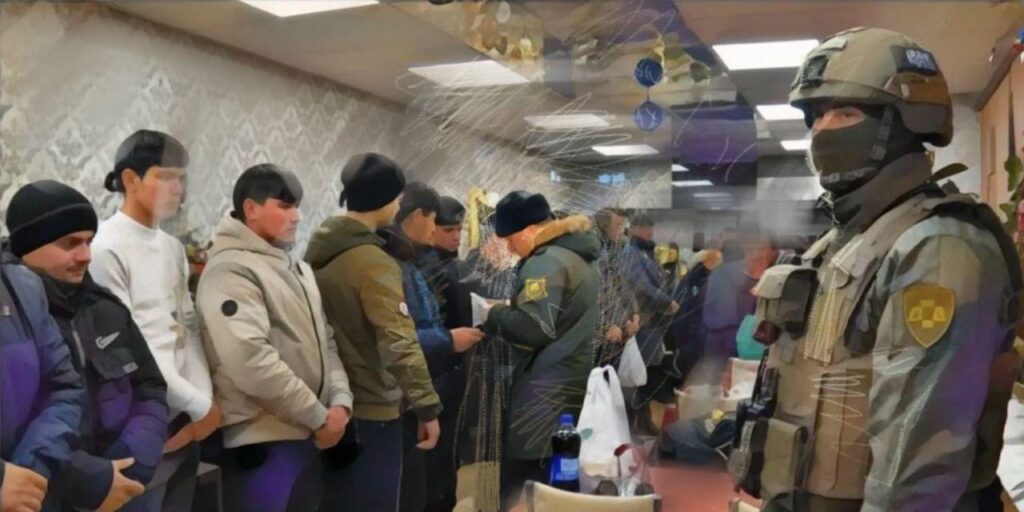
Russian security forces reportedly carried out a raid on a café in Khabarovsk in mid-December 2025, during which several Central Asian migrants were allegedly beaten. According to information circulated on social media, two Uzbek citizens fell into a coma following the incident, and one of them subsequently died. On January 2, Uzbekistan’s Ministry of Foreign Affairs announced it had sent a diplomatic note to Russia requesting an impartial and lawful investigation. The ministry also said steps were being taken to repatriate the deceased’s body. However, it noted that the cause of death has not been officially confirmed, and reports of a second Uzbek in a coma remain unverified. In response to the incident, Alisher Qodirov, member of parliament and leader of the Milliy Tiklanish (National Revival) Democratic Party, issued a stark warning to Uzbek migrants in Russia. “Believe me, the situation will only get worse month by month,” Qodirov wrote on Telegram. “Russian security services see Central Asians as potential participants in future unrest, and they have already given up on any benefit migrants may bring... Use your common sense and leave Russia as soon as possible,” he added. “No income is worth the tears of your parents and children.” As Russia’s war against Ukraine enters its fourth year, labor migrants remain among the most vulnerable and least protected groups affected by the conflict. Central Asian nationals,  particularly Uzbeks, face increasing risks of coercion, legal jeopardy, and systemic abuse. By July 2025, at least 902 Uzbek citizens were reported to have been recruited by Russia to fight in Ukraine. Independent monitors believe the true figure is considerably higher. In October 2025, the ‘I want to live’ project identified 2,715 Uzbek nationals who had participated in the conflict, including those recruited illegally, those who signed contracts, and ethnic Uzbeks already serving in the Russian military. Despite this, Russia remains heavily reliant on migrant labor. As of September 1, 2024, nearly four million citizens from Central Asia were living in Russia. Of these, 1.79 million were from Uzbekistan, followed by significant numbers from Tajikistan, Kazakhstan, Kyrgyzstan, and Turkmenistan. For Uzbekistan, the economic implications of growing pressure on migrants are profound. Remittances remain a cornerstone of the national economy. In the first half of 2025 alone, Uzbekistan received $8.2 billion in cross-border transfers, with 78% originating from Russia. Amid rising xenophobia and labor restrictions, economists warn that this dependence could have severe long-term consequences. Economist Abdulla Abdukadirov, Doctor of Economic Sciences, said total remittances by year-end are expected to approach $20 billion. “This is an extremely large sum,” Abdukadirov said at an offline session of the Fikrat analytical program, responding to a question from The Times of Central Asia. “If the state budget is around $28 billion, then nearly $20 billion in remittances reveals how dependent our economy is becoming on external sources.” Abdukadirov warned that Uzbekistan is developing a dangerous structural dependency. “First, we’re becoming more reliant on external investments and borrowing,” he said. “Second, our dependence on cross-border remittances is deepening.” According...

Tajik Schoolboy Killed in Moscow Area Sparks Central Asian Outrage

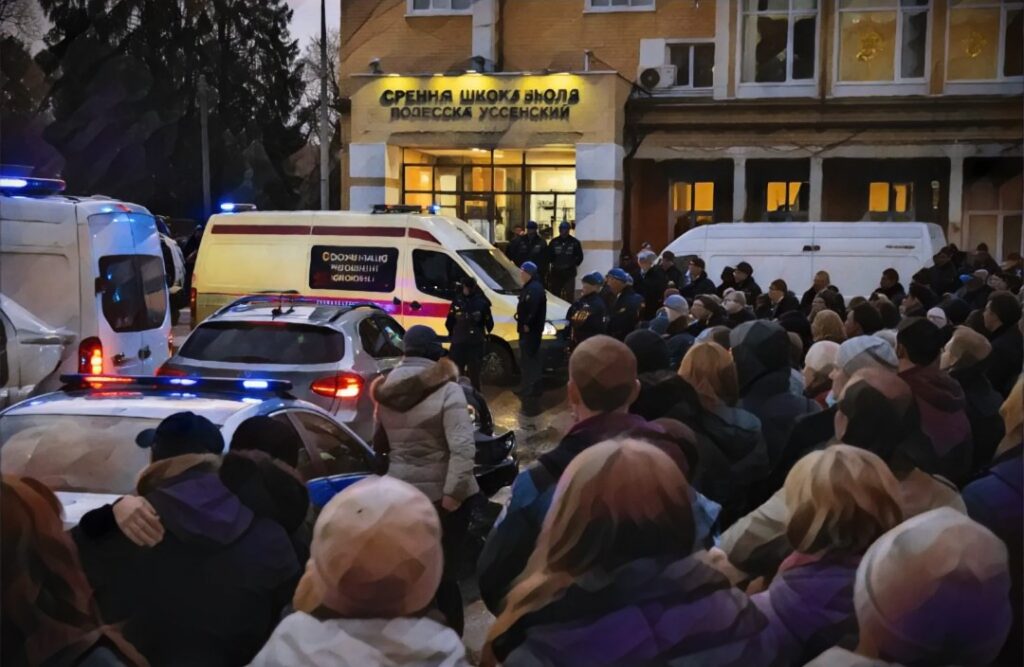
The fatal stabbing of a 10-year-old Tajik boy at a school in the Moscow area has sparked widespread condemnation across Central Asia. Russia’s Foreign Ministry extended “deep condolences” to Tajikistan following the killing. Ministry spokesperson Maria Zakharova said Moscow offered immediate assistance to the Tajik Embassy in Russia after the incident was reported by the press on December 16. She confirmed that the embassy sent a diplomatic note requesting an objective investigation. Official requests were subsequently forwarded to Russia’s Investigative Committee and the Interior Ministry to clarify the circumstances and support the Tajik side. The attack occurred at Uspensky School, where a 15-year-old ninth-grade student, identified as Timofey Kulyamov, allegedly stabbed and killed the victim, Qobiljon Aliyev. Witnesses reported that the suspect asked the child about his nationality before launching the fatal attack. On the day of the incident, he was reportedly wearing a shirt bearing the phrase “No lives matter.” Qobiljon’s family moved to Russia from the Hisor region of Tajikistan four years ago. His father passed away three years prior, and his mother has been working as a cleaner at the same school to support her three children. Journalists, civil society leaders, and public figures in Tajikistan and Uzbekistan condemned the killing, linking it to rising hostility toward Central Asian migrants in Russia. Tajik political analyst Muhammad Shamsuddinov took to social media to denounce what he described as systemic discrimination. “Who killed Qobiljon? The system,” he wrote. Shamsuddinov accused Russian public discourse and policies of fueling an environment of xenophobia, referencing remarks by State Duma members, law enforcement actions, and state-run media coverage. “Qobiljon was killed by Mironov’s constant statements. By Bastrykin’s speeches. By the State Duma’s draft laws. By Russian state television. By nationalist Telegram channels. By the constant and very public raids against migrants. By hours-long detentions at airports,” he wrote. He also criticized the Russian Embassy in Tajikistan for its silence, noting that while it continued to post routine updates and commemorative messages, it had not acknowledged the boy’s death. “As a society, where is the sympathy? The condolences? Nothing,” he wrote. Sherzodkhon Kudratkhuja, Chairman of the Supervisory Board of the Uzbekistan National Media Association and Rector of the University of Journalism and Mass Communications, also voiced his outrage. “No mother should ever go through this. None,” he said, after reportedly watching a video of the incident. He called the murder of a child based on national identity “impossible to describe in words.” Kudratkhuja urged Russia to introduce formal education on national tolerance in its schools and criticized the normalization of ethnic slurs among adults. “Children learn from adults, and this is the mirror of today’s society,” he said. He emphasized the need to foster values of tolerance, adding that all people “descended from Adam and Eve and are equal in dignity.”

Tajikistan Condemns Fatal Stabbing of Boy in Russia Citing Ethnic Hatred

Tajikistan has condemned what it called an “ethnic hatred” attack in Russia after a 10-year-old boy from a Tajik family was stabbed to death at a school near Moscow, in a rare public rebuke aimed at a key partner for labor migration and security ties. The killing happened on December 16 in the village of Gorki-2 in the Odintsovo district of the Moscow region, according to Russia’s Investigative Committee, which said a minor attacked people at an educational institution, killing one child and injuring a school security guard. A video of the attack circulated on Russian social media after the incident. According to reporting by Asia-Plus, footage published by the Telegram channel Mash shows the teenage assailant approaching a group of students while holding a knife and asking them about their nationality. The video then shows a school security guard attempting to intervene before the attacker sprays him with pepper spray and stabs him. The assailant subsequently turns the knife on the children, fatally wounding the 10-year-old boy. A statement released by Tajikistan’s interior ministry said it feared the case could “serve as a pretext for incitement and provocation by certain radical nationalist groups to commit similar crimes.” Tajikistan’s response also drew attention after the foreign ministry said the attack was “motivated by ethnic hatred.” Dushanbe subsequently summoned the Russian ambassador to protest the attack, handing him a missive “demanding that Russia conduct an immediate, objective, and impartial investigation into this tragic incident.” The condemnation is particularly notable as Tajikistan rarely issues public criticism of Russia, which remains its main destination for migrant labor and a key security partner. According to Russian media, the attacker, who has admitted their guilt, subscribed to neo-Nazi channels and had sent his classmates a racist manifesto entitled "My Rage," in which he expressed hostility toward Jews, Muslims, anti-fascists, and liberals, a few days before the incident. Tajik migrants form one of the largest foreign labor communities in Russia and across Central Asia. Millions of Tajik citizens work abroad each year, most of them in Russia, sending remittances that are a critical source of income for families at home. According to the World Bank, remittances account for roughly half of Tajikistan’s gross domestic product in some years, making labor migration a cornerstone of the country’s economy. Many Tajik migrants work in construction, services, and transport, often in precarious conditions and with limited legal protections. The killing comes as Central Asian migrants in Russia face growing pressure to enlist in the war in Ukraine, with coercion through detention, deportation threats, and promises of legal status having been reported. The killing has also renewed scrutiny of rising xenophobia in Russia, particularly toward migrants from Central Asia. The Times of Central Asia has previously reported an increase in hate speech, harassment, and violent attacks targeting migrants, especially following major security incidents. Human Rights Watch has warned that Central Asian migrants in Russia face growing discrimination, arbitrary police checks, and racially motivated abuse, trends that have intensified in recent...

Essential but Unwelcome: Central Asian Migrants in Russia

The Crocus City Hall terrorist attack in Moscow on March 22, 2024 triggered strong anti-migrant sentiment in Russian society. Since then, the nation’s authorities have been imposing stricter migration rules. But how does this impact millions of Central Asian labor migrants and their families living and working in Russia? Following the collapse of the Soviet Union in 1991, Russia became a major destination for migrant workers from Central Asia. According to the official Russian statistics, there are currently almost four million citizens of Kazakhstan, Kyrgyzstan, Uzbekistan, Tajikistan, and Turkmenistan living in Russia, along with approximately 670,000 illegal migrants. Rosstat (the Federal State Statistics Service of the Russian Federation) reports that 260,400 migrants arrived in Russia from January to July this year, with 60% (about 156,200) coming from Central Asian countries. The majority of them are citizens of Tajikistan. In 2023, over one million Tajiks have moved to Russia in search of work. With a large community of its citizens in Russia, the Tajik government seems to be working to not only improve their legal status in the Russian Federation, but also to coordinate some of their actions, particularly in the field of culture. On April 9, in Dushanbe, a meeting took place between Tajikistan’s Minister of Labor, Migration, and Employment of the Population, Solekhi Kholmakhmadzoda, and leaders and activists of the Tajik diaspora living in Russia. Tajikistan initiated the summit after Russia began testing migrant children on their knowledge of the Russian language before admitting them to school. Starting April 1, a law came into effect that prevents Russian schools from enrolling migrant children who do not speak Russian or are in Russia illegally. This measure is just the tip of the iceberg in the Kremlin’s plans to regulate the migrant issue in the country. Alexey Nechaev, the leader of the New People party – one of the handful of the so-called systemic opposition parties in Russia – said on March 19 that “artificial intelligence should be made a new tool for monitoring migrants… It is unfair that Russian citizens are digitized from head to toe, while migrants continue to live with paper documents without any problems,” Nechaev stressed, pointing out that monitoring migrants’ activities through AI could “help keep a closer eye on what foreigners are doing and make it easier to track illegal money flows.” Last year, the Liberal Democratic Party – another ‘systemic opposition’ group – proposed restricting the rights of migrant workers to bring their families into Russia. This initiative raised concerns in neighboring Kazakhstan. The ambassador of the largest Central Asian nation expressed unease to Moscow about such ambitions, referring to the Eurasian Economic Union (EAEU), the foundation of which, as he highlighted, is based on ensuring the four freedoms – the movement of goods, services, capital, and labor. Russian reports, however, claim that, as a result of Kazakhstan and Kyrgyzstan’s membership in the EAEU, their citizens living in Russia have a much better status than those from other Central Asian states. Despite that, on...

Deadly Attacks in Russia Spark Fears of Extremism Amid Ethnic Tensions

On August 23 2024, four prison employees were killed after several prisoners staged a revolt in the remote IK-19 Surovikino penal colony in the southwestern Volgograd region of Russia. Special forces stormed the facility and “neutralized” the attackers, whom the Russian media named as Temur Khusinov, 29, and Ramzidin Toshev, 28, from Uzbekistan, and Nazirchon Toshov, 28, and Rustamchon Navruzi, 23, from Tajikistan. In a mobile phone video released by the perpetrators, the attackers identified themselves as members of Islamic State, claiming their actions were fueled by a desire to avenge the mistreatment of Muslims. The footage starkly depicted prison officials lying in pools of blood, while other clips showed the attackers moving freely through the prison courtyard. With the twentieth anniversary of the Beslan school massacre - perpetrated by members of a Chechen separatist group called the Riyad as-Saliheen Martyrs’ Brigade - drawing near, tensions in Russia are running high, with the perceived threat from extremism leading to a wave of xenophobia. The Crocus City Hall attack, which allegedly involved Tajiks, served to stoke ethnic tensions in Russia, leading to backlash by nationalists. Faced with such conditions and prejudice, an exodus of migrant workers during a time of war has left Russia with a dearth of human capital. Through the Collective Security Treaty Organization (CSTO), Russia is working with the C5 to detect and combat violent extremists, some of whom are illegally entering Central Asia before traveling to Russia. The Central Asian states, which are secular, are meanwhile trying to balance rights to religious freedom with blocking the malinfluence of oppressive and potentially violent ideologies. Three Central Asian countries border Afghanistan, and both the U.S. and the UNODC are working with Tajikistan to counter terrorism and violent extremism. While some extremist groups see Central Asia as a fertile recruiting ground, a UN report from 2023 noted that “Regional Member States estimated current ISIL-K strength at between 1,000 and 3,000 fighters, of whom approximately 200 were of Central Asian origin.” Despite these low numbers, however, the fact that some observers continue to link Islamic State Khorasan Province to the countries of Central Asia - even though the terrorist organization has purely Afghan roots - means that Central Asia once again finds itself at the center of a nexus of international security challenges.