• KGS/USD = 0.01144 0%
  • KZT/USD = 0.00212 0%
  • TJS/USD = 0.10454 -0.1%
  • UZS/USD = 0.00008 0%
  • TMT/USD = 0.28571 0.28%
  • KGS/USD = 0.01144 0%
  • KZT/USD = 0.00212 0%
  • TJS/USD = 0.10454 -0.1%
  • UZS/USD = 0.00008 0%
  • TMT/USD = 0.28571 0.28%
  • KGS/USD = 0.01144 0%
  • KZT/USD = 0.00212 0%
  • TJS/USD = 0.10454 -0.1%
  • UZS/USD = 0.00008 0%
  • TMT/USD = 0.28571 0.28%
  • KGS/USD = 0.01144 0%
  • KZT/USD = 0.00212 0%
  • TJS/USD = 0.10454 -0.1%
  • UZS/USD = 0.00008 0%
  • TMT/USD = 0.28571 0.28%
  • KGS/USD = 0.01144 0%
  • KZT/USD = 0.00212 0%
  • TJS/USD = 0.10454 -0.1%
  • UZS/USD = 0.00008 0%
  • TMT/USD = 0.28571 0.28%
  • KGS/USD = 0.01144 0%
  • KZT/USD = 0.00212 0%
  • TJS/USD = 0.10454 -0.1%
  • UZS/USD = 0.00008 0%
  • TMT/USD = 0.28571 0.28%
  • KGS/USD = 0.01144 0%
  • KZT/USD = 0.00212 0%
  • TJS/USD = 0.10454 -0.1%
  • UZS/USD = 0.00008 0%
  • TMT/USD = 0.28571 0.28%
  • KGS/USD = 0.01144 0%
  • KZT/USD = 0.00212 0%
  • TJS/USD = 0.10454 -0.1%
  • UZS/USD = 0.00008 0%
  • TMT/USD = 0.28571 0.28%

Viewing results 1015 - 1020 of 3175

Kazakhstan’s Alageum Electric to Build Transformer Plant in Kyrgyzstan to Boost Power Grid

Alageum Electric, the largest transformer producer in Kazakhstan and Central Asia, plans to build an electric transformer manufacturing plant in Kyrgyzstan. The project was discussed on January 29 during a meeting in Kazakhstan between Kyrgyzstan’s Minister of Energy, Taalaibek Ibrayev, and the founder of Alageum Electric, Saidulla Kozhabayev. According to the Kyrgyz Ministry of Energy, Kozhabayev confirmed his readiness to cooperate on the plant’s construction. A memorandum of cooperation has been signed between the Ministry and Alageum Electric, and construction could begin this year. During his visit, Minister Ibrayev toured Alageum Electric’s production facilities to observe the transformer manufacturing process. Transformers are a critical component of Kyrgyzstan’s aging power distribution grid, which struggles to handle surging electricity consumption during the cold winter months. Increased reliance on electric heating in winter often overloads grid infrastructure, forcing power distribution companies to switch users to alternative feeders. This results in temporary outages lasting one to two hours. The Ministry of Energy explains that such measures are necessary to prevent critical equipment, such as expensive transformers, from failing. For example, a 220 kV transformer with a capacity of 250 MW costs $1.5 million and requires 150 days for manufacturing and delivery, followed by one to one and a half months for installation. Collaboration with Alageum Electric will enable Kyrgyzstan to begin domestic production of much-needed transformers at lower costs while modernizing the country’s power distribution grid. The initiative is expected to improve energy infrastructure resilience and reduce dependency on imported equipment.

Kazakhstan Bans Export of Gasoline and Diesel Fuel

Kazakhstan has officially banned the export of gasoline and diesel fuel by road and rail, according to a government decision that came into effect on January 29, 2025. The restriction is outlined in amendments to the joint order “On Some Issues of Export of Oil Products from the Territory of the Republic of Kazakhstan,” which were approved by the Minister of Energy, the Chairman of the National Security Committee (KNB), and the Ministers of Finance and Internal Affairs. Scope of the Ban and Exceptions Under the new regulations, the export of petroleum products - including to member states of the Eurasian Economic Union (EAEU) - is prohibited via road transportation. "Introduce a ban on the export of gasoline, diesel fuel, and certain types of petroleum products from the territory of the Republic of Kazakhstan, including to the EAEU member states, by road transport," the official statement reads. However, the government has outlined several exceptions: Lubricating oils may still be exported. Fuel contained in vehicle gasoline tanks is permitted for export, provided it meets factory specifications. Aviation fuel may be exported for scientific research, additive testing, laboratory studies, and industrial production, subject to government approval. Petroleum products designated for humanitarian aid are exempt from the ban during the period from September 29, 2024, to March 29, 2025. In addition to road transport, railway exports are also restricted, with limited exceptions. Gasoline exports within the framework of state-approved plans, as well as fuel deliveries for humanitarian aid and disaster relief efforts, will be permitted between February 1 and March 29. Government’s Rationale for the Ban The Ministry of Energy stated that the new restrictions aim to prevent fuel shortages in the domestic market. The move comes amid discussions about phasing out state regulation of fuel prices. As The Times of Central Asia previously reported, the Kazakh government is considering a gradual liberalization of gasoline and diesel fuel prices to reduce price disparities with neighboring countries and curb the illegal export of fuel and lubricants.

Kazakhstan Introduces Tax Incentives to Encourage Business Lending

Kazakhstan's draft Tax Code, set to take effect in 2026, proposes a differentiated corporate income tax (CIT) rate for banks, aiming to encourage business lending by making it more financially attractive than consumer lending or government securities investments. The proposed changes were announced by Akylzhan Baimagambetov, Deputy Chairman of the National Bank of Kazakhstan, during a recent briefing. He explained that Kazakhstani banks currently derive income from three main sources: Government securities, whose earnings are currently tax-exempt. Consumer lending, taxed at 20% CIT. Business lending is also taxed at 20% CIT. As banks tend to prioritize consumer lending over business loans, monetary authorities are now restructuring tax incentives to alter this trend. “The proposed approach is as follows: investments in government securities will now be subject to corporate income tax while lending to businesses will be taxed at a lower rate - 20% CIT. Meanwhile, all other income, including government securities and consumer lending, will be taxed at 25% CIT,” said Baimagambetov. Possible VAT Increase to 20% Another major tax reform under discussion is an increase in value-added tax (VAT) from the current 12% to as high as 20%. “We have not yet finalized the VAT rate, but the proposed range is 16% to 20%. Our calculations show that a higher VAT rate would increase the average burden on businesses by just 4%, but the end consumer will certainly feel the price hike. Inflation may rise by up to 4.5%, and we need to mitigate this impact,” said Deputy Prime Minister Serik Zhumangarin. To counterbalance the inflationary effect, the government plans to expand targeted social assistance, adjust salaries in state institutions, and increase pensions. In addition, if VAT is raised to 20%, the government intends to reduce payroll taxes by 10% by eliminating the social tax and mandatory employer pension contributions. “If we are not permitted to reduce these expenses, we will not increase VAT significantly - it’s a matter of checks and balances. We plan to submit our VAT proposal to parliament in the second half of February,” Zhumangarin added. Lower VAT Registration Threshold and Expected Revenue Boost Another key tax reform under discussion is a reduction in the VAT registration threshold from 78.6 million tenge to 15 million tenge. The government expects this change to increase tax revenues by 5-7 trillion tenge. In 2024, Kazakhstan’s national budget collected 12.3 trillion tenge in taxes. As The Times of Central Asia previously reported, the new Tax Code will also introduce a luxury tax on high-value goods such as yachts and cigars.

Tokayev Outlines Economic Reforms and Calls for Revised Energy Contracts

On January 28, Kazakhstan's capital Astana hosted an expanded government meeting led by President Kassym-Jomart Tokayev. The event focused on the country's socio-economic development in 2024, but this year’s discussion carried broader implications, addressing both domestic and international concerns. Addressing Budget Constraints From the outset, Tokayev made it clear that a key issue for his government is the state budget’s financial shortfall. Analyst Gaziz Abishev noted on his Telegram channel that the problem is not just a lack of funds but a long-standing habit - dating back to 2003 - of addressing challenges by simply increasing spending. “There is no longer an oil windfall to revitalize the dry economy as there was 20 years ago,” Abishev wrote. Adding to the uncertainty, Kazakhstan’s oil revenues face potential disruption from Donald Trump’s stated intention to drive down global hydrocarbon prices. Tokayev outlined a range of measures to fill budget gaps, urging his government to take bold, unconventional steps. He called on officials to act in the country’s best interests without fear of pressure from the Anti-Corruption Service or public opinion. He also stressed the importance of depoliticizing economic partnerships, particularly with Russia and China, cautioning against allowing Russophobic or Sinophobic rhetoric to interfere with business deals. “Money must be attracted from abroad, and this is more important than ever. Without investment, we cannot sustain ourselves. Money doesn’t smell, but it disappears. We need to attract investment from all sides - within the law - without falling into populism. The future of the national economy, and to some extent the country as a whole, is at stake,” Abishev commented. Public Reaction to Tax Reforms Although tax reform was only the sixth of eight key points in Tokayev’s speech, it quickly became the most widely discussed issue among the public. Kazakhstan’s value-added tax (VAT) is currently 12%, with a sufficiency threshold of 78 million tenge ($150,937). The government is considering raising the VAT rate to 20% and lowering the sufficiency threshold to 15 million tenge ($29,026). If implemented, nearly all small businesses would become VAT payers, while the increased tax rate is expected to drive inflation. The government maintains that inflation will not exceed 4.5%, but Tokayev’s mention of “belt-tightening” has already led many to expect rising retail prices. To offset the burden on businesses, the government proposes eliminating mandatory employer pension contributions and reducing the social tax. However, Tokayev himself expressed reservations about cutting the social tax, emphasizing that regional governors (akims) need financial incentives. “Think again. I believe it would be wrong to deprive akims of incentives, especially financial ones. After all, the regions are the country. Find a solution. We will meet again to discuss these issues,” he told the government. The tax reforms will also be debated in Parliament, where the lower house is currently reviewing the draft of the new Tax Code. The government will have to negotiate with members of the Majilis and Senate over the VAT rate, sufficiency threshold, and other sensitive issues. Messages to Foreign Partners...

Central Asian Countries and World Bank Discuss Progress on Kambarata-1 Hydropower Project

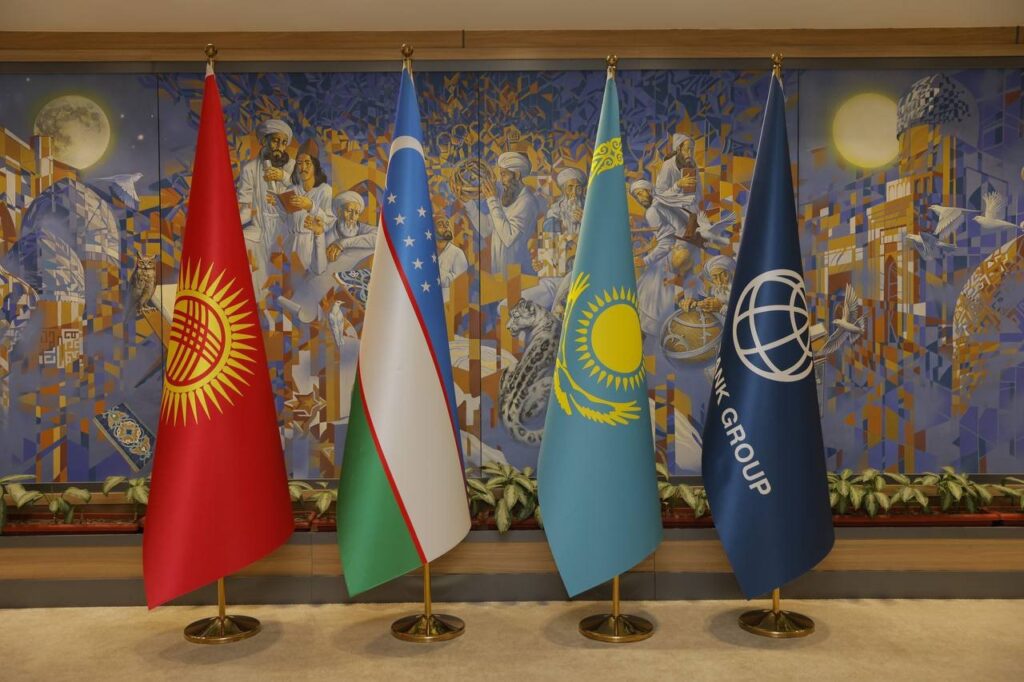
On January 27, Tashkent hosted a roundtable discussion on advancing the construction of the Kambarata-1 Hydropower Plant (HPP), an ambitious regional initiative being jointly undertaken by Kyrgyzstan, Kazakhstan, and Uzbekistan. The project aims to enhance regional cooperation in Central Asia regarding water and energy resource management. The meeting was attended by Kyrgyzstan’s Minister of Energy Taalaibek Ibrayev, Uzbekistan’s Minister of Energy Jurabek Mirzamakhmudov, Kazakhstan’s Deputy Minister of Energy Sungat Yesimkhanov, and the World Bank Regional Director for Central Asia Tatiana Proskuryakova. The Kambarata-1 HPP, with a projected capacity of 1,860 megawatts and an average annual electricity generation of 5.6 billion kilowatt-hours, will be constructed at an estimated cost exceeding $4 billion. It is planned to be located in the upper reaches of the Naryn River in Kyrgyzstan. Upon completion, it will become the largest hydropower plant in Kyrgyzstan and is expected to address the country's chronic electricity shortages. At the meeting, ministers from the three participating countries requested the World Bank’s assistance in preparing and financing the Kambarata-1 HPP construction. Kyrgyzstan's Ibrayev described the project as "the project of the century" for Kyrgyzstan, emphasizing its potential to strengthen regional cooperation and foster long-term development across Central Asia. “Today's roundtable in Tashkent continues a series of meetings that took place in Vienna, Brussels, and Washington in 2024. These events help coordinate and accelerate the project’s implementation, as well as attract the necessary international support,” Ibrayev stated. From Kazakhstan’s side, Yesimkhanov highlighted the meeting as another step forward in strengthening regional cooperation in the water and energy sectors. He expressed confidence that the project would bolster good relations among Central Asian nations. Uzbek representative Mirzamakhmudov reiterated his country’s commitment to the project, underscoring its strategic importance for the region. "The project will bring significant benefits to all Central Asian countries by strengthening regional energy security, accelerating the transition to a green economy, and improving the use of water resources," he said. Currently, Kyrgyzstan, with the World Bank’s technical support, is revising the project’s feasibility study. This includes assessing the technical, economic, financial, environmental, and social dimensions of the Kambarata-1 HPP. World Bank Regional Director Proskuryakova reaffirmed the institution’s readiness to support the three governments in their efforts to ensure a stable energy future for the region. “We will continue to provide technical assistance in the implementation of the Kambarata-1 HPP construction project. Together with other international development partners, we are working to attract the financing necessary to implement the project,” she said. Ibrayev has previously stated that all preparatory stages of the project are scheduled for completion by May 2025. In September 2024, Kyrgyzstan’s Cabinet of Ministers and the World Bank organized a roundtable to discuss dam selection for the Kambarata-1 HPP. The Swiss engineering firm AFRY proposed several options, and Kyrgyzstan’s Ministry of Energy has confirmed that the feasibility study will be finalized based on the chosen dam design by May 2025.

Kazakhstan and the UAE Are Building a Geoeconomic Powerhouse Spanning Asia and the Gulf

Kazakhstan President Kassym-Jomart Tokayev’s recent mid-January visit to the United Arab Emirates (UAE), to attend the Abu Dhabi Sustainability Week (ADSW) Summit, underscores the strategic importance both nations place on their bilateral ties. ADSW is a prominent global platform dedicated to accelerating sustainable development and promoting international cooperation on the global environmental agenda. The 2025 summit — with the theme, “Nexus of Next: Supercharging Sustainable Progress” — was designed specifically to explore advanced technologies such as artificial intelligence, renewable energy, and innovative sustainability solutions. As leader of the most dynamic of the Central Asian economies, President Tokayev’s presence signaled his country’s ambition to play a more prominent role in addressing environmental challenges at an international level. In his keynote speech, Tokayev addressed environmental issues that are particularly critical for Kazakhstan, including desertification, biodiversity loss, water scarcity, and food security. He emphasized his country’s multifaceted approach to these challenges, which includes digital technologies, large-scale infrastructure projects, and the development of nuclear energy as a low-carbon solution. Kazakhstan has recently launched initiatives, such as expanding solar and wind farms and implementing advanced irrigation systems to combat desertification. Tokayev also highlighted Kazakhstan’s commitment to meeting its renewable energy targets, aiming to generate 15% of its electricity from renewables by 2030, in partnership with global leaders in green technology. Overall, the ADSW Summit provided a platform for Kazakhstan to engage with international partners, share its vision for sustainable development, and explore collaborative opportunities to address global environmental challenges. Kazakhstan’s efforts include the development of the Mohammed bin Rashid Al Maktoum Solar Park, which will have a capacity of 5,000 megawatts (MW) by 2030, and participation in the Space-D programme, which enhances operational performance through nano-satellites. In particular, President Tokayev met with UAE President Sheikh Mohamed bin Zayed Al Nahyan to discuss bilateral relations. The two leaders agreed to focus on a specific economic agenda — focused on trade, investment, and sustainable development — to create positive bilateral trade dynamics. Their Joint Declaration on Strategic Investment Projects in these fields was also highlighted. Kazakhstan and the UAE have developed a dynamic and multifaceted partnership over the past three decades. Since establishing diplomatic relations in 1993, the UAE has become Kazakhstan’s leading strategic partner in the Arab world. Early cooperation focused on trade and investment but has since expanded to include sectors such as petrochemicals, energy, transport, logistics, agriculture, and aerospace. Key milestones include the establishment of direct flight routes between the two countries and the signing of long-term investment agreements in the mid-2000s. Tokayev noted that direct investment from the UAE into Kazakhstan more than doubled from 2023 to 2024, placing the country among the top ten largest foreign investors in Kazakhstan. A focal point of their discussion was the goal of increasing bilateral trade turnover to $1 billion. In this context, the Dubai International Chamber has established a representative office in Kazakhstan to boost trade and investment opportunities further still. For several years, the UAE has been expanding its cooperation with the Greater Caspian...