• KGS/USD = 0.01144 0%
  • KZT/USD = 0.00209 0%
  • TJS/USD = 0.10523 0%
  • UZS/USD = 0.00008 0%
  • TMT/USD = 0.28530 -0.14%
  • KGS/USD = 0.01144 0%
  • KZT/USD = 0.00209 0%
  • TJS/USD = 0.10523 0%
  • UZS/USD = 0.00008 0%
  • TMT/USD = 0.28530 -0.14%
  • KGS/USD = 0.01144 0%
  • KZT/USD = 0.00209 0%
  • TJS/USD = 0.10523 0%
  • UZS/USD = 0.00008 0%
  • TMT/USD = 0.28530 -0.14%
  • KGS/USD = 0.01144 0%
  • KZT/USD = 0.00209 0%
  • TJS/USD = 0.10523 0%
  • UZS/USD = 0.00008 0%
  • TMT/USD = 0.28530 -0.14%
  • KGS/USD = 0.01144 0%
  • KZT/USD = 0.00209 0%
  • TJS/USD = 0.10523 0%
  • UZS/USD = 0.00008 0%
  • TMT/USD = 0.28530 -0.14%
  • KGS/USD = 0.01144 0%
  • KZT/USD = 0.00209 0%
  • TJS/USD = 0.10523 0%
  • UZS/USD = 0.00008 0%
  • TMT/USD = 0.28530 -0.14%
  • KGS/USD = 0.01144 0%
  • KZT/USD = 0.00209 0%
  • TJS/USD = 0.10523 0%
  • UZS/USD = 0.00008 0%
  • TMT/USD = 0.28530 -0.14%
  • KGS/USD = 0.01144 0%
  • KZT/USD = 0.00209 0%
  • TJS/USD = 0.10523 0%
  • UZS/USD = 0.00008 0%
  • TMT/USD = 0.28530 -0.14%

Viewing results 1369 - 1374 of 3264

Accelerating Growth: Uzbekistan’s Automotive Industry Continues to Expand

Uzbek-Singaporean company Technologies of Real-Time plans to start producing components for such famous brands as BYD, Chery, Changan, Geely, and Dongfeng, it was announced during President Mirziyoyev's visit to the Tashkent region. The project will cost $115 million and is planned to be realized by 2025. As a result, 43 new jobs will be created, and production capacity will increase from 180,000 to 280,000 units annually. The automobile industry is a critical component of the Uzbek economy, with car production growing almost threefold in recent years. By the end of this year, production volume is expected to reach 460,000 units, and by 2030, it is planned to increase this figure to 1 million. Two new private enterprises and international brands have been brought in to eliminate monopolies and promote competition in the industry, with more than 20 plants in the country producing a wide range of cars and trucks. In response to the growing demand for spare parts, more than 300 enterprises have joined a cooperative network, including Technologies of Real-Time in Zangiat. In November 2019, the President familiarized himself with the products of this enterprise at an international industrial fair, and recommended its further expansion. As a result, extensive modernization has been carried out, and new equipment from China, Russia, South Korea, Japan, and the United States has been installed in 12 workshops. Currently, more than 750 types of spare parts for 118 car models are produced here. The enterprise has created 220 jobs. Products are supplied to the domestic market, including to the Uzavto Motors plant in the Khorezm region, where 773,000 spare parts for Damas and Labo were shipped. Spare parts are also in demand abroad: last year, exports amounted to $3 million, including deliveries to Kazakhstan, Kyrgyzstan, Tajikistan, and Turkmenistan.

Kazakhstan, Kyrgyzstan and Uzbekistan Determine Operating Mode for Toktogul Reservoir

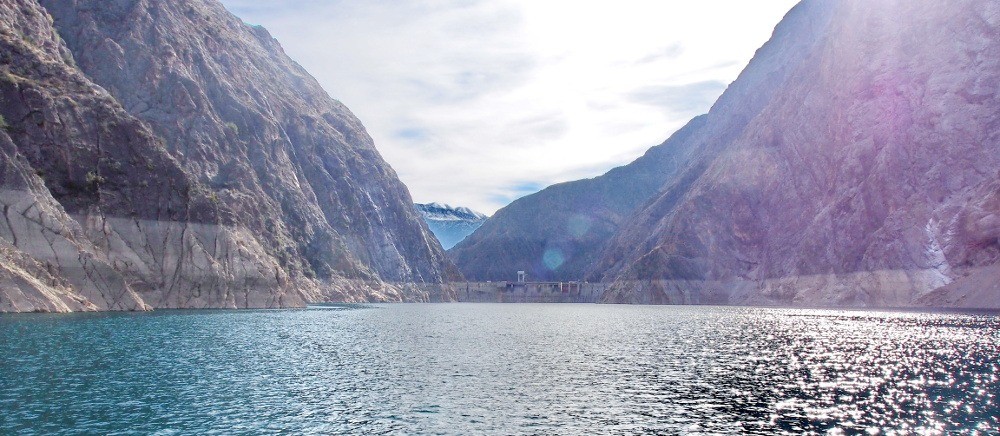
Following a meeting in Tashkent to coordinate the region's water and energy balance, ministers from Kazakhstan, Kyrgyzstan, and Uzbekistan determined a preliminary operating mode for Kyrgyzstan’s Toktogul reservoir for the autumn-winter period. Kyrgyzstan’s largest Toktogul hydroelectric power plant (HPP) reservoir on the Naryn River releases water downstream to Kazakhstan and Uzbekistan providing essential irrigation for fields in Kazakhstan's dry southern regions. In winter, the plant which produces around 40% of Kyrgyzstan’s electricity, releases more water to generate electricity to meet the country’s power shortages. Kazakhstan and Uzbekistan are now interested in helping Kyrgyzstan maintain a sufficient volume of water in the Toktogul reservoir for use during the 2025 irrigation season; a goal which could be achieved by exporting Kazakh and Uzbek electricity to Kyrgyzstan during the winter months. Commenting on the proposal, Kazakhstan’s Minister of Water Resources and Irrigation Nurzhan Nurzhigitov, stated: "An important area of cooperation for our countries is the water and energy sector. This year has become a vivid example of deepening such regional cooperation. We [Kazakhstan] have met our water needs thanks to the joint measures. For a downstream country, this is extremely important. First, it is used to fill the North Aral Sea. We will continue to adhere to the agreements reached for the autumn-winter period to provide farmers with irrigation water next year." The Kazakh Ministry of Water Resources and Irrigation announced on October 14 that the irrigation season had ended in all regions of the country and during the growing season, from April 1,  the Ministry supplied Kazakhstan's farmers with about 11.2 billion cubic meters of water.  Nurzhigitov also drew attention to the vital role of water diplomacy in preventing a shortage of irrigation water this year, with  Kyrgyzstan, Tajikistan, and Uzbekistan sending more water to Kazakhstan than planned. As previously  reported by The Times of Central Asia the Toktogul reservoir accumulated more water this year than last.

Kyrgyz Government Adopts Strategic Task to Construct Eco-City

On October 14, Kyrgyzstan's President Sadyr Japarov signed a Decree to construct the eco-city "Asman" near the village of Toru-Aigyr on the northern shore of Lake Issyk-Kul, the country's  main region for tourism and recreation. Spanning 4,000 hectares, some 200km southeast of the capital Bishkek and dubbed a "smart city", Asman aims to become the country’s new economic and tourist hub and home to modern business, recreational and sports facilities, hi-tech parks, and financial institutions. It will also provide homes for around  500,000 residents. From a bird's eye view, Asman (the Kyrgyz word for "sky") will resemble a komuz, a traditional Kyrgyz string musical instrument and one of Kyrgyzstan's national symbols. According to Kyrgyz officials, the new city financed by foreign investors, will be built over the next 7-10 years but although the capsule-laying ceremony took place in June 2023, construction has yet to begin. Speaking at the ceremony, President Japarov remarked that “the city of Asman will become a financial hub connecting East and West, North and South.” As reported by the presidential press service, the construction of the eco-city is a “strategic task” for the country’s Cabinet of Ministers and local authorities of the Issyk-Kul region, with a key objective to protect the biosphere territory adjacent to the lake. According to the decree, the Cabinet of Ministers should develop and approve a concept for the construction of Asman by March 1, 2025, ensuring the preservation and protection of the environment during the city’s construction. It has also been recommended that a ban be placed in the city on hydrocarbon-fueled (gasoline, diesel, gas) transport in preference for electric transport and bicycles. For this purpose, the decree orders the creation of electric transport infrastructure and charging stations, as well as necessary conditions for the use of bicycles to ensure mobility of the city's population. In addition, the decree orders the use of energy-saving solutions and smart home technologies in the construction of buildings, and compliance with the World Health Organization's environmental standards for greening cities and introducing an environmentally safe waste management system. The realization of such a mega project has inevitably raised questions regarding finance, with construction costs currently estimated at around $20 billion. The Asman project shares similarities to the city of Arkadag in Turkmenistan. Unveiled in June 2023, the “smart” city of Arkadag was built from scratch 30 km south of Turkmenistan’s capital, Ashgabat. Designed to accommodate a population of  70,000, it cost billions of dollars to construct.

Uzbekistan Joins International Agreement on Space Exploration

On October 10,  President Shavat Mirziyoyev signed a law sealing Uzbekistan's agreement on the activities of states on the exploration and use of outer space, including the Moon and other celestial bodies. The Outer Space Treaty was signed on January 27, 1967, by London, Moscow, and Washington. Since then, 115 countries have joined this agreement, and a further 22 have yet to ratify it. According to the CIS countries' rules, the Interstate Space Council chair is transferred among the participating countries in alphabetical order. Following Tajikistan, Uzbekistan will take the lead from 2024 to 2025. To this end, the Uzbekkosmos agency has announced a series of events in celebration of World Space Week, scheduled to take place in Uzbekistan in collaboration with NASA. This global event, commemorated in nearly 100 countries, was established by a UN General Assembly resolution in 1999 in recognition of the importance of space exploration.

Taliban Asks Uzbekistan to Prohibit Music at Border Market

Taliban officials have asked Uzbekistan to cancel concerts and musical programs at the joint border market in Termez. According to Atlas Press, Afghan citizens will not be allowed to enter this market if the programs continue. The recently reopened Afghanistan-Uzbekistan joint border market in Termez stages music concerts with performances by Uzbek artists but according to the publication’s sources, the Taliban have now asked the Uzbek government to discontinue such programs. To date, neither the Taliban nor Uzbek officials have officially commented on the issue and it remains unclear as to whether Uzbekistan will respond positively to the Taliban’s request. In an agreement between the Taliban and Uzbekistan, Afghan citizens can visit and trade in the international Termez market in the Surkhandarya region of Uzbekistan for 15 days without a visa. However, as stated in the report, “It seems that the Taliban are trying to implement their controversial laws outside of Afghanistan. This recently announced law, in addition to playing and listening to music, also imposes other severe restrictions on Afghan citizens, especially women, and has faced international condemnation." Previous protests issued by the Taliban include the detention of Afghan military aircraft in Uzbekistan.

Alisher Usmanov Sues Journalist for Insults in Germany

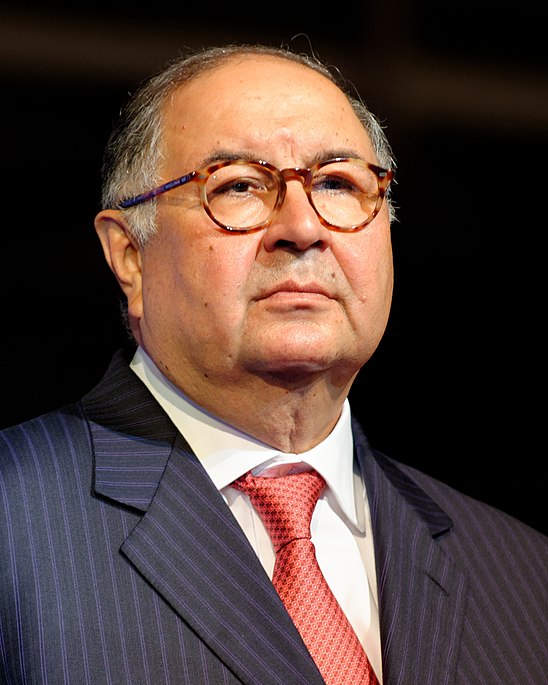
As previously reported by The Times of Central Asia, Alisher Usmanov won a court case against the German TV channel ARD, after a Hamburg court determined the channels' broadcast accusation that Uzbek-born billionaire Alisher Usmanov had created a system of bribing the International Fencing Federation (FIE),unreliable. In his article “Doubtful judges in action at the Olympics – 5,000 euros bribes in fencing,” award-winning journalist Hans-Joachim Seppelt accused Usmanov of bribery and manipulation of judges in international fencing. According to the report, the court banned its distribution as “inappropriate news based on suspicion.” If the court order is violated, the violator will be fined up to 250,000 euros per episode or imprisoned. But Usmanov needed more and in an complaint submitted electronically to the Cologne prosecutor’s office on October 8, called for the journalist to be prosecuted. In a statement to BILD, Usmanov's lawyer, Joachim Steinhöfel said, “Mr. Seppelt and ARD Sportschau not only violated basic journalistic standards and the press code. This malicious and vile gossip-  should be - punished. Seppelt only wanted to humiliate Mr. Usmanov. He had no facts. This is not journalism; this is shaming.”